

Business
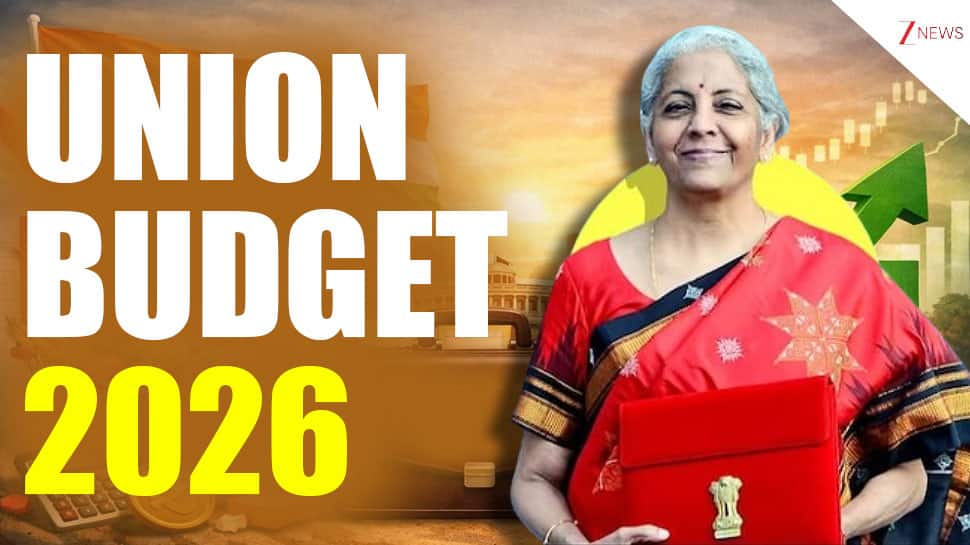
Budget 2026: New Tax Regime May Get Home Loan, Health Insurance Deductions


Last Updated:
Budget 2026 may bring middle-class relief as experts urge adding home loan interest and Section 80D health insurance deductions to the new tax regime



At present, most popular deductions are available only under the old tax regime. (AI-Generated Image)
As the Centre prepares to present the Union Budget in February 2026, expectations are building around possible changes to the personal income tax framework, with policymakers facing mounting pressure to make the new tax regime more attractive for middle-class taxpayers.
A key demand emerging from tax experts and industry bodies is the inclusion of select deductions, particularly home loan interest and medical insurance premiums, within the new regime. At present, most popular deductions are available only under the old tax regime, prompting many taxpayers to forgo lower tax rates in favour of exemptions and deductions.
According to reports in The Economic Times, experts have urged the government to consider allowing Section 80D deductions for health insurance in the new regime. Niyati Shah, Chartered Accountant and Personal Tax Head at 1 Finance, said a capped deduction of Rs 25,000 to Rs 50,000 for health insurance premiums would be justified, given that medical inflation is running at an estimated 12-14% annually.
Viswanathan Iyer, Senior Associate Professor at the Great Lakes Institute of Management, Chennai, told TOI that for an individual earning Rs 15 lakh annually, a standard or health insurance deduction of Rs 1 lakh could translate into tax savings of about Rs 4,000.
Another report suggested that Section 80D should be made available under both tax regimes, with higher limits for senior citizens. Business Standard quoted Shah as saying that the policy focus should be on healthcare, housing and retirement, recommending a simple flat deduction for home loan interest or house rent allowance (HRA), along with a capped health insurance benefit.
SR Patnaik, Partner and Taxation Head at Cyril Amarchand Mangaldas, proposed higher interest deductions on savings and fixed deposits and an upward revision of the income threshold for the 30% tax slab.
Housing-related tax relief has also emerged as a major talking point. Reports in The Financial Express and by trading platform Upstox quoted experts, including Abhishek Soni, as calling for an increase in the home loan interest deduction under Section 24(b) from the current Rs 2 lakh-Rs 3 lakh, citing rising property prices and higher EMIs. The Institute of Chartered Accountants of India (ICAI), in its pre-Budget memorandum, has recommended allowing Section 80D deductions in the new regime to improve health insurance penetration.
The debate has spilled over to social media, where Budget 2026 has become a trending topic. Financial expert Sumit Kapoor (@moneygurusumit) posted on X that health insurance deductions under Section 80D could return to the new regime, along with partial home loan benefits, potentially pushing effective tax-free income up to Rs 17 lakh.
CA Himank Singla echoed similar expectations, citing possible standard deductions of Rs 1–1.5 lakh, health insurance benefits and home loan relief. Journalist Ninad Sheth suggested that substantial interest deductions on home loans and GST benefits for affordable housing were “almost certain”, while some users speculated that the home loan interest cap could be raised to as much as Rs 5 lakh.
Currently, the new tax regime offers lower tax rates but virtually no deductions, apart from a standard deduction of Rs 75,000 for salaried employees. In contrast, the old regime allows deductions of up to Rs 2 lakh on home loan interest and up to Rs 25,000 on medical insurance premiums under Section 80D, rising to Rs 50,000 for senior citizens.
For the ongoing framework, income up to Rs 12 lakh is effectively tax-free under the new regime due to an enhanced rebate under Section 87A, extending to Rs 12.75 lakh when the standard deduction is factored in. On an annual income of Rs 15 lakh, the tax liability under the new regime works out to about Rs 1.56 lakh after deductions.
Experts argue that if limited deductions such as home loan interest and health insurance premiums are allowed within the new regime, taxpayers could benefit from both lower rates and meaningful relief. For instance, a Rs 2 lakh home loan interest deduction could reduce taxable income by the same amount, resulting in tax savings of Rs 60,000 for someone in the 30% slab. A Rs 25,000 health insurance deduction would save another Rs 7,500. If higher caps are introduced, savings could rise substantially.
 Click here to add News18 as your preferred news source on Google.
January 21, 2026, 20:09 IST
Read More



Business
Eli Lilly’s next-generation obesity drug retatrutide clears first late-stage diabetes trial

Eli Lilly on Thursday said its next-generation obesity drug retatrutide cleared its first late-stage trial on Type 2 diabetes patients, helping them manage their blood sugar levels and lose weight.
The drug lowered hemoglobin A1c — a key measure of blood sugar levels — by an average of 1.7% to 2% across different doses at 40 weeks compared to placebo, meeting the study’s main goal. Patients started the trial with an A1c in the range of 7% to 9.5%, and were not taking other diabetes medications.
Retatrutide also met the study’s second goal, helping patients at the highest dose lose an average of 16.8% of their weight, or 36.6 pounds, at 40 weeks, when evaluating only patients who stayed on the drug. When analyzing all participants, including those who discontinued treatment, the highest dose of the drug helped patients lose 15.3% of their weight.
Patients with Type 2 diabetes historically struggle to lose weight, so Lilly is “very excited” to see that the drug led to both a competitive drop in blood sugar levels and significant weight loss, Ken Custer, president of Lilly Cardiometabolic Health, said in an interview.
The company was also “very pleased” with the relatively low discontinuation rates due to side effects, which were up to 5%, he added.
They are the second late-stage results to date on retatrutide, which works differently from existing injections and appears to be more effective, at least for weight loss. Lilly is betting big on retatrutide as the next pillar of its obesity portfolio after its blockbuster weight loss injection Zepbound and its upcoming pill, orforglipron.
But Lilly has yet to file for approval for the drug for obesity or diabetes. The company expects to report findings from seven additional phase three trials on the drug by the end of the year.
There are no head-to-head trials of retatrutide against other drugs, making it difficult to directly compare efficacy.
Still, retatrutide’s A1C reduction doesn’t appear to be the greatest Lilly has seen within its portfolio: The highest dose of Zepbound lowered the measure by more than 2% at 40 weeks in two separate trials on diabetes patients.
But Custer said retatrutide’s A1C reduction is still “very, very strong” compared to other diabetes medications that don’t target gut hormones.
He also said that having options in the obesity and diabetes space will be important because “not everybody is going to be helped with or satisfied with the same treatment.” Choosing which drug to take will depend on “individualized tailoring of solutions and patients,” particularly earlier in their diabetes treatment, he added.
For example, Custer said patients who want to regulate their blood sugar could benefit from either Zepbound or retatrutide. But if they are looking to lose more weight, the latter might be a better option, he said.
In the two separate diabetes trials, Zepbound helped patients lose slightly less weight than retatrutide did. In one study called SURPASS-2, the highest dose of Zepbound helped patients lose an average of 13.1% of their weight at 40 weeks. In the other study, SURPASS-1, the highest dose helped patients lose an average of 11% of their weight at the 40-week mark.
Retatrutide’s safety profile was similar to other injectable diabetes and obesity drugs, primarily causing gastrointestinal side effects. Around 26.5% of patients on the highest dose experienced nausea, while roughly 22.8% and 17.6% had diarrhea and vomiting, respectively.
Low rates of patients experienced dysesthesia, which is an unpleasant nerve sensation.
Dubbed the “triple G” drug, retatrutide works by mimicking three hunger-regulating hormones – GLP-1, GIP and glucagon – rather than just one or two like existing treatments. That appears to have more potent effects on a person’s appetite and satisfaction with food than other treatments.
Tirzepatide, the active ingredient in Zepbound, mimics GLP-1 and GIP. Novo Nordisk’s semaglutide, the active ingredient in Wegovy, mimics only GLP-1.
As retatrutide inches closer to the market, Novo is racing to catch up to Lilly. In March 2025, Novo said it agreed to pay up to $2 billion for the rights to an early experimental drug from the Chinese pharmaceutical company United Laboratories International.
Novo’s newly acquired drug is a clear potential competitor to retatrutide because it similarly uses a three-pronged approach to promoting weight loss and regulating blood sugar. But Novo’s treatment is much earlier in development, meaning it will take several years before it reaches patients.

Annual earnings grew at an annual rate of 3.8% in the November to January period, the Office for National Statistics says.
Source link

The scheme provides £500 to support low-income families welcoming a new baby in the London borough.
Source link


Boots or Trail Runners? Depends if You Want Speed, Durability, or Ankle Support

Germany’s ZEW index falls to -0.5 in March amid Middle East tensions

Ryan Gosling reacts to viral NFL meme that won’t die

Stock market crash today (March 12, 2026): Nifty50 opens below 23,600; BSE Sensex down over 900 points on continuing US-Iran war – The Times of India

UK’s Topshop unveils Tolu Coker capsule collection

India’s textile recycling market may reach $3.5 bn by 2030: Report

-
Business1 week ago
Stock market crash today (March 12, 2026): Nifty50 opens below 23,600; BSE Sensex down over 900 points on continuing US-Iran war – The Times of India
-
 Fashion1 week ago
UK’s Topshop unveils Tolu Coker capsule collection
-
 Fashion1 week ago
India’s textile recycling market may reach $3.5 bn by 2030: Report
-
 Tech1 week ago
Meta Developed 4 New Chips to Power Its AI and Recommendation Systems
-
 Business1 week ago
US ignites Iran war, but Gulf Arab states pay the price | The Express Tribune
-

 Sports1 week ago
Bangladesh crush Pakistan in ODI series opener | The Express Tribune
-

 Entertainment1 week ago
Gas, food, household prices explained
-

 Tech1 week ago
I Used Google’s New Gemini-Powered ‘Help Me Create’ Tool in Docs. It’s Great at Corporate-Speak