

Business
‘Business rates changes will cost me £62,000’

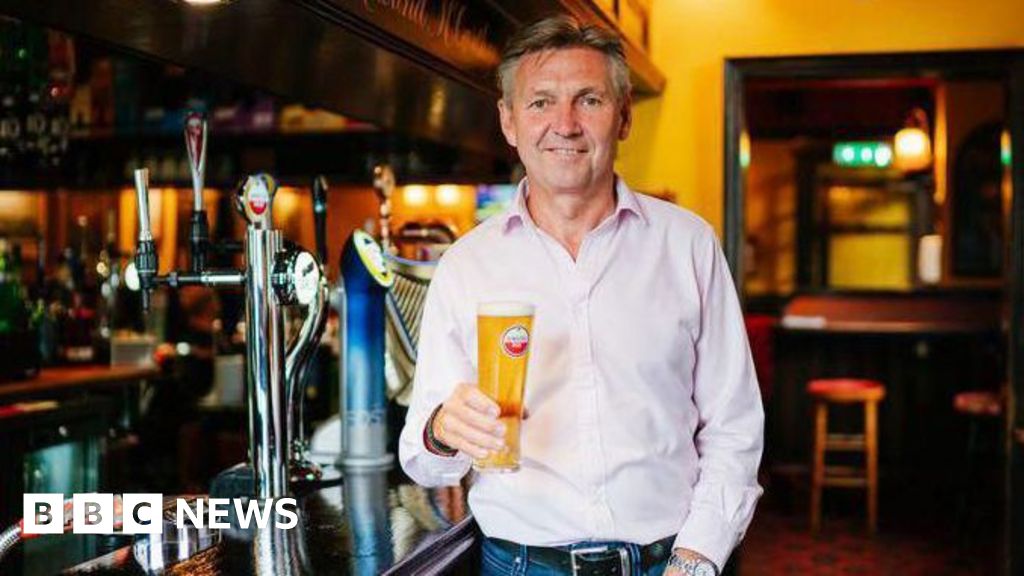
The owner of a small pub chain in the south east of England has said his costs will rise by £62,000 per year after changes announced in the Budget.
Phil Thorley, who runs the Thorley Taverns pub group, said business rates – a tax on commercial properties – will rise for 17 of his 18 sites, despite Rachel Reeves promising lower taxes for retail, leisure and hospitality firms.
Reeves had vowed to introduce the lowest taxes since 1991 for pubs, restaurants and small shops by increasing the levy on higher-value properties such as warehouses used by Amazon and other online giants.
The government said changes it had made meant it was saving most “typical independent pubs” £4,800 per year.
A firm’s rateable value is based on how much it would cost to rent a firm’s property for a year, and is used to calculate a business’s rates bill.
The government said it would calculate business rates for 750,000 High Street retail and hospitality firms using a lower percentage of the rateable value of premises, but this lower tax rate was not as generous as expected.
At the same time, many firms have seen their rateable value increase and face the phasing out of a Covid-era 40% discount from April.
The net result is that, despite some transitional relief, lots of them will see significant increases in their business rates bill.
Transitional relief caps the increase in rates for each year. For properties outside London with a rateable value of £20,000 to £100,000, the limit is 15% in 2026-27, 25% in 2027-28, 40% in 2028-29 (plus inflation).
UK Hospitality estimates that an average pub would pay £12,900 more over those three years, while an average hotel would pay £205,200 more.
Mr Thorley told BBC Radio 4’s Today programme that the rateable value at most of his sites had “gone north”.
“A further £62,000 worth of costs onto the business, which is absolutely at its knees at the moment.”
He said the industry was already under significant pressure following the chancellor’s first Budget last October, which pushed up hiring costs with a hike in employer national insurance contributions and the minimum wage.
Mr Thorley said another minimum wage hike will mean “less employment, less investment, less training in the people that we’ve got, and less jobs for young people”.
And he warned the chancellor’s Budget would “be the death knell to the British pub”.
The government said it is protecting pubs, restaurants and cafes with a £4.3bn package of support, limiting firms’ business rates bills.
A Treasury spokesperson said: “This comes on top of cutting the cost of licensing to help more offer pavement drinks and al fresco dining, keeping our cut to alcohol duty on draught pints and capping corporation tax.”
But Elaine Wrigley, the owner of Atlas Bar in Manchester, said Reeves’ latest Budget was “smoke and mirrors”.
She told the BBC the rateable value of her bar, used to calculate its business rates bill, has jumped from £69,000 in 2023 to £97,000. And she said that even with lower multipliers for small retail, leisure and hospitality firms she is still facing a 15% increase in her business rates bill.
“She may well have said it’s the lowest rate and the best support but it’s from the highest base,” Ms Wrigley said.
She added: “We’ve put our prices up four times in the last 12 months, but we’re at a point now where we feel like we can’t put any more on to our customers, so subsequently our margins are being reduced and being squeezed which is not helpful.”
And Sacha Lord, chairman of the Night Time Industries Association (NTIA) said the business rates changes amount to a “stealth tax” on High Street pubs, restaurants and bars.
He told the BBC operators initially welcomed the Budget, but the impact of revaluations became clear within hours of the chancellor’s statement.
“Once this kicks in in April, we are expecting to see more closures than ever before, including during the pandemic,” Mr Lord warned.
The Conservatives dubbed the chancellor’s business rates changes “a bombshell” and warned many pubs, restaurants and shops would see their bills “going up, by a lot”.
Shadow business secretary Andrew Griffith said the government had previously consulted on a far larger discount to business rates, but had “bottled it”.
“The result will be more closures, fewer jobs, and lower growth,” he said.
He called on Reeves to change course urgently, adding that “businesses need certainty before they face these bills in April”.
The Liberal Democrats said Reeves should “throw our hospitality sector a lifeline”.
Treasury spokeswoman Daisy Cooper added: “Our pubs, cafes, and restaurants are already on their knees, and these choices will only force more high street businesses to shut up shop.”
She called for the chancellor to cut the rate of VAT for the sector.
On the whole, Britain is not a nation of investors and the government wants that to change.
Following on from Rachel Reeves’ plans last year, the advertising campaign to create more retail investors is underway and with further changes afoot, the overall picture is one of Labour steering savers towards understanding why, and how, they can create better long-term returns with their money.
The cut to the cash ISA limit, however crude and unpopular, is one such upcoming change. We’ve just entered the final year of the £20,000 allowance being able to be put entirely into a cash ISA; as of April 2027, £8,000 of it will be reserved for investing-only. For those who don’t save over that amount annually it’ll make no material difference, but even the existence of the change can be argued is a prod to the consciousness of people to wonder if they should be doing something else entirely.
Then there’s targeted support.
Among industry insiders there is hope this could make a material difference, given time – in essence, those who have significant savings in cash being able to be spoken to by their bank or provider over other options, potentially including investing.
At Innovate Finance this week, a key summit of UK FinTech Week,The Independent heard from a senior executive at one neobank that the average client with them had savings in excess of £15,000 – precisely the sort of consumer who could benefit from targeted support to explain how, over the long term, they might be better off putting a portion of that excess cash into… well, something other than cash, which loses its value over time due to inflation.
Another suggested an uptick in app users branching out from just having current and savings accounts, to other products within their sphere including stocks and shares ISAs – where investing returns will be tax free for consumers.
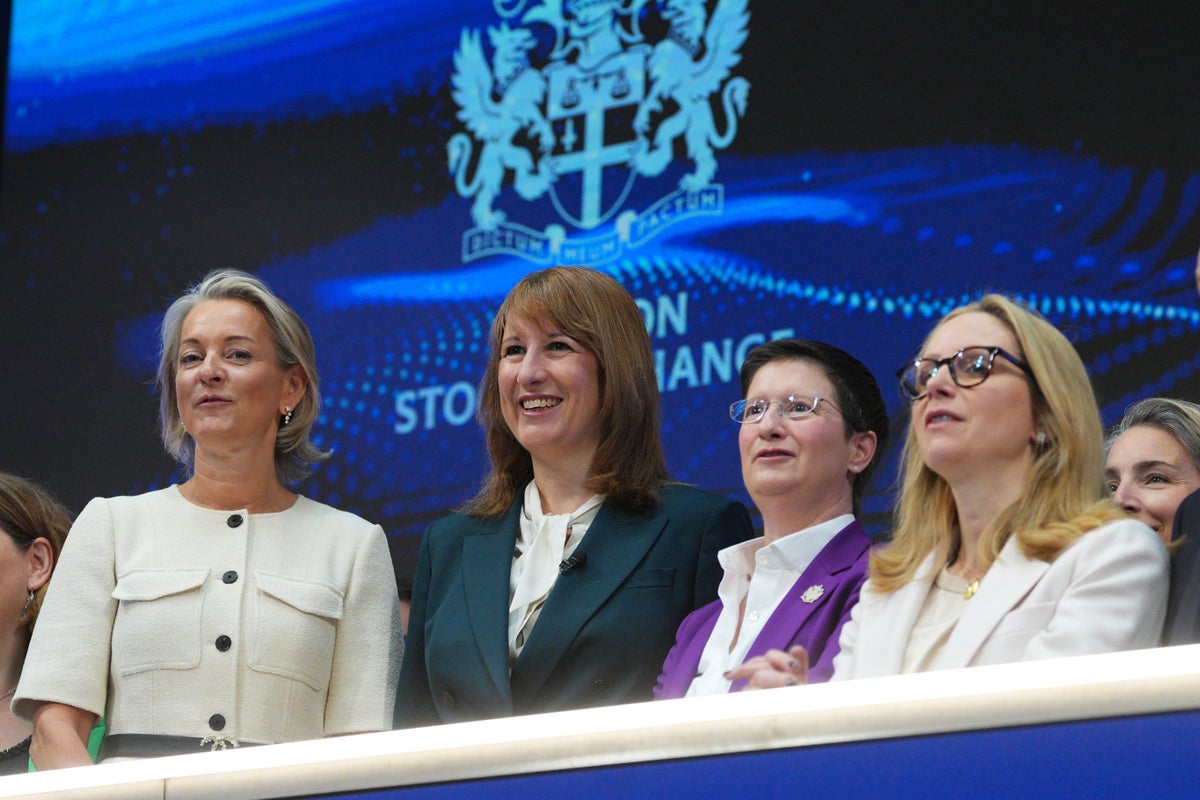
Economic secretary to the Treasury Lucy Rigby launched the nationwide ad campaign, along with chancellor Ms Reeves, at the London Stock Exchange on Thursday.
“With greater awareness of the benefits of investing, more people will be able to make informed decisions about how to make their savings work harder for them,” Ms Rigby said. “That will mean greater prosperity and financial resilience for households across the country and strengthened domestic capital markets too.”
The aforementioned plans and prospects certainly all align with raising awareness. That is a first step.
But there are greater key issues to deal with.

Get a free fractional share worth up to £100.
Capital at risk.
Terms and conditions apply.
ADVERTISEMENT
Get a free fractional share worth up to £100.
Capital at risk.
Terms and conditions apply.
ADVERTISEMENT
The advert campaign with Savvy the squirrel – conversational cab rides, explain-it-all website and more – will hopefully fill some painful gaps in the first instance around British people’s knowledge around the subject. Unlike in the US and several European countries, where investing is fairly commonplace, in the UK it’s not often spoken about, let alone fully understood.
Research from Barclays and their Investment Readiness Index showed this week that over a third of people (34 per cent) say fear of losing money is their main reason for not starting to invest, while nearly a quarter (23 per cent) said they believed there was a chance that a portfolio of well-known global companies could become “totally worthless” within five years.
Barclays’ report added for context that outcome was “an extremely unlikely” one.
But to really change some of those would-be investors’ minds, perhaps the response should have been more blunt. Perhaps the Treasury, the government and the campaign as a whole could stand to be a bit more…direct.
There is, in all probability, next to no chance that such a mix of companies would become worth zero in five years – unless something genuinely catastrophic happens to the world in which case we’ve all got more important issues to deal with than our portfolio performance. Maybe the Barclays report itself could likewise have benefited from feeling more freely able to state as such?
So, yes, financial education is absolutely one part, but so too is the language and understanding and framing of risk for people.
Articles, videos, all the learning activities across the web and within companies to help introduce people to investing – in every one of them you’re liable to find the disclaimer-style warning along the lines of: investments can go up as well as down, you may get back less than you invest and so on. Some find it off-putting to begin with, some barely even notice it.
In the words of the FCA, you must always “give a balanced impression of the benefits and risks of an investment product or service”.
That same pointing-out-of-the-risks wording and tone is another aspect which is being re-evaluated and could be switched up.
Now, while nobody wants that removed or watered down unduly to the point that bad actors or bad products are being pushed on newly introduced people to investing, there is still a misrepresentation of what risk means – it’s not always about you could lose all your money.
And, the reward (in theory) for taking on board risk is the possibility for higher returns, over time, than just cash alone (through interest) would give you.
Industry insiders have long also pointed out that the same – or reverse – warning is not applied to cash savings products: the risk here being you lose buying power over time due to inflation.
So language, as well as education, must remain on the table to improve and perhaps nudge people more forcefully towards a choice which helps them, similarly to reminding them to check employer contributions to their workplace pensions or taking out travel insurance before they fly.

There will still be one remaining gap though, even after people tentatively read the info, breathe in the adverts and eventually follow Savvy the squirrel down a new journey to take the plunge in investing: where are those people starting?
The ad campaign will not direct people to choose a particular platform or product, though many – Barclays, Hargreaves Lansdown, NatWest and more – are sponsoring the campaign and will be placed on the website as a result. But people still have to choose, and that particular analysis paralysis point has already left many ready to take the first steps, but unsure where to place their feet.
There are more new stocks and shares ISA providers available, loads of low-cost platforms as well as established, recognised names to choose from and deciding which suits any given person’s initial investment plan is as much a key decision as parting with their first few pounds in the first place.
It is important, for the long-term wealth of families, that more people start to invest. It is a positive thing that more information is therefore being pushed in front of them, to be able to make that call in an informed fashion.
But the reason it’s all needed in the first place is an overabundance of caution, a generational stepping-away from investing as a run-of-the-mill part of individual money management. Getting Brits back on board might therefore require less, not more, of that gentle approach to remedy the situation.
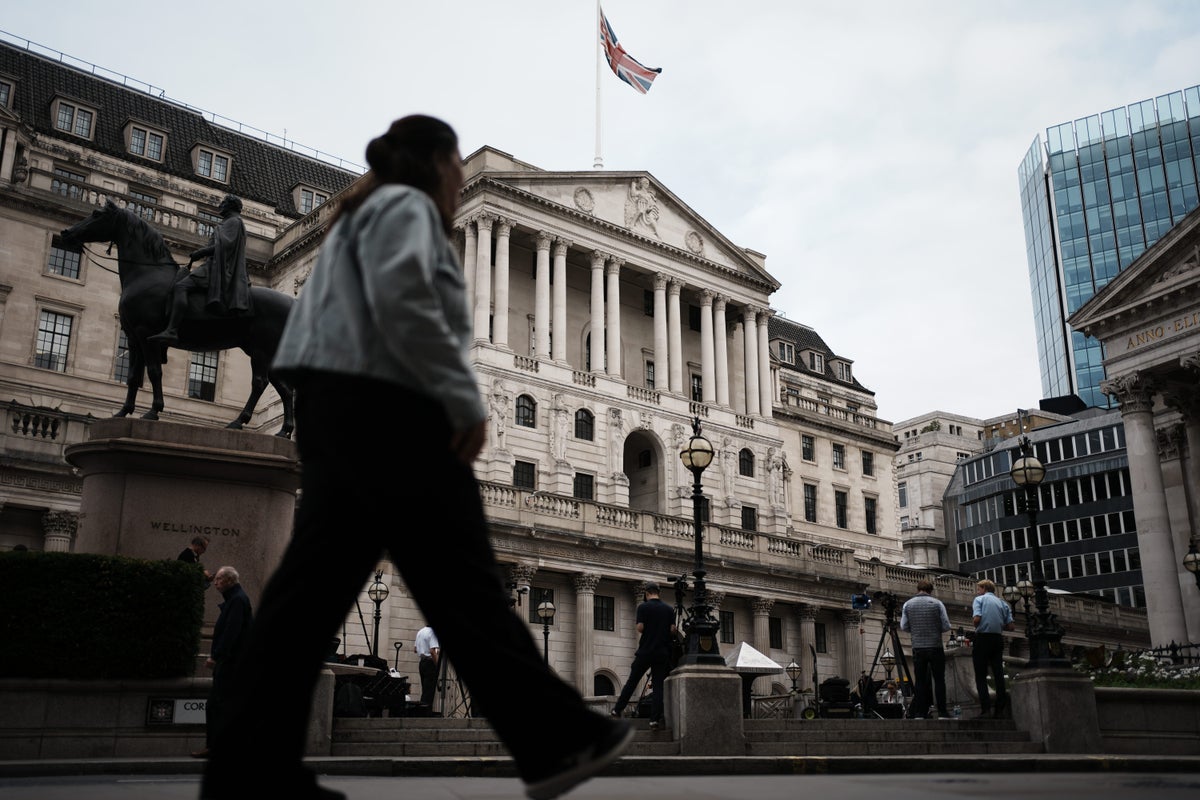
Bank of England policymakers will “almost certainly” hold interest rates at 3.75% at their meeting next week despite the Iran war pushing up the cost of living, economists have said.
However, experts have said a future interest rate increase could still be a possibility if firms and households continue to face inflationary pressure.
The Bank of England’s nine-strong Monetary Policy Committee (MPC) will vote on whether to maintain, increase or decrease its base interest rate on Thursday April 30.
The Bank will also publish its first full monetary policy report and set of economic forecasts since the conflict between US-Israeli and Iranian forces began in late February.
This week, a raft of economic data has shown that the conflict has helped to drive inflation higher.
Data published by the Office for National Statistics (ONS) on Wednesday showed that UK Consumer Prices Index (CPI) inflation lifted to 3.3% in March, a three-month-high, on the back of accelerating fuel prices.
The price of motor fuels jumped by 8.7% month-on-month – the largest increase since June 2022 – as disruption to oil production and transportation drove diesel and petrol prices higher.
Meanwhile on Friday, Bank of England research saw UK firms warn they think food inflation could jump as high as 7% as they increased their inflation outlook for next year.
Other economic data also indicated that activity in the UK economy has been stronger than expected.
The ONS reported the UK economy grew by 0.5% in February, ahead of forecasts of 0.1%, before the conflict began.
Elsewhere, UK retail sales volumes were stronger-than-expected after a boost from fuel, with motorists buying more in March in a bid to stock up amid rising prices.
Despite these figures, economists broadly expect the Bank’s rate-setters to maintain the current interest rate.
Oxford Economics chief UK economist Andrew Goodwin said: “We expect the MPC to keep bank rate unchanged at 3.75%, with most committee members seemingly keen to hold policy at its current restrictive level as they gather more information about how the energy shock is feeding through to the economy.
“Nevertheless, we suspect a minority will opt for a 25 basis point (0.25 percentage point) hike, on the basis that some pre-emptive tightening is a more robust strategy to guard against an inflation outlook where the risks are skewed to the upside.”
Thomas Pugh, chief economist at RSM UK, said the result of the meeting looks “nailed on”.
He said: “The Bank of England (BoE) will almost certainly hold interest rates at 3.75% at its meeting next week, most likely in a unanimous 9-0 vote again.
“The picture of the war in Iran is little clearer than at the last meeting and the value in waiting for more information is significant, given the uncertainty over both the future direction of energy prices and their impact on the economy.”
He indicated however that the “resilience” of some recent data “raises the risk that interest rates will rise in the summer”.
Elliott Jordan-Doak, senior UK economist at Pantheon Macroeconomics, also predicted a unanimous hold vote but also suggested that recent data could drive future concerns over elevated inflation.
He said: “If surveys for May repeat the same pattern, and crucially the ‘dirty’ Middle East ceasefire continues with oil flows disrupted, we think the MPC will be bumped into a hike in June or perhaps July.
“We expect rate setters to hike once this year, in June, before cutting twice in 2027 to leave interest rates at 3.5%.”

new video loaded: Who’s Getting a Tariff Refund?

By Tony Romm, Nour Idriss, Stephanie Swart, Whitney Shefte and Paul Abowd
April 24, 2026

The investment issues Labour must fix before the public can back its bid to join in

Strategic Assertion or Legal Breach? Deconstructing India’s Indus Waters Doctrine

Who’s in, who’s out after chaotic first round in Pittsburgh

-

 Fashion1 week ago
France’s LVMH Q1 revenue falls 6%, shows resilience amid Iran war
-

 Entertainment1 week ago
Is Claude down? Here’s why users are seeing errors
-

 Tech1 week ago
CYBERUK ’26: UK lagging on legal protections for cyber pros | Computer Weekly
-

 Fashion1 week ago
Raymond unveils luxury Chairman’s Collection Store in Mumbai
-

 Sports5 days ago
WWE WrestleMania 42 Night 2: Live match results and analysis
-
 Business1 week ago
PepsiCo earnings beat estimates as North American food business improves
-

 Sports5 days ago
NCAA men’s gymnastics championship: All-time winners list
-

 Sports1 week ago
Faheem Ashraf backs Islamabad United’s push, calls league a ‘career-changing platform’