

Business
Cabinet Clears Rs 7,280-Crore Scheme To Boost Rare Earth Magnet Manufacturing Amid China’s Export Curbs

Last Updated:
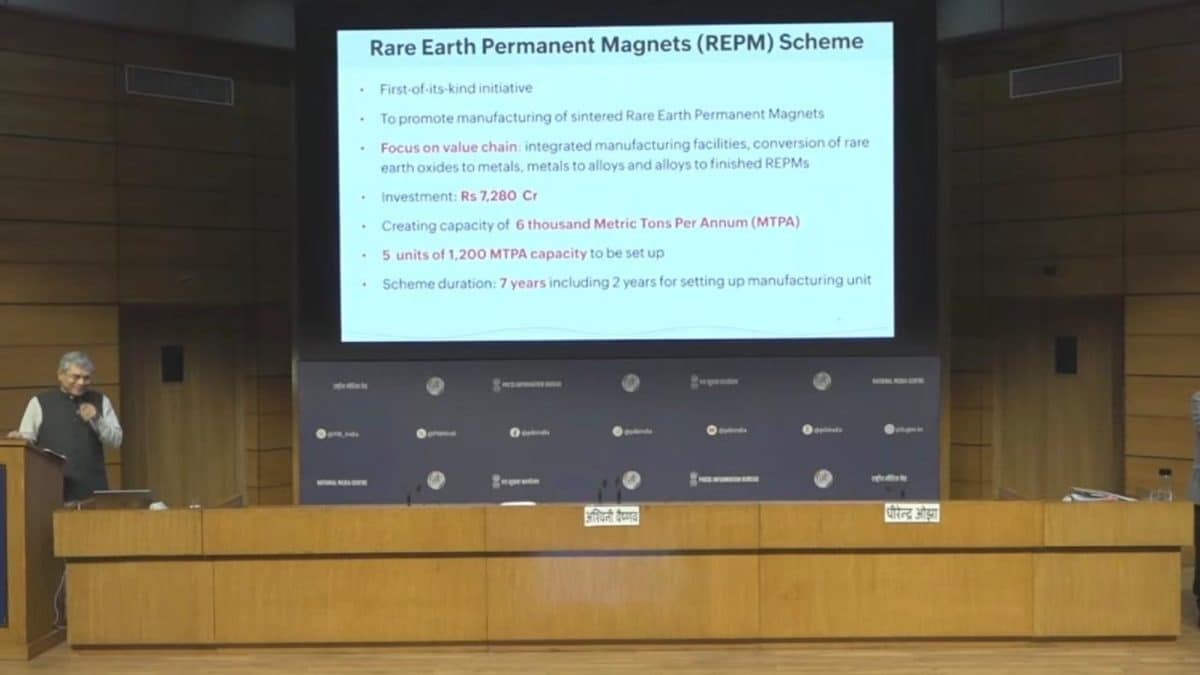
The Scheme to Promote Manufacturing of Sintered Rare Earth Permanent Magnets aims to create a REPM manufacturing capacity of 6,000 MTPA, in order to reduce import dependence.

Information and Broadcasting Minister Ashwini Vaishnaw briefs reporters on the Cabinet decisions today.
The Union Cabinet, chaired by Prime Minister Narendra Modi, on Wednesday cleared a Rs 7,280-crore incentive scheme to promote domestic manufacturing of rare earth permanent magnets (REPMs). The move comes amid China’s rare earth export control measures, which the country announced on October 9.
The Scheme to Promote Manufacturing of Sintered Rare Earth Permanent Magnets aims to create a REPM manufacturing capacity of 6,000 metric tonnes per annum (MTPA), to reduce India’s import dependence on critical minerals and strengthen its supply chain.
“The scheme will promote manufacturing of rare earth permanent magnets. The aim is to create capacity of 6,000 MTPA (metric tonne per annum),” Information and Broadcasting Minister Ashwini Vaishnaw told reporters.
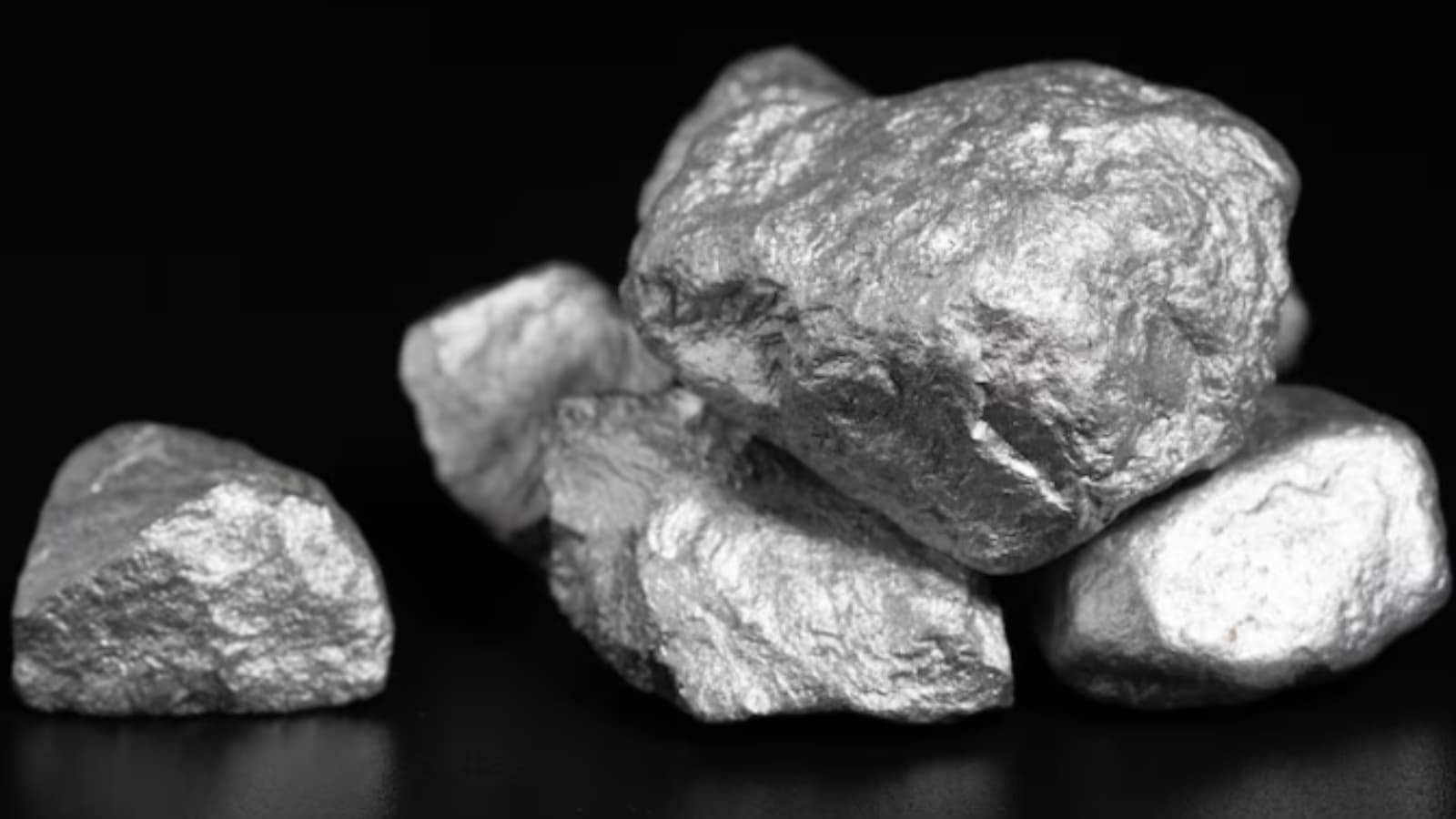
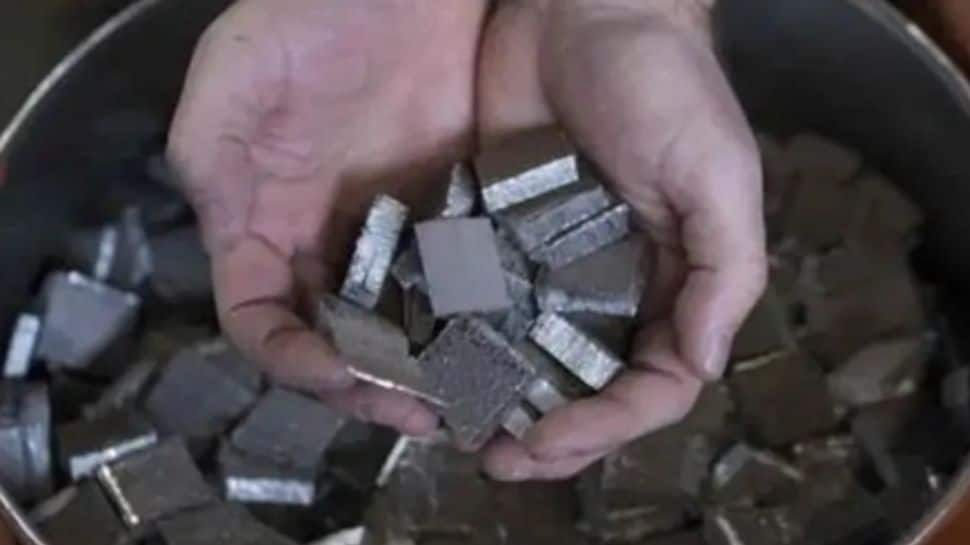
Rare earth magnets are used in major industries including electric vehicles, aerospace, electronics, medical devices and defence.
Duration Of The Rare Earth Magnet Manufacturing Scheme
The total duration of the scheme will be 7 years from the date of award, including a 2-year gestation period for setting up an integrated Rare Earth Permanent Magnets (REPM) manufacturing facility, and 5 years for incentive disbursement on the sale of REPM.
The scheme envisions allocating the total capacity to five beneficiaries through a global competitive bidding process. Each beneficiary will be allotted up to 1,200 MTPA of capacity.
REPMs Critical Material For Various Industries
“REPMs are one of the strongest types of permanent magnets and are vital for electric vehicles, renewable energy, electronics, aerospace, and defence applications. The Scheme will support the creation of integrated REPM manufacturing facilities,  involving conversion of rare earth oxides to metals, metals to alloys, and alloys to finished REPMs,” the Ministry of Heavy Industries said in a statement.
India’s REPM Consumption To Double By 2030
Driven by the rapidly growing demand from electric vehicles, renewable energy, industrial applications, and consumer electronics, India’s consumption of REPMs is expected to double by 2030 from 2025.
Currently, India’s demand for REPMs is met primarily through imports. With this initiative, India will establish its first ever integrated REPM manufacturing facilities, generating employment, strengthening self-reliance and advancing the nation’s commitment to achieve Net Zero by 2070, according to the statement.
‘Landmark Step For Domestic REPM Manufacturing Ecosystem’
“This initiative by the Government of India is a landmark step towards strengthening the domestic REPM manufacturing ecosystem and enhancing competitiveness in the global markets. By fostering indigenous capabilities in REPM production, the scheme will not only secure the REPM supply chain for domestic industries but also support the nation’s Net Zero 2070 commitment,” the ministry said.
It embodies the governments unwavering commitment to build a technologically self-reliant, globally competitive, and sustainable industrial base, in line with the vision of Viksit Bharat @2047.

Haris is Deputy News Editor (Business) at news18.com. He writes on various issues related to personal finance, markets, economy and companies. Having over a decade of experience in financial journalism, Haris h…Read More
Haris is Deputy News Editor (Business) at news18.com. He writes on various issues related to personal finance, markets, economy and companies. Having over a decade of experience in financial journalism, Haris h… Read More
November 26, 2025, 16:32 IST
Read More



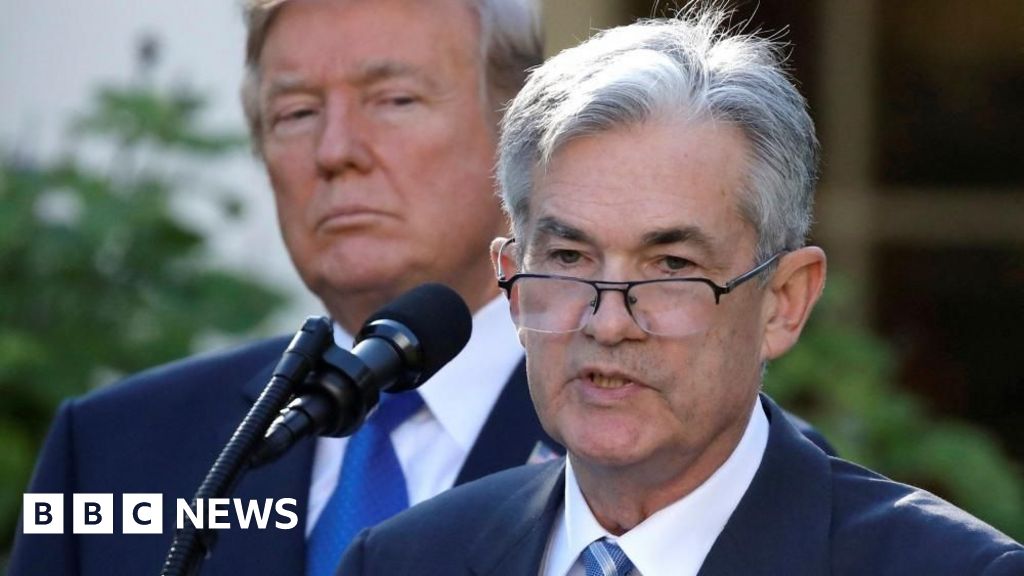
Powell’s term is nearing its end and the US Senate is considering Trump’s nominee for his replacement, Kevin Warsh. A key Republican, Thom Tillis, has withheld his support for Warsh unless the Trump administration would drop its investigation into Powell.
Business
Intel bags big gains! Chipmaker’s shares jump 26% on blockbuster results; how Trump admin benefits – The Times of India
Intel share price soared sharply on Friday after the chipmaker delivered a first-quarter performance that exceeded market expectations. And the win was not just for the chipmaker, but also the whole of US!The stock climbed 26.7% during trading on Friday, marking what could be its strongest single-day gain since 1987. Momentum continued after the closing bell, with shares rising a further 20% in after-hours trading as investors reacted to signs of a sustained turnaround driven by artificial intelligence.Intel reported revenue of $13.58 billion (€11.6bn) for the quarter, ahead of the $12.3 billion (€10.5 bn) forecast and up 7.2% from a year earlier. Adjusted earnings per share came in at $0.29, far exceeding expectations of $0.01.A key contributor to this performance was the company’s Data Centre and AI (DCAI) division, which delivered revenue of $5.05 billion (€4.2bn), up 22.4% year-on-year and well above analyst estimates of $4.41 billion (€3.77bn). The results indicate strong demand for Intel’s Xeon 6 processors and Gaudi 3 AI accelerators, particularly among enterprise clients and cloud service providers.Chief executive Lip-Bu Tan pointed to a broader shift in artificial intelligence usage as a major factor behind the growth. He said, “the next wave of AI will bring intelligence closer to the end user, moving from foundational models to inference to agentic.” He added, “This shift is significantly increasing the need for Intel’s CPUs and wafer and advanced packaging offerings.”The company also issued an upbeat outlook for the second quarter, forecasting revenue in the range of $13.8 billion (€11.8billion) to $14.8 billion (€12.6billion), surpassing investor expectations of $13 billion (€11.1billion).
But how is Washington winning?
The rally has had a direct impact on the US administration’s investment in Intel. In 2025, during a period of severe financial strain for the company, the administration of Donald Trump acquired a 9.9% stake in a move aimed at stabilising the business. The government invested $8.9 billion (€7.8bn) at a share price of $20.47 (€18.01), with $5.7 billion (€5bn) of that amount coming from previously approved but unpaid grants, according to the Euro News.At the time, Intel was facing multi-billion dollar losses and operational challenges, prompting concerns over its viability. As part of the intervention, the company cancelled planned factory projects in Germany and Poland, redirected focus towards US-based manufacturing, and reduced its global workforce by 25%, cutting around 25,000 jobs.Following the latest jump, Intel’s shares are now trading at $81.3 (€71.5), representing an increase of nearly 300% since the government first took its stake. The sharp rise highlights how the company’s improved financial performance has translated into substantial gains for the US administration.

Statistics Jersey says there have been “sharp increases” in some energy prices.
Source link


Charlie Sheen updates on relationship with old pal Jon Cryer

Iranian FM Abbas Araghchi lands in Pakistan ahead of renewed US talks

Mom’s Microwaved Coffee Won’t Stand a Chance With This Ember Smart Mug Deal

-

 Fashion1 week ago
France’s LVMH Q1 revenue falls 6%, shows resilience amid Iran war
-

 Tech1 week ago
CYBERUK ’26: UK lagging on legal protections for cyber pros | Computer Weekly
-

 Sports5 days ago
WWE WrestleMania 42 Night 2: Live match results and analysis
-

 Sports1 week ago
Faheem Ashraf backs Islamabad United’s push, calls league a ‘career-changing platform’
-

 Sports5 days ago
NCAA men’s gymnastics championship: All-time winners list
-
 Business1 week ago
PepsiCo earnings beat estimates as North American food business improves
-

 Tech1 week ago
Anthropic Plots Major London Expansion
-
 Business1 week ago
Oil prices fall again amid Middle East ceasefire hopes