

Fashion
CAI ups India’s 2024-25 cotton output estimate to 312.40 lakh bales

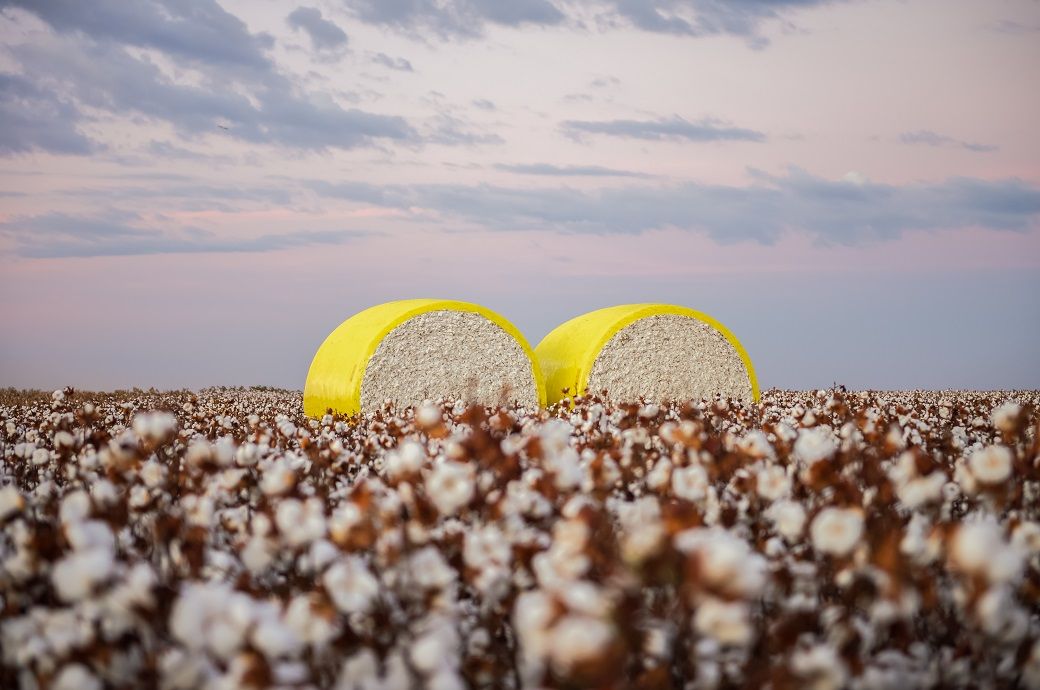
According to CAI, the total cotton supply till the end of August 2025 is estimated at 383.03 lakh bales. This includes pressings of 307.09 lakh bales, imports of 36.75 lakh bales, and an opening stock of 39.19 lakh bales at the beginning of the season.
CAI has raised its 2024–25 cotton production estimate to 312.40 lakh bales of 170 kg each, up from 311.40 lakh bales earlier.
Total supply for the season is pegged at 392.59 lakh bales, with higher imports at 41 lakh bales.
Domestic consumption remains at 314 lakh bales, while exports are unchanged at 18 lakh bales, significantly lower than last season’s 28.36 lakh bales.
CAI has estimated cotton consumption up to the end of August 2025 at 286 lakh bales, while export shipments for the same period are pegged at 17 lakh bales. The ending stock at the end of August 2025 is projected at 80.03 lakh bales, comprising 35 lakh bales with textile mills and the remaining 45.03 lakh bales held by CCI, Maharashtra Federation, and others (MNCs, traders, ginners, exporters, etc), including cotton sold but not yet delivered.
For the entire 2024–25 cotton season (up to September 30, 2025), CAI has estimated total cotton supply at 392.59 lakh bales, up from the previous estimate of 389.59 lakh bales. This comprises the opening stock of 39.19 lakh bales, pressing of 312.40 lakh bales, and imports estimated at 41 lakh bales—significantly higher than the 15.20 lakh bales imported in the 2023–24 season.
However, CAI has maintained its estimate of domestic consumption at 314 lakh bales. Exports for the 2024–25 season are also unchanged at 18 lakh bales, compared with 28.36 lakh bales recorded in the 2023–24 season.
Fibre2Fashion News Desk (KUL)




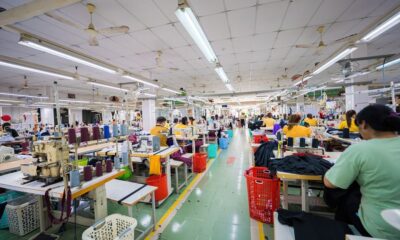








Current account excluding gold and energy indicated net deficit of $3.9 billion, while goods saw a deficit of $9.5 billion.
Turkiye recorded a current account deficit (CAD) of $9.6 billion in March, the country’s central bank said.
Treasury and Finance Minister Mehmet Simsek said the CAD is expected to widen this year, due to high energy and non-energy commodity prices.
Simsek said the deterioration is likely to remain temporary and manageable, thanks to stronger macroeconomic fundamentals and policy gains.
According to annualised data, current account deficit recorded as $39.7 billion (2.6 per cent of gross domestic product) in March, while the goods deficit recorded as $77.8 billion.
Simsek said the deterioration is likely to remain temporary and manageable thanks to stronger macroeconomic fundamentals and policy gains, domestic media outlets reported.
Turkiye is heavily reliant on imported energy, whose prices spiralled due to the Middle East conflict.
Simsek said elevated global commodity prices would put pressure on the external balance, but emphasised that the government’s economic programme had improved resilience against such shocks.
He said foreign direct investment (FDI) inflows totalled $1 billion in March, bringing annualised foreign direct investment to $12.6 billion.
The new investment incentive package under discussion in parliament now is expected to strengthen the country’s financing structure and support long-term capital inflows, he added.
Fibre2Fashion News Desk (DS)

During the first quarter of ****, the UK’s imports of textile fabrics eased down *.** to £*,*** million (~$*,*** million), against £*,*** million in January-March **** but slightly higher from £*,*** million in the fourth quarter of ****. Its imports of fibre were noted at £** million (~$***.** million) steady as £** million in Q*, **** but slightly lower than £** million in Q*, ****.
During the third month of this year, the country’s clothing imports declined *.** per cent to £*.*** billion (~$*.*** billion), compared with £*.*** billion in March ****. But the inbound shipment was slightly higher month on month compared with £*.*** billion in February ****.

Higher rents, utility bills and fuel prices are eating away at already thin profit margins, it found.
High inflation is cutting deep into Bangladesh consumer spending, with weak demand turning one of the biggest concerns for businesses, DCCI said.
Higher rents, utility bills and fuel prices are eating away at already thin profit margins.
DCCI’s economic position index revealed that consumers have sharply reduced spending as the cost of living continues to rise.
SMEs are feeling the pressure the most.
The chamber’s economic position index (EPI) revealed that consumers have sharply reduced spending as the cost of living continues to rise, putting pressure on retailers, transport operators and other service providers.
Small and medium enterprises (SMEs) are feeling the pressure the most as they struggle to manage higher operating costs without losing customers.
Businesses also cited difficulties in obtaining bank loans, while delays in licensing and other regulatory procedures are adding to costs.
The DCCI report identified a shortage of skilled workers, particularly in technical and customer service roles, as another challenge for the sector.
The country’s inflation rose to 9.04 per cent in April from 8.71 per cent in March, according to official statistics.
Fibre2Fashion News Desk (DS)


San Diego Islamic Centre shooting leaves five dead, police say threat ‘neutralised’

CDC says American tests positive for Ebola in Africa, risk in the U.S. remains low

New subscribers to pay more starting May 20

-

 Entertainment6 days ago
Conan O’Brien hat tricks as Oscar host
-

 Tech1 week ago
Could Contact-Tracing Apps Help With the Hantavirus? Not Really
-

 Fashion5 days ago
Italy’s Zegna Group’s Q1 growth boosted by strong organic performance
-

 Entertainment1 week ago
Martin Short: Facing tragedy with joy
-

 Entertainment1 week ago
Tom Brady gets back at Kevin Hart during Netflix roast
-

 Sports1 week ago
Jacob Fatu unleashes vicious assault on Roman Reigns after World Heavyweight Championship loss at WWE Backlash
-

 Entertainment1 week ago
Martha Stewart: How to make an omelet
-

 Tech1 week ago
Papa Johns Is Getting Into Drone Delivery—but Not for Pizza