

Politics
Canada’s Carney says he apologised to Trump over Reagan ad

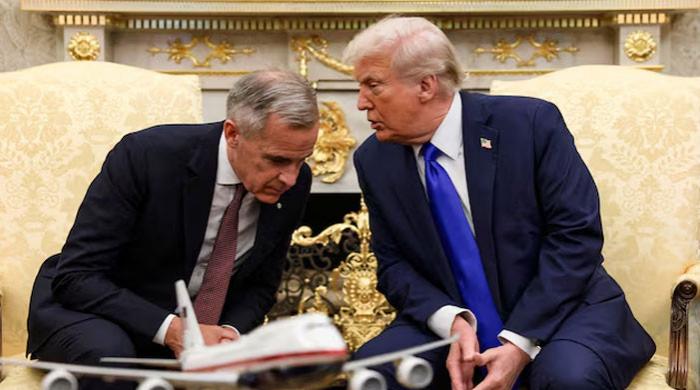
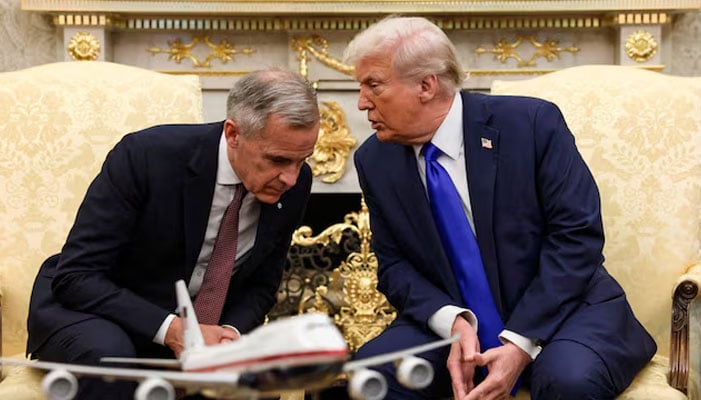
- Ontario aired anti-tariff ad featuring Ronald Reagan.
- Trump announced to increase tariffs in response.
- Carney says he did not want to proceed with the ad.
Canadian Prime Minister Mark Carney said on Saturday he had apologised to US President Donald Trump over an anti-tariff political advertisement and had told Ontario Premier Doug Ford not to run it.
Carney, speaking to reporters after attending an Asia-Pacific summit in South Korea, said he had made the apology privately to Trump when they both attended a dinner hosted by South Korea’s president on Wednesday.
“I did apologise to the president,” Carney said, confirming comments by Trump made on Friday.
Carney also confirmed that he had reviewed the ad with Ford before it aired, but said he had opposed using it.
“I told Ford I did not want to go forward with the ad,” he said.
The ad, commissioned by Ford, an outspoken Conservative politician who is sometimes compared to Trump, uses a snippet of Republican icon and former President Ronald Reagan saying that tariffs cause trade wars and economic disaster.
In response, Trump announced that he was increasing tariffs on goods from Canada, and Washington has also halted trade talks with Canada.
When departing South Korea earlier this week, Trump remarked he had a “very nice” conversation with Carney at that dinner, but did not elaborate. On Friday, Trump still said the United States and Canada will not restart trade talks but Canadian Prime Minister Mark Carney apologised to him for an Ontario political ad using former President Ronald Reagan saying tariffs spell disaster.
“I like him a lot, but what they did was wrong,” the US president said. “He apologised for what they did with the commercial because it was a false commercial.”
Meanwhile, Carney said his talks with Chinese President Xi Jinping on Friday were a turning point in relations after years of tensions.
The last formal meeting between the leaders of Canada and China happened in 2017 when then-Prime Minister Justin Trudeau had a brief exchange with Xi at a meeting in San Francisco.
The trip to Asia had been part of efforts to reduce Canada’s reliance on the United States, Carney said.
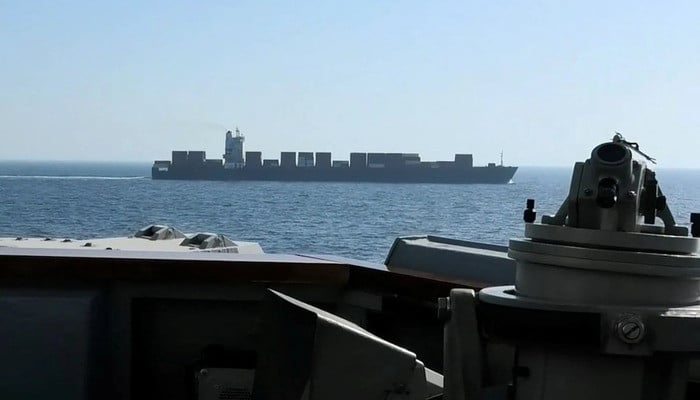
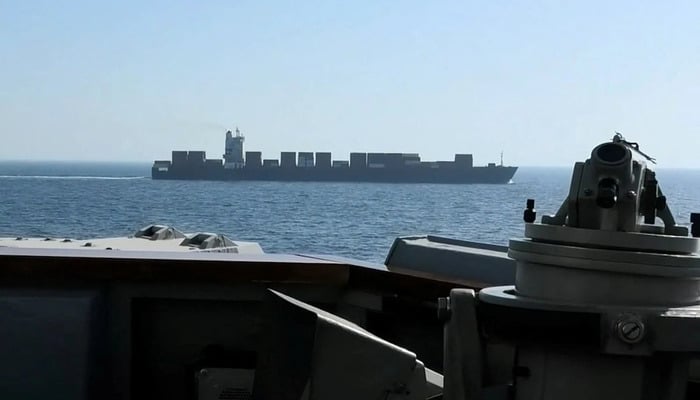
- Iran says it will respond to “armed piracy”.
- IRNA says Iran rejects talks, citing US blockade.
- Islamabad prepares for second round of negotiations.
Concerns grew on Monday that the ceasefire between the United States and Iran might not hold after the US said it had seized an Iranian cargo ship that tried to run its blockade and Iran vowed to retaliate.
Efforts to build a more lasting peace in the region likewise appeared to be on shaky ground, as Iran said it would not participate in a second round of negotiations that the US had hoped to kick off before the ceasefire expires on Tuesday.
The US has maintained a blockade of Iranian ports, while Iran has lifted and then reimposed its own blockade on marine traffic passing through the Strait of Hormuz, which typically handles roughly one-fifth of the world’s oil supply.
The US military said Sunday it fired on an Iranian-flagged cargo ship as the vessel sailed toward Iran’s Bandar Abbas port. “We have full custody of their ship, and are seeing what’s on board!” President Trump wrote on social media.
Iran’s military said the ship had been travelling from China. “We warn that the armed forces of the Islamic Republic of Iran will soon respond and retaliate against this armed piracy by the US military,” a military spokesperson said, according to state media.
Oil prices jumped and stock markets wobbled, as traders pondered the prospect that traffic in and out of the Gulf would remain at a bare minimum.
Iran rejects peace talks
Iranian state media reported that Tehran had rejected new peace talks, citing the ongoing blockade, threatening rhetoric, and Washington’s shifting positions and “excessive demands.”
“One cannot restrict Iran’s oil exports while expecting free security for others,” Iran’s First Vice President Mohammadreza Aref wrote on social media. “The choice is clear: either a free oil market for all, or the risk of significant costs for everyone.”
Trump earlier warned Iran that the US would destroy every bridge and power plant in Iran if Tehran rejected his terms, continuing a recent pattern of such threats.
Iran has said that if the United States were to attack its civilian infrastructure, it would hit power stations and desalination plants of Gulf Arab neighbours.
Preparing for talks that might not happen
Trump said his envoys would arrive in Islamabad on Monday evening, one day before a two-week ceasefire ends.
A White House official told Reuters the US delegation would be headed by Vice President JD Vance, who led the war’s first peace talks a week ago, and also include Trump’s envoy Steve Witkoff and son-in-law Jared Kushner. But Trump told ABC News and MS Now that Vance would not go.
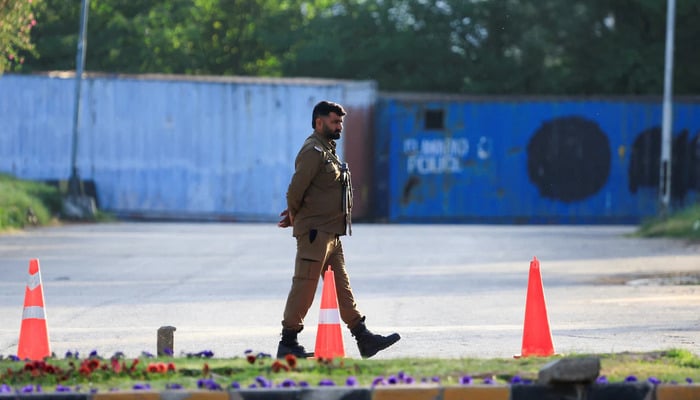
Pakistan, which has served as the main mediator, appeared to be preparing for the talks. Two giant US C-17 cargo planes landed at an air base on Sunday afternoon, carrying security equipment and vehicles in preparation for the US delegation’s arrival, two Pakistani security sources said.
Municipal authorities in the Pakistani capital of Islamabad halted public transport and heavy-goods traffic through the city. Barbed wire was rolled out near the Serena Hotel, where last week’s talks were held. The hotel told all guests to leave.
Now in its eighth week, the war has created the most severe shock to global energy supplies in history, sending oil prices surging because of the de facto closure of the strait.
Thousands of people have been killed by US-Israeli strikes on Iran and in an Israeli invasion of Lebanon conducted in parallel since the war began on February 28. Iran responded to the attacks with missiles and drones against Israeli and nearby Arab countries that host US bases.
Iran’s parliament speaker, Mohammad Baqer Qalibaf, who has led Iran’s side in the talks, had earlier said the two sides had made progress but were still far apart on nuclear issues and the Strait.
European allies, repeatedly criticised by Trump for not aiding his war effort, worry that Washington’s negotiating team is pushing for a swift, superficial deal that would require months or years of technically complex follow‑on talks.
- Suspected gunman shot dead by police after car chase.
- Shooting appears to incident of domestic violence: police.
- Official says crime scene spanning between two residences.
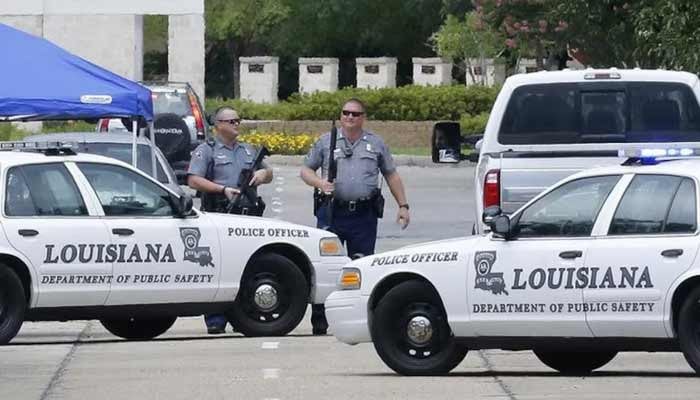
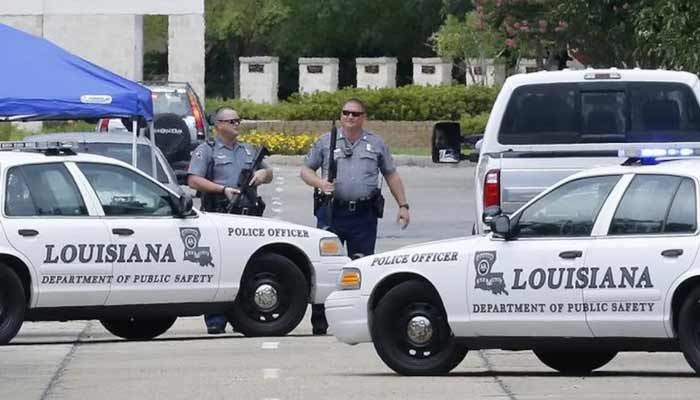
Eight children were killed in a shooting spree early Sunday in the southern US state of Louisiana, in what police said appears to have been an incident of domestic violence.
The gunman, who was not immediately identified, was fatally shot by police after a car chase, officials said.
The incident took place in the city of Shreveport, in northwestern Louisiana.
“This is a rather extensive crime scene spanning between two residences,” police Corporal Chris Bordelon told a press conference, adding that a third residence was also part of the scene being combed by investigators.
The victims ranged in age from one to 14, Bordelon said.
“Some of the children inside were his descendants,” he added.
Two other people were struck by gunfire, but their conditions were not immediately known.
The suspect carjacked a vehicle and led police on a chase before officers opened fire and the assailant was killed.
“We do believe him to be the only individual that fired gunshots at these locations,” Bordelon said, calling the incident a “domestic disturbance.”
The United States, where firearms are readily available, is a frequent scene of gun violence, with thousands of people killed every year.
“It’s a terrible morning in Shreveport and we all mourn with the victims,” Mayor Tom Arceneaux said at the press conference.
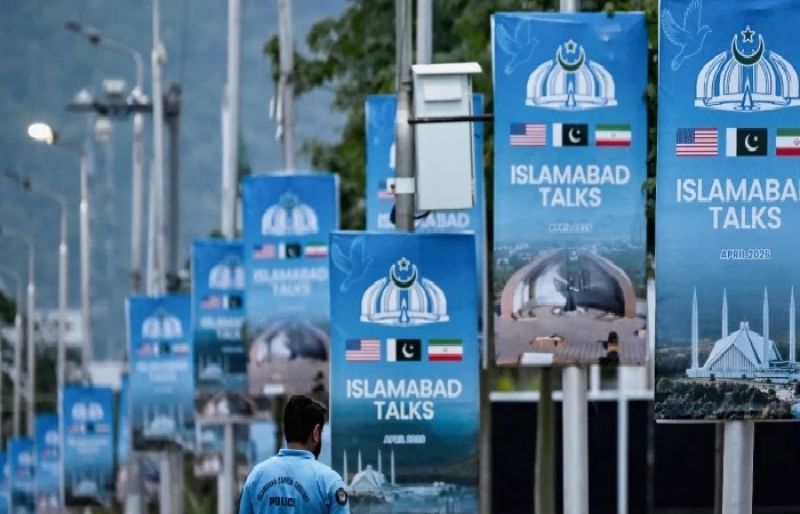
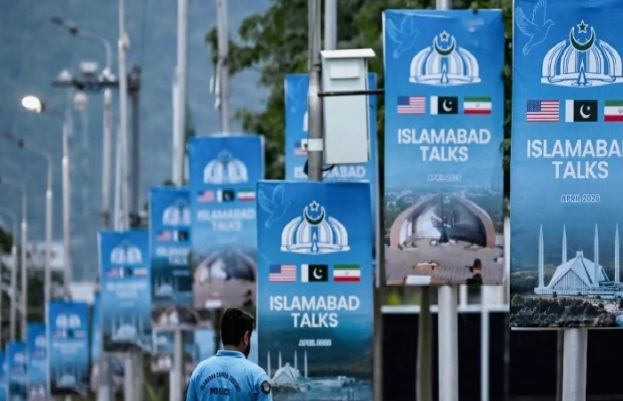
An advance team from the United States has arrived in Islamabad as Pakistan prepares to host the second round of talks between the Washington and Iran, sources said on Sunday.
Advance teams from foreign delegations have begun arriving in the country ahead of the much-anticipated talks, sources said.
Authorities in Islamabad and Rawalpindi heightened security in the federal capital, sealing off the Red Zone to traffic as Pakistan prepares to host visiting foreign delegations.
The measures follow reports about the second round of talks between delegations from the United States and Iran, reportedly scheduled next week.
In a statement, Islamabad police said that the Red Zone and Extended Red Zone will remain completely closed for all kinds of traffic until further notice due to the arrival of foreign delegations.
They advised citizens to use alternate routes and cooperate with traffic police to ensure smooth flow and security.
Further, the district administrations of Islamabad and Rawalpindi announced an immediate suspension of public and goods transport in the twin cities.
The Islamabad deputy commissioner suspended heavy transport and public transport services until further notice, without citing any reason.
“Heavy transport and public transport in the city are being suspended until further orders. Citizens are earnestly requested to cooperate with the security agencies,” the Islamabad DC posted on X.
Similarly, all private, public, and goods transport has been suspended with immediate effect in Rawalpindi. The official confirmed that further updates will be issued later.
“All private, public and goods transport in Rawalpindi is hereby suspended with immediate effect. Further updates will be shared,” the Rawalpindi DC said in his X post.
Security measures
A day earlier, the Rawalpindi police were put on high alert on the directives of City Police Officer (CPO) Syed Khalid Mahmood Hamdani.
“Rawalpindi Police have placed the city on high security alert and implemented extraordinary arrangements to ensure foolproof security in view of the movement of foreign delegations,” state-run news agency, APP, reported.
More than 10,000 police officers and personnel were deployed across the city to perform security duties, while over 600 special pickets were established with strict monitoring of all entry and exit points being done.
Special teams of Elite Commandos and trained snipers had been assigned security responsibilities, while the Elite Force, Dolphin Force, police station mobiles, and other quick response units conducted patrolling throughout the city.
Search, sweep, combing, and intelligence-based operations had also been intensified, with close monitoring and checking of suspicious individuals continuing across Rawalpindi.
Security around sensitive installations, key public and private locations and residential places of importance has been further tightened, while Safe City surveillance, CCTV cameras and modern monitoring systems are being used for round-the-clock observation.
Authorities in the twin cities had announced a two-day holiday on April 10 and 11, as Pakistan hosted the high-stakes talks between the US and Iran.
Prime Minister Shehbaz Sharif invited delegations from Washington and Tehran for peace talks after brokering a two-week ceasefire between the two sides on April 8.
The Middle East conflict began on February 28, following joint strikes by the US and Israel against. The scope of the conflict quickly spread as Tehran effectively blocked the Strait of Hormuz and launched retaliatory attacks against Israel and US bases across the Gulf region.
After agreeing to the PM Shehbaz-facilitated ceasefire, the two sides held negotiations in Islamabad on a wide range of disputes. However, the talks could result in an agreement for a permanent end to the conflict.
However, Pakistan continued its marathon efforts to help resolve longstanding disputes between the two sides, including COAS-CDF Field Marshal Asim Munir’s visit to Tehran, where he met Iran’s top political and military leadership.
A day after CDF Munir’s visit, Iran declared the Strait of Hormuz open, citing the agreement of a ceasefire between Israel and Lebanon.
However, the country blocked the waterway again, citing Washington’s naval blockade of Iranian ports as the reason.
Despite lingering issues, Iranian Parliament Speaker Mohammad Bagher Ghalibaf said talks with Washington have seen “progress,” but “many gaps and some fundamental points remain.”
“We are still far from the final discussion,” said Ghalibaf in a televised address earlier today.
US President Donald Trump has also said that “very good conversations” were going on with Iran, but warned Tehran against trying to “blackmail” Washington.


2026 NBA playoffs: Western Conference first-round takeaways

UK’s Sosandar returns to profitability amid robust FY26 performance

VAR review: Should Arsenal’s Gabriel have been sent off for headbutt?

-

 Fashion4 days ago
France’s LVMH Q1 revenue falls 6%, shows resilience amid Iran war
-

 Sports7 days ago
The case for Man United’s Fernandes as Premier League’s best
-

 Entertainment1 week ago
Palace left in shock as Prince William cancels grand ceremony
-
 Business7 days ago
UK could adopt EU single market rules under new legislation
-

 Entertainment1 week ago
Dua Lipa hits major career high ahead of wedding with Callum Turner
-

 Sports1 week ago
Lamar Jackson hits back at critics with faithful message on social media
-

 Entertainment5 days ago
Is Claude down? Here’s why users are seeing errors
-

 Fashion7 days ago
Energy emerges as biggest cost driver in textile margins