

Entertainment
Capitalism reborn – again

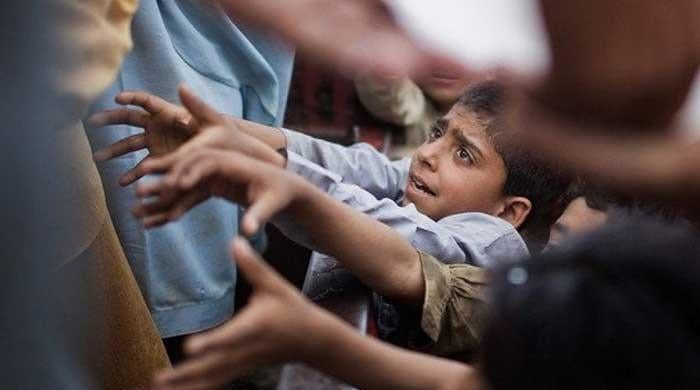
“An Unequal Future: Asia’s Battle for Life and Power”, Oxfam’s recent release reveals an entire continent in the grip of unprecedented inequality — with Pakistan at its epicentre.
The economic and political model of the country, and therefore also its response to climate change, is constructed in such a way as to make a few spectacularly rich at the top while keeping the rest in poverty, informal work and dependence.
The wealthiest 10% of South Asians own approximately 77% of income and wealth, whereas the bottom half live on a meagre amount of 12–15%. This is the Pakistan of today, in which the old-established nobility has been replaced by political dynasties, an army combine and corporate barons.
More than 80% of the workforce works in what is known as the informal economy — without contracts, without protection. The poor are massively taxed by inflation through skyrocketing prices of food and fuel, but the rich have immunity, concessions and an untouchable agricultural tax shield. The tax-to-GDP ratio is under 10%, among the lowest in Asia, and inequality is built into the system.
The hidden constitution of Pakistan is its foreign debt. By 2022, debt owed to Asian developing nations reached an estimated $443 billion, of which Pakistan’s share has led to brutal cuts in health, education, and social protection. More than 42% of Pakistanis today fall below the poverty line, and every IMF-imposed “reform” plunges millions more into suffering.
Debt servicing outstrips what is spent on schools and hospitals, mortgaging the future of the nation to creditors and local elites. Austerity, in reality, is a war against the poor.
The climate crisis is amplifying this injustice. The floods of 1998 and this year submerged the lives of 33 million Pakistanis, but assistance afterwards largely materialised in the form of fresh loans. According to Oxfam, low-income countries such as Pakistan currently spend about twice their entire allocation for climate finance on debt service. The wealthy pollute and the destitute drown.
The richest 1% of people in South Asia produce 17 times more carbon than the poorest half. In Pakistan’s fortified suburbs, energy-guzzling mansions and fleets of SUVs are the symbols of climate apartheid: Those most responsible for global warming pay more to get away scot-free; farmers lose their land while women walk farther for water; families in mountain villages liquefy as glaciers melt into rivers now too wet or too dry.
Inequality also extends to technology. In Asia, 83% of people living in urban areas are online; the figure is 49% for those residing in rural settings and Pakistan does worse. The internet is still available only in cities and select privileged schools, while slow speeds and high data prices continue to exclude millions.
The 2023 internet blackout alone cost $17 million, ruining livelihoods for freelancers and small traders. For the poor, disconnection is exclusion from education, jobs and even state welfare systems, now digitised but inaccessible.
Women are also the heaviest “price” that this order has been able to exploit.
They do as much as four times more unpaid care work than men and are 41% less likely to use mobile internet. Oxfam calculates that full female participation in the labour force could boost Asia’s gross domestic product by $4.5 trillion a year, yet patriarchy in Pakistan keeps women landless, voiceless and disposable. When the pain of an economic or climate shock needs absorbing, it is women — particularly in Sindh and Balochistan — who take up that burden.
The report warns that rising inequality is undermining democracy throughout Asia. In Pakistan, plutocracy reigns. Billionaires are served by politicians, business empires are run by uniforms and spoils are brokered by bureaucrats. Every regime, whether civilian or military, defends the same class interests. “Stability” and “investment confidence” always refer to maintaining elite control while the working poor are deprived of welfare and rights.
Elections change faces, not fortunes. Surveillance spreads as civic space closes. Even education and access to the internet have become privileges —conditional on submission.
The way forward for Oxfam should be obvious: progressive taxation, universal health and education and social protection schemes for informal workers. A 60% tax on the top 1% and a 2–5% annual wealth tax could pay for needed services and climate adaptation. But Pakistan’s ruling class would not stand for redistribution that cuts into their privileges.
A skyline of luxury towers has sprouted alongside thirsty neighbourhoods, and hundreds of thousands of bonded peasants in Sindh still toil for landlords fluent now in the language of “green growth”. This is modern slavery.
Pakistan’s misfortune isn’t scarcity but theft. Its forests, rivers and workers provide for the state but don’t have a voice at the table. If privilege is not disrupted, and public systems are not rebuilt, the nation will continue to be an economy of masters in designer suits served by slaves in rags.
Yet hope endures. Valuing education, healthcare and connectivity as public rights could begin to reverse the downward spiral. Climate justice begins at home: Stop pollution for profit and direct resources toward those rebuilding from ruin. The question is simple but determining: will Pakistan continue as a citadel of privilege or become a republic of equals?
The writer is an expert on climate change and sustainable development and the founder of the Clifton Urban Forest. He posts @masoodlohar and can be reached at: [email protected]
Disclaimer: The viewpoints expressed in this piece are the writer’s own and don’t necessarily reflect Geo.tv’s editorial policy.
Originally published in The News
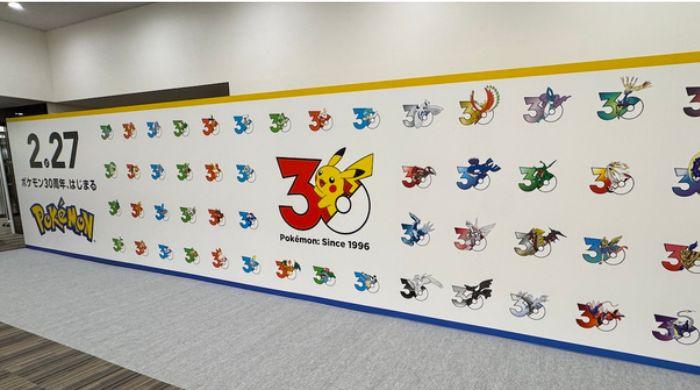
The Pokémon Company gave major surprises to fans on Friday, January 27, during the Pokémon Presents livestream, marking the franchise’s 30th anniversary.
The company unveiled mainline games, mobile apps, merchandise and much more.
Pokémon Winds and Waves headline 2027 lineup
Winds and Pokémon Waves, arriving in 2027 exclusively for Nintendo Switch 2.
Game Freak enabled fans to have a look at the tropical archipelago settings that feature roaming Tropius, volcanic landscapes with Slugma, and a massive Wailord breaching offshore.
The company announced three new starter Pokémon:
- Browt: Grass type “Bean Chick” Pokémon
- Pombon: Fire type “Puppy Pokémon” inspired by Pomeranians
- Gecqua: Water type “Water Gecko Pokémon”
The teaser also showed a mysterious pair of costumed Pikachu often called “Mr. Windychu and Mrs. Wavychu” by fans. This highlights that users can now enjoy customisation options.
Pokémon Champions release window announced
The company confirmed that the competitive battle of Pokémon Champions will launch in April on Nintendo Switch, while mobile versions will be ready to play “later this year.”
Game Boy Jukebox and Classic Titles
Game Boy Jukebox, a miniature Game Boy device, also made its comeback. The device is pre-loaded with 45 chiptune tracks from Pokémon Red and Blue.
Fans can buy collectables at Pokémon stores in the U.S., U.K., and Canada.
Moreover, in March 2005, “Pokémon XD: Gale of Darkness” arrived on GameCube Nintendo while “Fire Red” and “Leaf Green” joined Nintendo Switch Online.
Mobile and TCG updates
- Pokémon Go hosts “All Out” 30th anniversary event scheduled for March 7-9
- Pokémon TCG gets first-ever simultaneous global expansion launch
- Mew arrives in Pokémon Sleep
- Anniversary sync pairs debut in Pokémon Masters EX
- “Legends: Z-A” adds Maga Garchomp Z
With these updates, Pokémon’s 30th anniversary marks the most ambitious event of the franchise yet.
Regalo Press
We may receive an affiliate commission from anything you buy from this article.
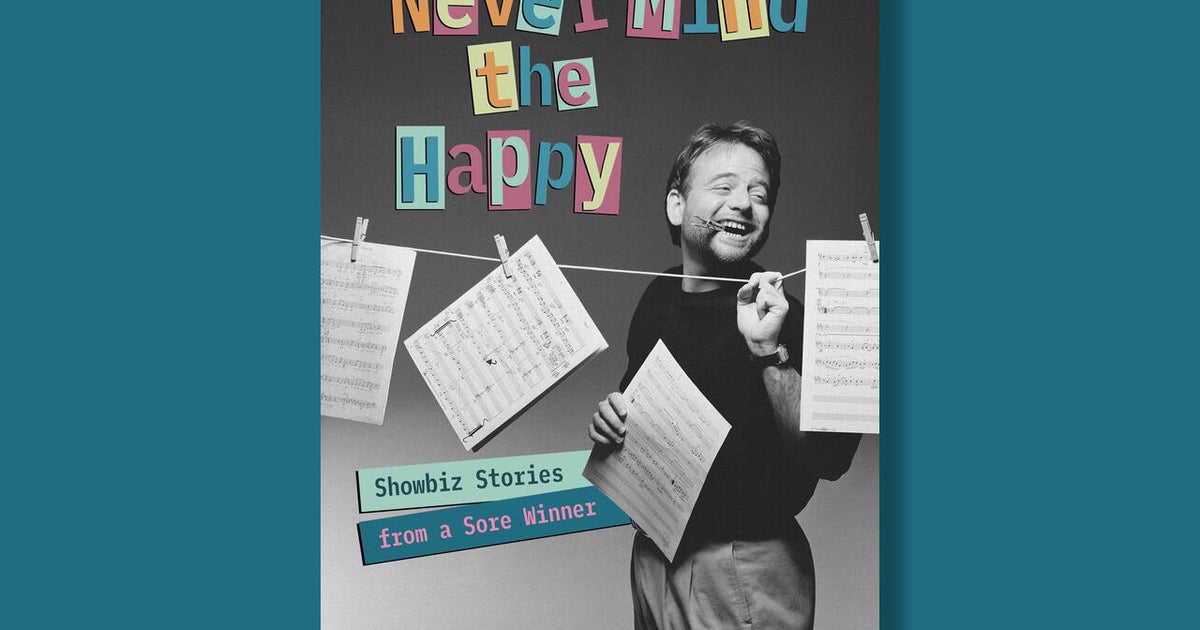
In his memoir, “Never Mind the Happy: Showbiz Stories from a Sore Winner” (published by Regalo Press), Tony- and Emmy-winning composer Marc Shaiman, known for Broadway hits like “Hairspray,” and music for “South Park: Bigger, Longer and Uncut,” writes of his half-century in show business.
Read the prologue below, in which he recounts preparing to perform on the Oscar stage with the idol of his youth, Bette Midler (an adoration that would grow into a collaboration), and don’t miss Tracy Smith’s interview with Marc Shaiman on “CBS Sunday Morning” March 1!
“Never Mind the Happy” by Marc Shaiman
Prefer to listen? Audible has a 30-day free trial available right now.
Prologue
It’s February 24, 2019, and I am on stage with Bette Midler at the Dolby Theatre in Los Angeles, moments away from performing at the 91st Annual Academy Awards. On the other side of the closed curtain are 3,400 of the most powerful and successful players in Hollywood—plus another thirty million people tuning into the television coverage worldwide. One such player in the auditorium is Scott Wittman, my lyrical collaborator of almost fifty years, with whom I co-wrote the Oscar-nominated song “The Place Where Lost Things Go”—the very song Bette and I are about to perform. It has only been two months since Disney released Mary Poppins Returns—which has garnered my sixth and seventh Oscar nominations— and even though I am calm as I sit at the keyboard of the polished black grand piano, I am also conscious of what a fight it has been to get here.
A few weeks earlier, on the morning the Oscar nominations were announced, my husband, Lou Mirabal, and I sat on the couch in our Manhattan loft, our golden retriever, Chops, no doubt wondering why we were glued to the television at 8:30 a.m. instead of making her breakfast. A similar scene was playing out with Scott and his partner, Brian, at their apartment just six blocks to the south. Mary Poppins Returns had been a hit film, if not the billion-dollar blowout the studio had hoped it would be. Scott and I were very proud of the songs we wrote for the sequel to Disney’s classic about a magical British nanny, but they had inevitably been compared to the unforgettable music from the original—so we didn’t know if we should get our hopes up on the morning of the nominations.
Luckily, Oscar smiled and we were nominated for our song “The Place Where Lost Things Go,” and I was also nominated for Best Score. We were all excited and relieved, perhaps nobody more than Lou, because he was the one who would have had to mop me off the floor if things had turned out differently.
I always say, though, that if showbiz puts you on a pedestal on Tuesday, it’s only to have a better shot at your balls on Thursday. And right on schedule, after two days of elation, the producers of that year’s Oscars telecast announced that of the five nominated songs, only two—one a duet by Lady Gaga and Bradley Cooper from A Star Is Born, the other by Kendrick Lamar and SZA from Black Panther—would be performed. Clearly, they wanted star power to boost the broadcast’s ratings and, by cutting three songs, perhaps also trim a few minutes from its running time. But to say the remaining songs were not worthy of inclusion sent a message both to the public—and worse, to the Oscar voters, who had yet to cast their ballots—that they were not considered equal. It really was a low blow.
What those Oscars producers didn’t anticipate, however, was just how much a dog with a bone I can be. First, I put together an appeal from the writers of the three orphaned songs (including my dear and foul-mouthed friend Diane Warren)—but that led to a dead end. Then, I went to Alan Horn, who was chairman of Walt Disney Studios at the time and who I knew from his years as Rob Reiner’s producing partner. Since Disney owns ABC, the television network that broadcasts the Oscars, I thought he would be able to pull some strings—but he gruffly said, “The ship has sailed, there’s nothing I can do.” Well, maybe there was nothing he could do, but I was not going to give up.
I had met Bradley Cooper a few times due to our shared friendship with the great actor Victor Garber. Bradley had been to the home I then shared with Scott, my romantic partner for nearly thirty years, when he and Victor were filming the TV show Alias, and he had always been very friendly whenever I ran into him at other showbiz functions. I had also just recently become pals with Kevin Feige, Supreme Intelligence of the Marvel Cinematic Universe. In fact, it was at an Academy event just a few weeks earlier (where we had all been schmoozing for nominations) when someone tapped me on my shoulder and said, “Kevin Feige would like to meet you.”
“Kevin Feige would like to meet me?” I queried. I was in shock and couldn’t believe, of all nights, that my Marvel-nerd husband wasn’t with me. It turned out Kevin, who you would think is busy enough, also has time to be a serious film-score fanatic. And after enjoying a few minutes of him praising my work, I asked if we could take a selfie together so I could send it to Lou.
Not only are Bradley and Kevin two of the nicest guys in Hollywood, at that moment, being friendly with them was uniquely useful. After all, Bradley produced A Star Is Born and Kevin produced Black Panther—the two films whose Oscar-nominated songs had been anointed by the Academy to be performed. So, I reached out to them both to explain the situation, which they agreed was unfair, and each offered to do what they could to help.
I’m not privy to what happened next, but those two gentlemen clearly have their own superpowers, because only a day or so later, it was announced that all five songs would be performed. Thank you, Bradley, and thank you, Kevin—if you ever need a favor from someone less powerful, let me know.
And so, I made it onto the Oscars stage that year after all. Moments before our performance, through the curtain, I could hear the orchestra play a snatch of our movie theme, and then the crowd respond as Keegan-Michael Key was lowered from the ceiling of the Dolby Theatre clutching a Mary Poppins–style black umbrella.
“This evening’s next nominee for best original song was written by Marc Shaiman and Scott Wittman for the film Mary Poppins Returns,” he said. “In addition to lifting the Banks children’s spirits through a series of magical adventures, Mary Poppins offers comfort and compassion with this tender lullaby, underscoring the notion that a loved one who is lost can still be very much present. Performing ‘The Place Where Lost Things Go’ with Marc Shaiman on piano, please welcome the Divine Miss M.”
(Both Bette and I thought—but of course did not have time to discuss in the moment—What, he couldn’t say her name?)
Then the curtain lifted, Bette stepped into the spotlight as twenty-eight red umbrella lanterns descended against a stage backdrop of London’s foggy skyline, and I started accompanying my favorite performer in the world—on a song I had co-written with my cherished collaborator—from a musical about my most beloved literary character—at the Academy Awards.
How did I get there? Well, as an old-school piano player might say, it went a little something like this…
From “Never Mind the Happy: Showbiz Stories from a Sore Winner” by Marc Shaiman. © 2026 by Marc Shaiman. Reprinted with permission from Regalo Press. All Rights Reserved.
Get the book here:
“Never Mind the Happy” by Marc Shaiman
Buy locally from Bookshop.org
For more info:
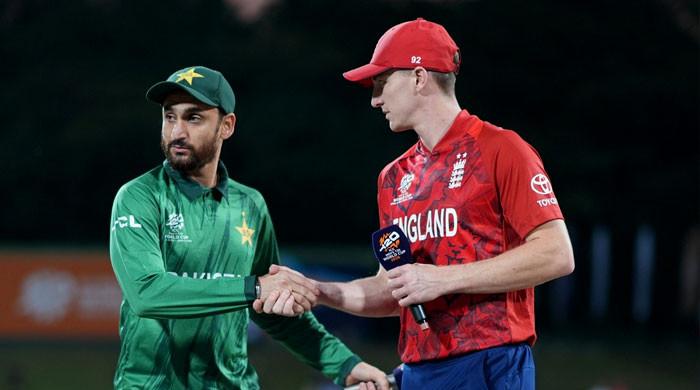
Two-time champions England secured a hard-fought four-wicket win over New Zealand in a crucial Super Eights clash of the ICC Men’s T20 World Cup 2026 at the R Premadasa Stadium on Friday.
New Zealand captain Mitchell Santner’s decision to bat first backfired as they could muster 159/7 in their allotted 20 overs against a spin-heavy England bowling attack.
Middle-order batter Glenn Phillips remained the top-scorer for New Zealand with a 28-ball 39, followed by openers Tim Seifert and Finn Allen, who made 35 and 29, respectively.
For England, Will Jacks, Adil Rashid and Rehan Ahmed bagged two wickets each, while Liam Dawson chipped in with one.
In turn, England chased down the 160-run target for the loss of six wickets and three balls to spare, courtesy of a quickfire 44-run unbeaten partnership for the seventh wicket between Jacks and Rehan.
Jacks made an unbeaten 32 off just 18 deliveries, smashing four fours and a six, while Rehan scored 19 not out from seven balls with the help of two sixes and a four.
Rachin Ravindra was the pick of the bowlers for New Zealand, taking three wickets for just 19 runs in his four overs, while Matt Henry, Lockie Ferguson and Phillips could bag one apiece.
England’s victory put New Zealand’s hopes of semi-final qualification on hold, besides keeping Pakistan in contention, who next face co-hosts Sri Lanka in the last Group 2 Super Eights match of the T20 World Cup 2026 in Kandy on Saturday.
Pakistan, placed third in Group 2 standings with one point in two matches, now need to beat Sri Lanka by around 65 runs or chase down the target in 13.1 overs to better New Zealand’s net run rate of 1.390.
The Green Shirts’ net run rate, however, currently stands at a negative 0.461, and if they fail to beat Sri Lanka by a substantial margin, New Zealand would join England in qualifying for the semi-finals from Group 2.


Just in Time for Spring, Don’t Miss These Electric Scooter Deals

Haaland, Rice, Semenyo: Who is your Premier League Player of the Year?
What the Warner Bros deal could mean for streaming, cinemas and news

-

 Tech1 week ago
A $10K Bounty Awaits Anyone Who Can Hack Ring Cameras to Stop Sharing Data With Amazon
-
 Business1 week ago
US Top Court Blocks Trump’s Tariff Orders: Does It Mean Zero Duties For Indian Goods?
-

 Fashion1 week ago
ICE cotton ticks higher on crude oil rally
-
 Business6 days ago
Eye-popping rise in one year: Betting on just gold and silver for long-term wealth creation? Think again! – The Times of India
-

 Tech1 week ago
Donald Trump Jr.’s Private DC Club Has Mysterious Ties to an Ex-Cop With a Controversial Past
-
 Sports1 week ago
Brett Favre blasts NFL for no longer appealing to ‘true’ fans: ‘There’s been a slight shift’
-

 Entertainment1 week ago
The White Lotus” creator Mike White reflects on his time on “Survivor
-

 Politics6 days ago
Pakistan carries out precision strikes on seven militant hideouts in Afghanistan