

Business
Car finance scandal: Payouts of £700 per driver under compensation plans


Millions of victims of car finance mis-selling could receive less compensation than previously estimated, under plans from the regulator.
The Financial Conduct Authority (FCA) said payouts could result from 14 million motor finance agreements between April 2007 and November 2024.
The regulator previously suggested motorists could receive less than £950 per deal, but it now says the average will be about £700. Lenders could pay out £8.2bn in compensation.
The payouts are over commission arrangements between lenders and dealers, unfair contracts, and inaccurate information given to car buyers.
“It’s time their customers get fair compensation,” Nikhil Rathi, chief executive of the FCA, said.
“We recognise that there will be a wide range of views on the scheme, its scope, timeframe and how compensation is calculated. On such a complex issue, not everyone will get everything they would like.”
The scheme would be free to access for consumers.
A ruling at the Supreme Court in August limited the breadth of these cases.
The vast majority of new cars, and many second-hand ones, are bought with finance agreements.
About two million are sold this way each year, with customers paying an initial deposit, then a monthly fee with interest for the vehicle.
In 2021, the FCA banned deals in which the dealer received a commission from the lender, based on the interest rate charged to the customer. These were known as discretionary commission arrangements (DCAs) and meant drivers were at risk of overpaying for the loan.
Other car buyers had an unfair contract because the commission paid to the dealer was so high, and some were not given accurate information about getting the best finance deal.
The regulator has now proposed a scheme to compensate drivers who were subject to these arrangements. If it gets the go-ahead, once the scheme starts:
- lenders will contact those who have already complained. If they don’t hear back after one month, lenders will assume they should look at the case and pay compensation if appropriate
- those who have already complained before the scheme gets up and running are likely to receive compensation faster
- those who have not complained will be contacted by their lender within six months of the scheme starting. People will be asked if they want to opt in to the scheme to have their case reviewed. They will have six months to decide
- those motor finance borrowers who do not receive a letter, for example because lenders no longer have their details and cannot trace them, will have a year from the scheme starting to make a claim
The regulator admitted that consumers can choose not to take part in the FCA’s compensation scheme and instead go to court, where they may get more or less compensation, based on the facts of their case.
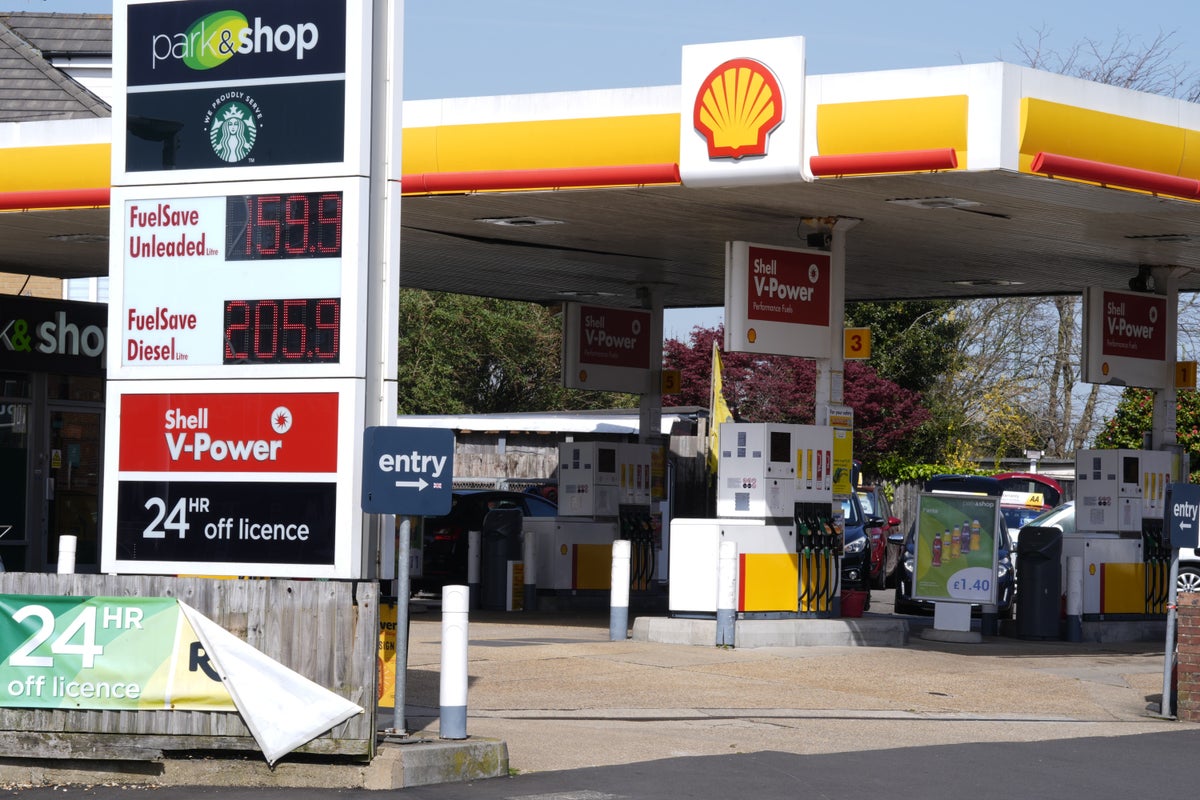
UK retail sales returned to growth last month as they were pushed higher by motorists stocking up on fuel as prices shot higher because of the Iran war, according to official figures.
The Office for National Statistics (ONS) said the total volume of retail sales, which measures the quantity bought, rose by 0.7% in March.
It compared with a 0.6% fall in February, which was revised slightly lower.
The latest reading was also stronger than expected, with economists having predicted a 0.1% dip for the month.
Statisticians said March’s increase was particularly driven by a spike in demand for fuel, which saw sales volumes jump by 6.1% for the month, the highest level since April 2021.
They indicated that this was especially linked to a short period, of less than a week, of particularly elevated sales as unfolding geopolitical events in the Middle East caused a significant rise in prices at the pump.
The value of sales, the amount of money spent, for fuel was up 11.6% amid the jump in petrol and diesel prices.
Recent data from the RAC shows that petrol prices have risen by 18.5% to 157.34 pence per litre, as recorded on Wednesday.
Meanwhile, diesel is up 33.4% to an average of 189.88 pence per litre.
Elsewhere, clothing stores also had a strong month, with sales volumes across the category rising by 1.2% in March amid a boost from better weather conditions.
Technology retailers also saw sales grow after they benefited from new products launches.
However, food sales were weaker, slipping by 0.8% for the month.
The ONS said overall retail sales volumes are up 1.6% for the first three months of 2026, as the industry was also supported by positive growth in January.
ONS senior statistician Hannah Finselbach said: “Retail sales rose in the three months to March, with commercial art galleries doing well earlier in the quarter and sales in beauty products stores rising as retailers reported launching new collections.
“Motor fuel sales were up on the quarter, with retailers commenting that many motorists had been filling up their tanks in March following the start of conflict in the Middle East.”
Elliott Jordan-Doak, senior UK economist at Pantheon Macroeconomics, said: “The first batch of hard data on consumers’ spending since the start of the Iran war was better than expected.
“Granted, stocking up on motor fuels drove headline sales higher, but even excluding petrol retail sales volumes nudged up showing that households largely brushed off the initial shock of higher energy prices.”
Business
Top stocks to buy today: Stock recommendations for April 24, 2026 – check list – The Times of India

Stock market recommendations: Bharat Electronics, and Colgate-Palmolive (India) have been recommended as the top stocks to buy today (April 24, 2026) by Bajaj Broking Research. Take a look at the target prices and expected returns:Bharat ElectronicsBuy in the range of ₹ 440.00-450.00
The stock is in structural up trend forming higher high and higher low in all time frame signaling strength and continuation of the uptrend. The entire up move of the last 8 months is in a rising channel as can be seen in the chart highlighting sustained demand at an elevated level.On the smaller time frame, the stock is at the cusp of generating a breakout above the bullish Flag like formation as post a sharp up move in the first 3 weeks of April the stock went into a consolidation phase in the last four sessions. It is seen resuming up move and is at the cusp of generating a breakout above the bullish Flag formation highlighting continuation of the up move and offers fresh entry opportunity.We expect the stock to extend the up move and head towards 495 levels in the coming months being the confluence of the 123.6% external retracement of the previous decline 473 – 400 and the upper band of the rising channel of the last 8 months.Colgate-Palmolive (India)Buy in the range of 2120-2160
The share price of Colgate-Palmolive has generated a breakout above bullish Flag pattern signaling continuation of the up move and offers fresh entry opportunity.We expect the stock to head higher towards 2330 levels in the coming months being the measuring implication of the bullish flag breakout.The daily 14 periods RSI is in buy mode thus supports the positive bias in the stock.(Disclaimer: Recommendations and views on the stock market, other asset classes or personal finance management tips given by experts are their own. These opinions do not represent the views of The Times of India)
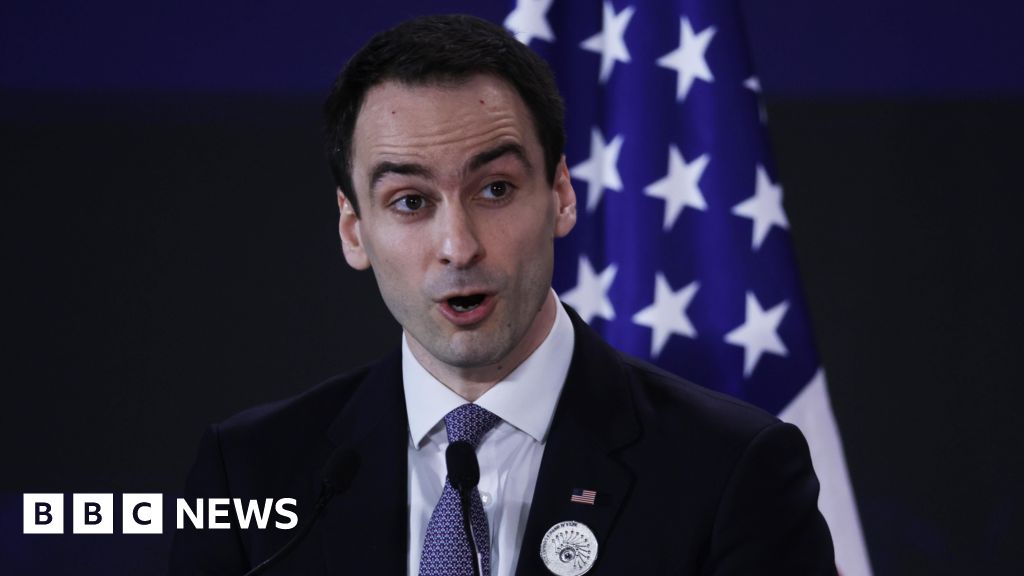
A memo from Michael Kratsios says firms, mainly in China, are wrongfully distilling US AI models.
Source link

UK retail sales rebound as motorists stock up on fuel

Pentagon email floats suspending Spain from Nato, other steps over Iran rift: source

Vietnam-India seminar boosts textile, leather ties

-

 Fashion1 week ago
France’s LVMH Q1 revenue falls 6%, shows resilience amid Iran war
-

 Entertainment1 week ago
Is Claude down? Here’s why users are seeing errors
-

 Tech1 week ago
The Deepfake Nudes Crisis in Schools Is Much Worse Than You Thought
-

 Sports1 week ago
PSL 11: Peshawar Zalmi win toss, opt to field first against Quetta Gladiators
-
 Business1 week ago
Standard Life buys rival in £2b deal to create savings giant
-

 Tech1 week ago
CYBERUK ’26: UK lagging on legal protections for cyber pros | Computer Weekly
-
 Business1 week ago
PepsiCo earnings beat estimates as North American food business improves
-

 Fashion1 week ago
Raymond unveils luxury Chairman’s Collection Store in Mumbai