

Business
Cardiff man earns £36k but can’t afford to buy a house


Shelter Cymru says privately rented homes are unaffordable for most people across Wales.
Source link

Heineken has revealed plans to invest more than £44 million into improvements for hundreds of its UK pubs.
The Dutch brewing giant said the cash injection into its Star Pubs operation, which runs 2,350 sites across the UK, will create around 850 jobs.
The major investment plan comes despite a challenging backdrop for the pub sector.
Pubs have come under pressure from rising labour costs and increases to national insurance contributions over the past year, while consumer spending has also come under pressure with concerns over inflation and rising unemployment.
However, pubs received additional business rates support from the Government from last month to help ease their cost pressures.
Lawson Mountstevens, Star Pubs’ managing director, said the company’s investment plan is partly aimed at boosting revenues to help the group cope with the recent “sustained increases in running costs”.
The plans will see the business invest £44.5 million this year into upgrades for 647 of its pubs.
It said 108 of its venues will see particularly significant cash injections, with these all set for transformations costing at least £145,000.
Heineken said the majority of pubs are owned by the group but independently operated by locals, with sports-focused venues an emphasis for investment in the run-up to the 2026 football World Cup.
The pub firm and brewer said it has pumped £328 million into British pubs since 2018.
It has already started work in 52 locations, including eight projects where it is reopening boarded-up pubs which have suffered from lengthy closures.
Mr Mountstevens urged the Government to reduce the tax burden on pubs to help ease the cost burden and support more job creation in the industry.
He said: “We can only do so much; the root-and-branch reform of business rates that the industry has been calling for over many years is urgently required, as well as a lowering of the burden of taxation on pubs, including VAT and beer duty.
“We are calling on the Government to support us in bringing out the best in the Great British pub.”
Business
New building standard makes fire safety advisory, raises height threshold to 24m – The Times of India

New Delhi: Residential buildings under 24 metres in height — a category that includes a large number multi-storey homes, such as the ill-fated one in Delhi’s Vivek Vihar — will fall outside the scope of “fire and life safety” provisions under the newly notified National Building Construction Standards (NBCS), which replaced the National Building Code (NBC) last week.NBCS fire and public safety norms, which are only “advisory” in nature, are applicable for buildings beyond 24 metres, against the earlier norm of 15 meters. Though the Deregulation Cell of Cabinet Secretariat had directed Bureau of Indian Standards (BIS) to keep fire and life safety out of NBCS, it was included due to pushback from technical experts.These provisions prescribe norms on how a building should be designed, equipped and managed to prevent fires and protect occupants if one occurs. This includes means of escape, and fire detection and alarm systems.The NBCS document said that “fire and life safety” is only for guidance and referral for state govt and local authority in respect of fire safety in buildings considering that “fire services is a state subject and a municipal function” as per the Constitution.“Provisions in NBCS have been updated considering the changes that have happened over the years. We have prescribed what states and municipalities can follow. It’s the responsibility of states and local authorities to ensure safety of structures and citizens,” said former Delhi Fire Service chief S K Dheri, who heads the fire safety committee at BIS.TOI has learnt that one of the key reasons for replacing NBC with NBCS was the confusion created by the term “Code.” Though NBC was voluntary, its title suggested legal enforceability, leading to disputes and litigation, and courts hauling up builders and govt entities for not following the code’s provisions.The document mentions that the nature of standards and codes has changed from a prescriptive regime, under which states and local authorities required hand holding, to a “more performance-oriented outlook, giving ample scope for innovation and decision-making”.However, experts involved in preparation of both NBC and current NBCS have raised concerns, pointing to inadequate institutional capacity of many municipal bodies to formulate detailed norms.Ajit Kumar SM, a committee member and president of Karnataka Professional Civil Engineers Act Steering Consortium, cautioned that increased state-level variation could result in inconsistent safety standards. He highlighted concerns about rising liability for professionals without adequate regulatory protection, potentially compromising public safety and professional integrity.
Business
Private credit risks may trigger wider crunch; Fed’s Michael Barr warns of ‘psychological contagion’ – The Times of India
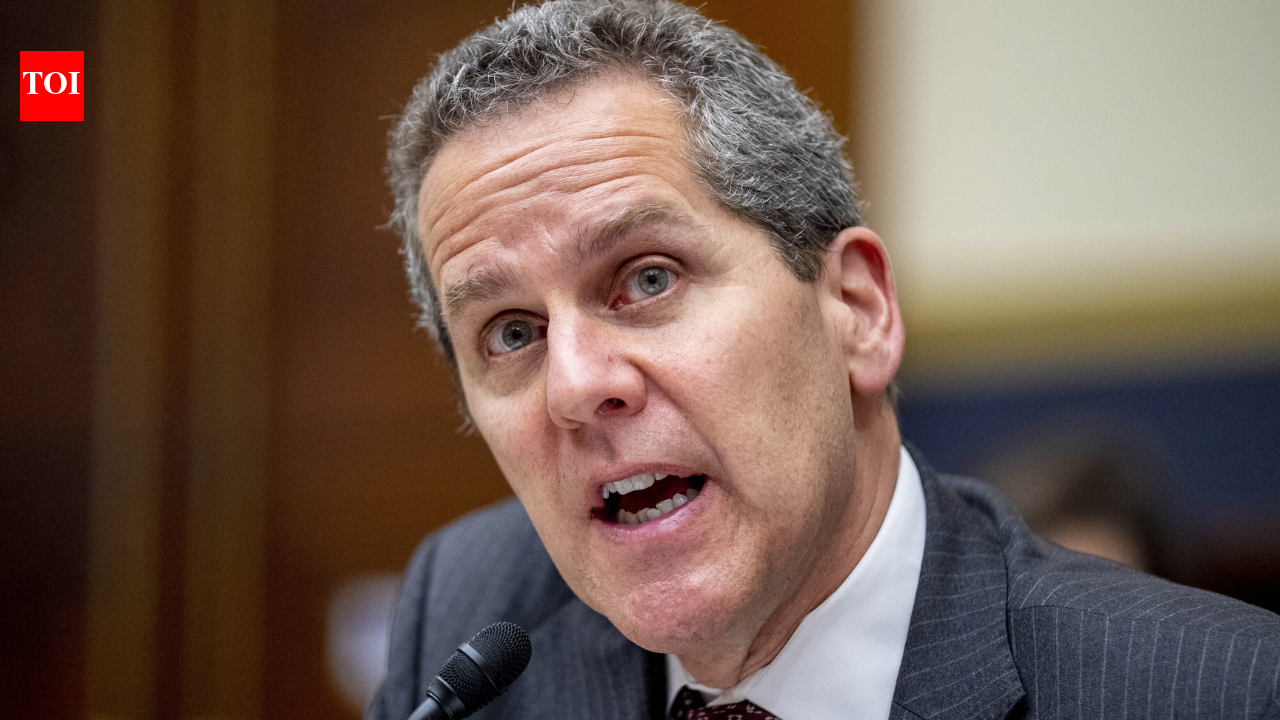
US Federal Reserve Governor Michael Barr has warned that stress in the fast-growing private credit market could trigger “psychological contagion” and spill into the broader financial system, Reuters reported citing an interview with Bloomberg News.Barr said direct links between banks and private credit firms do not currently appear “super worrisome”, but other areas such as insurance sector exposure to private lenders remain a concern.“People might look at private credit, and instead of saying, ‘This is an idiosyncratic problem, these were high-risk loans, the rest of the corporate sector is different,’ they might say, ‘Wow, there seem to be cracks in our corporate sector. Maybe over here in the corporate bond market, there are also cracks,” Barr said.He added that “then you could have a credit pullback, and that could lead to more financial strain.”Private credit firms have come under pressure during the recent market downturn, with some investors stepping back amid concerns over valuations and lending standards following several high-profile bankruptcies.The comments come as regulators increasingly monitor the rapid expansion of private lending markets, which have grown as an alternative source of financing outside traditional banking channels.Federal Reserve Chair Jerome Powell had said in March that policymakers were watching developments in the private credit sector for signs of stress, but did not currently see risks large enough to threaten the wider financial system.

Heineken to invest £44.5m in hundreds of pubs creating 850 jobs

Jelly Roll reacts to daughter Bailee Ann’s major life milestone

Iran weighs US reply delivered via Pakistan as Trump signals opposition to deal terms

-

 Tech6 days ago
A Brain Implant for Depression Is About to Be Tested in Humans
-

 Tech7 days ago
Almost 90% of women leave tech industry within 10 years | Computer Weekly
-
 Business6 days ago
‘I had £20,000 stolen and had to fight a 13-month fraud reporting rule to get it back’
-
 Business1 week ago
Pakistan’s oil market is fuelling the crisis | The Express Tribune
-

 Sports5 days ago
Pro wrestling star Steph De Lander reveals how colleague’s advice helped lead her to title triumph at ACW
-

 Entertainment6 days ago
Melania Trump says ABC should ‘take a stand’ on late-night host Kimmel
-

 Tech6 days ago
This Ambitious Laptop Doesn’t Leave Much Room for Your Hands
-

 Entertainment6 days ago
Norway joins Type 26 Frigate Programme to boost NATO naval power