

Tech
CES 2026: Qualcomm expands IE‑IoT portfolio | Computer Weekly

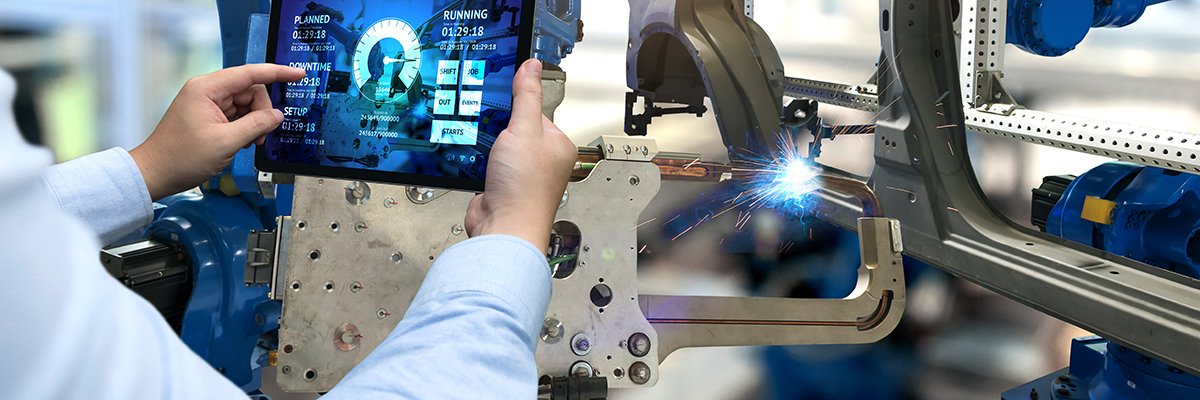
With a robot powered by its Dragonwing processor front and centre at its show floor demonstration at leading trade show CES, Qualcomm Technologies has revealed its go-to-market portfolio for the internet of things (IoT).
Qualcomm Technologies said that it is now positioned to address the needs of a much wider spectrum of customers, ranging from global enterprises to independent local developers, offering core edge compute and artificial intelligence (AI) technology across all industrial and embedded verticals.
Qualcomm hit the accelerator in IoT in earnest in February 2025 with the launch of Dragonwing range, designed to represent its industrial and embedded internet of things (IE-IoT), networking and cellular infrastructure solutions, looking to address industrial applications. The Dragonwing products support edge intelligence custom-designed for business and industry, with on-device hardware and software AI solutions seeing use in a number of use cases.
The net result is that the IoT solutions can be used in simplifying complexity, empowering smarter decision-making and optimising operational efficiency, forming what Qualcomm said would be “blueprints for industry transformation”, from enhancing everyday needs to solving the world’s most mission-critical challenges.
Fast forward almost a year and the company now has an expanded set of processors, software, services and developer tools. These include offerings and technologies from the five acquisitions of Augentix, Arduino, Edge Impulse, Focus.AI and Foundries.io. Qualcomm Technologies also claims to have the ability to provide system-on-chips tailored for intelligent IP cameras and vision systems.
The Dragonwing Q-8750, the latest in the series, is said to have been engineered for high-performance edge computing and immersive experiences. Its AI engine achieves 77 trillions of operations per second (TOPS) with support for INT4/8/16 and FP16 precision, enabling real-time inference and even on-device large language models up to 11 billion parameters. This later facet is said to eliminate cloud dependency for critical applications. The processor’s camera architecture supports up to 12 physical cameras and triple 48 MP ISPs, making it appropriate for use in drones, media hubs, and multi-angle vision systems.
Designed for consumer and industrial IoT devices, the Dragonwing Q-7790 boasts performance of 24 TOPS of on-device AI performance, and is seen as enabling advanced inference for applications – such as smart cameras, AI TVs and collaboration systems – without relying on the cloud. Its multimedia capabilities include dual 4K60 display support, 4K60 encoding and 4K120 video decoding, including AV1 hardware decode. It also has enhanced security features for environments where data integrity is paramount.
Also at CES, the firm announced that it was redefining its IE-IoT business to become a provider of edge compute and AI solutions across industrial and embedded sectors. This transformation will introduce distinct product lines with competitive roadmaps, a unified software architecture supporting Linux, Windows and Android, enabling deployment-ready solutions for multiple verticals.
Combined with its partner ecosystem and accessible developer platforms such as Arduino, Edge Impulse and Foundries.io, Qualcomm Technologies said that it was lowering barriers to entry and accelerating innovation from prototype to commercialisation.
By integrating Arduino and enhancing developer accessibility through Edge Impulse and Foundries.io, Qualcomm Technologies was confident that it could empower its developer communities to innovate faster and more securely. The unified ecosystem merges Arduino’s open-source capability with Qualcomm Technologies’ AI, connectivity and security technologies, while Edge Impulse and Foundries.io will provide machine learning and security-focused deployment tools.
“We’re not just introducing new products – we’re launching a comprehensive new approach to help organisations of virtually all sizes, across virtually all verticals, reap the benefits of AI and edge compute in their pursuit for efficiency and new opportunities,” said Nakul Duggal, executive vice-president and group general manager of automotive, industrial and embedded IoT, and robotics at Qualcomm Technologies.
“Our expanded industrial and embedded IoT portfolio, combined with a robust developer ecosystem, positions us as the ultimate platform for building intelligent, connected business solutions that scale.”

Skullcandy headphones aren’t always the sharpest tools in the proverbial shed, but they do have cool looks and have affordable price tags, and that gets even better with these Skullcandy promo codes on a few of the brand’s top products. If you’re after a pair of in-ear, open-ear, or over-ear headphones, Skullcandy has cut prices on several of its headphones, making now a decent time to buy. Plus, make sure you check out our Skullcandy coupons above for even more savings.
Experience Immersive Sound With 47% Off Skullcandy Crusher Evo Headphones
Right now, you can get nearly half off (47% off) Skullcandy Crusher Evo Headphones. We haven’t tested these sleek over-ear headphones, but they look nice and likely have solid performance. They come in many different colors, which is the main appeal of many Skullcandy headphones; they match your own personal style.
Enjoy Open-Ear Comfort With 33% Off Skullcandy Push 720 Earbuds
Open earbuds are a great way to hear the world around you while also tuning into your favorite music, audiobook, or podcast. We really like using them when working out in nature or working in the yard, where hearing someone honk or yell at you can be helpful. Skullcandy Push 720 Open Earbuds are 35% off right now; so if you’ve been curious about open earbuds, now’s a great time to buy.
Block Out Noise With 36% Off Skullcandy Crusher ANC 2 Headphones
The Skullcandy Crusher ANC 2 are over-ear headphones that come with a leopard print finish, which should appeal to anyone who is tired of boring black over-ear headphones. They also have active noise canceling, which should help tune out any errant roars. They are on sale for a limited time, at 36% off.
Take Your Gaming to the Next Level With Crusher PLYR 720 Headphones
Folks who want a gaming headset will be happy with the swivel-based mic on the Crusher Plyr 720 (now on discount at 33% off) allowing them to easily chat with friends and foes during tense online gaming sessions.
Shop the Skullcandy Sales to Save on Headphones, Earbuds, and Speakers
Don’t see what you’re looking for here? Be sure to check out the full list of Skullcandy options on sale right now on the company’s website. I’d also recommend looking at our Skullcandy discount codes and coupons, which rotate often to make sure you’re getting the best deals possible.

Jonathan Ross, the Immigration and Customs Enforcement officer identified by multiple news outlets as the federal agent who shot 37-year-old Renee Good in Minneapolis on Wednesday, is a veteran deportation officer in ICE’s Enforcement and Removal Operations division, according to sworn testimony from the federal district court in Minnesota obtained by WIRED. A member of a Special Response Team, ICE’s version of a SWAT team, he’s had duties as a firearms trainer and led teams drawn from multiple federal agencies including the FBI, Ross testified.
The testimony stems from a December 2025 trial related to a June incident with parallels to the interaction that led to Good’s killing.
In June according to Ross’s testimony, he led a team seeking to apprehend a man named Roberto Carlos Muñoz-Guatemala, who was on an administrative warrant for being in the United States without authorization. Because the man’s home was across from a school and immigration agents had no authority to enter his home, Ross testified, they instead trailed him in unmarked vehicles.
Muñoz-Guatemala’s attorney did not immediately reply to a request for comment.
According to the December testimony and a New York Times account of an FBI agent’s affidavit associated with the case, Ross approached Muñoz-Guatemala and asked him to roll down his window and open his door. Ross, who testified that he had been driving an unmarked vehicle, was dressed in ranger green and grey, and wore his badge on his belt, broke the driver’s side back window and reached into the vehicle, at which point Muñoz-Guatemala pulled away.
While being dragged at a speed he claimed seemed like “40 miles an hour at least, if not more,” Ross pulled out his Taser and fired it at the driver. Muñoz-Guatemala continued to drive, and succeeded in shaking Ross from the car. At trial, Ross testified that he suffered injuries that required 33 stitches.
According to the affidavit, Muñoz-Guatemala called 911 to report that he’d been assaulted by ICE, which led to his arrest. Last month, he was convicted of assault on a federal officer with a dangerous weapon.
Reports from the Minnesota Star-Tribune and The Guardian identified Ross as the shooter who killed Good, a mother and recent transplant to Minneapolis, during an immigration enforcement action in the city. Video of the incident appears to show a federal agent firing shots into Good’s vehicle as she attempted to leave the scene. The officer did not appear to have been struck by the vehicle, and Good appeared to be turning the wheel to avoid contact, video analysis by The New York Times and the Washington Post shows.
At Thursday’s White House press briefing, vice president JD Vance answered questions about the incident, and his responses included numerous identifying details about Ross, mainly relating to his interaction with Muñoz-Guatemala. “That very ICE officer nearly had his life ended, dragged by a car, six months ago, 33 stitches in his leg,” said Vance, “so you think maybe he is a little bit sensitive about somebody ramming him with an automobile?”
Department of Homeland Security secretary Kirsti Noem has repeatedly described Good’s actions as an intentional act of “domestic terrorism.” An FBI investigation into Good’s killing is ongoing.
DHS spokesperson Tricia McLaughlin told WIRED in a statement that the department is “not going to expose the name of this officer. He acted according to his training.” McLaughlin added that federal immigration agents “are under constant threat from violent agitators” because of “doxxing” and that the Minnesota Star Tribune, which first published Ross’ name, “should delete their story immediately.”According to Ross’ December testimony, he served in the Indiana National Guard and was deployed to Iraq from 2004 to 2005 as a machine gunner on a patrol truck, then joined Border Patrol in 2007 after finishing college, working near El Paso, Texas.

For Chinese companies, the bet is that lower prices and more AI features will persuade people to wear smart glasses all day, recording their lives through constant video and audio. If you lower the price to around $200, “people will start to use them every day,” says Brian Chen, general manager of Appotronics’ innovation center. That shift would raise obvious privacy and security concerns that both Rokid and Appotronics have acknowledged, but they see the potential payoff as worth the risk.
From Vacuums to Cars
Several major Chinese electric vehicle companies, including Geely and Great Wall Motor, brought their cars to CES, but what stole the show were two brands that almost no one had heard of before. Nebula Next and Kosmera both showed off sleek, luxurious electric sports car prototypes, neither of which are available on the market yet. Both brands have connections to Dreame, a leading Chinese robot vacuum company, but they claim to operate independently from it. At CES, however, the Nebula Next and Kosmera booths were tied to Dreame in the conference’s directory.
Putting aside this complicated corporate relationship, the idea of a robot vacuum company investing in EVs is not as absurd as it sounds. If anything, it’s just the latest example of how Chinese electronics companies are parlaying their existing manufacturing expertise into making cars. The founder of Roborock, another Chinese vacuum company, started an EV company in 2023. Xiaomi, the Chinese smartphone and home device giant, launched its first EV in 2024.
Dreame isn’t the first and won’t be the last Chinese company crossing over from electronics to EVs, says Lei Xing, an independent car market analyst and the former chief editor of the China Auto Review, who checked out Kosmera’s prototypes at CES with me. China’s sophisticated supply chain, engineering talent, and manufacturing ecosystem make it relatively easy for newcomers to take a shot at building cars, Xing explains, but only a few will succeed. Others could end up more like Apple, whose long-running car project ultimately collapsed. “Life and death will be a natural outcome,” Xing says.
Robovans Are Coming
When I went back to China last year, I made sure to try Baidu’s robotaxi service, which is roughly on par with Alphabet’s Waymo in the US. What surprised me in China, however, was how many autonomous parcel delivery cars there were roaming the same open streets alongside my robotaxi.
Neolix is the leading company in China making both the hardware and software for robovans. It says the number of them deployed in China is growing roughly tenfold each year and reached about 10,000 in 2025. (For comparison, there’re about 2,500 Waymo cars operating in the US.) Neolix claims to represent more than 60 percent of the market and has no major competitors globally, says Zhao You, the company’s executive president. Neolix brought three of its cars to CES, ranging in size from a mini-fridge to a golf cart: tiny, windowless boxes perched on oversized wheels, with no driver inside.
Neolix is eager to expand internationally and already has pilot projects underway in the Middle East, East Asia, and Latin America. It’s eyeing the American market too. Zhao told me he’s aware that any self-driving company in the US will face heavy scrutiny on issues like safety and data security, but he’s hoping to work with local partners who could help navigate compliance requirements here. “As a tech company, working with one cloud service provider for any market is the most affordable option, but it won’t work. You have to talk to local regulators and learn which cloud providers they approve of,” Zhao says.
Generating Viral Videos
When OpenAI launched Sora 2 last year, it was making an ambitious bet that generative AI can be not just a tool but a content genre big enough to sustain an entire social media platform. That vision hasn’t fully materialized yet, but at CES I met with two AI video companies that are competing with OpenAI’s Sora.
Kling is the AI division of Kuaishou, a massively popular Chinese short-video platform. The Kling app and website combined have more than 60 million registered users, the majority of which the company says are based outside China. About 100 people attended Kling’s panel event at CES with the platform’s power users. Jason Zada, an award-winning director who made Coca-Cola’s controversial 2024 AI-generated holiday commercial, said he recently used Kling to generate a YouTube video featuring a fireplace calmly burning as Santa, turkeys, astronauts, and snowmen make inexplicable appearances. Zada said he created over 600 clips with Kling and pieced them together to make the final 105-minute video. It cost about $2,500 in token credits.


SIP Inflows At New Record High Of Rs 31,002 Crore In Dec: AMFI Data

Here’s the schedule of new season

Skullcandy Headphone Deals: Crusher Evo, ANC 2, PLYR 720 and More

-

 Sports4 days ago
VAR review: Why was Wirtz onside in Premier League, offside in Europe?
-
 Business4 days ago
Aldi’s Christmas sales rise to £1.65bn
-

 Politics4 days ago
China’s birth-rate push sputters as couples stay child-free
-

 Entertainment4 days ago
Minnesota Governor Tim Walz to drop out of 2026 race, official confirmation expected soon
-

 Sports4 days ago
FACI invites applications for 2026 chess development project | The Express Tribune
-
 Business4 days ago
8th Pay Commission: From Policy Review, Cabinet Approval To Implementation –Key Stages Explained
-
Sports1 week ago
Tom Wilson’s New Year’s Eve: Two goals, a fight, a win and an Olympic nod
-

 Sports4 days ago
Steelers escape Ravens’ late push, win AFC North title