

Business
Chancellor abandons planned income tax hike because of improved forecasts


The Chancellor has abandoned plans to hike income tax at the Budget because of improved economic forecasting.
Rachel Reeves had been expected to hike income tax in the face of a yawning gap in her spending plans, hinting as recently as Monday that the alternative would be “deep cuts” to public investment.
But reporting overnight claimed she has abandoned introducing an income tax rise at the November 26 Budget over fears it could anger both voters and backbench Labour MPs.
The PA news agency understands the strength of tax receipts has improved forecasting from the Office for Budget Responsibility, allowing for the U-turn.
This is particularly the case on stronger wage performance: the higher wages are, the more tax is paid on them.
A downgrade in productivity has also not been as bad as was first feared.
While Ms Reeves is no longer understood to be pursuing an income tax hike, tough choices are still said to lie ahead for the Government and other tax rises have not been ruled out.
Income tax thresholds could still be reduced while tax rates are kept the same, a move which could raise billions of pounds for the Treasury.
Limits to salary sacrifice schemes, as well as new measures to tax electric vehicles, are still in the mix as the Treasury pursues a “smorgasbord” approach of raising a range of smaller taxes.
The Chancellor has not changed her approach, it is understood, and still intends to give herself larger fiscal headroom – the buffer against economic headwinds which could impact Government spending plans.
The latest Budget measures were submitted last week, rather than being a knee-jerk response to the turmoil in No 10 this week sparked by a briefing war.
Ms Reeves has been laying the ground for tax rises over recent weeks, including during an early-morning speech on November 4 aimed at preparing the public for the Budget.
Downing Street insisted that the thrust of the speech “stands”.
The Prime Minister’s official spokesman said: “She was very clear about the challenges the country faces and her priorities in addressing those challenges.
“All of that still stands.”
The spokesman refused to comment on Budget speculation, but said the Chancellor will aim to “build more resilient public finances with the headroom to withstand global turbulence”.
This would “give businesses the confidence to invest and leaving the Government freer to act when the situation calls for it”, he added.
Government borrowing costs rose in the wake of the apparent U-turn on income tax on Friday morning.
Speculation about the change in direction sparked a sell-off in UK Government bonds, also known as gilts: the means by which the Government borrows money from private investors.
The gilt market later stabilised somewhat as the reasoning behind the Treasury’s decision-making became apparent.
Among those who welcomed suggestions the tax rise had been abandoned was Health Secretary Wes Streeting.
He told PA: “What I would say about this morning is, it is really important that we keep the promises that we made to the public at the last general election.
“Our economy was broken by the Conservatives, so were our public services, but so was trust in politics itself.
“Our job is to rebuild the economy, rebuild our public services, and rebuild trust in politics.”
Helen Miller, director of the Institute for Fiscal Studies (IFS) think tank, said it was “not unusual” for chancellors to make last-minute changes to their Budget plans.
She added: “But the news that Rachel Reeves has backed away from a plan to increase the rates of income tax will lead investors to worry that the Chancellor will instead increase a range of smaller taxes that can be more damaging to economic growth.
“They may also worry that the change of plans signals that this Government are reluctant to do politically difficult things.
“These are the kinds of concerns that can lead investors to demand higher returns when lending to the Government.”
If the Government does choose to raise a set of smaller taxes, they should also be reformed “so that they do less damage to growth”, the IFS chief said.
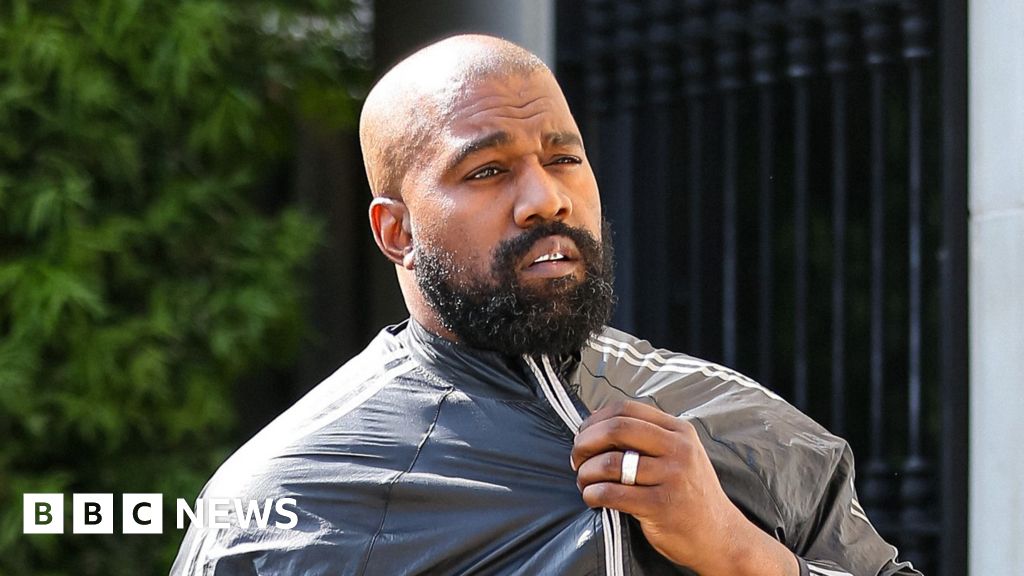
Sir Keir Starmer says it is “deeply concerning” the rapper is set to headline a festival after recent antisemitic comments.
Source link
Business
Stock markets outlook: Dalal Street braces for swings as RBI MPC decision, war risks weigh on sentiment–Check key triggers – The Times of India

Domestic equities are expected to remain volatile this week as investors track the Reserve Bank’s monetary policy decision, global macroeconomic cues and evolving developments in the West Asia conflict, analysts said, according to PTI.Market participants will also keep a close watch on crude oil price movements and foreign fund flows, which continue to influence sentiment.Vinod Nair, Head of Research at Geojit Investments Ltd, said the RBI’s Monetary Policy Committee (MPC) meeting will be the key domestic trigger, with investors focusing on the central bank’s stance on inflation and growth.“A rate pause is near-certain consensus, the central bank walks a tightrope between crude-driven inflation risks and a four-year low Manufacturing PMI signalling a softening growth impulse. The governor’s commentary on the rate cycle trajectory and FY27 projections will be closely monitored.“Globally, the US March CPI reading will carry significant importance, as it buries residual Fed rate-cut hopes, strengthens the dollar and tightens financial conditions for emerging markets, including India,” Nair said.He added that geopolitical developments in West Asia will remain the dominant factor shaping market direction.“Indian markets return after a three-day gap and remain acutely vulnerable to weekend war developments, with crude trajectory and any credible ceasefire signal being the decisive variable that could either trigger a sharp relief rally or extend the current sell-on-rise mode,” he said.In the previous holiday-shortened week, the BSE Sensex declined 263.67 points, or 0.35%, while the NSE Nifty fell 106.5 points, or 0.46%.Siddhartha Khemka, Head of Research (Wealth Management) at Motilal Oswal Financial Services Ltd, said investor sentiment will remain closely linked to developments in the West Asia conflict.Brent crude prices have stayed elevated near $107 per barrel, fuelling concerns around imported inflation. Currency pressures have also intensified, with the rupee weakening sharply before recovering towards Rs 93 against the US dollar following RBI intervention, he noted.Foreign institutional investor (FII) outflows remain a key overhang, with March witnessing heavy selling of Rs 1.2 lakh crore, among the highest monthly outflows in recent years.“Investors will monitor the US Federal Open Market Committee (FOMC) meeting minutes, GDP data, and initial jobless claims for further cues on growth and the policy trajectory.“Overall, markets are expected to remain volatile as geopolitical developments, crude price movements, FII flows and global macro data continue to drive sentiment,” Khemka said.Analysts said any signs of de-escalation in the West Asia conflict could ease crude prices and stabilise the currency, offering relief to markets, while further escalation may prolong risk aversion and keep pressure on foreign flows.

One elderly couple had to find £1,000 for an oil delivery and suppliers are not giving quotes, a councillor says.
Source link


Olivia Munn urges fans for ‘early’ cancer checkup

Islanders fire head coach Patrick Roy with four games left in the season amid playoff race

Actress Tori Spelling hospitalized after Southern California crash; authorities investigating cause

-

 Sports1 week ago
USMNT handed reality check by Doku, Belgium ahead of World Cup
-

 Sports1 week ago
2026 NCAA men’s hockey tournament: Schedule, results
-

 Fashion1 week ago
EU apparel imports slump 15.48% YoY in Jan; Bangladesh hardest hit
-

 Tech2 days ago
Our Favorite iPad Is $50 Off
-
Uncategorized6 days ago
[CinePlex360] Please moderate: “Further tariff
-
Uncategorized3 days ago
[CinePlex360] Please moderate: “Trump signals p
-

 Entertainment1 week ago
The Avett Brothers’ bassist explains why he wrote a book about John Quincy Adams
-
Uncategorized1 week ago
[CinePlex360] Please moderate: “Apple scrapping