

Business
Live: UK inflation falls steeply to 10-mont low prompting hopes of interest rate cut

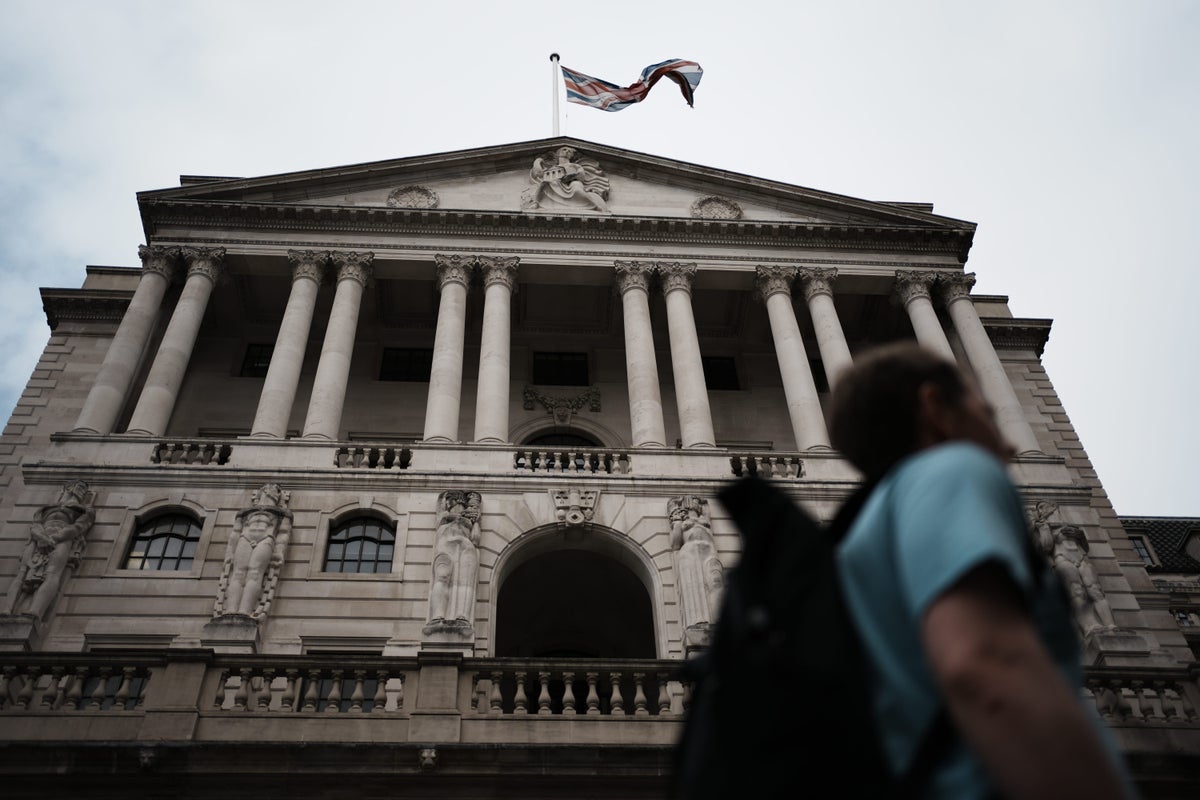
UK inflation has fallen to 3 per cent, its lowest since last March, prompting hopes that an interest rate cut will follow.
The fall in the Consumer Price Index (CPI) data, published by the Office of National Statistics, follows a surprise rise in December to 3.4 per cent.
It shows a return to the gradual downward trend seen at the end of last year, with analysts estimating it remains on course to hit the government’s 2 per cent target by April.
After this week’s rising unemployment and slowing wage growth data, and a continually weak economy, it is hoped the fall could spur the Bank of England (BoE) to cut interest rates next month when the Monetary Policy Committee convenes to vote on 19 March.
Inflation hit a high of more than 11 per cent in October 2022, and while it has returned to more manageable levels in the past year, the pace has been slower than businesses and households would have liked, resulting in interest rates staying higher for longer.
Falling household bills and the reduction of the energy price cap in April are expected to contribute to bringing CPI inflation back to 2 per cent by spring. Food inflation is also expected to moderate, having been a big contributor to high inflation last year.
Sharp falls in inflation and a cooling economy demands action from the Bank of England, says IPPR
Responding to the latest inflation statistics, William Ellis, senior economist at the Institute For Public Policy Research, said: “Inflation fell sharply to 3 per cent in January – led by slowing transport and food prices – as factors behind the temporary bump in December faded away.
“This is part of a longer-term trend, following a wider cooling in the economy. Inflation is down 0.8 percentage points since September, pay growth has slowed, and unemployment just reached its highest rate in nearly five years.
“Measures announced in the Autumn Budget, such as support on energy bills and fuel duty, will also help to keep inflation down over the coming months.
“Despite this, the Bank of England’s monetary policy stance is removing demand from the UK economy and lowering growth. A further cut to interest rates will be needed in March to improve sluggish economic growth and ensure that inflation doesn’t drop below target.”
Dan Haygarth18 February 2026 10:02
Deloitte: Figures ‘should create room for further interest rate cuts’
Commenting on today’s ONS inflation figures, Debapratim De, director of economic research at Deloitte, said: “The sharp slowing of price rises in January is consistent with expectations of inflation plummeting over the coming months.
“A substantial reduction in energy bills, much slower rises in regulated prices compared to last year, and a moderation in food price rises are set to bring headline inflation at or close to the Bank of England’s two per cent target in April.
“This, alongside a softening labour market, should create room for further interest rate cuts. Recent MPC voting patterns and today’s data point to an earlier easing than markets foresee.
“We expect two 25-basis-point cuts between now and autumn, with the first cut coming in April.”
Dan Haygarth18 February 2026 09:51
Starmer: ‘Cutting the cost of living is my number one priority’
The prime minister has said on X: “The choices this Labour government has made means inflation has fallen today to its lowest rate in a year.
“Lower food and petrol prices are helping ease the pressure on household budgets. I know there’s more to do, cutting the cost of living is my number one priority.”
Dan Haygarth18 February 2026 09:17
‘Doesn’t rule out a third cut later in the year’
Thomas Pugh, chief economist at tax and consultancy firm RSM UK said: “Today’s drop was just the start of a steep slide that should take inflation to 2 per cent in April, which will set the stage for another interest rate cut in the summer.
“Downward pressure on inflation was broad based, which will give policy makers more confidence that the disinflation trend is still intact.
“Food and non-alcoholic drink inflation as well as energy inflation, which are both key drivers of inflation expectations, slowed sharply, fuel inflation turned negative and December’s big increases in airfares unwound.
“However, given almost all the survey measures of prices suggest disinflation has slowed, the MPC will still have to be cautious this year, even as headline inflation drops. Indeed, services inflation is proving to be much stickier than headline inflation.
“It only marginally slowed to 4.4 per cent from 4.5 per cent in December and core inflation ticked down to 3.1 per cent from 3.2 per cent both above the MPC’s latest forecasts.
“That doesn’t rule out a third cut later in the year, especially if the labour market remains weak, but it means a third rate cut is a downside risk rather than the base case at the moment.”
Dan Haygarth18 February 2026 08:53
‘Softer inflation raises the prospect of further mortgage rate cuts’
Regarding the impact on mortgages, Alice Haine, personal finance analyst at BestInvest said: “Softer inflation raises the prospect of further mortgage rate cuts for homeowners and prospective buyers hoping for fresh respite from high borrowing costs.
“Lenders have upped mortgage rates in recent weeks amid shifting expectations on the interest rate path, so the possibility of renewed declines is likely to buoy the housing market.
“If we do see a rate cut next month, the impact on borrowers will depend on the timing of their current deal.
“Those on fixed-rate mortgages with several months or years left to run will see no change in their monthly repayments. Borrowers on tracker products, however, may see an almost immediate reduction.
“Homeowners emerging from short-term fixes secured at the peak of the mortgage rate cycle may find they can lock in a more favourable deal.
“Conversely, those nearing the end of ultra-low five-year fixes secured before the rate-hiking cycle began in late 2021 still face higher repayments, with monthly costs likely to rise unless they have made significant overpayments – though easing mortgage rates will at least soften the blow.”
Dan Haygarth18 February 2026 08:50
‘Prices are clearly moving in the right direction’
Scott Gardner, investment strategist at J.P. Morgan Personal Investing said: “Inflation fell sharply in January, providing some relief to UK consumers at the start of the year.
“Prices are clearly moving in the right direction, with closely watched core and services inflation continuing their downward trend from previous months.
“Behind the headline figure, motorists were helped as petrol pump prices continued to decline in January to their lowest level since summer 2021.
“Food inflation also fell after the Christmas period but is still a key area to watch in 2026 as it accounts for a large part of the UK’s everyday spending.
“Industry barometers suggest that weekly supermarket shops are still elevated with fresh produce prices rising over the month.
Dan Haygarth18 February 2026 08:40
Inflation remains a ‘real worry for household budgets’
Dr Liliana Danila, lead economist at the Food and Drink Federation said: “It’s positive to see a lower rate of food inflation in January, however it still remains a real worry for household budgets and above long-term averages.
“After many years of rising costs, businesses across the supply chain have had their margins eroded, leaving manufacturers particularly susceptible to the supply chain shocks caused by geopolitics or climate change.
“We’ve previously seen the impact that this can have on inflation, with prices of ingredients like cocoa and coffee skyrocketing, so the UK’s recent extreme wet weather flooding farms is a concern for the year ahead.
“To help stabilise food inflation in the long term and protect shoppers from future price spikes, government must incentivise investment in business resilience.”
Dan Haygarth18 February 2026 08:30
‘Should ease the pressure on the weekly shop’
Reacting to the budget, Holly Mackay, founder of Boring Money said: “Consumers can take comfort from lower inflation numbers which should ease the pressure on the weekly shop and also signal a strong likelihood of lower interest rates next month.
“The direction of travel is down which means mortgages are likely to come down as we head into summer and those with cash savings accounts should really shop around now and consider locking in a fixed rate if possible.
“The best fixes today are paying over 4% which looks pretty good to me given what is likely to happen to rates over the coming months.
“There is a sting in the tail. Slower inflation also comes with less growth and a difficult jobs market.
“As employers seek to keep costs low we should all make sure we build a cash buffer – ideally at least 3 months’ income – to cushion us in the event of redundancy.
“Homeowners coming off fixed rate mortgages should shop around. Passively accepting your lender’s standard variable rate which is offered at the end of a fixed term is almost always a bad idea so contacting an independent mortgage broker is a sensible move.”
Dan Haygarth18 February 2026 08:20
Motor fuels a big driver in fall of inflation
Data showed that motor fuels particularly contributed to the fall of inflation, with the average price of petrol falling by 3.1p per litre between December 2025 and January 2026.
The average price of petrol stood at 133.2p per litre in January, down from 137.1p per litre in the same month a year earlier.
Meanwhile, diesel prices also dropped, falling by 3.2p per litre compared with the previous month.
Dan Haygarth18 February 2026 08:10

A Walmart store is seen on Feb. 3, 2026 in Austin, Texas.
Brandon Bell | Getty Images
Two top Walmart executives are departing the company, nearly four months after CEO John Furner took over, CNBC learned on Friday.
Tom Ward, the chief operating officer of Walmart’s warehouse Sam’s Club, is retiring, while Cedric Clark, Walmart’s executive vice president of U.S. store operations, is leaving the business, internal memos viewed by CNBC shows.
A replacement for Clark is expected to be announced in the “coming weeks,” the memo stated. It’s unclear when the company expects to fill Ward’s position.
The leadership shuffle comes after Furner took over as Walmart’s CEO in February. Alongside Furner’s promotion, the company elevated four new top executives to work alongside him earlier this year. Seth Dallaire was promoted to chief growth officer, overseeing the company’s marketplace and advertising businesses, David Guggina was elevated to CEO of Walmart U.S., Chris Nicholas became CEO of Walmart International and Latriece Watkins became CEO of Sam’s Club.
Furner took over the largest U.S. retailer during a period of sustained growth, fueled by gains with higher-income consumers and the expansion of its e-commerce business.
Walmart announced fiscal first-quarter earnings on Thursday, where it issued mixed results and said its business remained strong despite consumer pressures and high gas prices.
The leadership changes were first reported by the Wall Street Journal.

British Airways is putting up the price of reward tickets for customers using Avios, giving five days’ notice of the increases.
The cash element of tickets booked through its loyalty scheme will rise by up to 33 per cent from Wednesday 27 May.
For example, a ticket in Club World from London Heathrow to New York JFK, once requiring 176,000 Avios, will now also require £499 – an increase of roughly £100, or about 25 per cent.
In an email, the airline said the amount of Avios required for bookings will remain unchanged for now. “Thank you for your continued support and understanding,” it said.
Customers have until Wednesday to book at current prices.
Writing on his Head for Points frequent-flyer website, Rob Burgess said: “This is the second devaluation in just five months. The earlier changes led to a 10 per cent increase in the Avios element and 3-23 per cent increase in the cash element.
“This change only impacts the cash element and represents an additional 10-33 per cent
“These changes are very likely to be linked to the increase in fuel costs due to the Middle East crisis, although British Airways has better hedging in place than most carriers. With little sign of the oil situation improving, however, it is likely that fuel costs will remain high beyond the life of the hedges.”
Simon Calder, travel correspondent at The Independent, said: “When British Airways first unveiled ‘Air Miles’, flights were genuinely free – no one was expected to hand over cash.
“To see the cash element increased up to £500 will prove a deterrent for some. But many passengers, especially those who amass Avios on their company’s spend, remain transactionally loyal to BA.”
In April, IAG – which owns British Airways, Aer Lingus and Iberia of Spain – said it was increasing the price of ordinary cash tickets because of the impact of the conflict.
“We are not seeing jet fuel supply interruptions, but fuel prices have risen sharply and, despite our hedging strategy which gives some shorter term mitigation, we are not immune to the impact,” it said. “Like other carriers, IAG airlines are making some pricing adjustments to reflect these higher fuel costs.”
Read more: All the airlines cancelling flights as easyJet and Jet2 issue updates
Business
Disney’s ‘Star Wars: The Mandalorian and Grogu’ tallies lowest Thursday preview sales in franchise history

Still from “Star Wars: The Mandalorian and Grogu.”
“Star Wars” returns to the big screen for the first time in seven years this weekend, riding the contrails of a Mandalorian’s jetpack.
Disney’s “Star Wars: The Mandalorian and Grogu” tallied $12 million in Thursday night preview sales, the lowest collection of advanced tickets in the franchise’s history, according to data from Comscore. “Solo: A Star Wars Story” was the previous low bar with $14.1 million in preshow tickets back in 2018.
Box office analysts expect the film based on the hit Disney+ show “The Mandalorian” to generate around $80 million for its three-day opening weekend and around $95 million for the four-day Memorial Day holiday weekend. Some less conservative experts have estimated the three-day haul could be $95 million and the holiday weekend could draw $115 million.
That would be one of the smallest openings of a “Star Wars film in modern cinematic history. “Solo” captured $84.4 million during its opening eight years ago. Since 2015, only “Solo” has opened to less than $100 million domestically, Comscore data show.
“The Mandalorian and Grogu” will likely benefit from the popularity of the television show, the long Memorial Day weekend and limited competition from new titles, especially on premium large format screens.
It will also act as a stress test for future “Star Wars” theatrical releases amid a lackluster cinema run for “Star Wars” and Marvel, the tentpole franchises that helped Disney dominate the global box office in the 2010s. The studio has “Starfighter” arriving in cinemas in 2027 starring Ryan Gosling and directed by Shawn Levy.
New “Star Wars” titles have been absent from cinemas since 2019’s “The Rise of Skywalker.” The final film in the Skywalker Saga and third film in what has become known as the sequel trilogy generated more than $1 billion, but was widely panned by critics and fans. Disney and its Lucasfilm studio paused theatrical productions in favor of reestablishing the franchise on streaming service Disney+.
“The Mandalorian,” which premiered just a month before “The Rise of Skywalker,” was a runaway hit for the company and inspired a number of live-action Star Wars projects to get a series run instead of a theatrical one. These include “Andor,” “Obi-Wan Kenobi,” “Ahsoka,” “Skeleton Crew,” “The Acolyte” and “The Book of Boba Fett.”
Lucasfilm tapped director Jon Favreau, who worked alongside the newly minted head of the studio Dave Filoni to bring “The Mandalorian” to Disney+, to helm “The Mandalorian and Grogu.” The feature film had a slightly smaller budget than typical Star Wars films, with the cost of production estimated to be around $165 million. Other “Star Wars” projects released theatrically in the previous decade had production budgets of $250 million or higher, according to data from The Numbers.
This means that “The Mandalorian and Grogu” has a smaller profitability threshold than previous titles from the franchise. Of course, those production budgets do not include marketing spending.
For parent company Disney, it’s not just about the box office numbers. The film has a robust consumer products launch tied to its release.
The “Star Wars” franchise has consistently been a strong seller at retail even without a theatrical release. So having new products across a variety of categories and brands could be a big boon for the company — especially after the character Grogu, known as “Baby Yoda,” was a runaway hit with fans.
Notably, following the 2015 release of “Star Wars: The Force Awakens,” the first of Lucasfilm’s latest “Star Wars” trilogy, Hasbro alone saw sales of “Star Wars” products reach nearly $500 million.
Not to mention, Disney is already doing tie-ins at its theme park locations, including specialized merchandise and a revamp of its Smugglers Run ride featuring Grogu.


Trump calls Kyle Busch a ‘LEGEND’ in Truth Social tribute after NASCAR champion’s death at 41

Jennifer Garner, Ben Affleck twin for L.A. reunion
Two top Walmart executives leave company under new CEO John Furner

-

 Entertainment6 days ago
Where Pete Davidson, Elsie Hewitt stand after breakup: Details revealed
-

 Entertainment1 week ago
Emilia Clarke recalls near-death incident while filming ‘Game of Thrones’
-
 Business1 week ago
Jersey Election 2026: Cost of living concern in St Helier Central
-

 Politics7 days ago
Rising diesel costs from Iran war strain US school budgets
-

 Politics1 week ago
UK’s Starmer faces survival battle as potential rivals circle
-

 Politics1 week ago
Trump says China will order 200 Boeing jets
-

 Tech1 week ago
Greg Brockman Officially Takes Control of OpenAI’s Products in Latest Shakeup
-

 Entertainment1 week ago
Drake drops highly anticipated "Iceman" album, plus two surprise albums