

Business
China to invest up to $10bn in Pakistan with new agreements | The Express Tribune

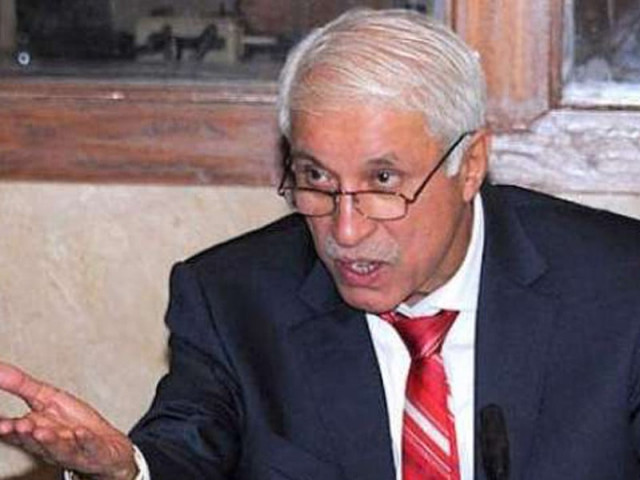
Federal Minister for Investment and Board of Investment (BOI) Chairman Qaiser Ahmed Sheikh. PHOTO: FILE
KARACHI:
China has signed new investment agreements worth billions of dollars with Pakistan and is set to invest up to $10 billion in the near future, Pakistan’s Federal Minister for Investment Qaiser Ahmed Sheikh said on Thursday.
In an exclusive interview, Sheikh said global attention was increasingly focused on Pakistan, with expectations of broad-based foreign investment in the coming years. He added that new joint venture agreements worth $1.5 billion have been finalised between the governments of Pakistan and China.
In addition, China has signed memorandums of understanding (MoUs) worth about $9 billion in Pakistan’s agriculture, automotive, and minerals sectors, signalling a renewed push for large-scale cooperation across key industries.
Sheikh said a major Pakistani trade delegation comprising around 300 business leaders recently visited China to attract further investment.
Also read: Pak-China footwear venture wins approval
He added that the government plans to connect the Reko Diq mining project to Karachi via Chagai with a special railway track and a new highway to facilitate transport and trade. Around $7 million would be secured from international financial institutions for the development of this economic corridor.
The minister also noted that following the success of Bunyan-un-Marsoos, global demand for Pakistan’s fighter aircraft has increased, with several countries expected to place orders.
Sheikh said the largest share of foreign direct investment in Pakistan is expected to flow into the agriculture and mining sectors.





Business
Stock market holiday on May 1: Are NSE, BSE, MCX open on Maharashtra Day? – The Times of India

Indian markets are set for a shortened trading week, with the NSE and BSE remaining closed on Friday, May 1, for Maharashtra Day. The holiday will pause trading across equity, equity derivatives and related segments.For investors planning trades or settlements, Friday’s closure will be the latest scheduled market break after the April 14 holiday observed for Dr Baba Saheb Ambedkar Jayanti.
Are NSE and BSE open on May 1?
No. Both the National Stock Exchange and BSE will remain shut on Friday, May 1.Normal trading will resume on the next working day after the holiday which is May 4, 2026.
Is MCX open on May 1?
The Multi Commodity Exchange (MCX) will remain closed in the morning session but will reopen for the evening session.The National Commodity & Derivatives Exchange (NCDEX), however, will remain shut for both sessions on Friday.
What is the next stock market holiday after May 1?
After Maharashtra Day, the next scheduled holiday for stock markets is May 28 on account of Bakri Id.
How many market holidays are left in 2026?
A total of 16 stock market holidays are scheduled for 2026. Seven have already passed. After the May 1 break, eight more full market holidays remain this year.The remaining holidays are:
- May 28- Bakri Id
- June 26 – Muharram
- September 14 – Ganesh Chaturthi
- October 2 – Gandhi Jayanti
- October 20 – Dussehra
- November 10 – Diwali Balipratipada
- November 24 – Guru Nanak Jayanti
- December 25 – Christmas
Which holidays fall on weekends?
Some major holidays in 2026 fall on weekends and therefore do not lead to exchange closures:
- Mahashivratri – February 15
- Eid-Ul-Fitr – March 21
- Independence Day – August 15
- Diwali Laxmi Pujan – November 8
Will there be Muhurat Trading?
Yes, Diwali Laxmi Pujan falls on a Sunday this year, and exchanges are expected to hold the customary Muhurat Trading session on November 8.The timing for the one-hour special session will be announced closer to the date.
Business
FDA proposes excluding Novo, Lilly weight loss drugs from bulk compounding list in win for the companies

The headquarters of the U.S. Food and Drug Administration in Silver Spring, Maryland, Nov. 4, 2009.
Jason Reed | Reuters
The Food and Drug Administration on Thursday proposed excluding the active ingredients in Novo Nordisk and Eli Lilly‘s blockbuster obesity and diabetes medications from the list of drugs that outsourcing facilities can use for compounding in bulk.
If that proposal is finalized, the exclusion would likely limit the mass compounding — or the making of custom, often cheaper alternatives — of those medicines unless they appear on the FDA’s drug shortage list. The agency said it will consider public comments, which can be submitted until late June, before making a final decision.
The FDA finds “no clinical need” for outsourcing facilities to compound them from bulk drug substances, the agency said in a release.
The proposal includes semaglutide, the active ingredient in Novo’s obesity drug Wegovy and diabetes counterpart Ozempic, and tirzepatide, which is in Lilly’s weight loss injection Zepbound and diabetes shot Mounjaro. It also covers Novo’s older molecule liraglutide.
“When FDA-approved drugs are available, outsourcing facilities cannot lawfully compound using bulk drug substances unless there is a clear clinical need,” FDA Commissioner Marty Makary said in the release.
The agency’s proposal specifically targets 503B outsourcing facilities, which manufacture compounded drugs in bulk with or without prescription and are largely regulated by FDA guidelines.
The proposal does not impact 503A pharmacies, which make compounded drugs according to individual prescriptions for a specific patient and are largely regulated by states rather than the FDA.
Lilly and Novo have invested billions to ramp up manufacturing capacity over the last several years, which has helped alleviate supply constraints. The companies have also pursued efforts to make their branded medications more affordable to win over users who had flocked to cheaper compounded medications.
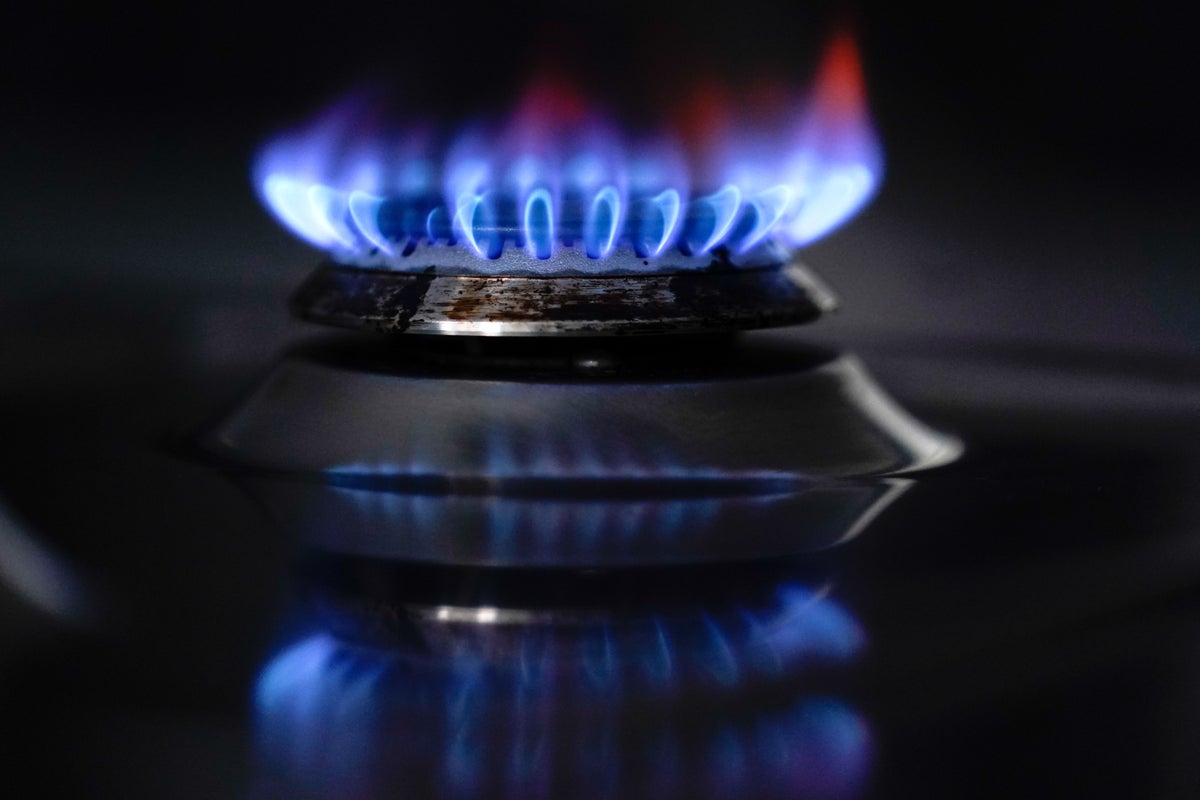
Reform UK leader Nigel Farage said in an interview on BBC Breakfast on Wednesday that “most of our gas now comes from Montana in the (US) Midwest”.
It is not the first time that Mr Farage has made a similar claim. Earlier in April he said: “Most of the gas we currently import comes from Montana.”
Evaluation
The US is only the third largest source of the UK’s gas supply, and the second largest foreign supplier. It is the largest supplier of liquid natural gas, the type that is transported by ship, rather than pipeline.
It is unclear why Mr Farage mentioned Montana specifically. Montana is not a major gas producing state.
The facts
Provisional data for 2025 shows that the UK’s own production of gas was 332,444 gigawatt hours (GWh). The country imported 463,692 GWh of gas. Of that, 320,249 GWh came from Norway and 104,360 GWh came from the US.
All the gas imported from the US was liquid natural gas (LNG) – the type that is super-chilled and transported by ship rather than in pipelines. The US was the UK’s largest supplier of LNG.
But it unclear how much – if any – of the UK’s gas comes from Montana specifically.
Data from the US Energy Information Administration (EIA) show that in 2024, the US produced a total of 37.7 trillion cubic feet of dry gas. Of this Montana accounted for around 40.0 billion cubic feet, or 0.1% of the total US production.
EIA data also show that Montana’s gas production was lower than its consumption of gas.
However, this does not mean that the state does not export any of its gas to other states or countries.
A 2023 report from the Montana Department of Environmental Quality said that while “Montana currently consumes more natural gas than it produces” a “significant portion” of the state’s production is exported.
Data from the US Census Bureau show that the US exported 2.8 billion US dollars worth of natural gas to the UK in 2025. This came from four states: Georgia, Louisiana, Maryland and Texas.
The data shows the state that the gas was exported from, not where the gas was actually initially produced. Although they are major LNG exporters, Maryland and Georgia produce little to no natural gas themselves.
The US Census Bureau data also show that Montana exported 525,083 US dollars worth of natural gas in 2025, all of which went to Canada.
A 2021 report from the UK’s Foreign and Commonwealth Office and Department for International Trade said that the UK was the fifth largest export market for Montana in 2019, selling 39 million US dollars worth of goods to the UK.
It listed the main goods exports from Montana to the UK in 2019 as electrical equipment, basic chemicals, navigational and measurement instruments, aerospace products and parts, and miscellaneous general purpose machinery.
There is no mention of gas in that report.
The US Census Bureau does not define Montana as being part of the Midwest.
Links
Facebook video (archived video download)
Gov.uk – Natural gas supply and consumption (archived page and spreadsheet)
Gov.uk – Natural gas imports (archived page and spreadsheet)
EIA – Natural Gas Gross Withdrawals and Production (archived)
EIA – Natural Gas Summary, Montana (archived)
Montana Department of Environmental Quality – Understanding energy in Montana (archived)
US Census Bureau – Foreign Trade (archived page and spreadsheet download)
EIA – Natural Gas Summary, Georgia (archived)
Gov.uk – UK-Montana trade and investment highlights (archived)
US Census Bureau – 12 States Make up the Midwest Region of the Country (archived)

Stock market holiday on May 1: Are NSE, BSE, MCX open on Maharashtra Day? – The Times of India

Chinese team visits Bangladesh, discusses FDI in textile sector

Stars of “Devil Wears Prada 2” give inside look at the highly anticipated film

Trump administration in advanced talks for a rescue package for Spirit Airlines, source says

PSL 11: Hyderabad Kingsmen opt to field after winning toss against Multan Sultans
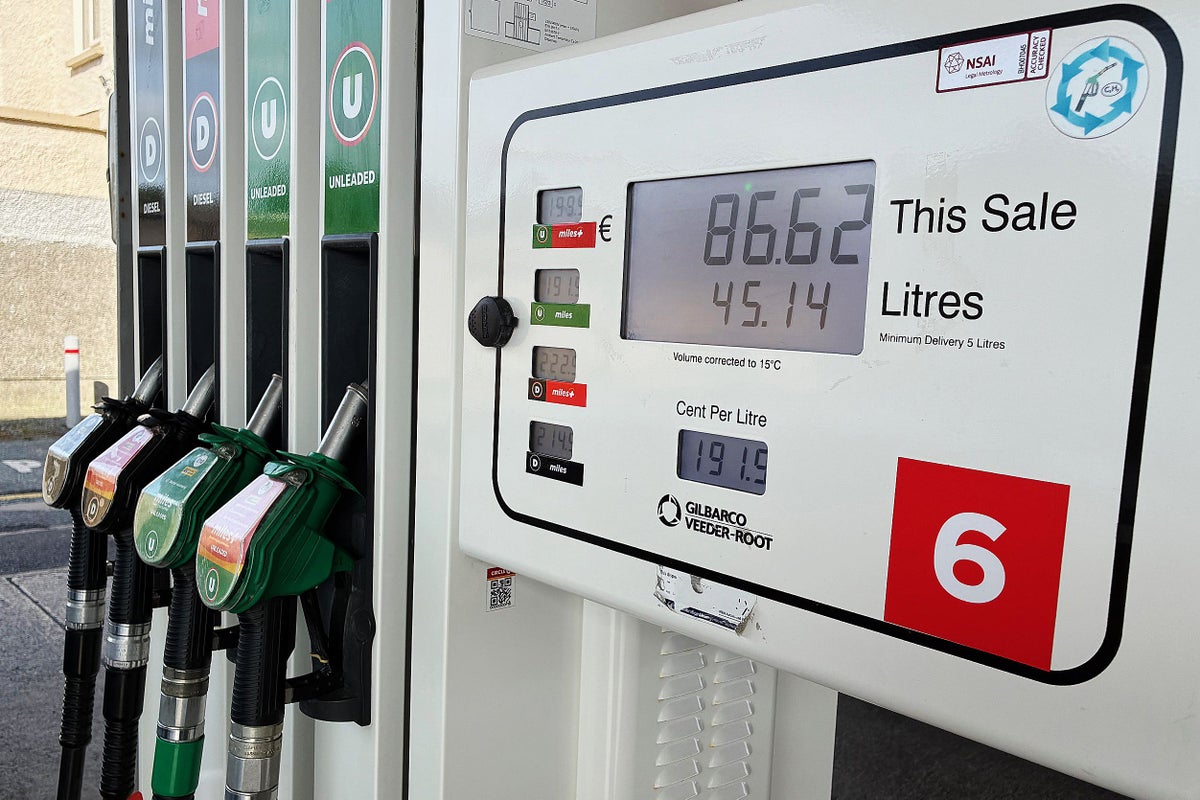
UK inflation accelerates after Iran war drives sharp rise in fuel prices

-
Business1 week ago
Trump administration in advanced talks for a rescue package for Spirit Airlines, source says
-
 Sports1 week ago
PSL 11: Hyderabad Kingsmen opt to field after winning toss against Multan Sultans
-
Business1 week ago
UK inflation accelerates after Iran war drives sharp rise in fuel prices
-

 Tech1 week ago
Microsoft faces court battle in £2bn Windows Server class action | Computer Weekly
-
 Business1 week ago
Gold prices in Pakistan Today – April 23, 2026 | The Express Tribune
-

 Entertainment1 week ago
Anne Hathaway shares major news about ‘Princess Diaries 3’
-

 Tech1 week ago
Blackbox replaces two racks of HPE storage with 8U of Everpure | Computer Weekly
-

 Fashion1 week ago
Bangladesh RMG units call for allowing local FOC raw material sourcing