

Business
Coffeemakers are the new centerpiece? India’s growing craze for cafe-like coffee at home; lakhs splurged on aroma and style – The Times of India


Spent a fortune on a coffee machine and those exotic beans to replicate that cappuccino you loved overseas? You are not alone. For many rich Indians, the coffee machine on the kitchen counter is no longer just for making a drink, rather it has become a lifestyle statement, as more people are trying to bring the cafe experience they enjoyed overseas, right in their homes.A growing number of young, affluent consumers are spending several lakh rupees on high-end coffee machines, specialty beans and cafe-style equipment to mirror the ambience of European coffee houses. These machines, which offer far more than basic espresso or latte functions, have become objects of prestige. Brands such as Versuni, SMEG and DeLonghi are increasingly being displayed as centrepieces in kitchens and lounges, erasing the line between appliance and art.
India’s coffee craze
From only a few hunderds six years ago, now, almost 20,000 premium coffee machines are estimated to be sold locally, every year, a figure that includes direct imports by companies, ET reported. This does not includes the large number of machines that individuals bring into the country themselves while travelling abroad or order through international e-commerce platforms. With limited availability of high-end brands and models in India, parallel imports continue to rise. Ravi Saxena, founder and chief executive of Wonderchef Home Appliances, links this trend to the rapid spread of neighbourhood cafes across Indian cities. He says this has created strong interest in recreating cafe-quality coffee at home. A trained barista, Saxena sells about 1.4 lakh coffee machines a year, including premium automatic models priced between Rs 60,000 and Rs 90,000. The appetite for premium machines is also visible among frequent international travellers. Gurgaon-based hotelier Rajat Gera placed an order for an SMEG machine in December for Rs 1.3 lakh and is still waiting for it to arrive at Indian ports. “It’s a piece of art that deserves to be placed as a centrepiece in the kitchen or lounge,” he says. The overall coffee machine market in India is valued at Rs 250–300 crore and is growing at more than 15% a year. Total sales across price categories reached about 4.2–4.5 lakh units in the last calendar year, compared with roughly 1.8 lakh units in 2019. While machines priced up to Rs 15,000 continue to dominate volumes, premium models are steadily expanding their share.
Struggling for the right taste
For some buyers, the shift is rooted in dissatisfaction with cafe offerings at home. Satyendra Shukla, who runs a boutique investment firm, bought a La Carimali machine for Rs 1.5 lakh two years ago. “I had to struggle for every cup of coffee in India. No cafe could give me coffee I liked. The right texture, temperature or taste seldom came together. Now, my well travelled friends say I make the best coffee. I look after the machine and spend a lot of time sourcing the best beans.” Others are prepared to absorb heavy import costs. Kolkata-based independent professional A Banerjee purchased a Philips machine priced at Rs 57,000 from Amazon UK for Rs 95,000 after accounting for shipping, customs duties and currency conversion. Gulbahar Taurani, chief executive of Versuni India, attributes rising demand to young consumers exploring different beans, flavours, aromas and brewing styles, including coffee mocktails mixed with tonic water. He said the company’s pilot launch of premium models priced up to Rs 80,000 in India has been highly successful. Versuni plans to combine its global technology with adaptations for Indian preferences. While its entire range is currently imported, Taurani has not ruled out domestic manufacturing as volumes grow. Retailers are also reporting strong traction. Coffee machines are among the fastest-moving categories in stores. Vijay Sales sells 400–500 units every month. “Coffee machines have become a lifestyle product. While most of the demand is still in the entry- to mid-segment, premium models are also selling fast. This could become a big category in the next three to four years,” said Nilesh Gupta, director, Vijay Sales. What was once a simple kitchen tool is rapidly turning into a lifestyle statement, as coffee drinkers in the country are investing not just in caffeine, but in culture and cachet at home.
Oil prices jumped on Tuesday as Donald Trump weighed Iran’s latest proposal to end the war.
The US president is unhappy with the latest Iranian proposal, a US official said on Monday. Iranian sources disclosed that Tehran’s proposal avoided addressing its nuclear programme until hostilities cease and Gulf shipping disputes are resolved.
Trump’s displeasure with the Iranian offer leaves the conflict deadlocked, with Iran shutting shipping flows through the Strait of Hormuz, which typically carries supply equal to about 20 per cent of global oil and gas consumption, and the US keeping in place its blockade of Iranian ports.
Brent crude rose to $108.13 per barrel, hovering near a three-week high, while US West Texas Intermediate went up to $96.48.
Both benchmarks are well above pre-war levels. Brent was trading at $72 before the US-Israeli war on Iran began on 28 February.
Asian stocks were broadly subdued at the opening. While MSCI’s broadest index of Asia-Pacific shares outside Japan was down 0.12 per cent, hovering near the record high it touched on Monday, Nikkei fell 0.5 per cent.
The S&P 500 eked out modest gains on Monday and was on course for a nearly 10 per cent gain for April. US stock futures were 0.1 per cent higher in Asian hours.
Indian shares are set to open lower on Tuesday, with GIFT Nifty futures pointing to the benchmark Nifty 50 opening below Monday’s close of 24,092.70. Both Nifty and Sensex snapped a three-session losing run on Monday, led by a rebound in technology stocks, but the broader momentum remained constrained by unresolved tensions around the Strait of Hormuz.
Elevated oil prices are a particular headwind for India, the world’s third-largest crude importer, heightening inflation risks, pressuring economic growth and widening the country’s import bill.
Foreign portfolio investors offloaded domestic stocks worth Rs 11.5bn ($122m) on Monday, extending their selling streak to a sixth straight session.
Vessel crossings showed signs of recovery over the weekend, according to the maritime intelligence firm Windward, but analysts warned increased movement was yet to translate into a surge in oil and gas flows.
Iran reportedly offered to end its blockade of the waterway without addressing its nuclear programme, passing the proposal to Washington through Pakistani mediators. But Mr Trump has made ending Iran’s atomic programme a condition for any deal.
Central banks are also in focus this week, with the Bank of Japan, the US Federal Reserve, the Bank of England, and the European Central Bank all due to announce policy decisions. All are expected to hold rates steady, but markets will be watching closely for signals about how policymakers plan to respond to the inflationary pressure from the war.
“The BOJ is likely to stay highly sensitive to market volatility,” Fred Neumann, chief Asia economist at HSBC, told Reuters. “Our base case remains one single 25 basis point hike this year in July, but a June rate rise becomes more likely if the Strait of Hormuz is still effectively closed after mid-May.”
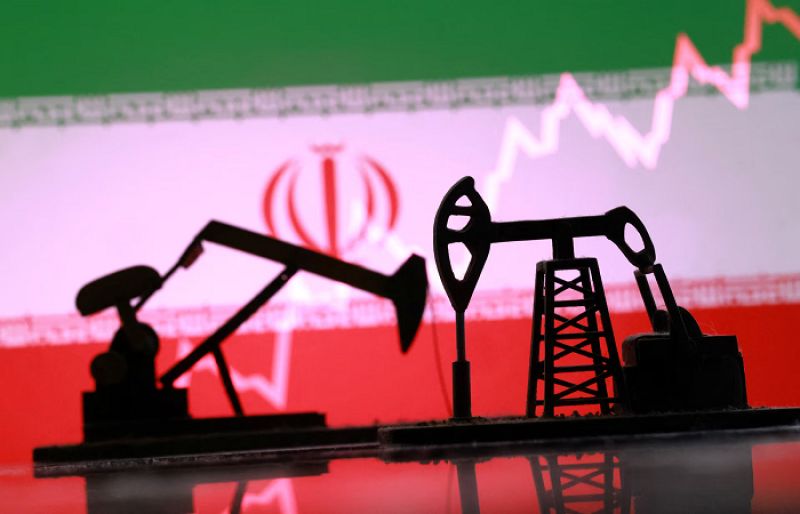
Oil prices extended their gains on Tuesday as efforts to end the US-Iran war appear stalled, with the crucial Strait of Hormuz waterway still mainly shut, keeping energy supplies from the key Middle East producing region out of the reach of global buyers.
US President Donald Trump is unhappy with the latest Iranian proposal aimed at ending the war, a US official said on Monday.
Iranian sources disclosed on Monday that Tehran’s proposal avoided addressing its nuclear program until hostilities cease and Gulf shipping disputes are resolved.
Trump’s displeasure with the Iranian offer leaves the conflict deadlocked, with Iran shutting shipping flows through the Strait of Hormuz, which typically carries supply equal to about 20% of global oil and gas consumption, and the US keeping in place its blockade of Iranian ports.
Brent crude futures for June climbed 45 cents, or 0.4%, to $108.68 a barrel, after gaining 2.8% in the previous session to its highest close since April 7. The contract is up for a seventh day.
US West Texas Intermediate (WTI) crude for June rose 58 cents, or 0.6%, to $96.96, after gaining 2.1% in the previous session.
An earlier round of negotiations between the US and Iran collapsed last week following failed face-to-face talks.
“For oil traders, it’s not the rhetoric that matters any more, but the actual physical flow of crude oil through the Strait of Hormuz, and right now, that flow remains constrained,” Fawad Razaqzada, market analyst at City Index and FOREX.com, said in a note.
Razaqzada added that even if a resolution is reached, production outages and logistical challenges mean recovery could take months.
Ship-tracking data revealed significant disruptions in the region, with six Iranian oil tankers forced to turn back due to the US blockade.
However, a liquefied natural gas tanker managed by the United Arab Emirates’ Abu Dhabi National Oil Co did cross the Strait of Hormuz and appears to be near India, ship-tracking data showed on Monday.
Before the US-Israeli war on Iran, which began on February 28, between 125 and 140 vessels transited the strait daily.

The General Motors global headquarters at Hudson’s Detroit in Detroit, Michigan, US, on Monday, Jan. 12, 2026.
Jeff Kowalsky | Bloomberg | Getty Images
DETROIT – General Motors is set to report its first-quarter earnings before the bell Tuesday.
Here’s what Wall Street is expecting, based on a survey of analysts by LSEG:
- Earnings per share: $2.62 adjusted
- Revenue: $43.68 billion
Those results would mark a roughly 1% decline in revenue compared with a year earlier and a 5.8% decrease in adjusted earnings per share.
GM’s 2025 first-quarter results included $44.02 billion in revenue, net income attributable to stockholders of $2.78 billion, and adjusted earnings before interest and taxes of $3.49 billion.
Aside from earnings and any changes to the automaker’s 2026 guidance, investors will be monitoring effects from the Iran war, tariff impacts and additional charges related to the automaker’s pullback in all-electric vehicles.
After announcing $7.6 billion in EV write-downs last year, the automaker said it expected additional charges but at a lower level than in 2025.
GM’s 2026 earnings guidance is better than its expectations and results from last year. It includes net income attributable to stockholders of between $10.3 billion and $11.7 billion; adjusted earnings before interest and taxes of $13 billion to $15 billion; and EPS of between $11 and $13 for the year.


Buckingham Palace issues ‘disappointing’ update on King Charles amid threat

Trump not happy with latest Iran proposal to end war, says US official

World Cup FAQ: How Are Penalties Awarded And What Are The Rules?

-

 Sports1 week ago
NCAA men’s gymnastics championship: All-time winners list
-

 Sports1 week ago
WWE WrestleMania 42 Night 2: Live match results and analysis
-

 Fashion1 week ago
UK’s Sosandar returns to profitability amid robust FY26 performance
-

 Politics7 days ago
UK’s Starmer seeks to deflect blame over Mandelson appointment
-
 Business1 week ago
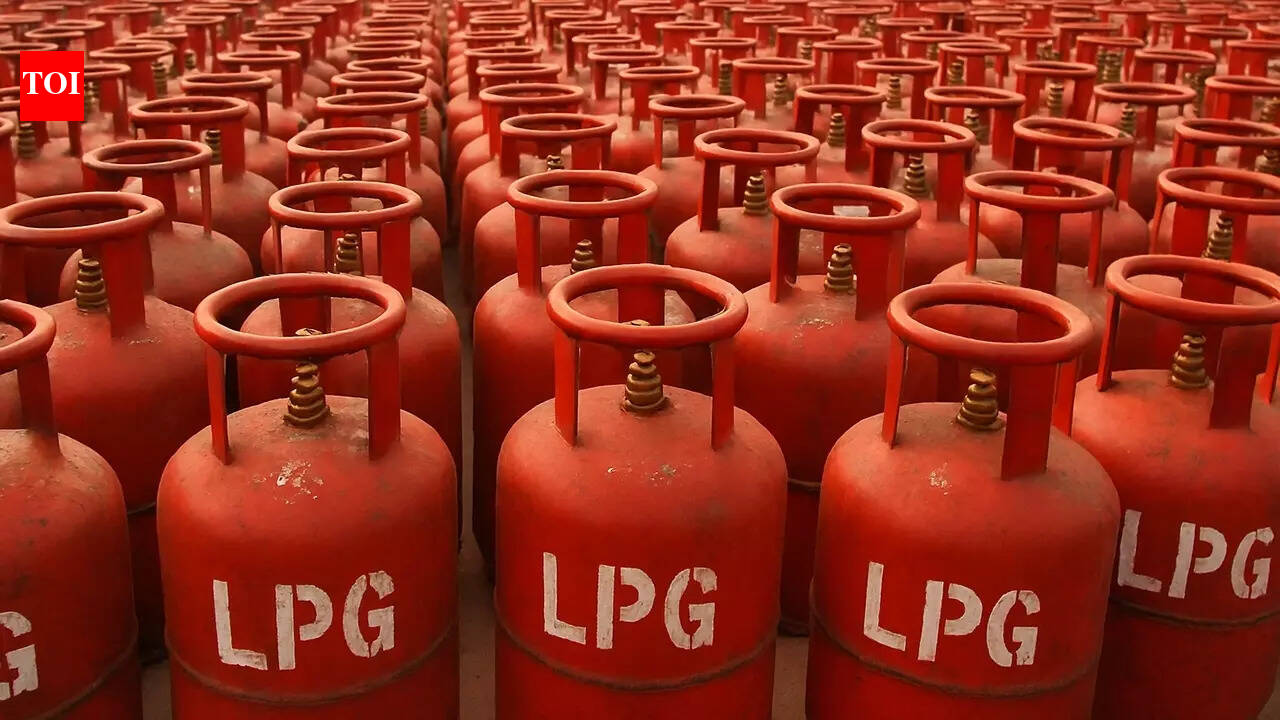
No fuel shortage: Govt assures 100% domestic LPG, PNG, CNG supply amid Hormuz energy crunch – The Times of India
-

 Entertainment1 week ago
Lee Anderson, Zarah Sultana kicked out of UK Parliament for calling PM ‘liar’
-
 Business1 week ago
How Trump’s psychedelics executive order could unlock stalled cannabis reform
-

 Sports1 week ago
Quetta Gladiators opt to bowl after winning toss against Peshawar Zalmi in PSL 11 clash