

Sports
College baseball Week 2: Top 25 rankings, play of the week and what to watch

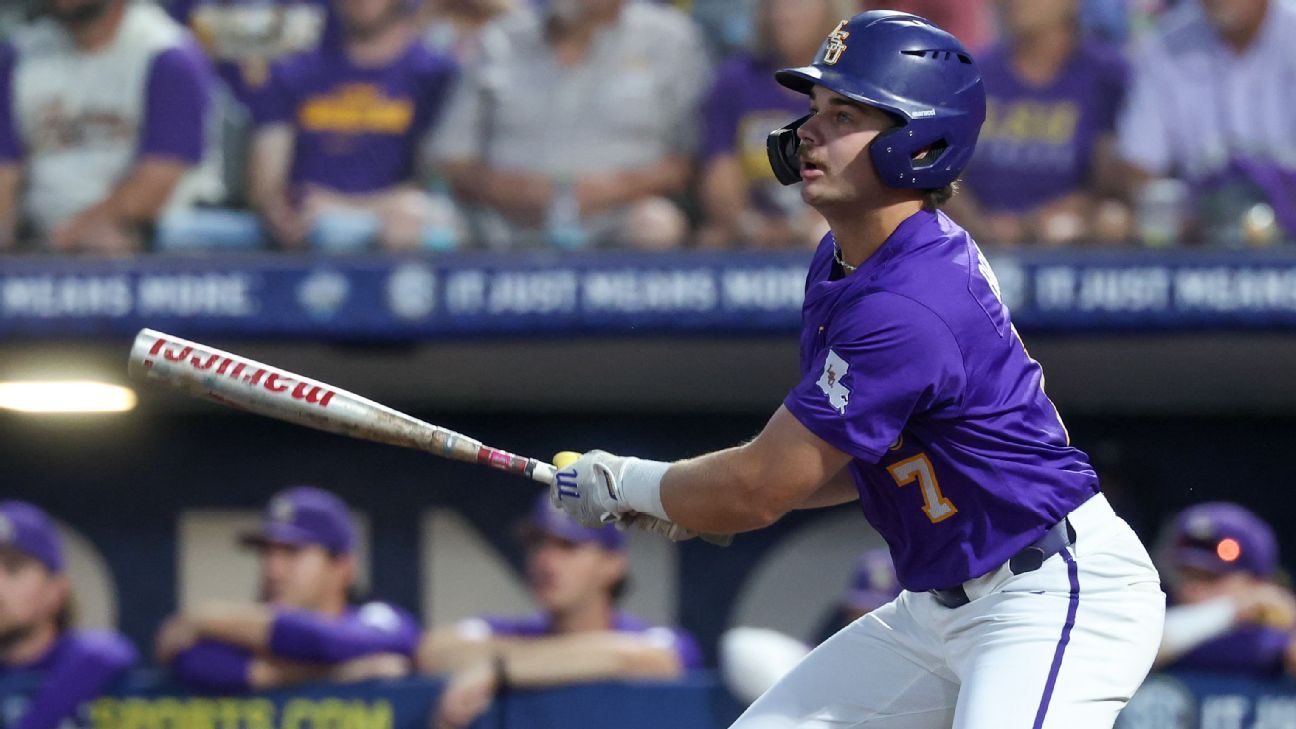
Kent State did the unthinkable this past week. After pushing LSU to the edge in Baton Rogue in a midweek matchup, the Golden Flashes took that momentum with them into Knoxville and won a road series against Tennessee. And as a result, the Vols took a big slide in this week’s rankings, dropping seven spots to No. 20.
How will the Vols respond? Well, they’re facing the top team in the country in UCLA on Friday, so they’ll have to bounce back fast. The Bruins, and the four teams behind them, held steady in the rankings after dominant performances, but after that there were more shakeups.
TCU had a rough week overall. After losing its midweek game to UT Arlington, it got swept by UCLA in Los Angeles, causing the Horned Frogs to drop 11 spots. The week’s biggest risers were Southern Miss and Oklahoma, which each climbed up eight spots. Louisville fell out of the rankings completely, paving the way for Ole Miss to break through at No. 25.
Here are how the entire top 25 rankings look as of Feb. 23, plus our favorite plays and what we’re watching in the week to come.
Top plays
Not that LSU needs anymore power than it already has, now it has Jake Brown launching home runs like this.
Jake Cannon Brown Everybody 💣@JakeBrown_14 | SECN + pic.twitter.com/WTy1th1r6v
— LSU Baseball (@LSUbaseball) February 17, 2026
And how about another home run? This one from UCLA’s Roch Cholowsky. He certainly is living up to all the hype he had before the season started.
Roch goes dead center 🤯
📺B1G+#GoBruins pic.twitter.com/zXXISgXcrM
— UCLA Baseball (@UCLABaseball) February 22, 2026
Player to watch
Jackson Flora, RHP, UCSB
Flora has been rising up draft boards, and for good reason. The junior, who Kiley McDaniel has at No. 4 in his MLB draft rankings, touched 100 MPH in his 2026 debut and he has kept up the heat since then. Does he have enough to over take Cholowsky for the No. 1 pick? We’ll just have to wait and see.
FLO-STATE 🌊
Back-to-back strikeouts for Flora as he escapes the bases loaded jam!
T2 | Pilots 0 – Gauchos 1
📺 ESPN+
🎧 https://t.co/TYosww6CZU#GoChos pic.twitter.com/HXE196J0xl— UC Santa Barbara Baseball (@UCSB_Baseball) February 21, 2026
Games to watch
No. 10 Florida at No. 17 Miami
Game 1: 7 p.m. on Friday (ACC Network Extra)
Game 2: 6 p.m. on Saturday (ACC Network Extra)
Game 3: 1 p.m. on Sunday (ACC Network Extra)
We can’t get enough of these early top-ranked series, and an in-state one makes this all the better. Miami has been solid to open the season, and though the Canes are ranked behind Florida, they do sport a perfect 7-0 record for the year, while the Gators have already dropped one game. Florida will have to be ready for Miami’s Alex Sosa, who has been dominant this season so far with five home runs and 17 RBIs. And if he wasn’t a tall enough task, there’s Daniel Cuvet right behind him with five homers himself to go along with 13 RBIs. It looks to be a high-scoring affair in Coral Gables this weekend.
Updated top 25
Here are D1baseball.com’s latest rankings, plus information on each team’s next game.
All times Eastern.

1. UCLA Bruins
Previous rank: 1
Record: 6-1
Next game: vs. Tulane, 8 p.m. on Tuesday
 2. LSU Tigers
Previous rank: 2
Record: 8-0
Next game: vs. McNeese, 7:30 p.m. on Tuesday (SEC Network+)
 3. Texas Longhorns
Previous rank: 3
Record: 7-0
Next game: vs. UTRGV, 7:30 p.m. on Tuesday (SEC Network+)
 4. Mississippi State Bulldogs
Previous rank: 4
Record: 8-0
Next game: vs. Austin Peay, 5 p.m. on Tuesday (SEC Network+)
 5. Georgia Tech Yellow Jackets
Previous rank: 5
Record: 8-0
Next game: at Georgia State, 4 p.m. on Tuesday (ACC Network Extra)
 6. Arkansas Razorbacks
Previous rank: 8
Record: 6-1
Next game: vs. Arkansas State, 4 p.m. on Monday (SEC Network+)
 7. Auburn Tigers
Previous rank: 9
Record: 6-1
Next game: vs. West Georgia, 7 p.m. on Wednesday (SEC Network+)
 8. North Carolina Tar Heels
Previous rank: 10
Record: 6-1-1
Next game: vs. NC A&T, 4 p.m. on Tuesday (ACC Network Extra)
 9. Coastal Carolina Chanticleers
Previous rank: 6
Record: 5-2
Next game: vs. Campbell, 4 p.m. on Tuesday (ESPN+)
 10. Florida Gators
Previous rank: 12
Record: 7-1
Next game: vs. FIU, 6:30 p.m. on Tuesday (ESPN+)
 11. Georgia Bulldogs
Previous rank: 14
Record: 6-1
Next game: vs. Troy, 3 p.m. on Wednesday (SEC Network+)
 12. Southern Miss Golden Eagles
Previous rank: 20
Record: 6-1
Next game: vs. Alabama, 7 p.m. on Tuesday (ESPN+)

13. Oklahoma Sooners
Previous rank: 21
Record: 7-0
Next game: vs. Arizona State, 5 p.m. on Tuesday (SEC Network+)
 14. NC State Wolfpack
Previous rank: 17
Record: 5-1
Next game: vs. Richmond, 3 p.m. on Tuesday
 15. Clemson Tigers
Previous rank: 19
Record: 7-0
Next game: vs. Presbyterian, 4 p.m. on Tuesday (ACCNX)
 16. Wake Forest Demon Deacons
Previous rank: 22
Record: 6-1
Next game: at UNCG, 5 p.m. on Tuesday (ESPN+)
 17. Miami Hurricanes
Previous rank: 23
Record: 9-0
Next game: at FAU, 6:30 p.m. on Wednesday
 18. TCU Horned Frogs
Previous rank: 7
Record: 2-5
Next game: at Loyola Marymount, 4 p.m. on Monday
 19. Oregon State Beavers
Previous rank: 11
Record: 4-3
Next game: at Houston, 3 p.m. on Friday
 20. Tennessee Volunteers
Previous rank: 13
Record: 5-2
Next game: vs. Bellarmine, 4 p.m. on Tuesday (SEC Network+)
 21. Florida State Seminoles
Previous rank: 16
Record: 4-2
Next game: vs. North Florida, 5 p.m. on Wednesday (ESPN+)
 22. Kentucky Wildcats
Previous rank: 18
Record: 5-2
Next game: vs. Western Kentucky, 4 p.m. on Tuesday (SEC Network+)
 23. Texas A&M Aggies
Previous rank: 24
Record: 7-0
Next game: vs. Lamar, 7 p.m. on Tuesday (SEC Network+)

24. West Virginia Mountaineers
Previous rank: 25
Record: 5-1
Next game: vs. Ohio, 1 p.m. on Wednesday (ESPN+)

25. Ole Miss Rebels
Previous rank: NR
Record: 8-0
Next game: vs. Southeast Missouri State, 5 p.m. on Tuesday (SEC Network+)
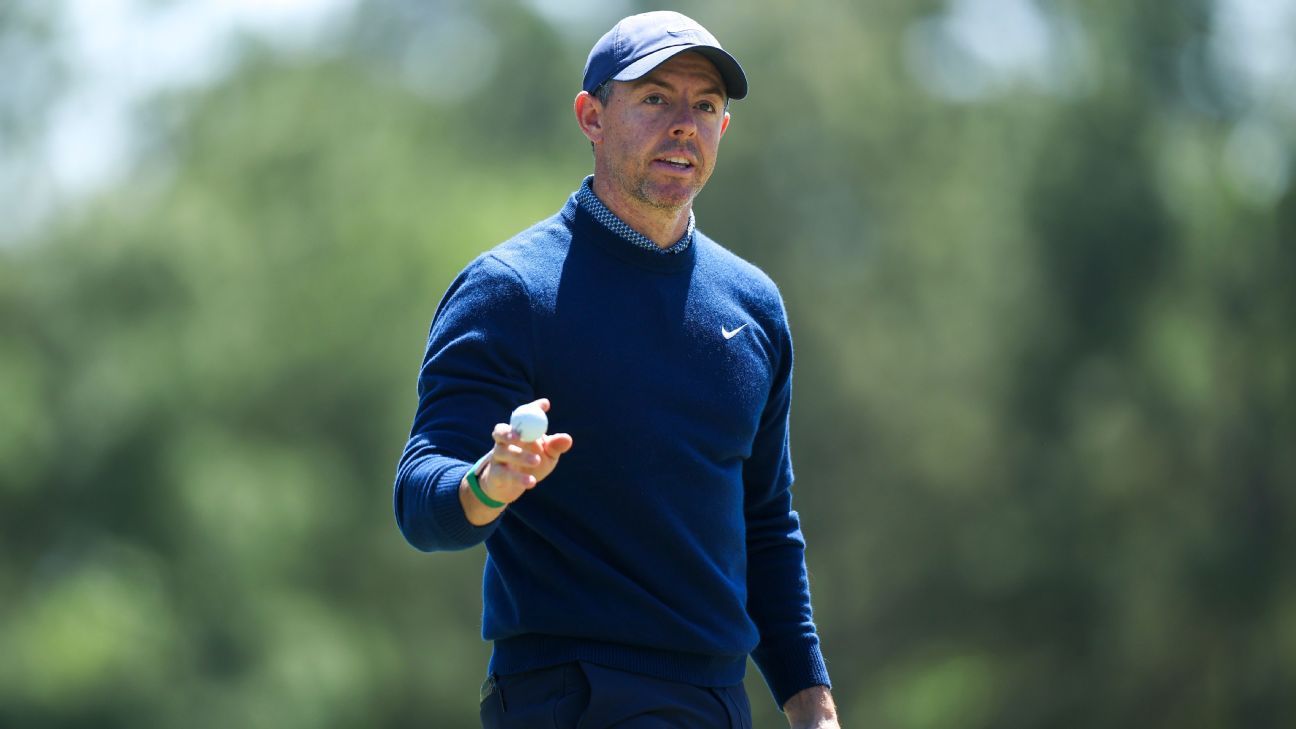
AUGUSTA, Ga. — We are just 18 holes into the 90th playing of the Masters and the tournament is already delivering on a high level.
A favorable forecast leading into the week has set the stage for a firm and fast Augusta National, one that appears prepared to weed out the pretenders from the contenders and potentially deliver one of the best versions of this major championship.
Through one round, the leaderboard is already stacked with some of the best players in the world as well as players who have had recent success here. Five of the top 10 finishers in last year’s event find themselves inside the top 10 again and four of the top five in the world, per Data Golf (as well as five of the top 10 in the OWGR), are part of the group of only 18 players under par.
With a golf course that should only get tougher over the next three days, here’s what we’re watching heading into the second round of the Masters.
Which players have the best shot at staying near the top of this loaded leaderboard?
Paolo Uggetti: There has not been a proper defense of the green jacket since Tiger Woods won in 2001, a year after winning his second Masters in 2000.
After an opening round 67 – good enough to hold a share of the lead at 5-under — Rory McIlroy is ready to try and do just that.
The score Thursday is one McIlroy felt was almost undeserved. He hit only five of 14 fairways and said he probably should have landed at 2-under. That he was able to score as well as he did regardless exemplified the kind of confidence the five-time major winner has in his game right now and the kind of freedom he possesses after finally securing the grand slam last year.
“I said this when I came in on Tuesday, I think winning a Masters makes it easier to win your second one. I do,” McIlroy said. “I think it’s easier for me to make those swings and not worry about where it goes when I know that I can go to the Champions Locker Room and put my green jacket on and have a Coke Zero at the end of the day.”
Must be nice. More than just his energy, McIlroy has come to relish this type of tough style of golf that requires shot-shaping, spin control and the right combination of aggression and patience. As this tournament gets harder, it would be shocking to see him not contend on the weekend. He’s not the only one who thinks so.
“By the way, Rory may never lose this thing again after last year,” Fred Couples said Thursday. “I said that on about the 12th hole to my caddie.”
The same goes for Scottie Scheffler, who played his C game Thursday and still shot 2-under, as well as Justin Rose who followed up his near Masters victory last year with a round of 70 too. Both know exactly what it takes to win here and are unlikely to fade.
Patrick Reed already has a green jacket and has been playing some of the best golf in the world this year, notching two wins on the DP World Tour. Reed also had a top-10 finish last year and there will be no lack of experience or getting ahead of himself.
“When I won in ’18, it was the first year I actually fully bought into just taking it day by day and shot by shot,” Reed said. “I think that’s what my recipe is, because when you get to the first major, you’re always going to put too much pressure on yourself, you’re always going to grind a little harder.”
Finally, a quiet round of 70 from two-time major winner Xander Schauffele should not be ignored. Schauffele has flown slightly under the radar after a disappointing 2025, but he’s got three top-10 finishes so far in 2026 and has had incredible form here at Augusta. In eight starts, he’s got five finishes inside the top 10.
“Kind of just got to hang in there,” Schauffele said. “Anything can happen on this property, especially the way it’s playing.”
How did the course play today and what could we see for the rest of the tournament?
Mark Schlabach: During the opening round, Patrick Reed, the 2018 Masters champion, broke a tee trying to repair a ball mark on the 17th green.
Jason Day, playing in his 15th Masters, noticed the “tinge of purple” on the No. 1 fairway, a sign that the Augusta National course is starting to get firm, bouncy and fast.
Chris Gotterup, who is making his debut in the first major of the season, averaged a whopping 363 yards off the tee because the ball is rolling so far on firm fairways.
High temperatures are predicted to reach the mid-80s on Saturday and Sunday, and relative humidity is dropping to 20-30% each afternoon, which means it’s going to stay dry.
“You already know it’s going to get crusty,” said Reed, who opened with a 3-under 69. “You know it’s going to get fast, and it’s going to take a lot of patience. You’re going to have to hit the ball solid and put the ball in the right spots. When you do, be patient and try to minimize errors.”
Shane Lowry, who carded a 2-under 70 on Thursday, predicted it might be the “toughest Masters we’ve played in a while.”
“You look at the forecast,” Lowry said. “They can do whatever they want with the golf course this weekend. I think over the last few years, we’ve had a day every year where it’s been raining or it’s been heavy rains. It’s kind of helped us a little bit, but I think before the week is out, it’s going to get very, very crusty around here.”
Day said Augusta National can make the course as difficult as it wants in the current conditions.
“If they want [single] digits to win, it’ll be baked out and fast, and guys will be kind of spewing on themselves out there,” said Day, who posted a 3-under 69. “Be really difficult.”
Uggetti: A perfect example of what players are talking about above is what happened today on the 13th green. Earlier in the day, McIlroy had to layup on the par-5 and left himself a 60-yard pitch on a downslope to the hole. McIlroy was able to generate enough spin to put the ball past the hole and keep it on the green. He made the ensuing birdie putt which kicked off a run of three straight birdies.
A few hours later, Scheffler and Gary Woodland played the hole and left themselves 62 and 39 yards respectively for their pitches. But even as they clipped their shots well off the turf, the greens had already gotten firmer and less receptive. Instead of holding, both of their balls rolled off the back left of the green and suddenly a birdie hole had turned into a grind for par.
“I think when the greens get that firm, you really have to think about where the best miss is, and distance control is very important, but also, like, different — missing it left, missing it right,” McIlroy said. “So when the greens do get firm like this, it makes it a much more tactical test, and you really have to think about things.”
McIlroy pointed out that the wind will be relatively tame the rest of the week, but the golf course? That’s only getting tougher. Buckle up.
Who had the most disappointing first round?
Uggetti: There was a lot of hype surrounding Jon Rahm heading into this week and with good reason. The Spaniard had notched a win and five top-5 finishes in five events on LIV. He appeared to be rounding into form just at the right time to compete for a second green jacket and spoke with much positivity about his game after taking a proper offseason to work on “bad habits.”
Yet Rahm delivered another dud Thursday, shooting a 6-over 78 and putting himself 11 shots behind the first-round leaders.
It would be easy to attribute Rahm’s mediocre play at the majors in recent years to his decision to leave for LIV. And while maybe there’s a kernel of truth there, it is also a crutch. The bottom line is Rahm does not belong in the conversation with Scheffler and McIlroy as one of the top players in the game.
His game is not sharp enough to compete at an Augusta that’s firm and fast and only getting harder. Rahm himself noted earlier this week that his win at the Masters had come during a version of the tournament in 2023 that was wet and soft where surviving the elements was more important than hitting the kinds of shots that this week will require.
“If I had to say what was really good in 2023 that is probably getting towards that level again hopefully is my iron game,” Rahm said Tuesday, “I hit my irons really well.”
On Thursday, a frustrated Rahm lost over a stroke to the field with those irons as well as a shocking 3.62 shots to the field with his putting — he three-putted four times! — the third-worst mark of the entire field. Even though he could bounce back Friday and make the cut, he effectively shot himself out of the tournament after just 18 holes.
Schlabach: After winning back-to-back tournaments in the LIV Golf League, Bryson DeChambeau was a popular pick to win his first green jacket this week.
Last year, DeChambeau played in the last pairing with McIlroy in the final round and tied for fifth at 7 under. It was his second straight top-10 in the Masters. It seemed that he had finally figured out the code for Augusta National.
That wasn’t the case on Thursday. He carded a 4-over 76 and is already nine strokes behind the leaders.
After making the turn at even par, things fell apart for DeChambeau on the par-4 11th. He hit his approach shot into the right greenside bunker. He needed three swings to get out, resulting in a triple-bogey 7.
0:35
Bryson DeChambeau has disastrous 11th hole in the bunker
Bryson DeChambeau needs three shots to get out of a bunker before recording a triple bogey on Hole 11 at the Masters.
DeChambeau said he hit his second shot 12 yards farther than he wanted. He also said the bunker was softer than he anticipated.
The Crushers GC captain will have to go low on Friday. He hit eight of 18 greens and nine of 14 fairways.
It was his worst opening round since he carded a 7-over 78 in the first round of The Open at Royal Portrush in Northern Ireland in July 2025. He went 16 under over the final 54 holes and tied for 10th at 9 under.
“Just going to give what the golf course gives me,” DeChambeau said. “I have to try to hit my irons better. I drove it left numerous occasions. You know, everybody has an ability for weird things to happen, and today I just did not have my irons under control, which is weird. It’s been good coming into it [the week].
What other golfers have work to do on Friday to make the cut?
It’s a loaded leaderboard with many of the world’s best golfers within striking distance.
But there are more than a handful of familiar names who are in danger of missing the 36-hole cut, which is projected at 4 over par or better (38.4%) by DataGolf.com.
Two-time Masters champion Bubba Watson, Sungjae Im, Nicolai Højgaard and DeChambeau are right on the projected cut line. Patrick Cantlay, Harry Hall and Maverick McNealy are 5 over, and Min Woo Lee, Fred Couples and Rahm are 6 over.
Hall planned wholesale changes after going 37-40 in his first Masters round.
“I’m going to change my driver,” he said. “I’m going to put two drivers in play tomorrow, different ones. I’m putting a new putter in play and going to figure [it] out on the range. I don’t think I spin my irons enough either. I went into a spinnier ball this week, but I still can’t stop it on a dime like I need to. So. I probably need to add to my irons or do something to compete in these majors.”
Former Open Championship winner Brian Harman is 7 over, and Robert MacIntyre is 8 over.
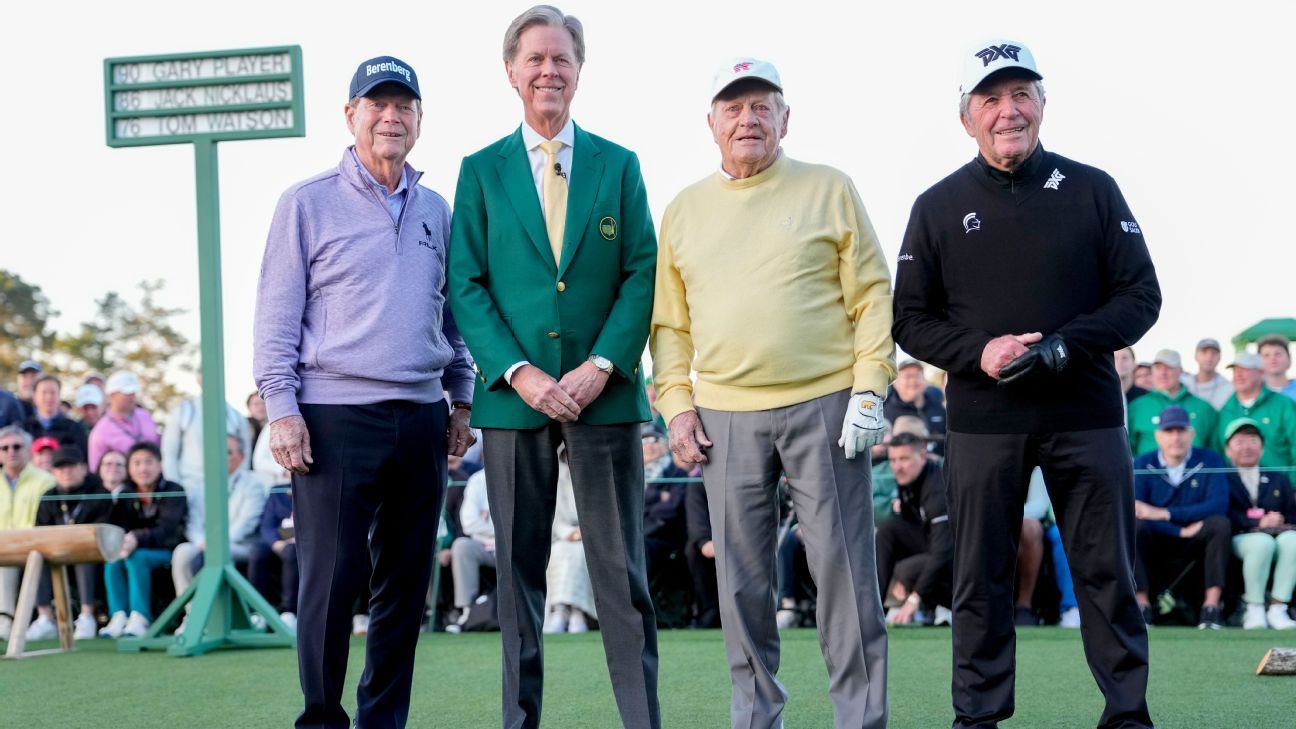
AUGUSTA, Ga. — Former Masters champion Gary Player said he sympathizes with Tiger Woods‘ ongoing pain from multiple injuries but says the 15-time major champion needs to hire a driver and stop operating vehicles while medicated.
Player, speaking to reporters Thursday after hitting a ceremonial tee shot before the opening round of the 90th Masters, said Woods needs to hire a chauffeur following his DUI arrest in Florida on March 27.
“Do I blame him for taking medicine? Hell, no,” Player said. “He has sleep deprivation. Do I blame him for taking something to help him sleep? No. But I don’t think he should drive a car. When you’re taking that medicine, it’s dangerous when you’re driving a car, same as it’s dangerous when you look at your cellphone in the car.”
Woods, 50, was formally charged Wednesday with misdemeanor DUI and refusing to take a chemical or physical test of his breath or urine, according to court records. Woods is also facing a ticket for distracted driving, a moving violation, after he told police that he was looking at his phone before he clipped the back of a trailer and had his SUV flip on its side.
The five-time Masters champion announced March 31 that he was stepping away from competitive golf and his administrative roles with the PGA Tour to seek “comprehensive inpatient treatment.”
A judge approved Woods’ request to seek treatment outside the U.S. due to privacy concerns. It’s believed that Woods is at a facility in Switzerland after his plane landed there.
“My heart goes out for him,” Player said. “There’s nothing worse than living in pain every day of your life. You can’t think of anything worse. I just hope he can get it all sorted out because he’s such an asset to golf and has done so much for the game.”
Said six-time Masters champion Jack Nicklaus: “Just whatever you need to help you and get back, because I think golf needs him, and we’d love to have him back.”
On Tuesday, prosecutors indicated that they plan to issue a subpoena seeking copies of Woods’ prescription medication records on file at Lewis Pharmacy in Palm Beach, Florida.
A Martin County Sheriff’s affidavit said deputies found two pain pills in Woods’ pants pocket and that the golfer showed signs of impairment following the crash.
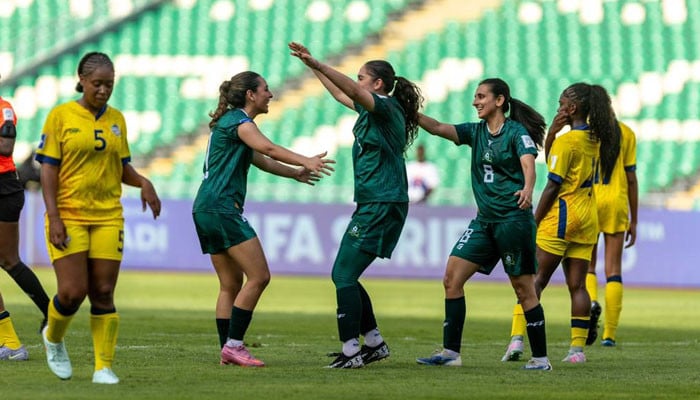
Pakistan made a sizzling start to their Fifa Series campaign with a record-breaking 8-0 victory over the Turks and Caicos Islands at the Stade Alassane Ouattara in Abidjan on Thursday.
Four goals by four different scorers in the first half set the tone for Adeel Rizki’s side before two more players got their names on the scoresheet as Pakistan surpassed their previous-best victory — 7-0 against the Maldives in September 2022.
Pakistan made their attacking intent clear from the very beginning when Mariam Mahmood, fresh from winning the Welsh league title with Wrexham Women, struck the side netting with a shot from an acute angle inside the first four minutes.
After Nadia Khan tested Turks and Caicos goalkeeper Archenie Desir with a shot from long range, Pakistan opened the scoring in the 10th minute with Zahmena Malik finding the back of the net.
It was 2-0 two minutes later, Aqsa Mushtaq slotting in after a rebound after Mariam had forced a save from Desir.
Pakistan continued to press with midfield metronome Layla Banaras showing her quality when she made it 3-0 with a weaving run and smart finish just past the half-hour mark.
In a game where Pakistan had pinned their opponents in the opposing half for almost the entirety of the match, Mariam got on the scoresheet in the 38th when she expertly volleyed in a cross at the back post.
Pakistan continued in the same vein in the second half, Nadia planting a perfect header to a cross from the left in the 56th to make it 5-0.
Aqsa scored a pearler to make it 6-0 in the 76th before Layla also got her second with a perfectly-placed shot from outside the box. Isra Khan’s goal in the 81st completed the record-breaking triumph.
PFF president Mohsen Gilani hailed the historic win. “I congratulate the players and the coaching staff for creating history. This is the start of a new era for women’s football in Pakistan and I hope the team continues in the same vein in the Fifa series.”


Rory’s defense, disappointing first rounds and looking ahead to the rest of the Masters

Gary Player, Jack Nicklaus address Tiger Woods arrest, recovery
[CinePlex360] Please moderate: “Lindsey Vonn cr

-
 Business1 week ago
Jaguar Land Rover sees sales recover after cyber attack
-
Uncategorized1 week ago
[CinePlex360] Please moderate: “Trump signals p
-

 Entertainment6 days ago
Joe Jonas shares candid glimpse into parenthood with Sophie Turner
-

 Tech6 days ago
Our Favorite iPad Is $50 Off
-
 Sports6 days ago
UConn Final Four run could trigger a $50M furniture giveaway for Massachusetts-based Jordan’s Furniture
-

 Entertainment6 days ago
Blake Lively reacts to harassment claims dismissal against Justin Baldoni
-

 Fashion1 week ago
China’s Anta Sports posts record $11.62 bn revenue in 2025
-
 Business6 days ago
Video: Why Is the Labor Market Stuck?