

Business
Corporate DEI index sees 65% drop in participation from Fortune 500 companies


People hold flags outside the US Supreme Court on December 4, 2024 in Washington, DC, during oral argument on whether states can ban certain gender transition medical treatments for young people.
Roberto Schmidt | AFP | Getty Images
New research from the LGBTQ+ group Human Rights Campaign showed a drastic drop in Fortune 500 companies willing to publicly disclose their diversity, equity and inclusion practices.
The HRC’s 2026 Corporate Equality Index saw a 65% drop in participation this year, falling from 377 Fortune 500 companies in 2025 to just 131 companies in 2026. HRC noted many of the companies that dropped out hold federal contracts.
“Our research shows the strength and the strain of this moment on LGBTQ+ workers, consumers and the companies that count on us,” HRC President Kelley Robinson said in a statement.
Of the 1,450 companies that participated, 534 earned a score of 100, representing nearly 6 million U.S. employees, according to HRC.
HRC’s index launched in 2002 and rates companies based on their social responsibility and equity in the workplace.
Over the past two years, the anti-DEI movement, championed by the White House, began to reframe the index, making it a conservative target.
The Corporate Equality Index has increasingly seen more companies exiting its orbit, beginning with Tractor Supply and including big names like Walmart, Ford and Lowe’s. Walmart, the largest U.S. retailer and grocer, said it had conversations with conservative activist Robby Starbuck, who has publicly advocated for a shift away from DEI, before the company pulled out.
It was a significant change from years prior, when companies like Ford and Walmart issued public statements supporting DEI and touting their achievements in their workplaces.


Business
Sri Lanka increases fuel prices around 25% as Middle East tensions disrupt global oil supplies – The Times of India
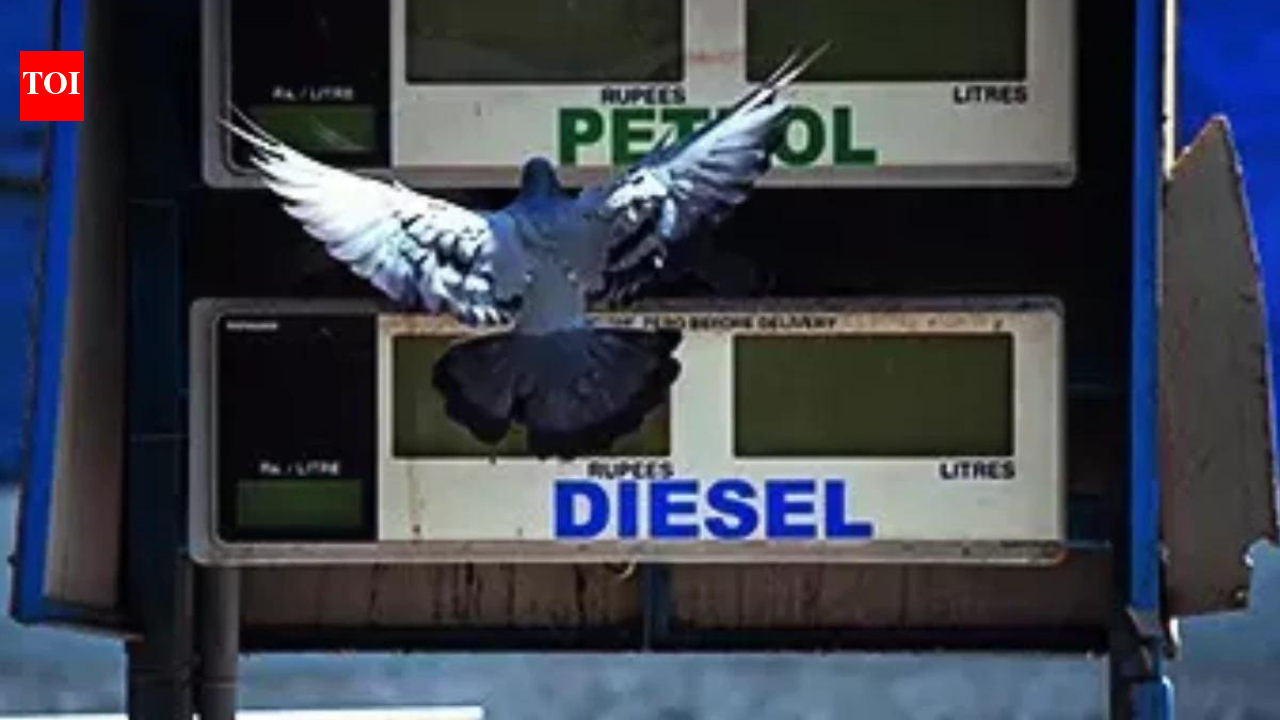
Sri Lanka on Sunday raised fuel prices by around 25 per cent, marking the second increase within a week as the ongoing Middle East conflict continues to disrupt global energy markets, news agency PTI reported.The price revision, effective from midnight, comes as tensions triggered by joint US–Israel strikes on Iran and retaliatory action by Tehran have spread across the Gulf region, leading to the closure of the Strait of Hormuz — a key global energy transit route.According to official announcements, the price of auto diesel rose 26.1 per cent from Sri Lankan rupees (LKR) 303 to LKR 382 per litre, while super diesel increased 25.5 per cent from LKR 353 to LKR 443. Petrol 92 octane climbed 25.6 per cent from LKR 317 to LKR 398, petrol 95 octane rose 24.7 per cent from LKR 365 to LKR 455, and kerosene jumped 30.8 per cent from LKR 195 to LKR 255.This is the third fuel price hike since March 1 and comes as the conflict, which has unsettled global oil markets, entered its fourth week.With the latest revision, retail fuel prices in Sri Lanka are set to return close to levels seen during the 2022 economic crisis, when the country declared its first-ever sovereign default since independence in 1948. The unprecedented financial turmoil at the time forced then president Gotabaya Rajapaksa to resign amid widespread civil unrest.The steep increase has sparked concern among transport operators. Non-state bus owners warned that up to 90 per cent of their fleet could be taken off the roads unless fares are revised.“This is the biggest rise of diesel ever. We will not be able to operate buses without an adequate fare revision. We need a minimum 15 per cent fare hike to stay afloat,” Gamunu Wijeratne, chairman of the Lanka Private Bus Owners’ Association, told reporters.The association threatened a nationwide strike if authorities fail to announce a scheduled fare revision.Responding to the developments, the National Transport Commission (NTC) said the latest diesel price increase, when applied to its fare formula, translates into a rise of more than 10 per cent in current bus fares. NTC Director General Nilan Miranda said Cabinet approval is expected on Monday to implement revised fares, according to media reports.Private operators account for about 65–75 per cent of the island nation’s public transport fleet, while the state-run share stands at around 25–35 per cent.Three-wheeler taxi operators, many of whom use petrol vehicles dominated by India’s Bajaj brand, said the price of commonly used petrol had risen to nearly LKR 400 per litre.“Who would want to ride with us at this rate?” a three-wheeler driver said, as quoted news agency PTI.Apart from state-owned Ceylon Petroleum Corporation (CPC), fuel retailing in Sri Lanka is also carried out by Lanka IOC — a subsidiary of IndianOil –as well as China’s Sinopec and Australia’s United Petroleum. Following CPC’s decision, LIOC and Sinopec also revised their retail fuel prices, media reports said.Opposition leaders criticised the government’s tax policy, claiming that authorities collect about LKR 119 per litre of petrol and LKR 93 per litre of diesel in taxes. They demanded that these levies be scrapped to provide relief to consumers.Analysts warned that the fresh fuel price hike could push inflation higher by 5–8 per cent.Earlier, government spokesman and minister Nalinda Jayatissa said that despite the price revisions, the government continues to bear a monthly subsidy burden of around Rs 20 billion by subsidising diesel by Rs 100 per litre and petrol by Rs 20 per litre.He said that without the revision, the state would have faced an additional financial burden of approximately $1.5 billion. Jayatissa urged the public to consume electricity and fuel “mindfully” and warned against hoarding, calling on citizens to report any such attempts.
Business
Govt orders faster city gas project clearances, hikes commercial LPG allocation to ease supply stress – The Times of India
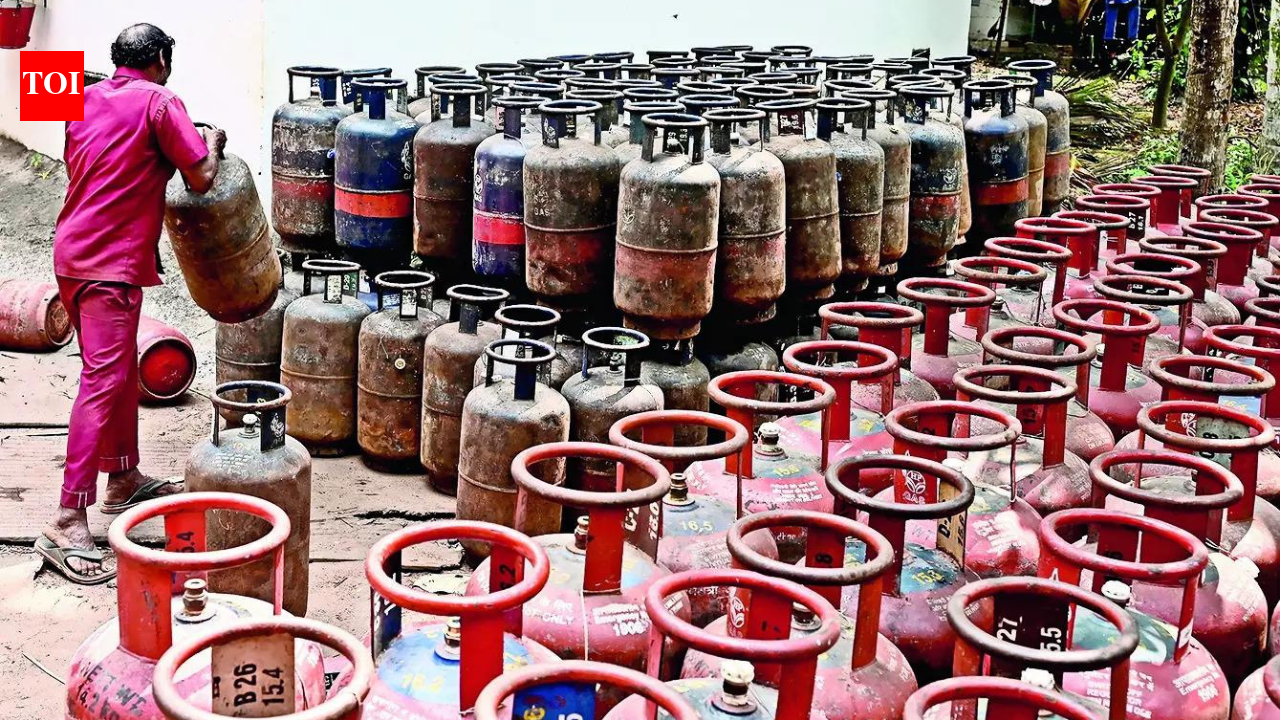
The government has stepped up efforts to streamline gas distribution and ease supply pressures, directing faster processing of city gas projects while increasing allocations of commercial LPG to key sectors amid a challenging geopolitical environment.The Petroleum and Explosives Safety Organisation (PESO) has instructed its offices to dispose of City Gas Distribution (CGD) applications within 10 days, aiming to accelerate the rollout of piped natural gas (PNG), an official statement said.Commercial LPG consumers in major cities and urban areas have also been advised to shift to PNG as part of a broader strategy to reduce dependence on liquefied petroleum gas. Domestic LPG supply remains stable, with no reported dry-outs at distributorships and normal delivery patterns across the country, the statement said, adding that most deliveries are being carried out through the Delivery Authentication Code (DAC) while panic bookings have subsided, PTI reported.On the commercial LPG front, the government has progressively increased allocations. After restoring 20 per cent supply earlier, an additional 10 per cent allocation linked to PNG expansion reforms was announced on March 18. A further 20 per cent allocation was cleared on March 21, taking total commercial LPG supply to 50 per cent.The latest increase prioritises sectors such as restaurants, dhabas, hotels, industrial canteens, food processing units, dairy operations, community kitchens and subsidised food outlets run by state governments and local bodies. Provision has also been made for 5 kg cylinders for migrant workers.Around 20 states and Union Territories have implemented the revised allocation guidelines, while public sector oil marketing companies are supplying commercial LPG in the remaining regions. In the past eight days, about 15,440 tonnes of LPG have been lifted by commercial entities.Educational institutions and hospitals continue to receive priority, accounting for nearly half of the total commercial LPG allocation. Despite global uncertainties affecting supply, the government indicated that domestic availability remains under control while efforts continue to transition urban consumers towards PNG.

Experts have warned of another “twist” to the cost-of-living story in the months ahead, as war in the Middle East is set to send energy bills soaring.
The rate of Consumer Prices Index (CPI) inflation has been gradually easing back towards the Bank of England’s two per cent target level since last summer.
Some analysts are expecting CPI to have held relatively steady in February, or dipped slightly, from the three per cent level recorded in January.
Official figures for last month will be published on Wednesday.
Economists for Deutsche Bank and Pantheon Macroeconomics said they are anticipating CPI to hold steady at three per cent in February, with lower fuel and services inflation being offset by higher clothes prices and air fares.
Edward Allenby, senior economist for Oxford Economics, said he thinks CPI inflation fell to 2.8 per cent in February, largely thanks to a predicted fall in petrol prices and slower inflation in the services sector.
Analysts for Barclays said they are expecting the headline rate to dip to 2.9 per cent, also partly because of lower pump prices during the month.
But Sanjay Raja, Deutsche Bank’s chief UK economist, said the inflation outlook has “rarely been more uncertain than it is now”.
He wrote in a research note: “We expect the UK’s disinflation story will take another twist on its (eventual) way down to target.
“The good news is that CPI is still expected to slide down in the coming months.
“The bad news? Higher energy prices appear poised to lift CPI meaningfully over the summer, adding yet another hump in the inflation profile.”
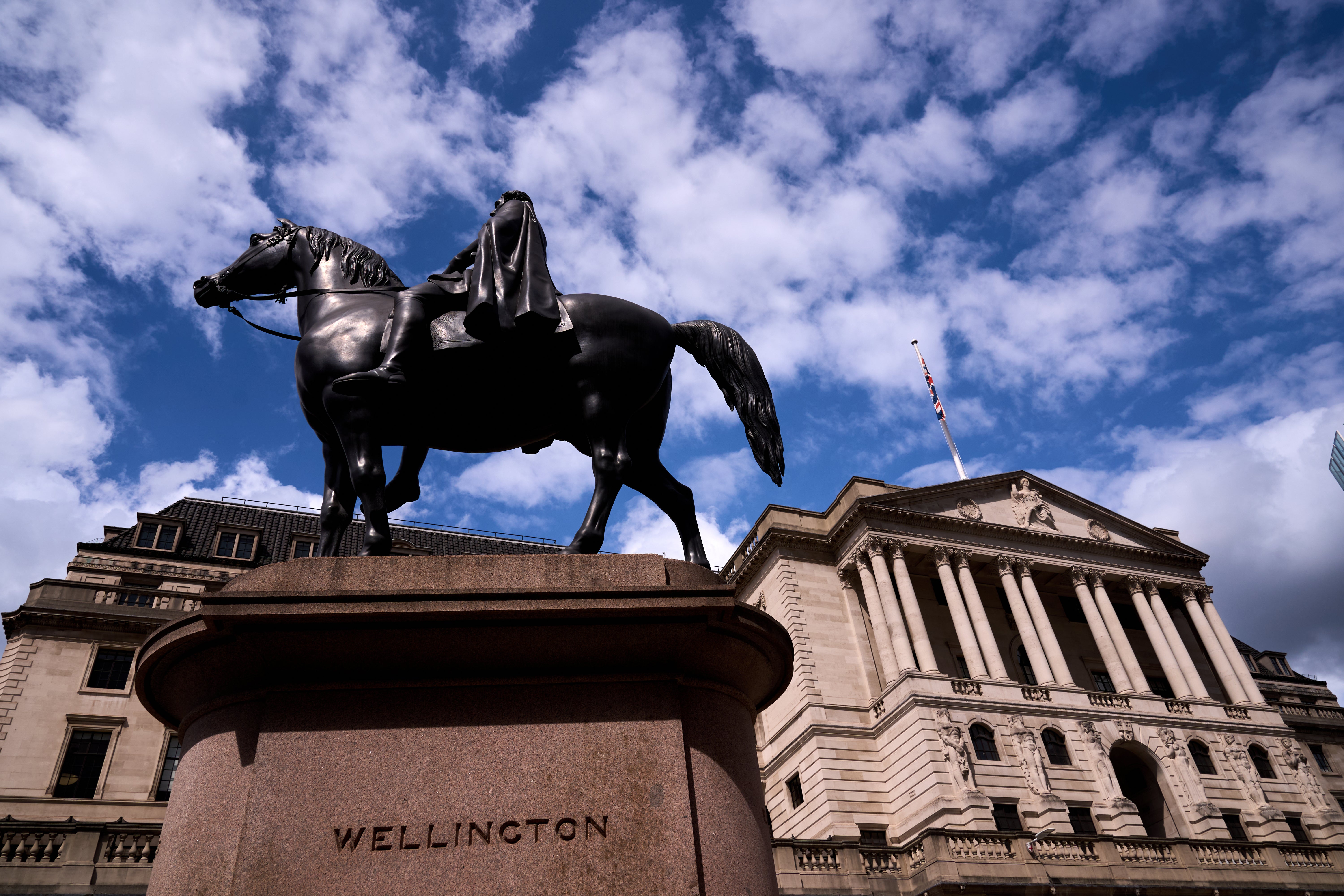
Economists have been ripping up previous projections in recent days and warning that the US-Israel war with Iran has muddied the outlook for the economy.
The Bank of England said on Thursday that recent increases in wholesale energy costs would delay the return of CPI inflation to target, as it was already seeing higher fuel prices.
It is now expecting inflation to be around three per cent in the second quarter of 2026, up from the 2.1 per cent that had been forecast in February.
The central bankers stressed that the situation is volatile and events over the next six weeks could shed light on the scale of the disruption and impact on prices.
Economists have weighed in with their own projections of where inflation could go if things persist.
Mr Allenby said he is now expecting CPI inflation to exceed four per cent during the second half of 2026.
“Under our updated assumptions, we now anticipate a much sharper rise in petrol prices, while higher wholesale gas prices cause a 19 per cent increase in the Ofgem energy price cap in July,” he said.
Pantheon Macroeconomics agreed that, if the latest spike in gas prices is sustained, then CPI could be headed to four per cent later this yar.


Lady Amelia Windsor shares private hen photos tied to grandparents’ love story
Sri Lanka increases fuel prices around 25% as Middle East tensions disrupt global oil supplies – The Times of India

Princess Eugenie husband springs in action for Fergie, Andrew: ‘Unexpected’

Tips and Advice for Buying Used or Refurbished Electronics

UAE savings strategies 2026 explained: Best apps, tools, budget rules and smart money hacks to beat rising cost of living in emirates – The Times of India

Iran threatens US-linked oil facilities after Kharg Island bombed

-
 Tech1 week ago
Tips and Advice for Buying Used or Refurbished Electronics
-
Business1 week ago
UAE savings strategies 2026 explained: Best apps, tools, budget rules and smart money hacks to beat rising cost of living in emirates – The Times of India
-
 Politics1 week ago
Iran threatens US-linked oil facilities after Kharg Island bombed
-
 Entertainment7 days ago
Strategic oil stocks to be released ‘immediately’ in Asia and Oceania: IEA
-
 Entertainment1 week ago
Iran at war
-

 Tech1 week ago
Apple’s New Monitor Does HDR Like It’s Never Been Done Before
-

 Sports1 week ago
Japan suffers shocking collapse to Venezuela in World Baseball Classic
-

 Sports1 week ago
College Basketball Invitational abruptly cancels 2026 tournament