

Entertainment
Iran at war

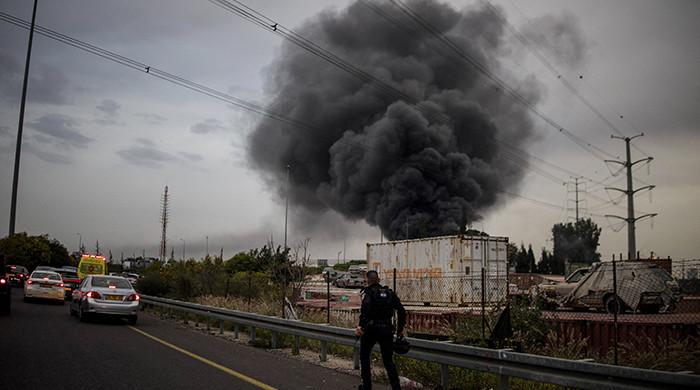
Ages ago, when our war with India in 1965 began, I had just become a young reporter in an English eveninger. It so happened that I was asked to write a column on the war for the group’s Urdu daily, ‘Hurriyet’. And the directive was to find historical examples to raise people’s morale and promote their patriotism.
I had read a review of a new book titled ‘Russia at war 1941-45’, written by Alexander Werth, who had been a BBC correspondent in the Soviet Union during the Second World War. I was able to get it and was fascinated by its contents. Based on his personal experiences, Werth had described and explained the great resistance of the Soviet people. He told the story of the Russians in startling human terms.
That has remained one of the books that I cherish. I still have it, though it is now in poor condition. I searched it out this week from the chaos that my collection has become and have been browsing through it while mentally and emotionally preoccupied with the war that is raging in Iran and the Middle-East.
Naturally, I am also reminded, with a touch of nostalgia, of what I had picked from this book to write my Urdu columns. I found so much material in the book that only a few references were possible. The most touching was the story of Leningrad, now renamed Saint Petersburg, and how its citizens braved the siege and the famine.
One column that I fondly recall was on a poem: ‘Wait for me’. A soldier, leaving for the front, tells his beloved: “Wait for me, and I will return, only wait very hard”. To quote Werth: “It is difficult at this distance, except for those who were in Russia at that time, to realise how important a poem like this was to literally millions of Russian women; no one could tell how many hundreds of thousands had died at the front or had been taken prisoner or were otherwise missing”.
As an aside, I want to point out this astounding fact that the Soviet Union suffered the highest number of casualties in the Second World War, with total deaths estimated to be around 24 to 27 million people.
Now, this may seem like a distraction. But I thought of it as a point of departure to underline the importance of the morale of a people during a war or a time of deep crisis. A nation is to be judged by the quality of its people. That is how some nations are stronger than others. The patriotic strength of the Russian people was demonstrated during the Great War, even though they were ruled by an authoritarian system, with Joseph Stalin at the helm.
Initially, I was thinking of reviewing the state of the people of Pakistan in this context. We, as a country, are certainly in a very difficult situation because of the complexity of our relations with Iran and the US and the Gulf countries. Specifically, we are bound by a security pact with Saudi Arabia. In addition, we are at war with Afghanistan. It is a critical situation and anything can happen at any time.
So, what kind of social capital does Pakistan have? Are its citizens capable of bearing hardships in a disciplined manner? One may refer to the significant rise in petrol prices and the austerity measures announced by Prime Minister Shehbaz Sharif, both relevant from an economic point of view. But the real strength of a society lies in its civilisational and moral values, and in the people’s spirit of sacrifice in the national interest.
Considering the increasing tempo of the war and the intensity of American and Israeli attacks on Iran, it is the resilience of the Iranian forces that has surprised the world. One expects that some historians and journalists are documenting the human stories of this monumental encounter between Iran and the most powerful military in the world.
Already, a number of social media analysts are meaningfully exploring the reasons why Operation Epic Fury is not able to bring about a regime change in Iran or achieve whatever goals that have confusedly been articulated by President Trump. Meanwhile, the cost of this war is becoming unbearable for the world, mainly due to the energy crisis.
Actually, Iran at war is a spectacle that has baffled many in the world. One aspect of this has perceptively been explained by noted Iranian writer and scholar of religion, Reza Aslan, in a longish piece published last week in The New York Times. Based in Los Angeles, he belongs to the Iranian diaspora. But he rejects the thought that an American president can be Iran’s liberator. Hence the title of his article: ‘The mistake that Iranians make about America’. I also heard him repeat his views in an interview with Christiane Amanpour on CNN on Friday.
Reza Aslan concedes that when American leaders speak of helping Iranians to take over their government, they are tapping into “a powerful longing”, but recent history confirms that regime change delivered from outside “rarely produces the democracy imagined in the inside”.
One excerpt from his article: “Here is what I know for certain: Iran is older than any regime that has ruled it – older than the revolution, older than the shahs, older than the foreign powers that have sought to shape its fate. Across three millenniums of poetry, philosophy, empire and renewal, this civilisation has outlasted conquerors and kings, clerics and generals. It has done so not because a saviour from abroad intervened but because its people endured – sustained by a fierce pride in their language and heritage, by a literary and intellectual tradition that has survived invasion and upheaval, by a collective memory shaped as much by resistance as by rule”.
The ongoing war is a manifestation of Iran’s resistance. A time will come when other battles are fought in another arena.
The writer is a senior journalist. He can be reached at: [email protected]
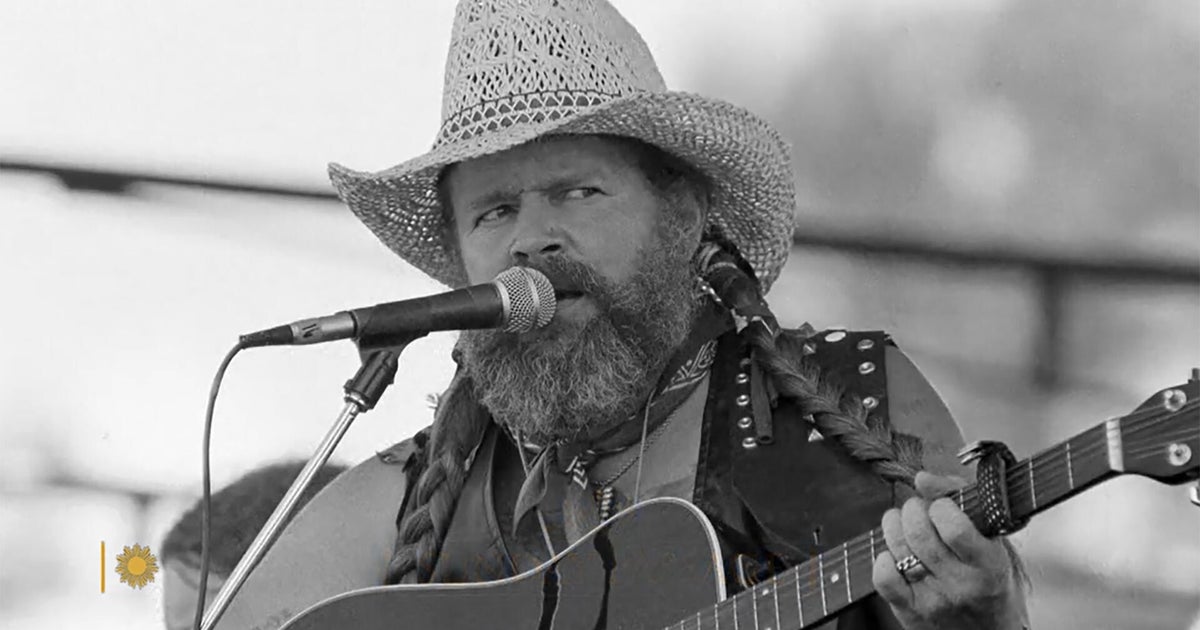
“Sunday Morning” remembers some of the notable figures who left us this week, including songwriter David Allan Coe, famous for his country hit “Take This Job and Shove It.”
Source link
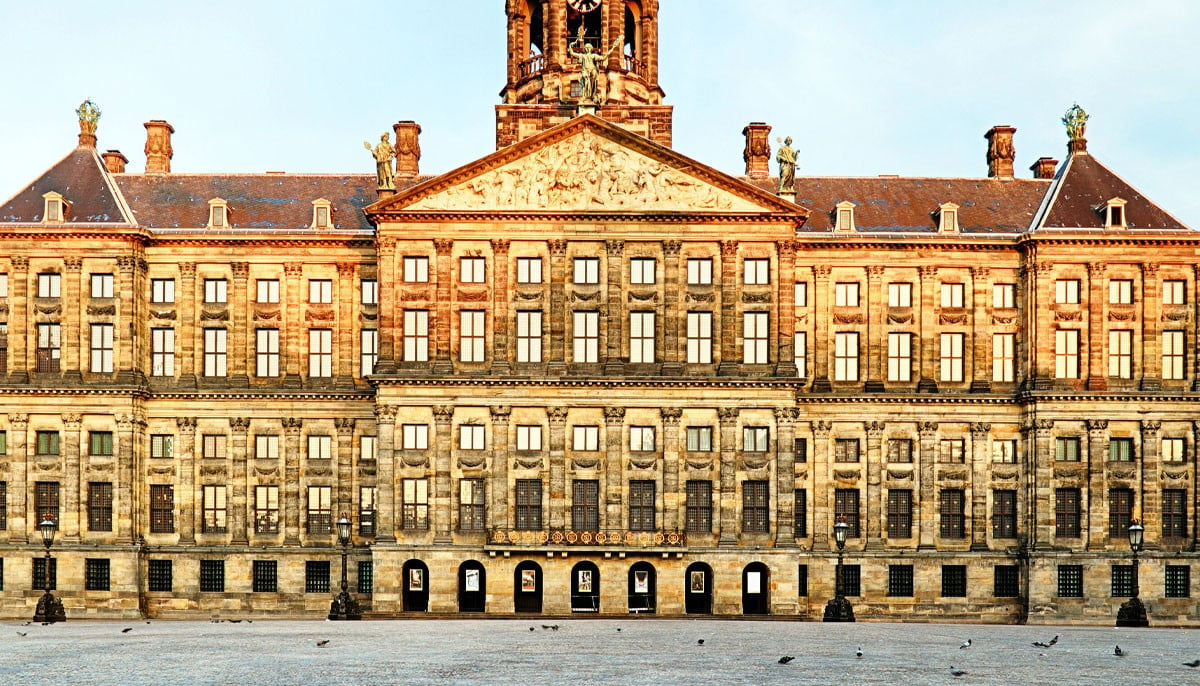
The royal family was saved from a devastating disaster as an alleged plot for murder was foiled before it could have been executed.
According to AP, a 33-year-old man was detained on Friday and was found in possession of suspicious items which had a connection to a plot to harm Princess Catharina-Amalia and Princess Alexia of the Netherlands.
The investigation indicated that the man had allegedly been targeting the 22-year-old Amalia and 20-year-old Alexia for a February date in Hague.
The suspect is expected to appear in court on Monday, according to the court scheduling order published on the website of The Hague Public Prosecutor’s Office.
Moreover, it stated that the suspect was in possession of two axes” with the words ‘Alexia’, ‘Mossad’, and ‘Sieg Heil’ carved into them, and he allegedly had a handwritten sheet with the words ‘Amalia’, ‘Alexia’, and ‘Bloodbath’”.
The news comes just days after Amalia, Alexia and Princess Ariane had come together with their parents King Willem-Alexander and Queen Máxima to partake in the official celebrations in Dokkum, for King’s day celebrations.
Although, it seems that even though the news had understood to cause some distress for the royals, they appeared in good spirits despite it.
This is not the first attempt to hurt the Dutch heir to the throne, Princess Amalia as threats to her life intensified. She was forced to give up her school life and couldn’t leave the house as an “enormous consequence of her life”.
The Royal House has not yet issued a statement on the latest threat.
Entertainment
Shakira draws 2 million spectators in free concert on Brazil’s Copacabana Beach, mayor says
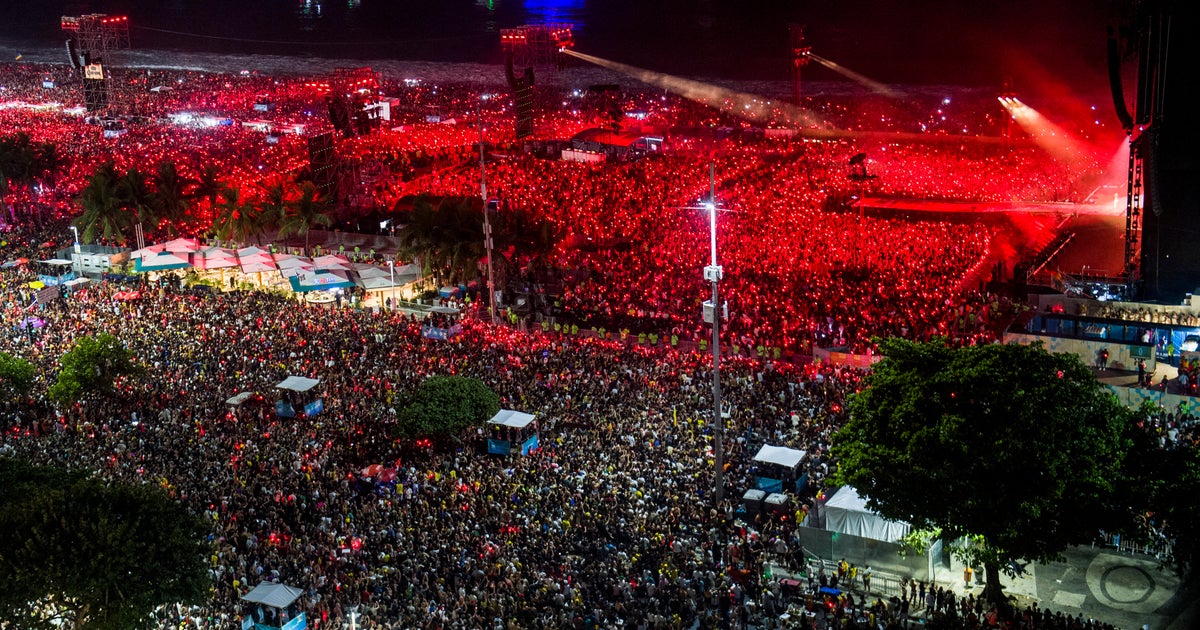
Colombian superstar Shakira gave a free concert on Copacabana Beach in Rio de Janeiro on Saturday night, an event that the city’s mayor said drew 2 million people to one of the world’s most iconic waterfronts.
The performance followed similar shows by Madonna in 2024 and Lady Gaga last year, which also were attended by huge crowds that danced on the sprawling sands. For Shakira, it was part of her “Las Mujeres Ya No Lloran,” or “Women No Longer Cry,” world tour named after her 2024 album.
Shakira’s set kicked off around 11 p.m., more than an hour after the scheduled slot, to her fans screaming with excitement and frantic applause as skywriting drones flew overhead, spelling out in the sky, “I love you Brazil” in Portuguese.
The megastar spoke fondly about the first time she came to Brazil, some three decades ago.
“I arrived here when I was 18 years old, dreaming about singing for you,” Shakira told the crowd shortly after coming on stage. “And now look at this. Life is magical.”
The much-loved pop star sang fan favorites such as “Hips Don’t Lie,” “La Tortura” and “La Bicicleta.” She ended with “BZRP Music Sessions #53/66,” which followed her separation from Spanish soccer player Gerard Piqué.
She also took the time to celebrate women’s resilience during the show. “Us women, every time we fall we get up a little wiser,” she said.
One of the first places where Shakira became successful
Rio Mayor Eduardo Cavaliere said on social media that 2 million people attended the performance. “The She-Wolf made history in Rio,” he posted, referring to Shakira’s 2009 hit.
When Shakira first performed in Brazil in the 1990s, she established an amazing connection with the Brazilian public, according to Felipe Maia, an ethnomusicologist pursuing a doctoral degree in popular music and digital technologies at Paris Nanterre University.
That success in Brazil “has a lot to do with the fact that she comes from Colombia, a country whose culture has many similarities with Brazil,” Maia said, adding that Saturday’s performance “crowns the relationship she has had with Brazil for a very long time.”
Erica Monteiro, a 38-year-old accountant, said she has listened to Shakira since childhood.
“For me she represents the strength of our Latino community,” Monteiro said ahead of the concert. “We’re treated as if we were inferior but in fact we have much more strength.”
Heading home after Saturday’s show, Hellem Souza da Silva said Shakira’s performance, like Bad Bunny’s concerts in Sao Paulo in February, helped consolidate Brazil’s Latino identity.
These artists “are making it clear that Brazil, Puerto Rico, Colombia and other countries are part of Latin America. And that America is not the United States,” she said.
Crowds started piling onto the beach Saturday morning to nab a good spot for the show. Street vendors sold sweet corn and other Brazilian snacks, bottled water and caipirinhas, the popular Brazilian cocktail, but also toilet paper, deodorant and even bags of sand for concertgoers to stand on to get a better view of the stage set up opposite Copacabana Palace, a historic luxury hotel.
Street vendor Simone Paula da Cunha arrived on the beach on Friday evening, hoping to sell all the beer and water bottles she had bought ahead of the show and make about $100 in all.
Despite being tired, da Cunha was excited at the prospect of seeing Shakira live. “I remember her from when she still had black hair,” she said. “I’m a huge fan of hers.”
An effort to boost the city’s post-Carnival economy
The free concerts are part of City Hall’s attempt to boost economic activity after Carnival and New Year’s Eve festivities and before the monthlong Saint John’s Day celebrations in June.
“For us, parties are serious business. Because parties generate jobs, income, development, and identity for the city,” Cavaliere, the mayor, said on Wednesday as he presented the city’s operational plan for the event. “Our investment in this show will give us a financial return 40 times greater,” he said.
Shakira’s performance could generate around 777 million reais (around $155 million), according to a study by City Hall and Riotur, the municipality’s tourism company, thanks to the influx of tourists and cash spent in restaurants, hotels and shops.
More tourists headed to Rio in the month of May in the years with shows — 2024 and 2025 — compared to 2023, according to City Hall data. In 2024, the growth was 34.2% on May 1, just ahead of the concerts, compared to the previous year. In 2025, the increase was 90.5% compared to 2023.
Amid last year’s concert with Lady Gaga, Rio de Janeiro’s state police arrested two people for an alleged bomb plot. Police said the two arrested were allegedly part of a group that was spreading hate speech against the LGBTQ community, and they sought to radicalize and recruit teenagers to carry out attacks using Molotov cocktails and improvised explosives.
Ahead of Shakira’s performance, Airbnb said in an April 22 statement that it was seeing an increase in guests expected to travel from different parts of Brazil, Latin America and even European capitals such as Paris and London.
Wanderson Andrade, a 30-year-old architect, said he flew in especially for the show from the city of Goiana in central Brazil on Saturday and planned to fly back the following day.
“I tried to get tickets to see her in Brazil last year but I didn’t succeed,” said Andrade, whose first tattoo is a wolf in honor of Shakira. “Today is a dream come true.”


Passage: In memoriam

Iranian envoy reaffirms Pakistan’s ‘central role’ in ongoing talks with US

Royal Princesses narrowly escape shocking attack amid celebration

-

 Tech6 days ago
A Brain Implant for Depression Is About to Be Tested in Humans
-

 Tech6 days ago
Almost 90% of women leave tech industry within 10 years | Computer Weekly
-
 Business6 days ago
‘I had £20,000 stolen and had to fight a 13-month fraud reporting rule to get it back’
-
 Business1 week ago
Pakistan’s oil market is fuelling the crisis | The Express Tribune
-

 Tech5 days ago
This Ambitious Laptop Doesn’t Leave Much Room for Your Hands
-

 Sports5 days ago
Pro wrestling star Steph De Lander reveals how colleague’s advice helped lead her to title triumph at ACW
-

 Entertainment6 days ago
Melania Trump says ABC should ‘take a stand’ on late-night host Kimmel
-

 Tech6 days ago
Are tech leaders risking a cyber resourcing crisis? | Computer Weekly