

Business
Cost and chaos continue to test resiliency of U.S. auto industry


A worker at Ford’s Kentucky Truck Plant on April 30, 2025.
Michael Wayland | CNBC
DETROIT — “A lot of cost and a lot of chaos.” That’s how Ford Motor CEO Jim Farley described the state of the automotive industry earlier this year amid geopolitical tensions, tariffs, inflation and other disruptions.
All those factors created massive uncertainty for the U.S. automotive industry that led to relatively bearish outlooks for the sector in 2025. Some of those concerns have come to fruition, but the industry has proven to be far more resilient than many had expected.
“Six months into the onset of tariffs, we’ve been positively surprised by the extent to which the industry has held in better than anticipated,” Barclays analyst Dan Levy said in an investor note last month that upgraded the U.S. auto/mobility sector to neutral from negative.
The neutral rating by Barclays speaks volumes about the state of the automotive industry right now, according to auto executives, insiders and analysts who say circumstances aren’t as bad as they once feared — but also that they still aren’t as positive or certain as they could be.
S&P Global last week released a new report explaining how tariff burdens have eased, but noting that demand headwinds persist amid slowing disposable income growth, consumer pessimism and fluid trade policies. The government shutdown also adds uncertainty to the economic outlook, the firm said.
Jim Farley, President and CEO of Ford Motor Company, speaks at a Ford Pro Accelerate event on Sept. 30, 2025 in Detroit, Michigan.
Bill Pugliano | Getty Images
The cautiousness followed S&P revising its U.S. light vehicle sales estimates upward by about 2%, to 16.1 million vehicles for 2025, and to 15.3 million, up 200,000, in 2026.
Part of what’s driven the unexpected optimism has been industry sales and production holding up much better than expected, in addition to broader macroeconomics such as consumer spending being relatively stable.
“The [economic] outlook is getting better, and part of it is realizing that tariffs didn’t end the world, and that applies to the auto market as well,” Cox Automotive’s chief economist, Jonathan Smoke, told CNBC. “I think we can navigate it, and I’m holding on to that optimistic outlook.”
Such optimism will be tested as major automakers such as General Motors, Ford and Tesla begin announcing third-quarter results this week.
Each of the American automakers is expected to report double-digit declines in adjusted earnings per share but remain profitable on an adjusted basis, according to analyst estimates compiled by LSEG.
“We expect Q3 earnings that [are] generally in line to slightly above expectations. Industry production did come in better than expected,” Wolfe Research analyst Emmanuel Rosner said in an Oct. 10 investor note. “But as always there are nuances to consider.”
Balancing act
The automotive industry is in a bit of a balancing act.
Tariffs have cost automakers billions of dollars this year, but deregulation of fuel economy penalties, as well as corporate gains under the Trump administration’s “One Big Beautiful Bill Act,” are expected to help offset those costs, Ford’s Farley and others have said.
Meanwhile, there are red flags of stress in auto lending for lower credit buyers, including the recent bankruptcy of subprime auto lender Tricolor — but sales and pricing of new vehicles through the third quarter remained far better than many had expected.
“There’s some positives for next year, but there could also be some really bad negatives if there’s a freak out on tariffs or the consumer finally breaks down or whatnot,” Morningstar analyst David Whiston told CNBC. “But no one’s calling for a complete crash.”
Fronts of the GMC Sierra Denali,Tesla Cybertruck and Ford F-150 Lightning EVs (left to right).
Michael Wayland / CNBC
Whiston — who covers GM, Ford and several auto retailers and suppliers — characterized his outlook as “cautiously optimistic,” saying the significant industry concerns are countered by other bullish circumstances.
UBS analyst Joseph Spak agreed, noting a lot of challenges for automakers such as tariffs and losses on electric vehicles “have already been incorporated into 2025/2026 estimates,” he said in an investor note last month.
In addition to the economic and political concerns, the automotive industry faces significant changes in all-electric vehicle adoption that caused GM last week to pre-report $1.6 billion in special charges during the quarter related to its pullback in EVs.
Adding to this year’s “chaos,” especially for Ford, is a fire last month at aluminum supplier Novelis that is impacting vehicle production. Wall Street analysts estimate the fire to cost Ford between $500 million and $1 billion in operating income.
“The industry is in a lot of flux. It faces an array of challenges,” Elaine Buckberg, a senior fellow at Harvard University and former GM chief economist, said regarding tariffs, EVs and other issues. “The level of volatility they’ve faced over the last seven years or so is unlike what came before.”
Suppliers
The broader supplier industry remains a major potential concern for automakers, as it did to begin the year.
The automotive supplier industry is made up of thousands of companies — ranging from multibillion-dollar publicly traded corporations to “mom-and-pop shops” making one or two parts — that industry experts say cannot support many, if any, additional cost increases.
“The market has been under pressure. It’s fragile,” said Mike Jackson, executive director of strategy and research for vehicle supplier association MEMA. “Those suppliers that are flexible and agile have been able to reposition themselves to be successful despite the changes, despite the shifts.”
Autolite spark plugs at an auto parts store in Provo, Utah, on Monday, Sept. 29, 2025. First Brands Group Holdings has filed for Chapter 11 bankruptcy, capping weeks of turmoil sparked by creditor concern over the auto-suppliers use of opaque off-balance sheet financing.
George Frey | Bloomberg | Getty Images
Not all have been able to compete successfully. The bankruptcy of U.S. auto parts maker First Brands Group in late September heightened concerns on Wall Street about the health of the private credit market. First Brands had a web of complex debt agreements with a slew of lenders and investment funds globally.
JPMorgan Chase CEO Jamie Dimon last week called the bankruptcies of First Brands and Tricolor Holdings “early signs” of excess in corporate lending, while some Wall Street analysts have written them off as idiosyncratic.
Executives have said automakers, also known as OEMs, or original equipment manufacturers, have so far done their best to assist suppliers when needed and have not passed on added tariff costs to such companies, but it’s unclear how long that may last.
“Suppliers clearly are working as hard as they can with their customers to try and mitigate the impact, understating it’s an important issue to work through,” Jackson said. “That said, there have been a number of different cost pressures that we’ve seen that go beyond the tariffs. … It varies by customer, by OEM.”
Shares of many larger publicly traded suppliers, such as Aptiv, BorgWarner, Dana and Adient, are up double digits so far this year. Even Canada-based Magna International, which at one point was expected to be one of the companies most impacted by tariffs, is up roughly 7%.
Those gains are despite the third quarter marking the 14th consecutive quarter of building pessimism by North American auto supplier executives, according to MEMA’s most recent “Vehicle Supplier Barometer” released earlier this month.
Adding to supplier concerns are continuing issues with tariffs between the U.S. with Mexico and Canada as well as the Trump administration’s ongoing trade war with China, where many rare earth materials, some of which are used in vehicles, are processed and sourced.
K-shaped concerns
There are also continuing concerns that the automotive industry is an example of a “K-shaped” economy in the U.S., where the wealthy keep seeing gains while those who have lower incomes struggle.
Economists have warned the U.S. economy is increasingly K-shaped following the coronavirus pandemic, with consumers experiencing different realities depending on their income level.
Used vehicle retailer CarMax was the first major auto-related company to sound the alarm on the consumer late last month.
“The consumer has been distressed for a little while. I think there’s some angst,” CarMax CEO Bill Nash told analysts earlier this month, with an auto lending executive for the used car retailer warning the “cracks” are “an industry issue.”

But that “issue” appears to only be for lower-income consumers or those with subprime credit, many of whom are not new car buyers.
Wealthier Americans have been assisted by rising house values, lucrative stock market returns and favorable credit, while lower- and middle-income buyers have faced tighter budgets and have been hit hard by rising inflation.
Fitch Ratings reports 6.43% of subprime auto loans in August were at least 60 days past due, in line with a record high of 6.45% that was hit in January. Delinquency rates for borrowers with higher scores have remained relatively stable.
“Clearly there is concern about the consumer, because if you’re not in the upper part of the ‘K’ then yes, there is stress,” Cox Automotive’s Smoke said. “But it tends to be a demographic story about median and below income households.”
About two-thirds of new vehicle purchases are made by people whose household income is above the median, according to Buckberg. The U.S. household median income last year was $83,730, according to U.S. Census Bureau estimates
That percentage could continue to grow and impact sales if tariff costs begin getting passed on to new car buyers or the whiplashing regulatory chaos barrels more into the automotive industry.
“That’s really the big question for 2026. I think everyone in the industry is assuming consumers are going to start to get tariffs passed down to them for autos. They haven’t really yet,” Whiston said. “How does the consumer react to that? Will they just take it in stride, pay more and keep going? Or will it just cause a massive freak out? No one knows the answer to that yet.”




People walk past a Nike store in New York City, on April 2, 2025.
Kylie Cooper | Reuters
Nike announced a new round of layoffs Thursday affecting approximately 1,400 employees across the organization, mostly concentrated in its technology department.
In a note from COO Venkatesh Alagirisamy, the company said the layoffs were part of Nike’s broader “Win Now” turnaround strategy aiming to reshape its technology team, modernize its Air manufacturing, move some of its Converse Footwear operations and integrate its materials supply chain work into its footwear and apparel supply chain teams.
“Collectively, these changes will result in a reduction of approximately 1,400 roles in global operations, with the majority in technology,” Alagirisamy wrote. “These reductions are very hard for the teammates directly affected and for the teams around them, too.”
A Nike spokesperson said the layoffs are about better positioning the organization for the current pace of sports and accelerating its growth. The layoffs affect employees across North America, Asia and Europe and represent less than 2% of the company’s total global head count.
“This is not a new direction,” Alagirisamy wrote. “It is the next phase of the work already underway.”
Affected employees will be notified beginning Thursday, Nike added.
CEO Elliott Hill has been working to turn Nike around after years of slumping sales. While Hill has made some initial progress, it’s come with some bumps in the road.
Nike announced 775 job cuts in January, primarily at its U.S.-based distribution centers, due to the company’s work in accelerating its use of automation. At the time, the company said the cuts are part of Nike’s goal to return to “long-term, profitable growth.”
Those layoffs came on top of a round of cuts last summer that affected less than 1% of Nike’s corporate staff as part of the company’s efforts to realign the business.
In its third fiscal quarter earnings report last month, the retailer warned that sales will continue to fall for the rest of the year, primarily led by an anticipated 20% decline in China during the current quarter.
— CNBC’s Jessica Golden contributed to this report.
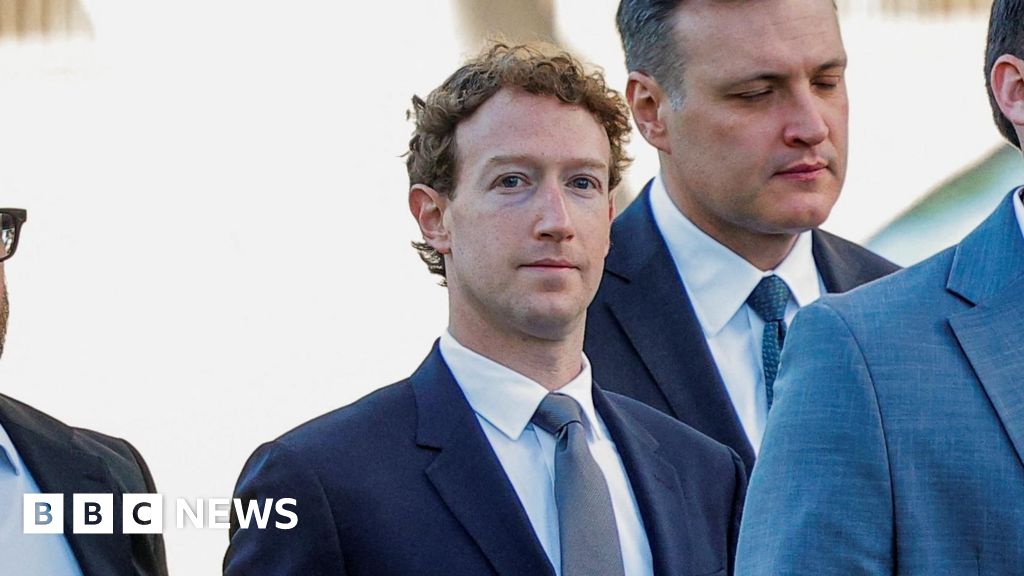
A key reason for the layoffs is Meta’s increased spending in other areas of the company, including AI, for which it will this year spend $135bn (£100bn). This is roughly equal to the amount it has spent on AI in the previous three years combined, according to a person who viewed the memo.

The Government has been urged to stick to its pledge to ban ticket touting amid concerns the policy will be left out of next month’s King’s Speech.
In November, the Government announced that new rules making it illegal to resell tickets for live events for profit would end the “industrial-scale” touting that has caused misery for millions of fans.
Ministers confirmed plans to make it illegal for tickets to concerts, theatre, comedy, sport and other live events to be resold for more than their original cost.
The Labour manifesto promised stronger protections to stop consumers being scammed or priced out of events by touts, who frequently use bots to buy tickets in bulk the moment they go on sale, which they can then sell on for huge mark-ups on secondary ticketing websites.
The proposed rules make it illegal for tickets to be sold at a price above the face value – defined as the original price plus unavoidable fees including service charges.
Service fees will be capped to prevent the price limit being undermined by platforms, which will have a legal duty to monitor and enforce compliance, and individuals will be banned from reselling more tickets than they were entitled to buy in the initial sale.
A host of globally renowned artists have backed the plan, including Radiohead, Dua Lipa and Coldplay.
Following a report in the Guardian that the minister responsible for the policy, Ian Murray, had told music industry groups not to worry if the measure was not part of the King’s Speech on May 13, the Government said it required new primary legislation that it was working to deliver at the earliest opportunity.
A Government spokeswoman said: “Ticket touts are a blight on the live events industry, causing misery for millions of fans.
“We set out decisive plans last year to stamp out touting once and for all, and we are committed to delivering on these for the benefit of fans and industry.”
The music industry and Which? raised concerns about the suggestion of any delay, as sites appeared to show touts selling tickets for the Radio 1 Big Weekend in Sunderland well above the two-ticket limit for buyers and at vastly inflated prices.
Annabella Coldrick, chief executive of the Music Managers Forum, said: “2026 was supposed to mark this Government moving ‘from announcements to action’ but we have little evidence of this to date.
“A ban on ticket touting was one of only two music-related commitments in the Labour manifesto, alongside fixing EU touring.
“These are widely supported, pro-growth measures that will deliver tangible benefits to the British public. However, if ticket resale legislation is not presented in the King’s Speech, it will have the opposite effect and continue to cost those constituents hundreds of millions of pounds a year.
“This Government needs to stand by its promises and get it done.”
Adam Webb, campaign manager at FanFair Alliance, said: “The Government has a big decision to make: will they ‘put fans first’ or not?
“Last November, ministers committed to ‘bold new measures’ to ban online ticket touting and support consumers.
“Enacting these measures should be a no-brainer but, if legislation is not presented in the upcoming King’s Speech, the cycle of industrial-scale exploitation will continue.”
Lisa Webb, consumer law expert at Which?, said: “The Government has promised to put fans first but, if this legislation is not included in the King’s Speech, the only ones celebrating will be the rip-off secondary ticketing websites and online touts.”

Nike cuts 1,400 roles in second round of layoffs this year

2 critical out of 10 injured in Baton Rouge, shooter at large

Violations, threats, blockade main obstacle to genuine talks: President Pezeshkian

-

 Fashion1 week ago
France’s LVMH Q1 revenue falls 6%, shows resilience amid Iran war
-

 Entertainment1 week ago
Is Claude down? Here’s why users are seeing errors
-

 Sports1 week ago
PSL 11: Peshawar Zalmi win toss, opt to field first against Quetta Gladiators
-

 Tech1 week ago
The Deepfake Nudes Crisis in Schools Is Much Worse Than You Thought
-
 Business1 week ago
Standard Life buys rival in £2b deal to create savings giant
-

 Tech1 week ago
CYBERUK ’26: UK lagging on legal protections for cyber pros | Computer Weekly
-

 Fashion1 week ago
Raymond unveils luxury Chairman’s Collection Store in Mumbai
-
 Business1 week ago
PepsiCo earnings beat estimates as North American food business improves