

Business
Cost of living: Families are priced out of London, Assembly told


Kumail JafferLocal Democracy Reporting Service
 AFP via Getty Images
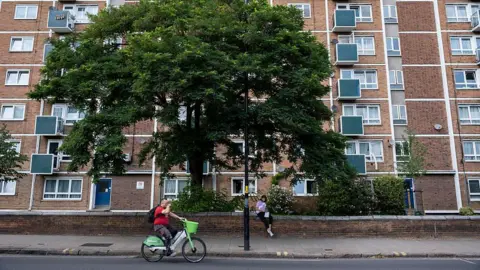
Families are being priced out of living in London due to rising costs and a lack of social housing, the London Assembly has been told.
The number of births in London in 2023 was 20% lower than the peak in 2012, with the sharpest decline in inner London, according to the Assembly’s Economy, Culture and Skills Committee.
The committee heard from experts on this trend, with child poverty campaigner Katherine Hill urging London’s mayor to make the capital a “child-friendly city”.
A spokesperson for the mayor said London’s population had “always fluctuated”, and the mayor had been doing “all he can” to support families with the cost of living.
The mayor’s office blamed falling numbers of primary school pupils in inner London on factors including “national falling birth rates, Brexit, housing costs and the impact of the cost-of-living crisis”.

 In Pictures via Getty Images
Ms Hill, who is the strategic programme manager for child poverty campaign group 4in10, told the committee on Tuesday: “London rightly prides itself on being a diverse city – that should cut across all parameters, including age.
“In terms of getting people to have children and then stay in London with them, affordable housing and affordable childcare are the absolute key.”
She said families were being “priced out of areas where previously they have been able to live”, primarily due to availability of social housing.
Dr Bernice Kuang, a research fellow in demography at the University of Southampton, claimed Londoners still wanted to have an average of two children, but that this was not feasible for many in the capital.
She blamed a shift from social housing to private renting in inner London, adding that “private rented accommodation is not seen as the place to start a family”.
The mayor’s office claimed Sir Sadiq Khan had “started more new council homes for Londoners than any time since the 1970s and has funded free school meals to all state primary school children”.
 Getty Images
Experts said another reason for the drop in the number of families in London was the cost of childcare.
According to Coram Family and Childcare, parents of three to four year olds in inner London pay an average of £184.96 for 50 hours of childcare, even with the government’s free 30-hour offer, compared with a London average of £126.94.
Ms Dye said availability was often an even bigger problem than affordability, with “childcare deserts in parts of the city”.
The panel also expressed concerns about a lack of public green spaces for children to play in the capital.
‘Fantastic city for children’
The declining number of children born in the capital has forced many primary schools to close.
In February, a London Councils report predicted reception pupil numbers in the city would decrease by 3.6% over the next four years, which translates to 3,195 pupils or 117 classes.
Ms Hill said this would change “how our city feels” and that schools were “the heart of our communities”.
“If we lose them, we’re losing more than figures on a graph,” she said.
However, she acknowledged that “London is a fantastic city for children”, noting free transport and museums for children to take advantage of.
But, she added: “They need a roof over their head to be able to do that.”
Business
Sensex, Nifty 50 Stock Market Today Live Updates: Sensex Up 360 Points, Nifty Above 24,100; India VIX Falls Over 15%
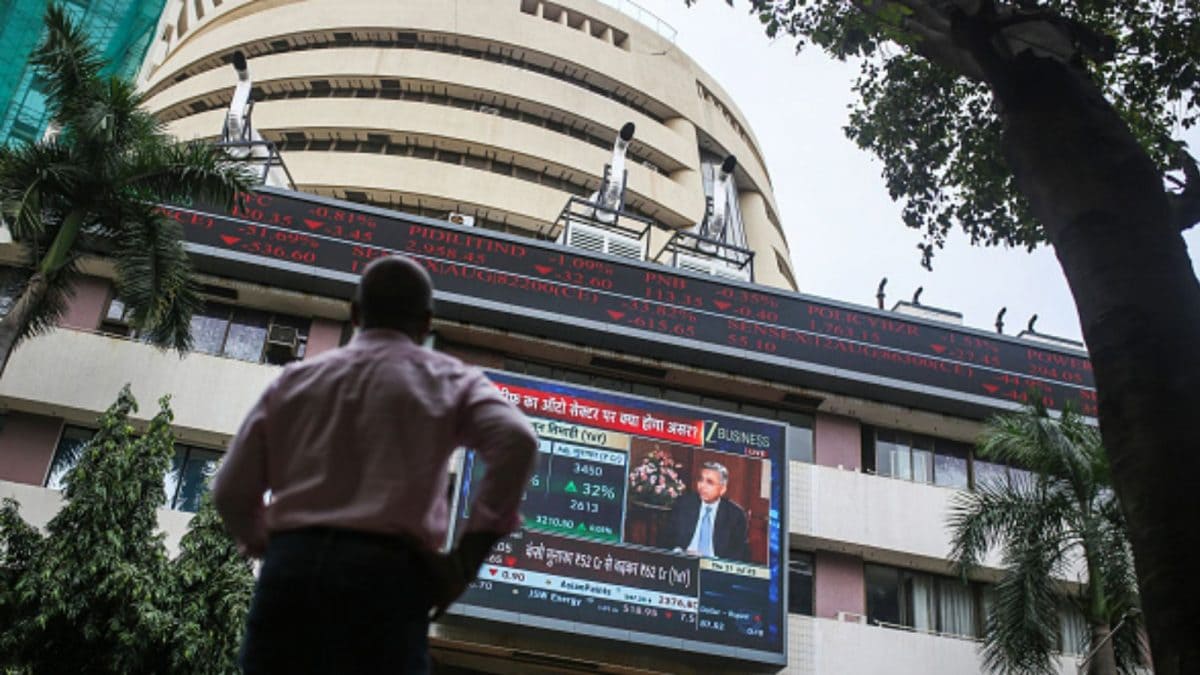
The Nifty50 and the Sensex rebounded from a two-day slump, tracking gains in global equities as Brent crude price eased after US President Donald Trump signaled an end to war. As of 9:17 AM, the Nifty50 was trading 0.58 per cent or 143.35 points higher at 24,167.40, and the Sensex was trading 0.62 per cent or 491.68 points higher at 78,030.20.
Global Cues
South Korea’s Kospi jumped over 6 per cent to lead the recovery rally in the region, and Japan’s Nikkei 225 rose over 5 per cent.
Meanwhile, US stock futures declined after the US President Donald Trump signalled that the war with Iran may come to an end soon. He also warned that Iran would be hit 20 times harder if the country blocks oil supply from the Strait of Hormuz.
The Dow Jones Industrial Average and S&P 500 futures were trading 0.22 per cent and 0.25 per cent down, respectively.
Overnight, the Dow Jones Industrial Average and S&P 500 indices ended 0.5 per cent and 0.83 per cent higher, respectively.
Brent crude prices declined 11 per cent to $88.05 per barrel on Tuesday so far following Trump’s remarks. It was trading 10.37 per cent down at $88.70 per barrel as of 7:20 AM, according to data on Bloomberg.
Gold and silver futures rose on Tuesday as the dollar index declined on hopes for easing US-Iran tensions in the near future. Gold and Silver futures were trading 1.55 per cent and 6.06 per cent higher, respectively.

The Pakistan Stock Exchange (PSX) rebounded sharply on Tuesday, with the benchmark index jumping more than 6% after sentiment in global markets improved following US President Donald Trump’s prediction that the ongoing war in the Middle East could soon de-escalate.
During the session, the benchmark KSE-100 Index traded between a high of 157,648.77 (up 11,168.63 points, or 7.62%) and a low of 155,294.65 (up 8,814.51 points, or 6.02%) versus the previous close of 146,480.14.
During the previous session on Monday, the index shed 11,015.96 points, marking the second-largest single-day drop in the index’s history.
The index indicated at 155,783.89 (up 9,303.75 points, or 6.35%) when trading was temporarily suspended.
“Market is rebounding due to lower oil prices and improving sentiment in regional markets,” Samiullah Tariq, Head of Research at Pak-Kuwait Investment Company, told Geo.tv.
Topline CEO Mohammad Sohail told Thenews.pk that a sharp decline in global oil prices has prompted investors to aggressively buy local stocks.
Trading at the PSX was temporarily suspended after the benchmark KSE-30 Index declined by more than 5% from the previous day’s close, triggering a market-wide circuit breaker.
The exchange’s notice noted that outstanding orders were cancelled automatically and set out the re-opening schedule (Market Halt Time 09:22am; Pre-Open 10:22am; Open 10:27am).
Oil prices fell on Tuesday after hitting an over three-year high in the prior session, after Trump’s prediction eased concerns about prolonged disruptions to global oil supplies.
Brent futures LCOc1 fell $4.17, or 4.2%, to $94.79 a barrel at 0345 GMT, while US West Texas Intermediate (WTI) crude CLc1 was down $3.81, or 4%, to $90.96 a barrel. Both the contracts fell as much as 11% earlier before paring some losses.
Oil surged past $100 a barrel on Monday to hit their highest since mid-2022, as supply cuts by Saudi Arabia and other producers during the expanding US-Israeli war with Iran stoked fears of major disruptions to global supplies.
Prices later retreated after Russian President Vladimir Putin held a call with Trump and shared proposals aimed at a quick settlement to the Iran war, according to a Kremlin aide, easing concerns about a prolonged supply disruption.
Trump said on Monday in a CBS News interview that he thinks the war against Iran “is very complete” and that Washington was “very far ahead” of his initial four- to five-week estimated timeframe.
Asian stock markets also rose sharply in early trade, including in South Korea and Japan.
South Korea’s benchmark Kospi rebounded more than 5%, and the Nikkei 225 in Tokyo jumped more than 3% before falling back slightly.
Last Updated:
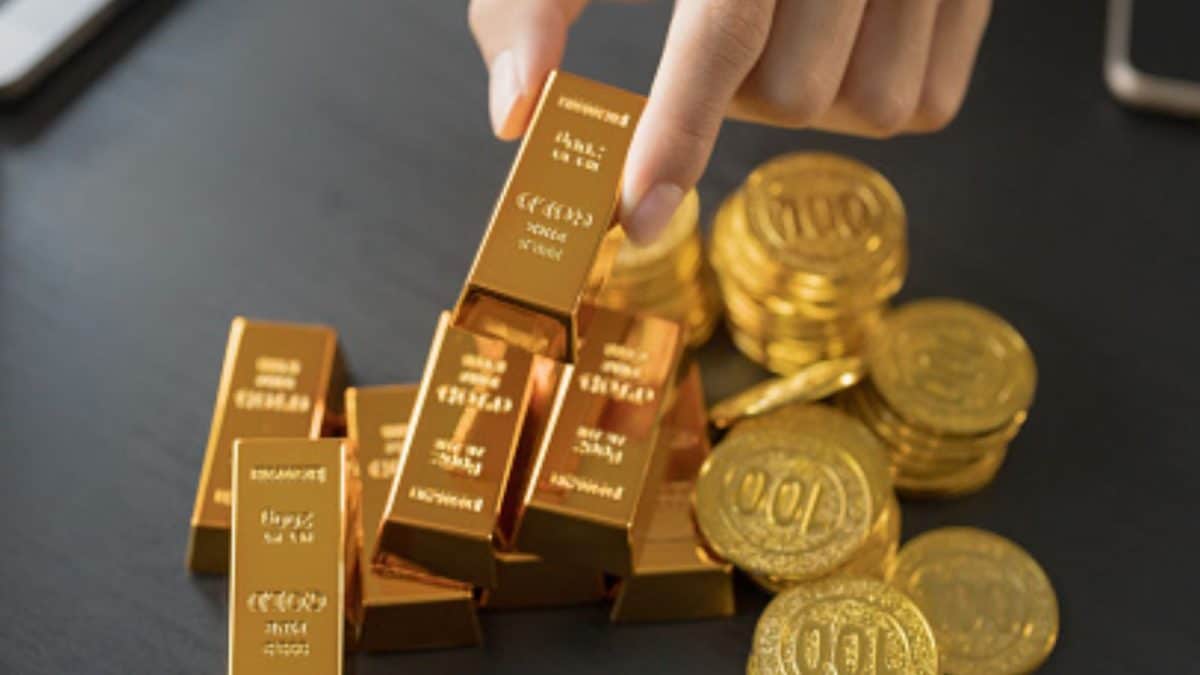
Gold prices surged on March 10. 24k gold was Rs 1,61,610 per 10g, 22k gold was Rs 1,48,190 per 10g. Silver rallied Rs 10,000 to Rs 2,90,000 per kg. MCX futures also rose.




Gold and silver futures rose on Tuesday
Gold Rate Today, March 10: Spot gold prices rose sharply on Tuesday after US President Donald Trump hinted that the war with Iran is close to an end. The price of 24-carat gold stood at Rs 1,62,380 per 10 grams, while 22k gold was available at Rs 1,48,190 per 10 grams. These rates do not include GST and making charges.
Meanwhile, spot silver saw a sharp uptick to rally Rs 10,000 in a single day in India, which was trading at Rs 2,90,000 per kg in the morning.
On MCX, gold futures, whose expiry is on April 02, 2026, was traded at Rs 1,62,143 per 10 gram, with a rise of 1.15 per cent. While silver futures expiring on March 05, 2026, was trading at Rs 2,76,308 per kg, with a jump of 3.42 per cent.
What Is The Price Of 22kt, 24kt Gold Rates Today In India Across Key Cities On March 10?
| City | 22K Gold (per 10gm) | 24K Gold (per 10gm) |
|---|---|---|
| Delhi | Rs 1,49,000 | Rs 1,62,530 |
| Jaipur | Rs 1,49,000 | Rs 1,62,530 |
| Ahmedabad | Rs 1,48,900 | Rs 1,62,430 |
| Pune | Rs 1,48,900 | Rs 1,62,430 |
| Mumbai | Rs 1,48,850 | Rs 1,62,380 |
| Hyderabad | Rs 1,48,850 | Rs 1,62,380 |
| Chennai | Rs 1,48,850 | Rs 1,62,380 |
| Bengaluru | Rs 1,48,850 | Rs 1,62,380 |
| Kolkata | Rs 1,48,190 | Rs 1,62,380 |
What Factors Affect Gold Prices In India?
International market rates, import duties, taxes, and fluctuations in exchange rates primarily influence gold prices in India. Together, these factors determine the daily gold rates across the country.
In India, gold is deeply cultural and financial. It is a preferred investment option and is key to celebrations, particularly weddings and festivals.
With constantly changing market conditions, investors and traders monitor fluctuations closely. Staying updated is crucial for effectively navigating dynamic trends.
March 10, 2026, 10:19 IST
Read More


War, inflation and apparel: What TexPro CPI signals

Who is Ivanna Ortiz? Woman who fired shots at Rihanna Beverly Hills mansion
Sensex, Nifty 50 Stock Market Today Live Updates: Sensex Up 360 Points, Nifty Above 24,100; India VIX Falls Over 15%

-

 Politics3 days ago
India let Iran warship dock the day US sank another off Sri Lanka, say officials
-

 Sports3 days ago
Pakistan set for FIH Pro League debut | The Express Tribune
-

 Entertainment3 days ago
Harry Styles kicks off new era with ‘One Night Only’ comeback show
-
 Business1 week ago
Labour parliamentarians urge UK Government to oppose Rosebank oil field
-
 Business3 days ago
Restaurant group changes name after bid to buys pubs across the UK
-
 Business3 days ago
Home heating oil: ‘Most of my pension has gone on home heating oil’
-

 Tech1 week ago
The 5 Big ‘Known Unknowns’ of Donald Trump’s New War With Iran
-

 Sports1 week ago
USA vs. Argentina (Mar 1, 2026) Live Score – ESPN