

Business
Cracker Barrel stock falls as company reports mixed earnings after rebrand controversy


In an aerial view, a Cracker Barrel sign featuring the old logo hangs on a sign outside of a restaurant on Aug. 27, 2025 in Florida City, Florida.
Joe Raedle | Getty Images
Cracker Barrel Old Country Store said Wednesday the restaurant chain is focusing on enhancing its experiences for guests after it faced intense backlash over an attempted rebrand earlier this summer.
The company reported mixed fiscal fourth-quarter earnings Wednesday afternoon, and CEO Julie Masino said the company is “optimistic” about its future as it heads into next year.
The stock sank roughly 10% in after hours trading.
Here’s how the company performed compared with what Wall Street was expecting, based on a survey of analysts by LSEG:
- Earnings per share: 74 cents vs. 80 cents expected
- Revenue: $868 million vs. $855 million expected
Masino said Cracker Barrel was grateful for customers voicing their “passion for Cracker Barrel in recent weeks” and that the company is now switching its focus.
“We conducted extensive research to inform our strategic plan, but what cannot be captured in data is how much our guests see themselves and their own story in the Cracker Barrel experience, which is what’s led to such a strong response to these changes,” Masino said on a call with analysts Wednesday.
The company is now focusing on innovating in the kitchen and “areas that enhance the guest experience,” Masino said, with the team aiming to return to a “positive trajectory.”
Still, Cracker Barrel said it expects total revenue for fiscal 2026 of $3.35 billion to $3.45 billion, compared with the $3.52 billion analysts expected, and a same-store traffic decline of 4% to 7%.
The company faced backlash last month after it announced a complete rebrand, including a redesign of its logo and a remodeling of its restaurants.
The new logo scrapped the image of a man sitting on a wooden chair leaning against a barrel, instead moving to a simpler black-and-yellow logo featuring only “Cracker Barrel,” without the “Old Country Store.” It had been the company’s latest move in a “strategic transformation” announced in May 2024 to reenergize the brand.
The restaurants were also scheduled to undergo remodeling to align with the new vision.
But the rebrand came under intense scrutiny. Users on social media called it “soulless” and “generic,” and conservatives took to X to argue that the logo change was an attempt to remove the American identity of the brand to cater to diversity, equity and inclusion efforts. The stock sank in the wake of the changes.
Cracker Barrel’s old and new logo.
Courtesy: Cracker Barrel
Cracker Barrel responded to the criticism, saying that the company could have “done a better job sharing who we are and who we’ll always be.” The chain said the man from the original logo, Uncle Herschel, would still be featured on the menu and part of the Cracker Barrel “family.”
President Donald Trump even weighed in on the situation, saying that Cracker Barrel “should go back to the old logo, admit a mistake based on customer response (the ultimate Poll) and manage the company better than ever before.”
The same day, the company announced a stunning reversal, shutting down the rebrand and retaining its original branding.
“We thank our guests for sharing your voices and love for Cracker Barrel. We said we would listen, and we have. Our new logo is going away and our ‘Old Timer’ will remain,” the company said in a statement.
Masino said on the Wednesday call that four locations with the modern designs are already being reverted to the traditional “Old Timer” signage.
“That’s why our team pivoted quickly to switch back to our ‘Old Timer’ logo and has already begun executing new marketing, advertising and social media initiatives leaning into Uncle Herschel and the nostalgia around the brand with more to come,” Masino said on the Wednesday call.
She added that the company is launching “Front Porch Feedback” on Thursday to build on what Cracker Barrel has received over recent weeks. The new tool will allow reward members to comment directly to team members after every visit, Masino said.
The company also announced it was suspending all of its restaurant remodels.
Shares of the company rose after the reversal, mostly restoring its losses. Since its first announcement, Cracker Barrel lost and regained almost $100 million in market value.
“Cracker Barrel is not just an old country store or a restaurant,” Masino said. “It’s the front porch of America, and we take that very seriously.”




Business
MLB faces a historic shift as potential lockout, media rights and other league changes loom

Thursday’s Opening Day may be the calm before the storm for Major League Baseball.
The league’s collective bargaining agreement with its players expires at the end of this season. Owners, with the commissioner’s backing, are almost sure to push for a salary cap (which would likely come with a salary floor to get players to the negotiating table).
MLB owners have never been able to get a cap passed by the players union. It’s unclear if the end of the 2026 season will lead to a different result, but MLB Players Association Interim Executive Director Bruce Meyer told ESPN last month he expects a lockout is “all but guaranteed.”
In addition to the CBA’s expiration, there are major shifts underway for baseball media rights. One-third of the league’s teams didn’t have local TV deals in place for this season until this week.
Nine MLB teams – the Washington Nationals, Seattle Mariners, Milwaukee Brewers, St. Louis Cardinals, Miami Marlins, Tampa Bay Rays, Cincinnati Reds, Kansas City Royals, and Detroit Tigers – announced Wednesday their brand new MLB-operated team channels will be carried by DirecTV.
Most of those teams had previously been part of Main Street Sports (previously Diamond Sports Group), which operates FanDuel Sports Networks (previously Bally Sports). That entity has been teetering with liquidation, and the teams terminated their contracts with the company due to missed payments earlier this year.
A 10th team, the Atlanta Braves, is launching a new network called BravesVision. The Braves and Charter’s Spectrum announced a multiyear distribution agreement earlier this week.
MLB ideally wants the rights to all 30 teams in its control by the end of the 2028 season so that it can sell the in-market local games as a national package to a streamer. That would become the modern replacement to regional sports networks, and it would likely be a new, coveted package for streaming services such as ESPN and Amazon Prime Video.
Also at the end of the 2028 season, MLB’s national media rights for all of its packages will expire, allowing the league to redistribute games to its partners and potentially select new ones.
NBC, ESPN, Fox and a combined CBS/Turner have dominated national rights for the past few decades.
“The key in media negotiations now is having all of your rights available,” MLB Commissioner Rob Manfred told me last year. “If you have all of your content – all of your playoffs, all of your regular season – available, there will be buyers, and I’m confident there will be buyers at a higher price for us.”
Manfred has even floated the idea of expanding to 32 teams and realigning the league geographically, upending or even eliminating the American and National leagues that have existed for more than 100 years.
Soaring TV ratings
It’s, of course, unclear how much of this hypothetical change will actually come to fruition.
But the potential for transformation at MLB is greater than at any of the other Big 4 professional leagues in the U.S.
And yet, baseball isn’t struggling — on the contrary. The implementation of the pitch clock in 2023 has led to shorter games, rising attendance and higher TV ratings.
Rob Manfred, Commissioner of the MLB, attends the annual Allen and Co. Sun Valley Media and Technology Conference at the Sun Valley Resort in Sun Valley, Idaho, U.S., on July 9, 2025.
David A. Grogan | CNBC
More than 50 million people in the U.S., Canada and Japan watched Game Seven of the World Series last year – the most-watched baseball game in 34 years. MLB recently wrapped up the World Baseball Classic – a global preseason tournament – which captured nearly 11 million viewers on Fox and Fox Deportes for its final game.
MLB team valuations rose 13% from last year. The average MLB team is now worth $2.95 billion, according to CNBC Sport data.
Still, the profitability of the league is in far worse shape than it is for the NFL, NBA and NHL, according to CNBC’s calculations. In 2025, MLB’s 30 teams had an EBITDA — earnings before interest, taxes, depreciation and amortization — margin of under 2%. Team average revenue was $426 million with average EBITDA of $7 million, including non-MLB ballpark events. In contrast, the comparable margin for the NFL was 20%; the NBA, 21% and the NHL, 22%, according to CNBC’s most recent valuations.
The new CBA at the end of this season could be the first significant step toward a very different MLB. But, similar to the WNBA, which announced its new CBA earlier this week, MLB must ensure negotiations to get a new labor agreement don’t jeopardize a wave of positive momentum.
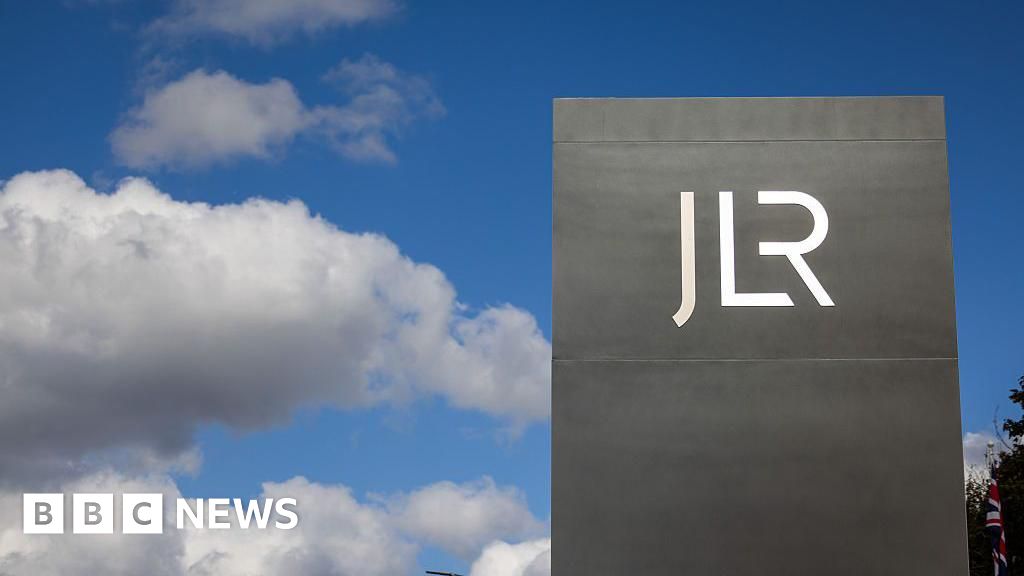
A JLR spokesperson said: “Due to a part supply challenge with a supplier, we are temporarily pausing production on certain vehicle lines at our Solihull manufacturing facility. We are working closely with that supplier to resolve the issue as quickly as possible and minimise any impact on our clients or our operations.”
Business
WTO reform push: India flags dysfunctional dispute system at MC14, seeks review of e-commerce duty moratorium – The Times of India
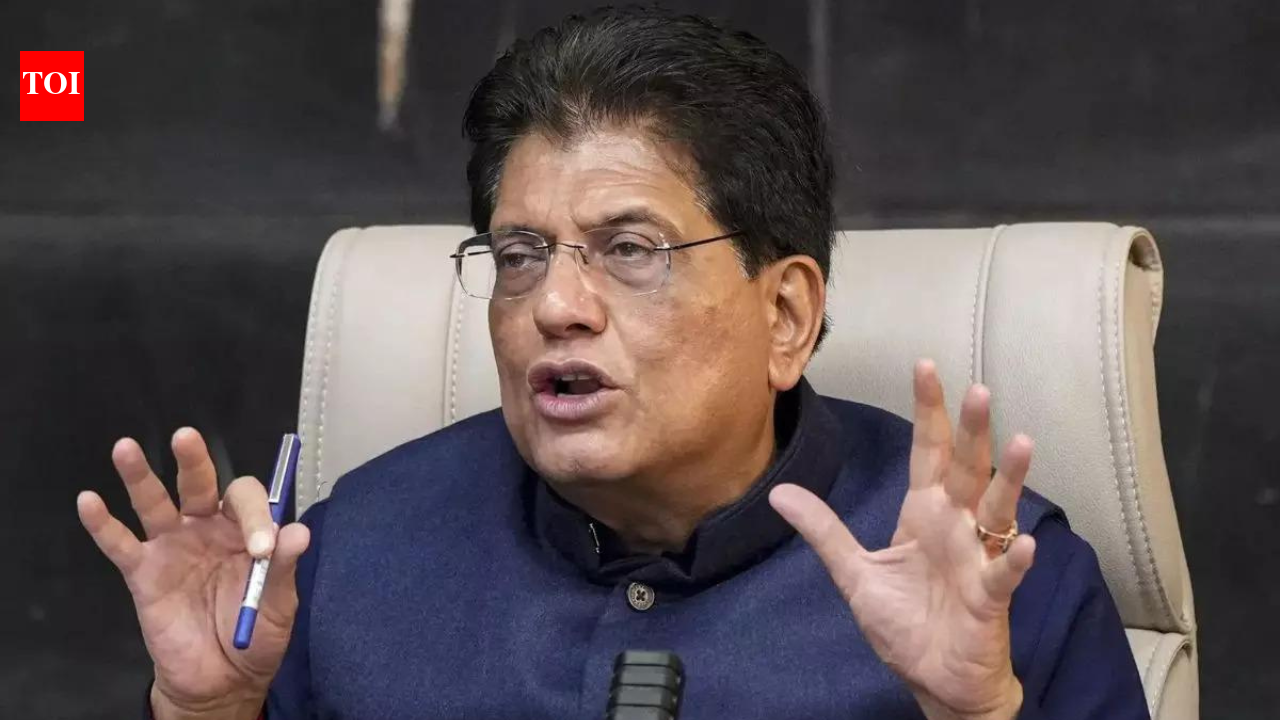
India on Thursday urged members of the World Trade Organisation (WTO) to restore a fully functional dispute settlement system, saying the current mechanism has deprived countries of effective redressal, PTI reported.Speaking on the opening day of the WTO’s 14th ministerial conference (MC14) in Yaounde, Cameroon, commerce and industry minister Piyush Goyal stressed the need to revive the automatic and binding nature of dispute resolution within the global trade body.“A dysfunctional Dispute Settlement System has deprived Members from effective redressal. We must restore the automatic and binding dispute settlement system,” he said.The WTO’s dispute settlement mechanism has faced prolonged disruption since 2009 after the US blocked appointments to the Appellate Body.Goyal also called for a reassessment of the moratorium on customs duties on electronic transmissions, which WTO members have periodically extended since 1998. India has repeatedly raised concerns over the potential revenue implications of the arrangement.“In the absence of a common understanding among Members on the scope of the moratorium on customs duties on electronic transmissions and given its potentially significant implications, the continued extension of this moratorium warrants careful reconsideration,” he said.The four-day MC14 is scheduled to conclude on March 29.On broader WTO reforms, Goyal emphasised that any restructuring should be transparent, inclusive and member-driven, with development concerns at the centre. He underlined that core principles such as non-discrimination, consensus-based decision-making and equity must be upheld. The minister added that the principle of special and differential treatment (S&DT) should be made precise, effective and operational.On agriculture negotiations, he said a permanent solution on public stockholding for food security purposes, the special safeguard mechanism and cotton are long-pending mandated issues that member countries “must deliver on them on priority”.“India remains committed to negotiating a comprehensive Fisheries Subsidies Agreement that balances current and future fishing needs, protects the livelihoods of poor fishers, with appropriate and effective S&DT,” Goyal said.He also stated that incorporating plurilateral outcomes into the WTO framework should be based on consensus and should not undermine the rights of non-participants or impose additional obligations on them.“We will engage constructively to show that WTO remains central to global trade and strive to Reform it to remain responsive, Perform in delivering on development, equity, and inclusiveness, and Transform to better serve the interests of the poor, vulnerable, and marginalized people, anchored in consensus and multilateralism,” he said.Other WTO members also highlighted the need for reforms. According to a statement from US Trade Representative Jamieson Greer, the organisation has struggled to address systemic issues such as persistent trade imbalances, structural excess capacity, economic security and supply chain resilience.“As ministers, our focus should be on reforms that would make the WTO more responsive to Members and improve our ability to achieve outcomes that optimize our trading relationships,” Greer said, adding that countries should consider making the e-commerce duty moratorium permanent.Separately, a ministerial statement by the G-33 grouping of developing countries reiterated that public stockholding for food security remains a crucial policy tool for developing and least developed nations.“We urge all WTO Members to work together in reaching a permanent solution on this issue as per the Ministerial mandates,” the statement said.China also called for restoring a fully functioning dispute settlement mechanism at the earliest to strengthen the WTO’s role in global economic governance. The UK said it wanted to “improve accountability by reinstating a functioning dispute settlement system”.EU trade commissioner Maros Sefcovic warned that inaction could weaken the rules-based trading system. “Maintaining the status quo is not an option — we cannot go on as we are. If we do, we risk erosion of the rules-based system and the WTO sliding into irrelevance. Therefore, I strongly believe we must act urgently to reform the WTO,” he said


How Cole Hutson is taking a role in the next wave for the Capitals

Men’s March Madness live tracker: Updates from every Sweet 16 game Thursday

Man City to seek Rodri talks amid Real Madrid links – sources

-

 Fashion1 week ago
Sales at US apparel, clothing accessories stores up 4% YoY in Jan 2026
-

 Fashion1 week ago
Spain’s Inditex FY25 sales rise 3.2% to $46.28 bn amid strong demand
-

 Entertainment1 week ago
Val Kilmer revived 1 year after death through AI
-

 Politics1 week ago
Iran strikes Tel Aviv with cluster-warhead missiles in retaliation of Larijani’s martyrdom
-

 Sports1 week ago
March Madness 2026 – How to watch in SA, start time, schedule, TV channel for NCAA championship basketball tournament
-
 Fashion1 week ago
US’ G-III Apparel’s FY26 sales fall 7% to $2.96 bn
-

 Politics1 week ago
US judge directs Trump administration to bring VOA employees back
-
 Business1 week ago
Brits cashing in jewellery as gold price hits record high