

Business
Crude oil: Opec+ to raise production by 137,000 bpd from November; group stays cautious amid supply glut fears – The Times of India


Saudi Arabia, Russia and six other members of Opec+ on Sunday decided to raise their oil production quotas by 137,000 barrels per day (bpd) for November, continuing efforts to reclaim market share amid cautious demand projections, AFP reported.“In view of a steady global economic outlook and current healthy market fundamentals, as reflected in the low oil inventories, the eight participating countries decided to implement a production adjustment of 137 thousand barrels per day from October’s levels,” Opec+ said in a statement after an online meeting.The increase was lower than many analysts had anticipated, with the group seeking to avoid exerting downward pressure on prices amid weak global demand. “Opec+8 stepped carefully after witnessing how nervous the market had become in light of rumours that production could be hiked by 500,000 barrels a day,” said Jorge Leon, analyst at Rystad Energy. “The group is walking a tightrope between maintaining stability and clawing back market share in a surplus environment.”Since April, the eight members — Saudi Arabia, Russia, Iraq, the UAE, Kuwait, Kazakhstan, Oman, and Algeria — have already raised their quotas by more than 2.5 million bpd. The initial focus of Opec+ this year was to support high prices by limiting supply, but the strategy shifted in April to prioritise regaining market share from competitors including the US, Brazil, Canada, Guyana and Argentina.Global oil demand projections are modest. The International Energy Agency expects consumption to rise by only 700,000 bpd between 2025 and 2026, while Opec forecasts higher growth of 1.3 million bpd in 2025 and 1.4 million bpd in 2026.Brent crude, the global benchmark, traded below $65 per barrel on Friday, down about 8% in a week amid concerns over a potential surge in Opec+ production.Russia, the cartel’s second-largest producer after Saudi Arabia, relies on high oil prices to fund its war effort in Ukraine but has limited capacity to increase output due to US and European sanctions. “The increase decided Sunday is manageable for Russia,” said Leon. The country currently produces around 9.25 million bpd, close to its maximum capacity of 9.45 million bpd, down from roughly 10 million before the conflict, analysts said.Ukrainian strikes on Russian refineries since August have intensified exports, as domestic utilisation of crude has declined, making Russia even more dependent on foreign markets, said Arne Lohmann Rasmussen, analyst at Global Risk Management




Business
‘Opportunity to consider options’: US govt seeks delay in tariff refunds battle as Trump fumes over possible ‘rehearing’ – The Times of India

US President Donald Trump’s administration is seeking to delay legal proceedings related to tariff refunds, a week after the Supreme Court struck down his sweeping global duties, according to a court filing on Friday.The Supreme Court’s ruling marked a major setback for Trump’s signature economic policy and opened the door to a complex and legally challenging refund process, as importers prepare to sue for repayments.
In its filing before the United States Court of Appeals for the Federal Circuit, the government sought a delay of up to four months before refund litigation resumes at the US Court of International Trade.“In a case on review from a federal court, the Supreme Court sends down its judgment 32 days after entry of judgment,” AFP reported quoting the government in its submission. It further argued that the court should grant an additional delay of “90 days to allow the political branches an opportunity to consider options.”“Complexity in the future counsels appropriately careful process, not breakneck speed,” the government said.Earlier in the day, Trump also criticised the Supreme Court’s decision, warning it could result in massive payouts.Posting on Truth Social, the MAGA Supremo said, “The recent decision of the United States Supreme Court concerning TARIFFS could allow for Hundreds of Billions of Dollars to be returned to Countries and Companies that have been ‘ripping off’ the United States of America for many years, and now, according to this Decision, could actually continue to do so, at an even increased level.”“I am sure that the Supreme Court did not have this in mind! It doesn’t make sense that Countries and Companies that took advantage of us for decades, receiving Billions and Billions of Dollars that they should not have been allowed to receive, would now be entitled to an undeserved ‘windfall,” he said.He also questioned the possibility of further legal action, asking, “Is a Rehearing or Readjudication of this case possible???”The legal battle began after the US Court of Appeals for the Federal Circuit ruled in August last year that many of Trump’s tariffs were illegal, but sent the question of refunds back to the Court of International Trade. The appeals court paused issuing its mandate while Trump appealed to the Supreme Court.Last week, the top court by a 6–3 majority ruled that Trump had exceeded his authority in imposing broad global tariffs, striking them down.Chief Justice John Roberts wrote that the Constitution does not grant the executive unilateral authority to levy taxes, saying the framers did not vest taxing power in the presidency.However, the decision did not affect sector-specific duties on products such as steel and automobiles.Within hours of the ruling, Trump invoked a different law to impose a new 10% tariff on imports into the United States, later raising it to 15%.

Last Updated:
‘While some roles may be automated, others will see enhancement through AI augmentation, and other, entirely new roles will be created,’ the report says.




As AI adoption spreads across businesses, companies are expected to hire senior-level executives such as chief AI officers to oversee implementation across functions.
Amid rising concern that artificial intelligence (AI) could displace white-collar workers at scale, a report by Morgan Stanley offers a measured view, saying the technology is more likely to reshape work than eliminate it. Rather than triggering mass early retirement, the report notes that employees will need to reskill for roles that are still emerging, according to Fortune.
“While some roles may be automated, others will see enhancement through AI augmentation, and other, entirely new roles will be created,” the report highlighted.
The researchers draw on more than 150 years of technological change — from electrification to the internet — to argue that innovation historically transforms job profiles without fully replacing human labour. The report cites spreadsheets in the 1980s as an example: they reduced demand for some clerical tasks but enabled analysts to focus on complex work and led to new finance-sector professions.
As AI adoption spreads across businesses, companies are expected to hire senior-level executives such as chief AI officers to oversee implementation across functions. The report also projects a surge in governance-focused positions tied to data compliance, policy oversight and information security, especially in sensitive sectors like healthcare.
“There will also be a massive surge in AI governance roles focused on data compliance, policy oversight, and information security, particularly in sensitive sectors like health care,” the publication stated.
New job titles may also emerge across sectors. In consumer industries, roles such as AI personalisation strategists and AI supply-chain analysts could appear, while industrial firms may seek predictive maintenance engineers and smart-grid analysts. The rise of natural-language coding tools could also create hybrid IT roles, allowing product managers to directly prototype concepts before engineers complete technical execution.
Separate evidence suggests the short-term labour impact of AI remains limited. A National Bureau of Economic Research study surveying nearly 6,000 executives in the US, UK, Germany and Australia found that more than 90 per cent reported no change in employment levels over the past three years, and 89 per cent saw no productivity impact.
“On average, more than 90 per cent of business managers across the four countries estimate no impact of AI on their employment over the past three years. 89 per cent report no impact of AI on their labour productivity (measured as volume of sales per employee) over the last three years,” the study highlighted.
Even so, expectations for future gains remain strong. Executives surveyed expect AI to raise productivity by 1.4 per cent and output by 0.8 per cent over the next three years, while 75 per cent of firms anticipate using some form of AI technology within that period.
 Click here to add News18 as your preferred news source on Google.
Follow News18 on Google. Join the fun, play games on News18. Stay updated with all the latest business news, including market trends, stock updates, tax, IPO, banking finance, real estate, savings and investments. To Get in-depth analysis, expert opinions, and real-time updates. Also Download the News18 App to stay updated.
February 28, 2026, 09:11 IST
Read More

Last Updated:
Warner Bros Discovery signed a SUD 11 billion deal with Paramount Skydance Friday morning, as revealed in a global town hall audio clip.
Warner Bros signs USD 110 billion deal with Paramount (Image for representation)
Warner Bros Discovery (WBD.O) signed a SUD 110 billion deal with Paramount Skydance (PSKY.O) Friday morning, the two companies announced, marking one of the most consequential media mergers in recent history.
“Netflix had the legal right to match the PSKY offer. As you all know, they ultimately decided not to do that. That then resulted in a signed agreement with PSKY as of this morning. So that’s where everything stands,” Bruce Campbell, Warner Bros’ chief revenue and strategy officer, said, as quoted by news agency Reuters.
The companies revealed that the deal is expected to close in the third quarter of 2026.
The deal was inked as Netflix declined to match Paramount’s latest USD 31-per-share offer, pulling out of the bidding war for Warner Bros. Discovery’s studio and streaming assets.
According to the Reuters report, citing sources, Warner Bros received the contracts from Paramount on Saturday and within the following two days, it announced that Paramount’s offer was superior.
The deal was immediately approved by board of directors of both media giants, said the companies in a joint statement.
The deal is “subject to customary closing conditions, including regulatory clearances and approval by WBD shareholders, with a vote expected in the early spring of 2026″, the statement read.
Interestingly, Paramount Skydance is headed by David Ellison, the son of Silicon Valley billionaire Larry Ellison, a close ally of President Donald Trump.
“By bringing together these world-class studios, our complementary streaming platforms, and the extraordinary talent behind them, we will create even greater value for audiences, partners and shareholders — and we couldn’t be more excited for what’s ahead,” David Ellison said in a statement.
NOT A ‘MUST HAVE’
In a stunning move hours later, Netflix announced it would not match Paramount Skydance’s latest offer to acquire Warner Bros Discovery. Netflix co-CEOs Ted Sarandos and Greg Peters asserted that “this transaction was always a nice to have at the right price, not a ‘must have’ at any price.”
TRUMP YET TO COMMENT
At one point, President Donald Trump said he might weigh in on the agreement. However, he told NBC News in early February that he would not be “involved” in the proceedings.
Then, last week, he issued a warning to Netflix, saying it would “pay the consequences” if it did not fire board member Susan Rice, an ex-official of the Biden administration.
During a podcast, Rice had said the entities that “take a knee” to the President would be “held accountable” when Democrats return to the office.
Meanwhile, the President is yet to comment on the deal.
Click here to add News18 as your preferred news source on Google.
Follow News18 on Google. Join the fun, play games on News18. Stay updated with all the latest business news, including market trends, stock updates, tax, IPO, banking finance, real estate, savings and investments. To Get in-depth analysis, expert opinions, and real-time updates. Also Download the News18 App to stay updated.
Washington D.C., United States of America (USA)
February 28, 2026, 07:48 IST
Read More


India’s real GDP estimated to grow 7.6% in FY26 under new base FY23

Trump says US won’t intervene in Islamabad-Kabul conflict

South Korea’s Misto Holdings completes planned leadership transition

-

 Tech1 week ago
A $10K Bounty Awaits Anyone Who Can Hack Ring Cameras to Stop Sharing Data With Amazon
-
 Business1 week ago
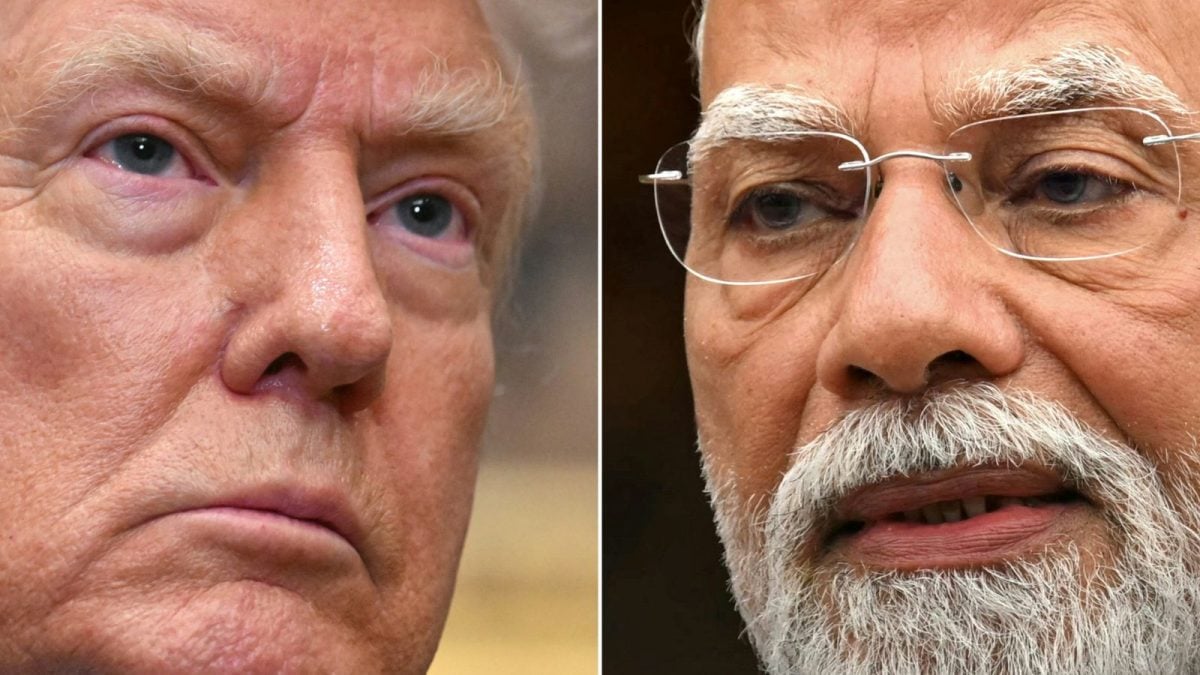
US Top Court Blocks Trump’s Tariff Orders: Does It Mean Zero Duties For Indian Goods?
-

 Fashion1 week ago
ICE cotton ticks higher on crude oil rally
-

 Entertainment1 week ago
The White Lotus” creator Mike White reflects on his time on “Survivor
-

 Politics6 days ago
Pakistan carries out precision strikes on seven militant hideouts in Afghanistan
-

 Tech1 week ago
Donald Trump Jr.’s Private DC Club Has Mysterious Ties to an Ex-Cop With a Controversial Past
-
 Business7 days ago
Eye-popping rise in one year: Betting on just gold and silver for long-term wealth creation? Think again! – The Times of India
-

 Sports1 week ago
Brett Favre blasts NFL for no longer appealing to ‘true’ fans: ‘There’s been a slight shift’