

Tech
Featured video: Coding for underwater robotics


During a summer internship at MIT Lincoln Laboratory, Ivy Mahncke, an undergraduate student of robotics engineering at Olin College of Engineering, took a hands-on approach to testing algorithms for underwater navigation. She first discovered her love for working with underwater robotics as an intern at the Woods Hole Oceanographic Institution in 2024. Drawn by the chance to tackle new problems and cutting-edge algorithm development, Mahncke began an internship with Lincoln Laboratory’s Advanced Undersea Systems and Technology Group in 2025.
Mahncke spent the summer developing and troubleshooting an algorithm that would help a human diver and robotic vehicle collaboratively navigate underwater. The lack of traditional localization aids — such as the Global Positioning System, or GPS — in an underwater environment posed challenges for navigation that Mahncke and her mentors sought to overcome. Her work in the laboratory culminated in field tests of the algorithm on an operational underwater vehicle. Accompanying group staff to field test sites in the Atlantic Ocean, Charles River, and Lake Superior, Mahncke had the opportunity see her software in action in the real world.
“One of the lead engineers on the project had split off to go do other work. And she said, ‘Here’s my laptop. Here are the things that you need to do. I trust you to go do them.’ And so I got to be out on the water as not just an extra pair of hands, but as one of the lead field testers,” Mahncke says. “I really felt that my supervisors saw me as the future generation of engineers, either at Lincoln Lab or just in the broader industry.”
Says Madeline Miller, Mahncke’s internship supervisor: “Ivy’s internship coincided with a rigorous series of field tests at the end of an ambitious program. We figuratively threw her right in the water, and she not only floated, but played an integral part in our program’s ability to hit several reach goals.”
Lincoln Laboratory’s summer research program runs from mid-May to August. Applications are now open.
Video by Tim Briggs/MIT Lincoln Laboratory | 2 minutes, 59 seconds



Bremont Supernova Chronograph (From $8,000)
Bremont has spent two decades building tool watches for Air, Land, and Sea. The Supernova adds a fourth pillar: Space. It’s also a meaningful design departure for a brand whose DNA has skewed toward traditional aviation styles—this is an angular, unapologetically bold take on the integrated-bracelet blueprint, drawing its language from space stations and spacecraft both real and imagined. Oh, and one of them is going to the moon.
The 41-mm case is a geometric take on Bremont’s signature three-piece—or “Trip-Tick”—case architecture, in 904L steel with a DLC-coated middle section and a decahedral black ceramic bezel. But it’s the dial that is the showpiece: a three-dimensional latticework divided into 12 sections angling towards the center, with arrow-motif divides. Dedicated space-heads will recognise the look of solar arrays used by spacecraft like the Cygnus vehicle from Northrop Grumman, though in the watch’s case, the light comes from the other side. The dial overlays a full blue-emission Super-LumiNova base that glows out through the perforations in low light. Triangular indexes and rhomboidal black-gold hands echo the geometry. If you like your space watches still more otherworldly, Bremont is launching a skeletonized tourbillon version too.
.jpg)
Hermès H08 Skeleton
The Hermès H08 has been a WIRED favorite since it launched in 2021: a seamless blend of high-fashion DNA and everyday sports utility thanks to minimal design and water resistance to 100 meters. But, for 2026, the house is now stripping that design away. Three years in development, the new Squelette marks the collection’s first foray into the world of skeletonization—the process of removing as much metal as possible from a watch’s components, such as the plate, bridges, and oscillating weight, without compromising structural integrity. It also features a brand-new titanium Hermès movement with 60-hour power reserve developed in collaboration with Vaucher Manufacture Fleurier. Sporting a 39-mm black DLC titanium case with ceramic bezel, the Squelette ditches the date window to let the (lack of) mechanical interior steal the show.

Rolex Oyster Perpetual “100 Years” Rolesor ($9,650)
Much was speculated about what Rolex would do for the centenary of the Oyster case; many hoped for a return of the Milgauss, but Rolex rarely does nostalgia. Instead, we get this far more subdued Oyster Perpetual with a two-tone Rolesor (Rolex’s term for its half gold, half steel watches) configuration pairing an Oystersteel case and bracelet with an 18-carat yellow gold bezel and crown—a nod to the 1950s reference 6582 “Zephyr”—over a new slate gray sunray dial. At six o’clock, “Swiss Made” has been replaced with “100 Years” and the crown carries a small engraved “100” that most will never notice. That’s it. After 100 years, you’d think even Rolex would want to shout a little louder.

Rolex Oyster Perpetual “Jubilee Dial” ($6,750)
The decidedly sober “100 Years” Rolesor makes this bright “Jubilee Dial” Rolex seem like it’s having all the fun. Rolex has done bold dials before, but this is possibly its most graphic yet. The monochrome steel case only makes the dial hit harder: a repeating, crossword-like pattern of the letters R-O-L-E-X rendered in 10 colors and created through a complex, multi-stage pad printing process. Up close, it reads as a structured typographic pattern; at a distance, it merges into a cloud of color. Legibility takes a back seat here, but for a bright, entry-level Oyster Perpetual at $6,750, we think many won’t care. The real impediment to ownership won’t be the price; it’ll be getting hold of one.

Tudor Black Bay Ceramic ($7,725)
Tudor’s Black Bay Ceramic takes the brand’s much-admired dive-watch formula and strips it down into something moodier, sleeker, and a little more high-tech. The 41-mm matte black ceramic case gives it a stealthy presence, but the real trick is how the brand has managed to engineer the bracelet entirely from ceramic as well, which means this wears much lighter than a stainless steel diver. The off-white indices, snowflake hands, and domed dial keep the legibility sharp, while the no-date layout preserves minimal aesthetic. Even the lume is dark in tone. Inside, Tudor backs up the design with its in-house METAS-certified MT5602-U movement, good for 70 hours of power reserve when not worn.

Patek Philippe Celestial Sunrise and Sunset ($437,610)
This year’s ubiquitous astronomical theme continues with a new edition of Patek Philippe’s most high-flown watch, the Celestial, in which a starry night sky—configured exactly for the northern hemisphere, and calibrated to Geneva’s latitude—makes a real-time turn around the dial. At any given moment, the portion of the sky framed within the elliptical window superimposed above the dial shows the visible skyscape, should you look up from that latitude on a cloudless night, including the orbit and phases of the moon. This trick is achieved via a trio of superimposed see-through disks—two in mineral glass, and one in metallized sapphire glass.
The new version, Reference 6105G-001, adds indications for the sunrise and sunset, for which the peripheral date display doubles up as a 5 am to 11 pm scale. Nothing here is understated. The platinum case, with a sculpted architectural form that lends this Celestial a distinctly contemporary edge, is—at 47 mm—as monumental as the price. As Oscar Wilde would say, “I have the simplest of tastes. I am always satisfied with the best.”

Xinbi Guarantee has also hosted a wide variety of other black market offerings, including harassment services that threaten or throw feces at a victim for a fee, and even sex workers as young as 14 who are likely trafficking victims. One listing Elliptic shared with WIRED, found just in recent weeks, offered a 16-year-old sex worker, including the girl’s body size measurements and available sex acts.
As clearly as all of those examples contradict Telegram’s arguments for hosting Xinbi Guarantee, though, the UK government’s official sanctions against Xinbi are even more clearcut, says Elliptic’s Robinson. “It was already a weak argument, but the sanctioning of Xinbi makes the argument much weaker,” Robinson says. “There is now this official recognition that Xinbi is predominantly an illicit actor.”
Telegram’s tolerance for Xinbi Guarantee is all the stranger because it did, in fact, ban the market at one point last year. After WIRED asked Telegram about Elliptic’s findings regarding Xinbi Guarantee and a then-even-larger market known as Huione Guarantee, Telegram summarily purged the accounts of both. Telegram spokesperson Remi Vaughn wrote to WIRED at the time that “criminal activities like scamming or money laundering are forbidden by Telegram’s terms of service and are always removed whenever discovered.”
Over the following month, however, Elliptic continued to share its findings about apparent money laundering activity in a Telegram group that included a WIRED reporter and a Telegram spokesperson. Yet after its initial bans, Telegram didn’t remove any accounts for the black markets Elliptic highlighted, and Xinbi Guarantee simply rebuilt its marketplace despite Telegram’s own statement that it had violated the messaging platform’s terms of service.
Perhaps aware of its vulnerability to another Telegram ban, Xinbi Guarantee has asked its users to transition to another platform called SafeW. But the vast majority of Xinbi Guarantee’s activity has remained on Telegram, and Elliptic’s Robinson argues that the market will have a tough time moving users to SafeW. “Xinbi benefits from Telegram’s huge installed user base, something that would be very challenging for SafeW to replicate,” Robinson says.
For now, of course, Xinbi Guarantee doesn’t have to go anywhere, given Telegram hosting its blatantly criminal activity in plain sight. DarkTower’s Warner argues that represents an inexcusable lack of attention to Telegram’s enabling of Chinese-language black markets, both on the part of Telegram itself and law enforcement agencies worldwide.
When Russian cybercriminals have hosted black markets selling malicious software and stolen data, Warner points out, international law enforcement coalitions targeted those criminals and their infrastructure, leading to repeated seizures and arrests. Given how openly Telegram has hosted an even bigger criminal ecosystem, the company and its founder and CEO Pavel Durov deserve that same treatment, Warner argues. (Durov was, in fact, arrested and charged in France in 2024 but has since been released while the French government’s investigation reportedly continues.)
“He should be the subject of an international task force,” claims Warner. “He should be hunted down and arrested. He should be forced to be held accountable.”
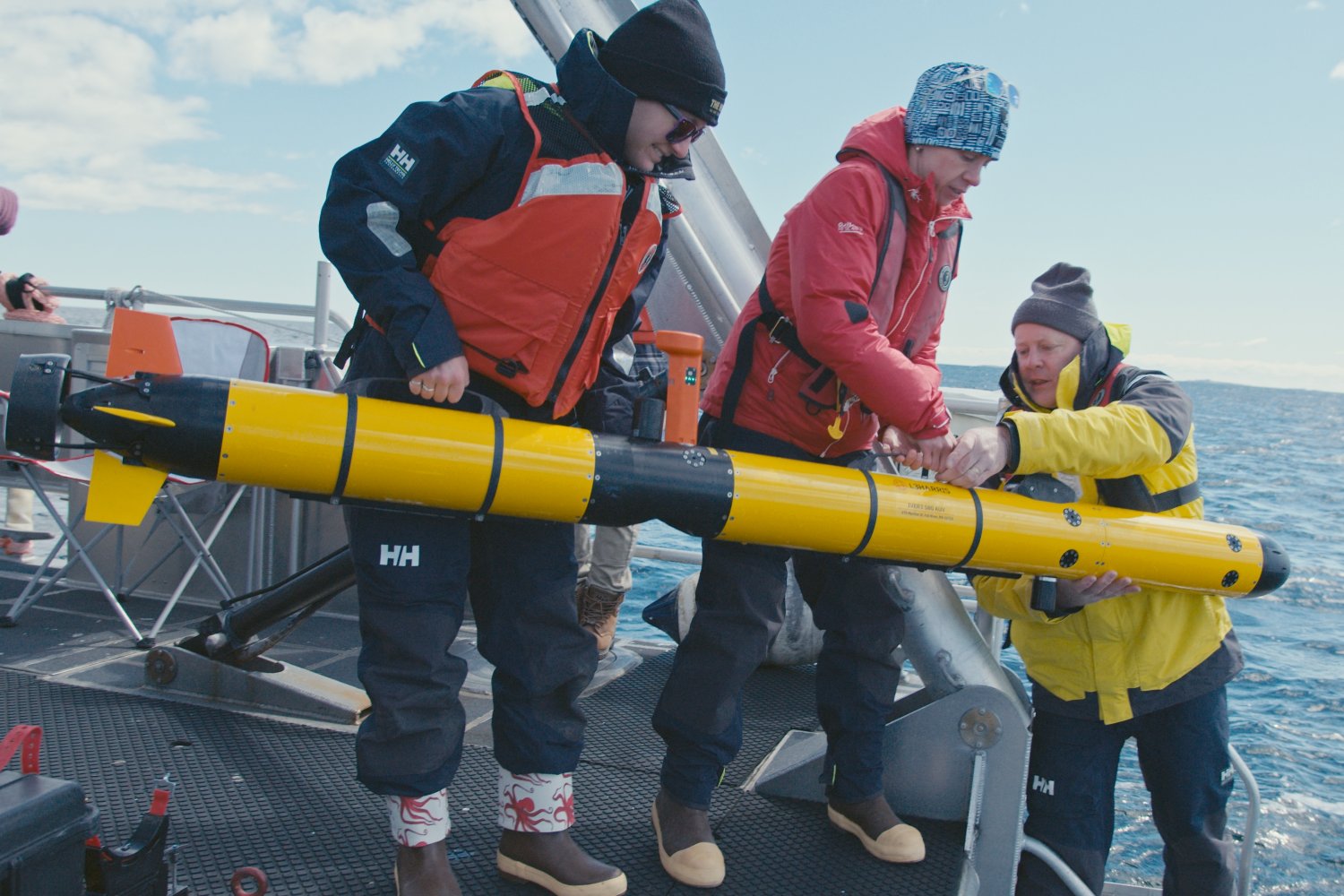
The electricity to an island goes out. To find the break in the underwater power cable, a ship pulls up the entire line or deploys remotely operated vehicles (ROVs) to traverse the line. But what if an autonomous underwater vehicle (AUV) could map the line and pinpoint the location of the fault for a diver to fix?
Such underwater human-robot teaming is the focus of an MIT Lincoln Laboratory project funded through an internally administered R&D portfolio on autonomous systems and carried out by the Advanced Undersea Systems and Technology Group. The project seeks to leverage the respective strengths of humans and robots to optimize maritime missions for the U.S. military, including critical infrastructure inspection and repair, search and rescue, harbor entry, and countermine operations.
“Divers and AUVs generally don’t team at all underwater,” says principal investigator Madeline Miller. “Underwater missions requiring humans typically do so because they involve some sort of manipulation a robot can’t do, like repairing infrastructure or deactivating a mine. Even ROVs are challenging to work with underwater in very skilled manipulation tasks because the manipulators themselves aren’t agile enough.”
Beyond their superior dexterity, humans excel at recognizing objects underwater. But humans working underwater can’t perform complex computations or move very quickly, especially if they are carrying heavy equipment; robots have an edge over humans in processing power, high-speed mobility, and endurance. To combine these strengths, Miller and her team are developing hardware and algorithms for underwater navigation and perception — two key capabilities for effective human-robot teaming.
As Miller explains, divers may only have a compass and fin-kick counts to guide them. With few landmarks and potentially murky conditions caused by a lack of light at depth or the presence of biological matter in the water column, they can easily become disoriented and lost. For robots to help divers navigate, they need to perceive their environment. However, in the presence of darkness and turbidity, optical sensors (cameras) cannot generate images, while acoustic sensors (sonar) generate images that lack color and only show the shapes and shadows of objects in the scene. The historical lack of large, labeled sonar image datasets has hindered training of underwater perception algorithms. Even if data were available, the dynamic ocean can obscure the true nature of objects, confusing artificial intelligence. For instance, a downed aircraft broken into multiple pieces, or a tire covered in an overgrowth of mussels, may no longer resemble an aircraft or tire, respectively.
“Ultimately, we want to devise solutions for navigation and perception in expeditionary environments,” Miller says. “For the missions we’re thinking about, there is limited or no opportunity to map out the area in advance. For the harbor entry mission, maybe you have a satellite map but no underwater map, for example.”
On the navigation side, Miller’s team picked up on work started by the MIT Marine Robotics Group, led by John Leonard, to develop diver-AUV teaming algorithms. With their navigation algorithms, Leonard’s group ran simulations under optimal conditions and performed field testing in calm waters using human-paddled kayaks as proxies for both divers and AUVs. Miller’s team then integrated these algorithms into a mission-relevant AUV and began testing them under more realistic ocean conditions, initially with a support boat acting as a diver surrogate, and then with actual divers.
“We quickly learned that you need more sensing capabilities on the diver when you factor in ocean currents,” Miller explains. “With the algorithms demonstrated by MIT, the vehicle only needed to calculate the distance, or range, to the diver at regular intervals to solve the optimization problem of estimating the positions of both the vehicle and diver over time. But with the real ocean forces pushing everything around, this optimization problem blows up quickly.”
On the perception side, Miller’s team has been developing an AI classifier that can process both optical and sonar data mid-mission and solicit human input for any objects classified with uncertainty.
“The idea is for the classifier to pass along some information — say, a bounding box around an image — to the diver and indicate, “I think this is a tire, but I’m not sure. What do you think?” Then, the diver can respond, “Yes, you’ve got it right, or no, look over here in the image to improve your classification,” Miller says.
This feedback loop requires an underwater acoustic modem to support diver-AUV communication. State-of-the-art data rates in underwater acoustic communications would require tens of minutes to send an uncompressed image from the AUV to the diver. So, one aspect the team is investigating is how to compress information into a minimum amount to be useful, working within the constraints of the low bandwidth and high latency of underwater communications and the low size, weight, and power of the commercial off-the-shelf (COTS) hardware they’re using. For their prototype system, the team procured mostly COTS sensors and built a sensor payload that would easily integrate into an AUV routinely employed by the U.S. Navy, with the goal of facilitating technology transition. Beyond sonar and optical sensors, the payload features an acoustic modem for ranging to the diver and several data processing and compute boards.
Miller’s team has tested the sensor-equipped AUV and algorithms around coastal New England — including in the open ocean near Portsmouth, New Hampshire, with the University of New Hampshire’s (UNH) Gulf Surveyor and Gulf Challenger coastal research vessels as diver surrogates, and on the Boston-area Charles River, with an MIT Sailing Pavilion skiff as the surrogate.
“The UNH boats are well-equipped and can access realistic ocean conditions. But pretending to be a diver with a large boat is hard. With the skiff, we can move more slowly and get the relative motion in tune with how a diver and AUV would navigate together.”
Last summer, the team started testing equipment with human divers at Michigan Technological University’s Great Lakes Research Center. Although the divers lacked an interface to feed back information to the AUV, each swam holding the team’s tube-shaped prototype tablet, dubbed a “tube-let.” The tube-let was equipped with a pressure and depth sensor, inertial measurement unit (to track relative motion), and ranging modem — all necessary components for the navigation algorithms to solve the optimization problem.
“A challenge during testing was coordinating the motion of the diver and vehicle, because they don’t yet collaborate,” Miller says. “Once the divers go underwater, there is no communication with the team on the surface. So, you have to plan where to put the diver and vehicle so they don’t collide.”
The team also worked on the perception problem. The water clarity of the Great Lakes at that time of year allowed for underwater imaging with an optical sensor. Caroline Keenan, a Lincoln Scholars Program PhD student jointly working in the laboratory’s Advanced Undersea Systems and Technology Group and Leonard’s research group at MIT, took the opportunity to advance her work on knowledge transfer from optical sensors to sonar sensors. She is exploring whether optical classifiers can train sonar classifiers to recognize objects for which sonar data doesn’t exist. The motivation is to reduce the human operator load associated with labeling sonar data and training sonar classifiers.
With the internally funded research program coming to an end, Miller’s team is now seeking external sponsorship to refine and transition the technology to military or commercial partners.
“The modern world runs on undersea telecommunication and power cables, which are vulnerable to attack by disruptive actors. The undersea domain is becoming increasingly contested as more nations develop and advance the capabilities of autonomous maritime systems. Maintaining global economic security and U.S. strategic advantage in the undersea domain will require leveraging and combining the best of AI and human capabilities,” Miller says.


The Most WIRED Watches at Watches and Wonders 2026

Telegram Is Still Hosting a Sanctioned $21 Billion Crypto Scammer Black Market
South East Water failed customers over outages, boss tells MPs

-

 Fashion1 week ago
India’s exports face reset as EU links trade to carbon metrics: EY
-

 Entertainment7 days ago
Queen Elizabeth II emotional message for Archie, Lilibet sparks speculation
-

 Tech6 days ago
As the Strait of Hormuz Reopens, Global Shipping Will Take Months to Recover
-

 Tech6 days ago
Azure customers up in arms over ‘full’ UK South region | Computer Weekly
-

 Entertainment1 week ago
Lamar Odom shocking response to Khloé Kardashian account of his overdose
-

 Fashion7 days ago
CII submits 20-pt agenda to Indian govt to back firms hit by Iran war
-

 Tech5 days ago
This AI Button Wearable From Ex-Apple Engineers Looks Like an iPod Shuffle
-

 Tech1 week ago
A Single Strike Won’t Shut Off the Gulf’s Desalination System