

Tech
Cyber body ISC2 signs on as UK software security ambassador | Computer Weekly


ISC2, the non-profit cyber professional membership association, has joined the UK government’s recently launched Software Security Ambassador Scheme as an expert adviser.
Set up at the beginning of the year by the National Cyber Security Centre (NCSC) and the Department for Science, Innovation and Technology (DSIT), the scheme forms part of a wider £210m commitment by Westminster to remodel approaches to public sector cyber resilience from the ground up, acknowledging that previous approaches to the issue have basically gone nowhere and that previously set targets for resilience are unachievable.
It is designed to incentivise organisations to pay more attention to the security of software products, and supports the wider adoption of the Software Security Code of Practice, a set of voluntary principles defining what secure software looks like.
ISC2 joins a number of tech suppliers, including Cisco, Palo Alto Networks and Sage; consultancies and service providers including Accenture and NCC Group; and financial services firms including Lloyds Banking Group and Santander. Fellow cyber association ISACA is also involved.
“Promoting secure software practices that strengthen the resilience of systems underpinning the economy, public services and national infrastructure is central to ISC2’s mission,” said ISC2’s executive vice-president for advocacy and strategic engagement, Tara Wisniewski.
“The code moves software security beyond narrow compliance and elevates it to a board-level resilience priority. As supply chain attacks continue to grow in scale and impact, a shared baseline is essential and through our global community and expertise, ISC2 is committed to helping professionals build the skills needed to put secure-by-design principles into practice,” she said.
Software vulns a huge barrier to resilience
A study of wider supply chain risks conducted last year by ISC2 found that a little over half of organisations worldwide reported that vulnerabilities in their software suppliers’ products represented the most disruptive cyber security threat to their overall supply chain.
And the World Economic Forum’s (WEF’s) Global Cybersecurity Outlook report, published on 12 January, revealed that third-party and supply chain vulnerabilities were seen as a huge barrier to building cyber resilience by C-suite executives.
A total of 65% of respondents to the WEF’s annual poll flagged such flaws as the greatest challenge their organisation faced on its pathway to resilience, compared to 54% at the beginning of 2025. This outpaced factors such as the evolving threat landscape and emerging AI technology, use of legacy IT systems, regulatory compliance and governance, and cyber skills shortages.
Pressed on the top supply chain cyber risks, respondents were most concerned about their ability to assure the integrity of software and other IT services, ahead of a lack of visibility into their supplier’s supply chains and overdependence on critical third-party suppliers.
The UK’s Code of Practice seeks to answer this challenge by establishing expectations and best practices for tech providers and any other organisations that either develop, sell or buy software products. It covers aspects such as secure design and development, the security of build environments, deployment and ongoing upkeep, and transparent communication with customers and users.
As part of its role as an ambassador, ISC2 will assist in developing and improving the Code of Practice, while championing it by embedding its guiding principles into its own cyber education and professional development services – the organisation boasts 10,000 UK members and associates.
It will also help to drive adoption of the Code of Practice through various awareness campaigns, incorporating it into its certifications, training and guidance, engaging with industry stakeholders and members to encourage implementation, and incorporating its provisions into its work with its own commercial suppliers.
Tech
‘STAGED’: Conspiracy Theories Are Everywhere Following White House Correspondents’ Dinner Shooting

In the immediate aftermath of the attack on the White House Correspondents’ Dinner on Saturday night, influencers, pundits, and random posters lit up social media platforms like X, Bluesky, and Instagram with conspiracy theories about the attack and the alleged shooter.
Both left and right-wing accounts claimed, without evidence, that the attack was staged.
President Donald Trump, Vice President JD Vance, and dozens of other high-profile administration officials and journalists were attending the dinner at the Hilton hotel in Washington, DC, when a suspect, later identified by media reports as Cole Tomas Allen from California, allegedly ran past security towards the event. He was detained by law enforcement while the president and vice president were evacuated. Police said that they believe Cole acted alone, but did not expand on who his intended target was or what his motive may have been. “We believe the suspect was targeting administration officials,” acting attorney general Todd Blanche told NBC’s Meet the Press on Sunday morning.
On Bluesky, which has a predominantly left-leaning user base, many people simply wrote the word “STAGED” over and over again, echoing the response to the Trump assassination attempt in Butler, Pennsylvania in 2024.
On X, many claimed the shooting was staged as a way to bolster support for Trump’s plan to build a new ballroom in the White House. The president referenced the ballroom in a press conference after the incident and a Truth Social post on Sunday morning. Many prominent online Trump boosters echoed the need for the ballroom, including far-right podcaster Jack Posobiec, Libs of TikTok creator Chaya Raichik, and Tom Fitton, the right-wing activist who runs Judicial Watch.
Their quick response, conspiracy theorists claimed, was evidence of a coordinated campaign following the shooting. “Is this another staged event,” one X user asked in a post that has been viewed more than 5 million times.
Other social media users who claimed the incident was staged pointed to a Fox News clip that featured the station’s White House correspondent Aishah Hasnie speaking from the Hilton hotel. Hasnie told viewers that prior to the shooting, press secretary Karoline Leavitt’s husband allegedly told her “you need to be very safe,” before the call was cut off.
“Fox News just cut one of their reporters off as they seemed to indicate the shooting was a pre-planned false flag,” one X user wrote in a post that has been viewed more than 2 million times. Hasnie later clarified in an X post that her cell service had cut out in a location with notoriously bad service, adding: “He was telling me to be careful with my own safety because the world is crazy. He was expressing his concern for my safety.”
“I don’t want to be fomenting conspiracies,” wrote Angelo Carusone, the chair and president of Media Matters, on Bluesky about the Fox News interview. “But I mean…this was super weird. Super weird.”
Leavitt herself was also the focus of conspiracy theories after she said “shots will be fired” in an interview ahead of the dinner, referring to the jokes Trump was scheduled to deliver. Following the attack, X users claimed the comment was “strange,” “sus,” or a “curious choice of words,” while sharing memes that suggested the shooting was staged. At least one mainstream outlet appeared to amplify the conspiracy theory as well, describing Leavitt’s comment as “eerie” and “bizarre.”

Kindle Holders
Hate holding up your Kindle? Or struggle with chronic pain that makes holding it feel terrible? These holders will literally take the weight out of your hands.
A Freestanding Charger
Looking to keep your Kindle charged without adding another cord to the floor of your desk or bedside table? Same. Here’s a more stylish solution if you have one of the Signature editions.

Anker
Wireless Charging Dock for Kindle
This wireless charging dock is made by Anker for Kindles, specifically for Kindle Paperwhite and Colorsoft’s seven-inch Signature editions. Those versions have wireless charging capabilities, and this stand takes advantage of that with charging coils that line up with the back of the Kindle, where the wireless charging is. You’ll want to take off any MagSafe cases; leaving mine on made the little light on the charging dock flash until I took it off.
A Kindle Page Turner
The hottest new item to get as a Kindle lover is a page turner. They’re especially handy for holders like the ones above, where your hands aren’t already on the device, and can make for a great accessibility accessory for readers with different needs.
My biggest irritation with these devices so far is that you have to charge them both individually, and if one runs out of battery, the whole thing is useless. I also don’t love that the turner does tend to block at least one letter while I read, and you can’t place it on the lower or upper margins since it’ll activate the menus instead of turning the page. Still, it makes reading ultra comfortable, especially for my strained wrists.
Here’s my favorite one so far, that’s been solid at holding a charge, and next I’m testing this remote ($15) with a wearable ring clicker instead of a remote.
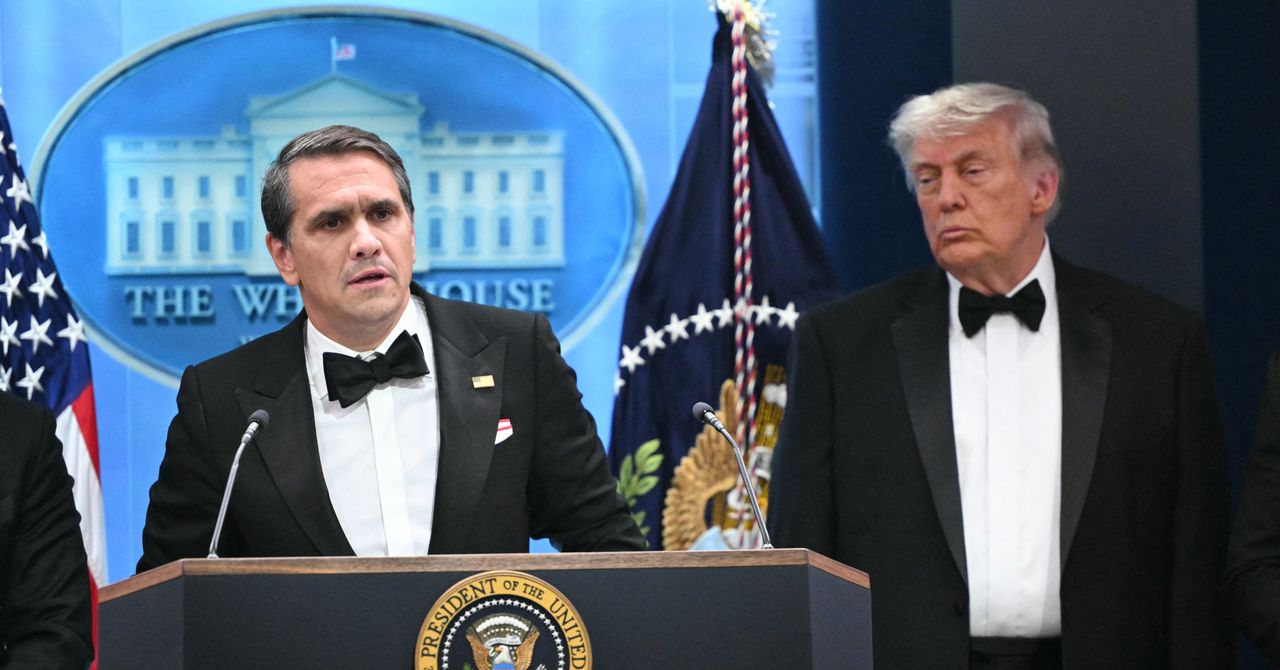
A 31-year-old engineer and computer scientist was identified by media reports and President Donald Trump as the suspected shooter at the White House Correspondents Dinner on Saturday night.
Cole Tomas Allen, of Torrance, California, was apprehended following the firing of shots at the Washington Hilton, where Trump was scheduled to deliver remarks to a ballroom full of journalists, cabinet officials, and Hilton staff. Allen’s name surfaced in media reports shortly before Trump posted two photos of a suspect following his apprehension. The person in the photos Trump posted matches photos of Allen.
In dramatic scenes, several shots were heard outside the ballroom, after which Trump and Vice President JD Vance were immediately rushed off the stage by the United States Secret Service. In the immediate aftermath of the shooting incident, it briefly appeared as if the event would proceed—Trump posted “LET THE SHOW GO ON” on Truth Social—but the event was eventually shut down.
According to the Metropolitan Police Department, the suspect “charged” a Secret Service checkpoint at the Hilton hotel, and was intercepted by agents. MPD interim chief Jeffery Carroll said the suspect was carrying a “shotgun, handgun, and multiple knives.”
At a White House press conference following the shooting, Trump said one United States Secret Service agent was shot but saved from serious injury by his bulletproof vest. Trump said the agent, who was not named, is “doing great” and in “great shape.” No other injuries were immediately reported.
The suspect was later transported to a local hospital “to be evaluated,” according to Carroll, who said he appears to be a “lone actor.”
Around the time Trump’s press conference began on Saturday night, he posted a picture on his Truth Social account appearing to show the suspected shooter on the ground, with his hands restrained behind his back, and a foil warming blanket covering the lower half of his body.
A WIRED review of public databases shows a seemingly minimal online presence associated with Allen’s name. According to his LinkedIn profile, he graduated from Caltech in 2017 with a bachelor’s in mechanical engineering and from California State University Dominguez Hills in 2025 with a master’s in computer science. An apparent photo of Allen that appears on Caltech’s website identifies him as a member of the school’s Mechanical Engineering 72 class, described by the school as a “two-term engineering design lab” for building robots and autonomous vehicles. His name is also listed in a 2025 Dominguez Hills graduation program. A search in a public facial recognition database returns only two images, both apparently of him as an undergraduate.
According to the alleged shooter’s LinkedIn profile, he has been employed part-time since March 2020 at C2 Education, a private company that helps students prepare for the SAT and ACT exams. In December 2024, C2 Education said in posts on LinkedIn and Facebook that he was the company’s “December Teacher of the Month.”
Since 2018, the suspected shooter has self-identified on his LinkedIn profile as a “self-employed” indie game developer. He appears to have released an “atomic fighting game” called Bohrdom on Steam in 2018. The game was advertised using accounts on YouTube and X that appeared to have little to no following. The caption for a trailer of the game describes it as a “non-violent, skill-based, asymmetrical fighting game loosely based on a chemistry model that is itself loosely based on reality.”
C2 Education and did not immediately respond to requests for comment. When reached for comment, the Metropolitan Police Department referred WIRED to a video of its public press conference.


Strait of Hormuz disruption ‘systemic shock’ threatening SE Asia: ERIA

Anta: The Chinese sports brand taking on Nike and Adidas

Prince Harry stirs new debate at Palace with bold move: ‘walking liability’

-

 Sports1 week ago
WWE WrestleMania 42 Night 2: Live match results and analysis
-

 Sports1 week ago
NCAA men’s gymnastics championship: All-time winners list
-

 Fashion1 week ago
UK’s Sosandar returns to profitability amid robust FY26 performance
-

 Politics6 days ago
UK’s Starmer seeks to deflect blame over Mandelson appointment
-

 Entertainment7 days ago
Lee Anderson, Zarah Sultana kicked out of UK Parliament for calling PM ‘liar’
-

 Entertainment1 week ago
Ruby Rose old essay resurfaces detailing night of alleged Katy Perry assault
-

 Entertainment1 week ago
Nathalie Baye, low-key legend of French cinema, dies aged 77
-
 Business1 week ago
No fuel shortage: Govt assures 100% domestic LPG, PNG, CNG supply amid Hormuz energy crunch – The Times of India