

Politics
Deal was closer than ever to end Russia’s invasion of Ukraine: President Trump says

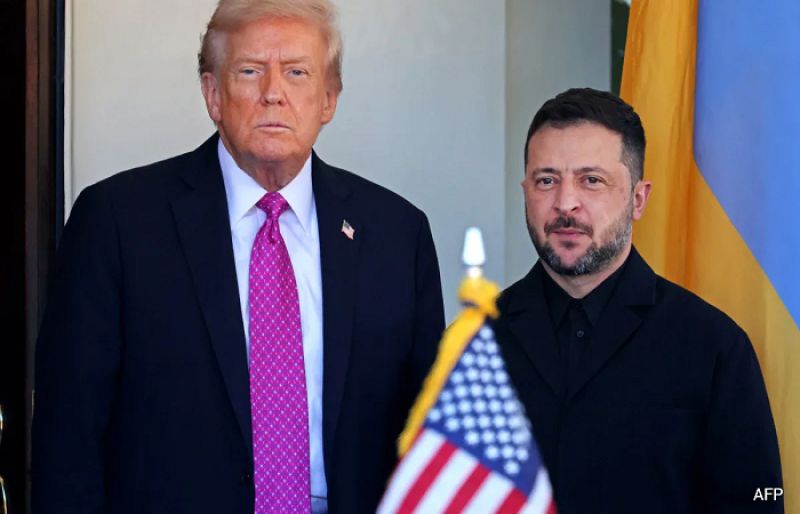

US President Donald Trump said that a deal was closer than ever to end Russia’s invasion of Ukraine but reported no apparent breakthrough on the flashpoint issue of territory after new talks with the warring countries’ leaders.
Trump, who had promised a peace deal on day one of his nearly year-old presidency, said it would become clear within weeks whether it was possible to end the war that has killed tens of thousands of people since February 2022.
In a pre-New Year’s diplomatic sprint, Trump brought Ukrainian President Volodymyr Zelensky to Florida, where the two met with top aides over lunch, a day after Russia unleashed major new attacks on residential areas of the capital Kyiv.
Much like when Zelensky last met Trump in October, Russian President Vladimir Putin also spoke shortly beforehand by telephone with the US leader, who immediately insisted that Moscow was “serious” about peace despite the assault.
“I really believe we’re, Mr President, probably closer than — far closer than — ever before with both parties,” Trump said with Zelensky at his side in the tea room of his Mar-a-Lago estate.
“Everybody wants it ended,” Trump said.
After their talks, Zelensky and Trump spoke jointly by telephone with key European leaders, who have been particularly alarmed about any decisions that would embolden Russia.
Zelensky said that he and European leaders could return jointly for talks with Trump in Washington in January.
The Ukrainian president stayed studiously polite throughout his visit, mindful of his disastrous White House meeting on February 28 where Trump and Vice President JD Vance publicly berated him for not being sufficiently grateful.
Territory impasse
Trump, for all his stated optimism, gave few details on the progress he cited, instead digressing into familiar grievances about his predecessor Joe Biden, who committed billions of dollars for Ukraine’s defense, and speaking of his own friendly rapport with Putin.
Trump acknowledged continued disagreement between Kyiv and Moscow on territory. The current plan, revised after weeks of intense US-Ukrainian negotiations, would stop the war at the current frontlines in the eastern Donbas region and set up a demilitarized area, while Russia has long demanded territorial concessions.
“It’s unresolved, but it’s getting a lot closer. That’s a very tough issue, but one that I think will get resolved,” Trump said.
Trump offered to address the Ukrainian parliament to promote the plan — an idea, however unlikely, that Zelensky was quick to welcome.
Zelensky has voiced an openness to the revised US plan, marking Kyiv’s most explicit acknowledgement yet of possible territorial concessions, although Ukrainians voters would need to approve it in a referendum.
By contrast, Russia has shown no signs of compromise, as it sees hope in the grinding gains it has made over four years against tough Ukrainian defenses.
The Kremlin in its readout of talks between Putin and Trump called on Kyiv to make a “brave decision” and immediately withdraw troops from Donbas, casting European leaders as the impediment to peace.
“Russia and the United States share the same position which is that the Ukrainian and European proposal for a temporary ceasefire (…) would only prolong the conflict and lead to a resumption of hostilities,” the Kremlin’s diplomatic advisor Yuri Ushakov told reporters.
’90 percent’ agreed by Ukraine
Trump’s advisors have previously floated the idea of offering NATO-like security guarantees to Ukraine, meaning in theory that the alliance’s members would respond militarily if Russia attacks again.
Zelensky said that the peace framework laid out by Trump was “90 percent agreed” and that “US-Ukraine security guarantees: 100 percent agreed.”
Zelensky said the two sides were still finalizing a “prosperity plan” for Ukraine as well as the sequencing of the various actions.
Russia had adamantly rejected any entrance of the former Soviet republic into NATO.
In its latest assault with drones and missiles, Russia knocked out power and heating to hundreds of thousands of residents during freezing temperatures.
“If the authorities in Kyiv don’t want to settle this business peacefully, we’ll resolve all the problems before us by military means,” Putin said on Saturday.
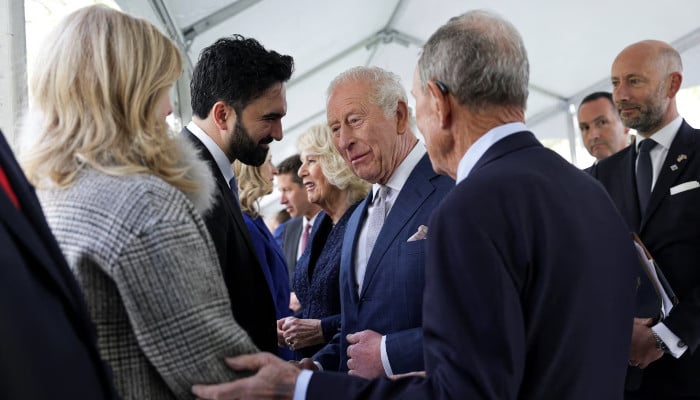
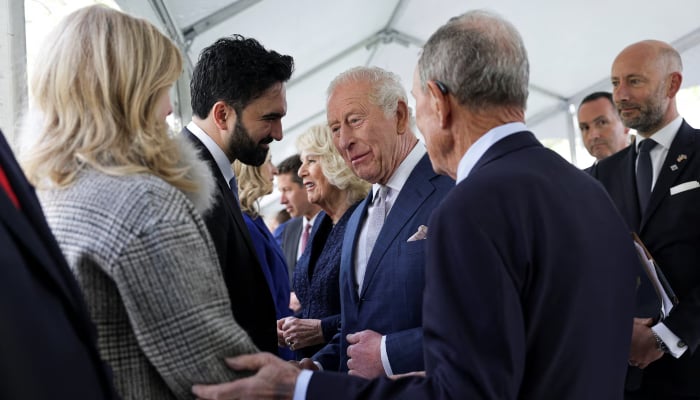
New York City Mayor Zohran Mamdani said on Wednesday he encourages Britain’s King Charles to return the Koh-e-Noor Diamond, with his comments coming during the British monarch’s ongoing US visit.
“If I were to speak to the king separately from that, I would probably encourage him to return the Koh-e-Noor Diamond,” Mamdani, who is Indian American, said when asked at a press conference hours before a ceremony that commemorated victims of the deadly September 11, 2001, attacks.
Later in the day, the king spoke with Mamdani at the ceremony. Buckingham Palace declined to comment. Mamdani’s office did not respond to a request to comment on whether Mamdani brought up the issue with the king.
India has previously repeatedly demanded that Britain return the 105-carat diamond.
Britain’s then colonial governor-general of India arranged for the huge diamond to be presented to Queen Victoria in 1850 after the East India Company had annexed the region of Punjab in 1849 and taken the diamond from a deposed Indian leader.
Charles on Wednesday commemorated victims of the September 11, 2001, attack on New York City, laying a floral bouquet at the memorial where the World Trade Centre’s twin towers once stood.
India received independence from British rule in 1947. The British colonisation of India and the widespread atrocities committed against people during that period remain sensitive issues in the country.
India has previously said the diamond was a “valued piece of art with strong roots in our nation’s history.” The diamond’s possession by the British is seen by many Indians as a symbol of colonial atrocities during British rule.
The diamond has been previously owned by India’s Mughal emperors, shahs of Iran, emirs of Afghanistan, and Sikh maharajas, according to the Historic Royal Palaces charity.
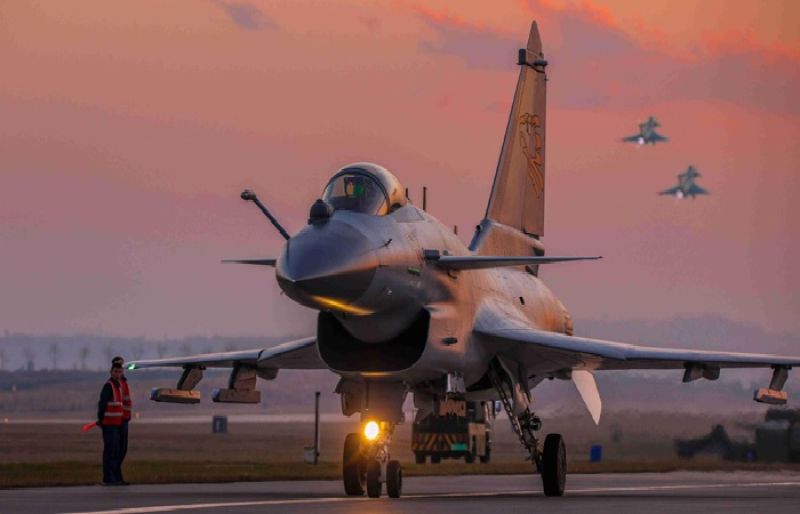
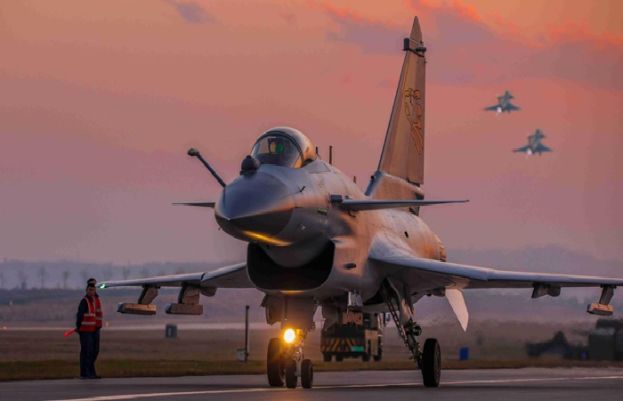
China’s AVIC Chengdu Aircraft Corporation, the maker of J-10C aircraft used by Pakistan to down India’s French-made planes in May last year, has reported a significant surge in profits, according a report by Bloomberg.
Revenue increased by 15.8% to 75.4 billion yuan ($11 billion) in 2025, with profit up 6.5% to 3.4 billion yuan in 2025, the publication cited the jetmaker as saying in a statement.
The numbers are the highest-ever for the company, Bloomberg reported, adding that Chengdu’s first-quarter sales rose almost 80% on year.
The Pakistan Air Force (PAF) inducted J-10C in March 2022, in a major boost to the country’s military capabilities to defend airspace.
At the time, the government said that the fighter jet could carry more advanced, fourth-generation air-to-air missiles, including the short-range PL-10 and the beyond-visual-range PL-15.
The fighter jet saw its first combat use in May 2025 when India launched an unprovoked attack on Pakistan on May 6, following an attack on tourists in the Indian Illegally Occupied Jammu and Kashmir.
Pakistan, during the 87-hour conflict, downed seven Indian fighter jets, including French-made Rafale, and dozens of drones.
The four-day war saw Pakistan successfully employing the Chinese-made HQ-9 air-defence system, PL-15 air-to-air missiles, and J-10C fighter aircraft, credited with downing multiple Indian aircraft.
The PAF also used its JF-17 Thunder jets to destroy India’s S-400 air defence system in Adampur by using hypersonic missiles.
The war between the two nuclear-armed nations ended on May 10 with a ceasefire agreement brokered by the US.
Months after the conflict, Inter-Services Public Relations (ISPR) Director-General (DG) Lieutenant General Ahmed Sharif Chaudhry praised the performance of Chinese-made weapons, saying they performed “exceptionally well. “Of course, lately, recent Chinese platforms, they’ve demonstrated exceptionally well,” Lt Gen Chaudhry said in an interview in October last year.
In November last year, a report presented to the United States Congress acknowledged Pakistan’s “military success over India” in the war.
The US-China Economic and Security Review Commission report — reviewing US-China security and foreign affairs — stated that Pakistan employed advanced Chinese weaponry to enhance its military edge over India.
- Revenue up by 15.8% to 75.4 billion yuan in 2025: report.
- Company’s profits up by 6.5% to 3.4 billion yuan in 2025.
- Chengdu sales in first-quarter rose almost 80% on year.
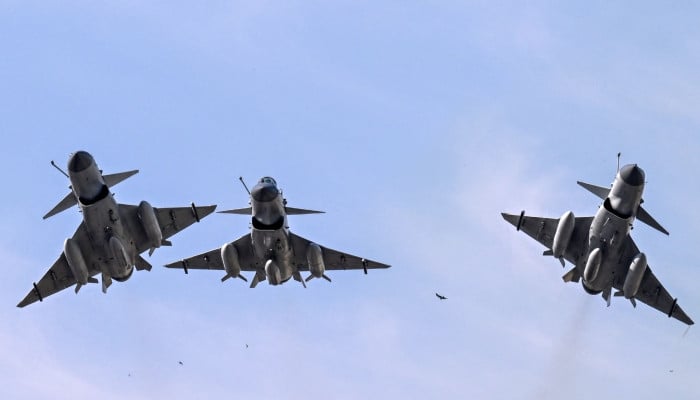
China’s AVIC Chengdu Aircraft Corporation, the maker of J-10C aircraft used by Pakistan to down India’s French-made planes in May last year, has reported a significant surge in profits, according a report by Bloomberg.
Revenue increased by 15.8% to 75.4 billion yuan ($11 billion) in 2025, with profit up 6.5% to 3.4 billion yuan in 2025, the publication cited the jetmaker as saying in a statement.
The numbers are the highest-ever for the company, Bloomberg reported, adding that Chengdu’s first-quarter sales rose almost 80% on year.
The Pakistan Air Force (PAF) inducted J-10C in March 2022, in a major boost to the country’s military capabilities to defend airspace.
At the time, the government said that the fighter jet could carry more advanced, fourth-generation air-to-air missiles, including the short-range PL-10 and the beyond-visual-range PL-15.
The fighter jet saw its first combat use in May 2025 when India launched an unprovoked attack on Pakistan on May 6, following an attack on tourists in the Indian Illegally Occupied Jammu and Kashmir.
Pakistan, during the 87-hour conflict, downed seven Indian fighter jets, including French-made Rafale, and dozens of drones.
The four-day war saw Pakistan successfully employing the Chinese-made HQ-9 air-defence system, PL-15 air-to-air missiles, and J-10C fighter aircraft, credited with downing multiple Indian aircraft.
The PAF also used its JF-17 Thunder jets to destroy India’s S-400 air defence system in Adampur by using hypersonic missiles.
The war between the two nuclear-armed nations ended on May 10 with a ceasefire agreement brokered by the US.
Months after the conflict, Inter-Services Public Relations (ISPR) Director-General (DG) Lieutenant General Ahmed Sharif Chaudhry praised the performance of Chinese-made weapons, saying they performed “exceptionally well,” The News reported, citing Bloomberg.
“Of course, lately, recent Chinese platforms, they’ve demonstrated exceptionally well,” Lt Gen Chaudhry said in an interview in October last year.
In November last year, a report presented to the United States Congress acknowledged Pakistan’s “military success over India” in the war.
The US-China Economic and Security Review Commission report — reviewing US-China security and foreign affairs — stated that Pakistan employed advanced Chinese weaponry to enhance its military edge over India.


Chinese team visits Bangladesh, discusses FDI in textile sector

FDA proposes excluding Novo, Lilly weight loss drugs from bulk compounding list in win for the companies

Drake Maye voices support for Patriots coach Mike Vrabel as off-field controversy continues to swirl

PSL 11: Hyderabad Kingsmen opt to field after winning toss against Multan Sultans

Trump administration in advanced talks for a rescue package for Spirit Airlines, source says
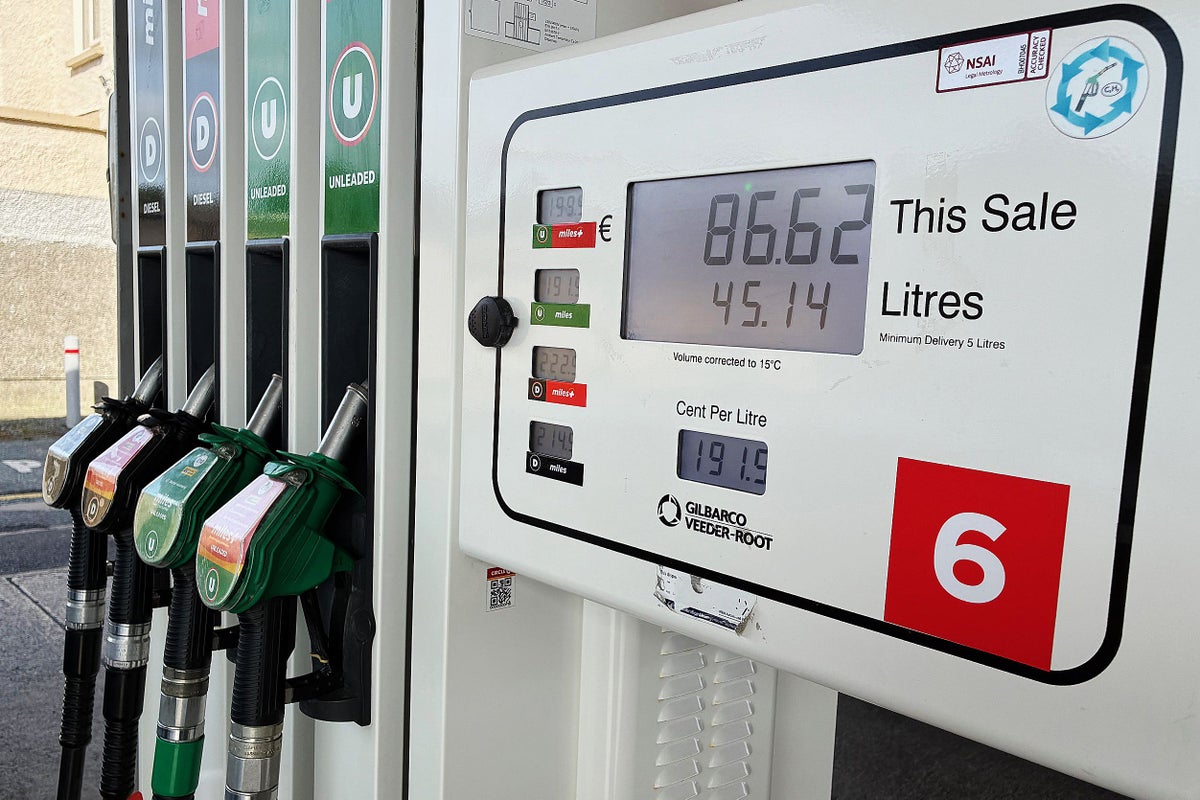
UK inflation accelerates after Iran war drives sharp rise in fuel prices

-
 Sports1 week ago
PSL 11: Hyderabad Kingsmen opt to field after winning toss against Multan Sultans
-
Business1 week ago
Trump administration in advanced talks for a rescue package for Spirit Airlines, source says
-
Business1 week ago
UK inflation accelerates after Iran war drives sharp rise in fuel prices
-

 Tech1 week ago
Nation states responsible for ‘nationally significant’ cyber attacks against UK, says NCSC chief | Computer Weekly
-

 Tech1 week ago
Microsoft faces court battle in £2bn Windows Server class action | Computer Weekly
-

 Entertainment1 week ago
Anne Hathaway shares major news about ‘Princess Diaries 3’
-

 Tech1 week ago
Blackbox replaces two racks of HPE storage with 8U of Everpure | Computer Weekly
-

 Fashion1 week ago
Bangladesh RMG units call for allowing local FOC raw material sourcing