

Business
Debt and taxes haunt economy | The Express Tribune

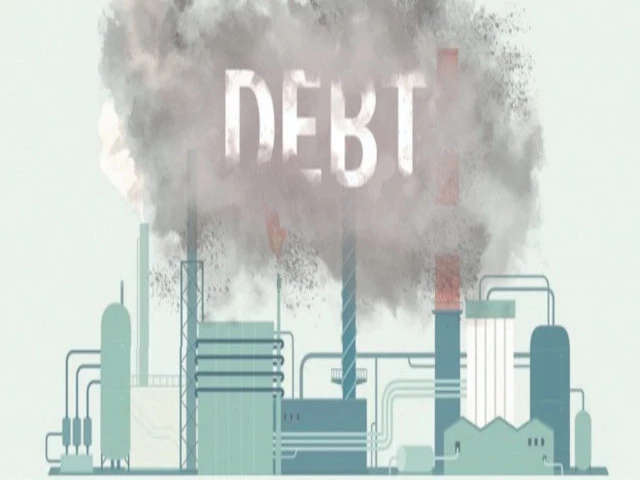
Fiscal and monetary policies are closely aligned; fiscal discipline leading to fiscal space will reduce the pressure on government borrowing from commercial banks and the State Bank’s propensity to print money. Photo: file
BRUSSELS:
Debt and taxes are throttling Pakistan’s economy. Pakistan’s never ending fiscal profligacy is the underlying reason why we keep going in the intensive care unit asking the same medical team (read: IMF) who keep giving us the same set of treatments, albeit with more powerful medications only to cure our symptoms and failing to cure our disease.
Once the medical team is satisfied that the patient has “stabilised” and out of the intensive care unit and into the recovery room, they will continue to monitor the recovery over a period of time until their next pre-planned visit.
While the patient is in recovery then there are expensive overseas “specialists” that are hired for further medical diagnosis thinking that they might give some “new” advanced treatments for this reoccurring illness.
So, the question to ask is: how sick is the patient? Pakistan’s debt is unsustainable on its current path. Gross public debt has hit 70% of GDP in 2025 and the nominal deficit is a whopping 6% of GDP, composed entirely of interest payments. The doomsayers are right to forecast trouble. Net interest payments on debt already exceed the government’s total tax revenues, a recipe for a “disorderly” default and subsequently an economic meltdown.
If Pakistan has to overcome the twin inter-related malaises of fiscal deficit and debt burden, then there is no other option but to dismantle the existing outdated and anti-growth tax system. Governments have two ways to generate revenues – taxation and borrowing. Year-on-year Pakistan has continuously failed in its tax collection and has, unfortunately, excelled in its capacity to borrow to no-end, thus falling into a non-ending debt trap.
The fundamental rule of borrowing is that a county’s foreign debt should never exceed its borrowing capacity. Pakistan today is paying more to service external debt than receiving in new external finance. Our myopic revenue-thirsty government has now come to a point where the borrowing options are diminishing and the debt repayments are increasing.
Tax hikes passed by the current government in the last two budgets have put a brake on economic growth. Companies are closing down, foreign investors are fleeing, and our brightest minds emigrating. We have disincentivised work and investment.
Economics is all about incentives and taxes have consequences. The important point to recognise is that people and businesses don’t work to pay taxes; they work to earn what they can after tax. It is the after-tax rate of return on work, after all, that is the incentive that propels output and employment growth.
The only answer to our twin malaise is sustainable high economic growth. So, what’s the growth solution? The answer is a home-grown, simple, straight-forward set of supply-side economic policies: rationalisation of the tax system, government spending restraint, free trade, sound money, deregulation and privatisation.
Let’s start with our tax policy. There should be few taxes, where those taxes that are chosen to remain have low rates on a broad tax base. Exemptions, deductions, exclusions, credits and carve-outs should be kept to the bare minimum. Low tax rates provide the least incentive for people and businesses to evade, avoid or otherwise not report taxable income. A broad tax base removes as many ways as possible for people to hide their income to avoid paying taxes.
Tariff policy remains revenue target oriented and disrupts the enormous gains from trade. There are production gains from trade, consumption gains as well as economic growth gains. Free trade adds enormously to a country’s growth.
Excessive government spending leads to underperformance and inefficiency at the federal and provincial levels. Pakistan’s government spending has gone amok. Excessive and wasteful spending, way beyond its ability to collect in tax revenues, is a recipe for disaster.
We need a sound monetary policy – slow money growth, low interest rates, a stable currency and keeping inflation in single digits. Fiscal and monetary policies are closely aligned; fiscal discipline leading to fiscal space will reduce the pressure on government borrowing from commercial banks and the State Bank of Pakistan’s propensity to print money.
Government regulations, restrictions, requirements and directives result in excessive collateral damage to the economy. Rules need to be framed to rationalise and coordinate public behaviour and they should be reviewed to make sure each one is justified on a strict cost-benefit basis.
Privatisation needs to be implemented on an urgent basis. State-owned enterprises (SOEs) are a huge net drain on fiscal solvency. These white elephants should be sold off or shut down transparently.
Just about everyone knows how we have put ourselves into this quagmire, but how to get ourselves out of this is not rocket science, it’s common sense. We need to take ownership of these challenges with home-grown solutions and not rely on overseas medical teams overdosing us with Prozac or overseas “specialists” selling us “snake oil”. It’s time to get out of the recovery room and back to work!
The writer is a philanthropist and an economist based in Belgium



Business
Spirit Airlines plans to slash flights, fleet in bid to emerge from bankruptcy as early as spring

A Spirit Airlines Airbus A320 taxis at Los Angeles International Airport after arriving from Boston on September 1, 2024 in Los Angeles, California.
Kevin Carter | Getty Images News | Getty Images
Spirit Airlines is gearing up to shrink to a tiny version of its former self in an attempt to survive, according to a new plan it unveiled in U.S. Bankruptcy Court on Tuesday.
The budget-travel icon said it will get rid of even more of its Airbus fleet as it plans to exit its second bankruptcy in less than a year. It expects to emerge in late spring or early summer, Spirit’s lawyer, Marshall Huebner of Davis Polk, said at a hearing.
The airline has reached an agreement in principle with its creditors for the plan, Huebner said, adding that secured lenders will make “material incremental liquidity available to Spirit via the release of cash collateral.”
In its second bankruptcy, Spirit had held deal talks with Frontier Airlines, and with investment firm Castlelake. Nothing materialized, but Huebner hinted a combination could be back on the table.
“This emergence will allow Spirit to do many things from a position of strength and stability, including to consider potential future industry transactions,” Huebner said.
Spirit’s new fleet would be made up of mostly older Airbus planes, “with the potential rejection of additional high cost NEO aircraft,” Huebner said, referring to the more modern Airbus A320 family of planes, adding that the exact size of Spirit’s fleet will depend on talks with counterparts like aircraft lessors.
He said Spirit’s annualized fleet cost would be cut another $550 million, down 65% from before its bankruptcy filing last year. The debtors have also eyed another $300 million in cost savings from non-fleet cuts, he said.
Spirit has already reduced some of its Airbus fleet and furloughed pilots and flight attendants to cut costs as it reduced its network, though some cabin crew members were called back to work ahead of spring break.
“Because every single day counts, and every single dollar counts, the airline industry is just as competitive today with this deal in hand as it was last Friday, and we must — and will — lock down what we need from other stakeholders and then begin a high speed march to get this storied company out of Chapter 11 at the earliest possible date so that it can write its next chapters from a position of strength,” Huebner said.
Spirit’s new plan will be challenging. It would pit a smaller version of Spirit against ever-larger competitors that dominate the U.S. market. Some U.S. budget carriers have struggled due to a surge in labor and other costs post-Covid, a growing consumer shift in favor of more upscale travel and increased competition from larger airlines that offer stripped down fares.
Spirit was uniquely challenged by a massive engine recall from Pratt & Whitney and a failed plan to get acquired by JetBlue Airways, a deal knocked down by a federal judge in early 2024.
Spirit forecast it would generate a net profit of $252 million last year, according to a court filing in December 2024. But it said in an August report that it lost nearly $257 million in a matter of months stretching from March 13, after it exited its first Chapter 11 bankruptcy, through the end of June. It filed for Chapter 11 bankruptcy protection again less than a month later.
Business
Novo Nordisk to slash GLP-1 list prices by up to 50% in U.S. to cut costs for insured patients

The logo of pharmaceutical company Novo Nordisk is displayed in front of its offices in Bagsvaerd, Copenhagen, Denmark, Feb. 4, 2026.
Tom Little | Reuters
Novo Nordisk on Tuesday said it plans to slash the monthly list prices of its popular obesity and diabetes drugs in the U.S. by up to 50% starting in 2027, in a bid to make the treatments more accessible to patients with insurance coverage.
The obesity injection Wegovy, its new pill counterpart, the diabetes shot Ozempic and the oral diabetes drug Rybelsus will have a new lower list price of $675 per month starting on Jan. 1, 2027. The Wegovy medicines both currently have list prices of around $1,350 per month, while the diabetes drugs have list prices of around $1,027 per month.
For the first time, Novo said its price cuts are targeting insured patients whose out-of-pocket costs are linked to list prices, such as people with high-deductible health plans or co-insurance benefit designs.
“Both of these patient populations should, beginning [in 2027], see a benefit with lower out-of-pocket burdens,” Jamey Millar, the company’s head of U.S. operations, told CNBC in an interview.
He added that Novo expects improvements in access and uptake among patients in the commercial insurance market, though the company is not giving any specific expectations.
The move could help Novo compete better with Eli Lilly, which now holds the majority share in the blockbuster GLP-1 market. Lilly’s more effective drugs and earlier foray into the direct-to-consumer space have allowed it to take the lead in the space, but the company has yet to significantly lower the U.S. list prices of its medicines.
It’s unclear exactly how much commercial insured patients typically pay out of pocket for Novo’s drugs. Those patients may pay as little as $25 per month for Novo’s drugs in “only the best of circumstances,” Millar said.
But patients in high-deductible plans would have to pay out-of-pocket “more or less the full list price of a drug until they reach that” threshold and the insurance benefit kicks in, he added. Millar said some of those patients defer treatment entirely because they don’t want to shoulder that expense. The number of patients using high-deductible plans has increased over the years due to the trade-off of lower premiums, he noted.
Meanwhile, Millar said other people have 25% to 33% of their co-insurance linked to the list prices of those drugs.
The Danish drugmaker has previously cut the direct-to-consumer prices of Wegovy and Ozempic, which primarily benefit cash-paying patients who often don’t have insurance coverage for the drugs.
Novo offers its drugs to cash-paying patients for $149 to $499 per month, depending on the specific product and dose. Novo and Lilly have escalated a GLP-1 pricing war over the last year, especially following the landmark “most favored nation” deals they struck with President Donald Trump in November.
The move also coincides with new, lower Medicare prices going into effect for Novo’s obesity and diabetes drugs in 2027 following negotiations with the federal government under the Inflation Reduction Act. The new negotiated prices for Wegovy, Ozempic and Rybelsus will be $274 per month.
Business
Home Depot tops earnings estimates for the first time in a year as demand for projects remains muted

Home Depot on Tuesday posted a roughly 4% quarterly sales decline, as a sluggish real estate market and selective spending by homeowners continued to weigh on home improvement demand.
The company also stuck by the current fiscal year forecast that it shared in December at an investor day. It said it expects full-year total sales growth to range between about 2.5% and 4.5% and adjusted earnings per share to be between roughly flat and up 4% from $14.69 in the prior fiscal year. It expects full-year comparable sales growth, which takes out one-time factors like store openings and closures, to range from flat to up 2%.
Despite the fourth-quarter sales decline, Home Depot topped Wall Street’s revenue and earnings expectations for that period.
In an interview with CNBC, Chief Financial Officer Richard McPhail said U.S. consumers and the company have “been in a frozen housing environment for three years” – and there hasn’t been a meaningful thaw.
“What we’ve seen as an added pressure during the last year has been this increase in consumer uncertainty, a gradual decline in consumer confidence,” he said. “And so those are signs we’re watching.”
He said customers have told the company that they are concerned about housing affordability and job losses, dynamics that colored Home Depot’s outlook for the year.
Here’s what Home Depot reported for the fiscal fourth quarter of 2025 compared with Wall Street’s estimates, according to a survey of analysts by LSEG:
- Earnings per share: $2.72 adjusted vs. $2.54 expected
- Revenue: $38.20 billion vs. $38.12 billion expected
Shares rose about 2% in premarket trading on Tuesday, as Home Depot beat earnings expectations after missing estimates three quarters in a row.
Higher interest rates, lower housing turnover and economic uncertainty have challenged the company, as homeowners delay the pricier projects typically spurred by buying or selling a home.
As the Atlanta-based retailer waits for business to pick up, it laid off 800 employees and announced a five-day a week return-to-office policy in late January.
Yet some investors anticipate an inflection point could be coming for Home Depot, as mortgage rates moderate slightly. The average rate on a 30-year fixed mortgage fell to 5.99% on Monday, matching its lowest level since 2022, according to Mortgage News Daily.
Home Depot’s biggest selling season, springtime, is also ahead.
McPhail said Home Depot’s business was relatively stable throughout the year, including in the fourth quarter, when adjusting for storms. He said the company is gaining market share, even as the sector lags.
In the three-month period that ended Feb. 1, Home Depot’s net income fell to $2.57 billion, or $2.58 per share, from $3.0 billion, or $3.02 per share, in the year-ago period.
Revenue dropped from $39.70 billion in the year-ago period. The company said some decline was due to the most recent fiscal year 2025 having one fewer week. The additional week in the 2024 fiscal year contributed $2.5 billion in sales.
Comparable sales, an industry metric also called same-store sales, increased 0.4% in the fiscal fourth quarter across the business and 0.3% in the U.S.
Store transactions in the quarter across Home Depot’s website and stores dropped by 1.6% year over year, but average ticket rose 2.4% year over year. Big-ticket purchases, which the company defines as those over $1,000, were 1.3% higher than the year-ago period.
Some of those larger orders may reflect higher prices. McPhail said Home Depot has had “modest” price increases, though he declined to say which items and categories now cost customers more.
Higher tariffs have been one of the forces driving price hikes at retailers, including Home Depot. Companies now face a new landscape for import duties after the Supreme Court on Friday ruled that some of the Trump administration’s tariffs were illegal. Soon after the ruling, President Donald Trump said at a press conference that he would pursue alternative tariffs and proposed an across the board global tariff that he has since set at 15%.
He said Home Depot is “still in the middle of our analysis” after the Supreme Court ruling and latest proposed tariffs.
“Not all the information is out right now. Not all the language is final around what was announced,” he said. He added that Home Depot is “as well positioned as anyone to understand any impacts and manage through them.”
More than half of what Home Depot sells comes from the U.S., according to the company. It’s diversifying its imports, so that no single country outside of the U.S. represents more than 10% of the company’s purchases, McPhail said.
Though do-it-yourself buyers have cut back, the company still has a more stable business segment.
A growing business from home professionals, such as contractors and roofers, has boosted Home Depot’s overall business. It acquired SRS Distribution, a company that sells supplies to roofing, landscaping and pool professionals, for $18.25 billion last year in 2024 and bought GMS, a specialty building products distributor, for about $4.3 billion last year.
Pro sales were stronger than do-it-yourself sales during the fourth quarter, McPhail said, though he declined to share specific figures.
Home Depot opened 12 stores in fiscal 2025 and plans to open 15 additional stores this fiscal year.
The company also announced on Tuesday that its board of directors increased its quarterly dividend by 1.3%, or 3 cents, to $2.33 per share. It will be payable next month.
As of Monday’s close, Home Depot shares are down about 2% over the past year, but up about 10% year to date. That compares to the S&P 500’s nearly 14% gains over the past year and its roughly flat performance year to date.


College softball rankings: 2026 NCAA Week 3 Top 25 poll
Spirit Airlines plans to slash flights, fleet in bid to emerge from bankruptcy as early as spring

The Last Mystery of Antarctica’s ‘Blood Falls’ Has Finally Been Solved

-

 Entertainment1 week ago
Queen Camilla reveals her sister’s connection to Princess Diana
-

 Tech1 week ago
Rakuten Mobile proposal selected for Jaxa space strategy | Computer Weekly
-

 Politics1 week ago
Ramadan moon sighted in Saudi Arabia, other Gulf countries
-

 Entertainment1 week ago
Robert Duvall, known for his roles in "The Godfather" and "Apocalypse Now," dies at 95
-
 Business1 week ago
Tax Saving FD: This Simple Investment Can Help You Earn And Save More
-

 Politics1 week ago
Tarique Rahman Takes Oath as Bangladesh’s Prime Minister Following Decisive BNP Triumph
-

 Tech1 week ago
Businesses may be caught by government proposals to restrict VPN use | Computer Weekly
-

 Sports1 week ago
Usman Tariq backs Babar and Shaheen ahead of do-or-die Namibia clash