

Business
Debt and taxes haunt economy | The Express Tribune

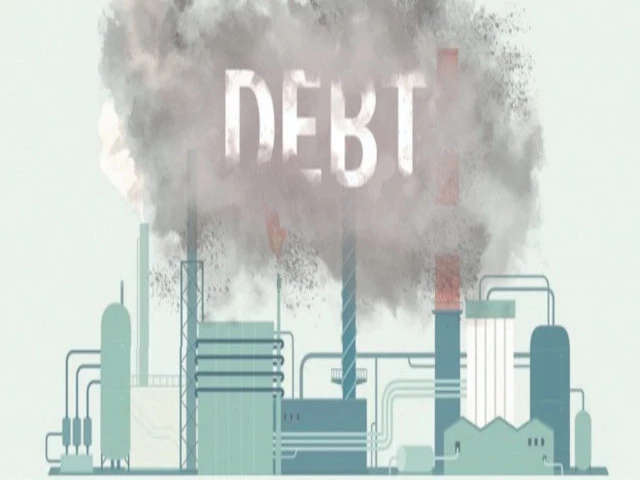
Fiscal and monetary policies are closely aligned; fiscal discipline leading to fiscal space will reduce the pressure on government borrowing from commercial banks and the State Bank’s propensity to print money. Photo: file
BRUSSELS:
Debt and taxes are throttling Pakistan’s economy. Pakistan’s never ending fiscal profligacy is the underlying reason why we keep going in the intensive care unit asking the same medical team (read: IMF) who keep giving us the same set of treatments, albeit with more powerful medications only to cure our symptoms and failing to cure our disease.
Once the medical team is satisfied that the patient has “stabilised” and out of the intensive care unit and into the recovery room, they will continue to monitor the recovery over a period of time until their next pre-planned visit.
While the patient is in recovery then there are expensive overseas “specialists” that are hired for further medical diagnosis thinking that they might give some “new” advanced treatments for this reoccurring illness.
So, the question to ask is: how sick is the patient? Pakistan’s debt is unsustainable on its current path. Gross public debt has hit 70% of GDP in 2025 and the nominal deficit is a whopping 6% of GDP, composed entirely of interest payments. The doomsayers are right to forecast trouble. Net interest payments on debt already exceed the government’s total tax revenues, a recipe for a “disorderly” default and subsequently an economic meltdown.
If Pakistan has to overcome the twin inter-related malaises of fiscal deficit and debt burden, then there is no other option but to dismantle the existing outdated and anti-growth tax system. Governments have two ways to generate revenues – taxation and borrowing. Year-on-year Pakistan has continuously failed in its tax collection and has, unfortunately, excelled in its capacity to borrow to no-end, thus falling into a non-ending debt trap.
The fundamental rule of borrowing is that a county’s foreign debt should never exceed its borrowing capacity. Pakistan today is paying more to service external debt than receiving in new external finance. Our myopic revenue-thirsty government has now come to a point where the borrowing options are diminishing and the debt repayments are increasing.
Tax hikes passed by the current government in the last two budgets have put a brake on economic growth. Companies are closing down, foreign investors are fleeing, and our brightest minds emigrating. We have disincentivised work and investment.
Economics is all about incentives and taxes have consequences. The important point to recognise is that people and businesses don’t work to pay taxes; they work to earn what they can after tax. It is the after-tax rate of return on work, after all, that is the incentive that propels output and employment growth.
The only answer to our twin malaise is sustainable high economic growth. So, what’s the growth solution? The answer is a home-grown, simple, straight-forward set of supply-side economic policies: rationalisation of the tax system, government spending restraint, free trade, sound money, deregulation and privatisation.
Let’s start with our tax policy. There should be few taxes, where those taxes that are chosen to remain have low rates on a broad tax base. Exemptions, deductions, exclusions, credits and carve-outs should be kept to the bare minimum. Low tax rates provide the least incentive for people and businesses to evade, avoid or otherwise not report taxable income. A broad tax base removes as many ways as possible for people to hide their income to avoid paying taxes.
Tariff policy remains revenue target oriented and disrupts the enormous gains from trade. There are production gains from trade, consumption gains as well as economic growth gains. Free trade adds enormously to a country’s growth.
Excessive government spending leads to underperformance and inefficiency at the federal and provincial levels. Pakistan’s government spending has gone amok. Excessive and wasteful spending, way beyond its ability to collect in tax revenues, is a recipe for disaster.
We need a sound monetary policy – slow money growth, low interest rates, a stable currency and keeping inflation in single digits. Fiscal and monetary policies are closely aligned; fiscal discipline leading to fiscal space will reduce the pressure on government borrowing from commercial banks and the State Bank of Pakistan’s propensity to print money.
Government regulations, restrictions, requirements and directives result in excessive collateral damage to the economy. Rules need to be framed to rationalise and coordinate public behaviour and they should be reviewed to make sure each one is justified on a strict cost-benefit basis.
Privatisation needs to be implemented on an urgent basis. State-owned enterprises (SOEs) are a huge net drain on fiscal solvency. These white elephants should be sold off or shut down transparently.
Just about everyone knows how we have put ourselves into this quagmire, but how to get ourselves out of this is not rocket science, it’s common sense. We need to take ownership of these challenges with home-grown solutions and not rely on overseas medical teams overdosing us with Prozac or overseas “specialists” selling us “snake oil”. It’s time to get out of the recovery room and back to work!
The writer is a philanthropist and an economist based in Belgium
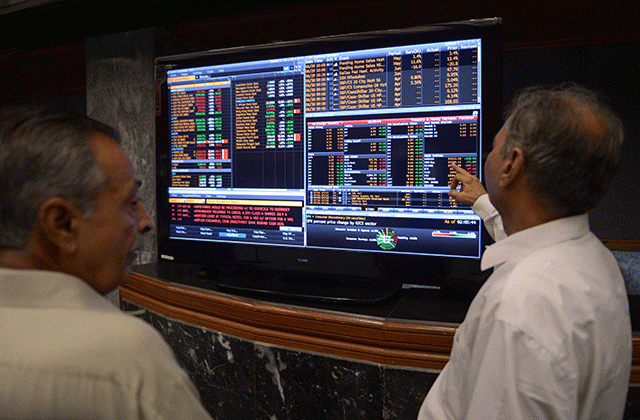




Gold prices in Pakistan have risen again at the start of the business week after several days of decline, according to the All Pakistan Bullion Market.
The price of gold per tola increased by Rs 800, reaching Rs 493,962.
Similarly, the price of 10 grams of gold rose by Rs 686 to Rs 423,492.
In the global market, gold also recorded an increase of $8 per ounce, reaching $4,716.
Experts say global economic uncertainty, currency fluctuations, and investor preference for safe-haven assets are driving the upward trend in gold prices.
They add that changes in international markets directly impact Pakistan’s local bullion rates, leading to continued fluctuations in domestic prices.

Now one of the biggest sportswear firms, Anta’s rise follows a playbook adopted by many Chinese giants.
Source link
Business
Gold price prediction today: Will gold prices continue to be volatile? Key levels to watch out for April 27, 2026 week – The Times of India

Gold price prediction today: Gold prices will closely track movements on the rate decisions by several central banks, including the US Federal Reserve, this week, says Manav Modi, Senior Analyst, Commodity Research at Motilal Oswal Financial Services Ltd.Gold is currently consolidating after sharp swings in a broad range, indicating a pause rather than a reversal. Price action shows a higher-high structure intact, but the recent sideways movement suggests indecision near the upper supply zone around 158,000–160,000. The formation resembles a short-term flag/triangle continuation pattern, where a breakout on either side will define the next directional move. Volume has tapered slightly, reinforcing the consolidation narrative.Gold prices recently moved from the upper band toward the mid-band (20 DMA), and are now attempting to stabilize. The bands have started to contract, signaling a potential volatility expansion ahead. Sustaining above the mid-band (~150,500–151,000 zone) keeps bullish bias intact, while a breakdown below this could trigger a deeper mean reversion toward the lower band.For the week, immediate support for gold prices is placed at around Rs 150,500, which is followed by stronger support near Rs 148,500. On the upside, the resistance stands at around Rs 155,500, and after that the key supply zone is at Rs 158,000. A decisive close for gold above Rs 158,000 levels can then resume the broader uptrend. However, a break in gold prices below levels of Rs 148,500 may shift the momentum to bearish in the near term.The economic docket is filled with data points and events this week as the focus will be on FED, BOJ, ECB and ECB policy meetings. US consumer confidence, GDP, inflation and durable goods orders data will also be in radar.(Disclaimer: Recommendations and views on the stock market, other asset classes or personal finance management tips given by experts are their own. These opinions do not represent the views of The Times of India)


SBP raises policy rate by 100bps to 11.5% as inflation risks mount

Finalise Bangladesh’s textile-RMG circular economy strategy: Experts
Gold prices rise rebound in Pakistan after recent decline – SUCH TV

-

 Sports1 week ago
WWE WrestleMania 42 Night 2: Live match results and analysis
-

 Sports1 week ago
NCAA men’s gymnastics championship: All-time winners list
-

 Fashion1 week ago
UK’s Sosandar returns to profitability amid robust FY26 performance
-

 Politics6 days ago
UK’s Starmer seeks to deflect blame over Mandelson appointment
-
 Entertainment7 days ago
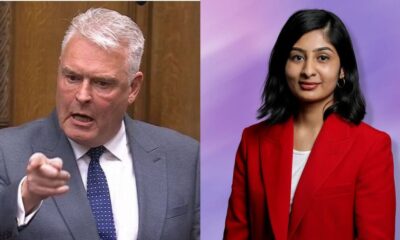
Lee Anderson, Zarah Sultana kicked out of UK Parliament for calling PM ‘liar’
-
 Business1 week ago
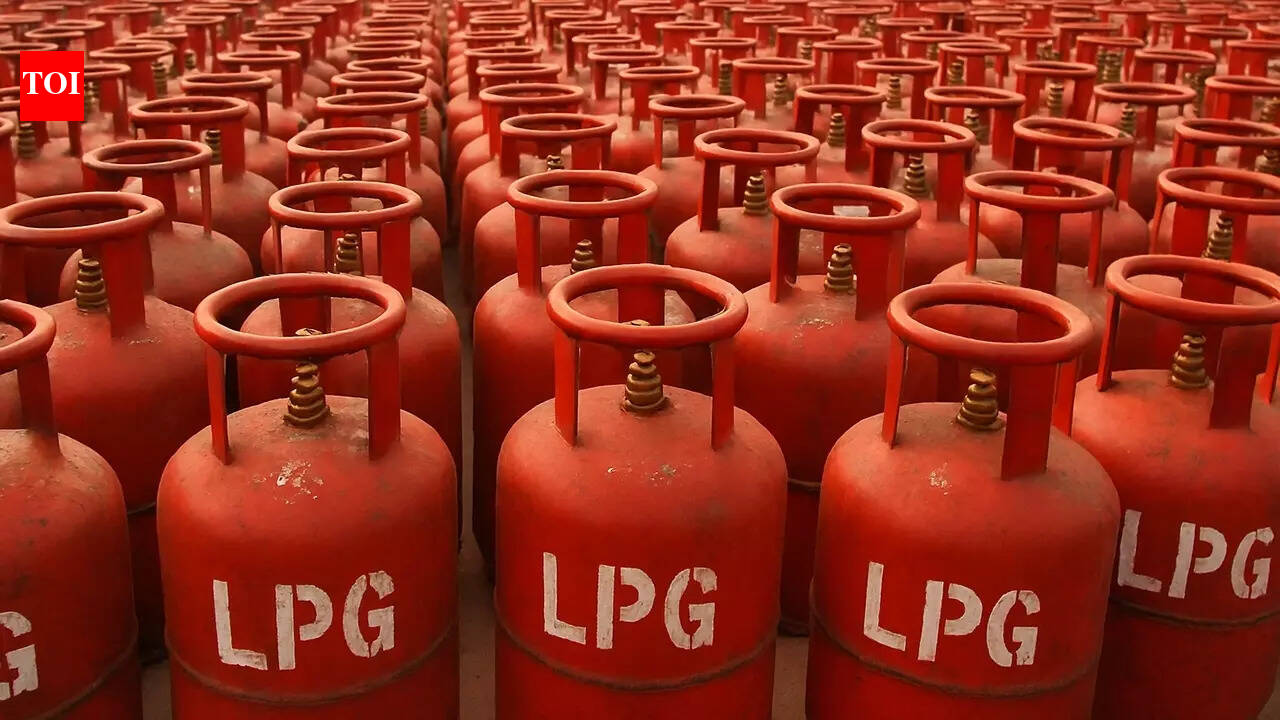
No fuel shortage: Govt assures 100% domestic LPG, PNG, CNG supply amid Hormuz energy crunch – The Times of India
-
 Business7 days ago
How Trump’s psychedelics executive order could unlock stalled cannabis reform
-
 Business6 days ago
Us-India Trade Talks: US–India trade deal: Where do talks stand & what to expect – explained – The Times of India