

Business
Delhi Metro fare hike: DMRC raises prices starting today; check kilometre-wise list of new rates – Times of India

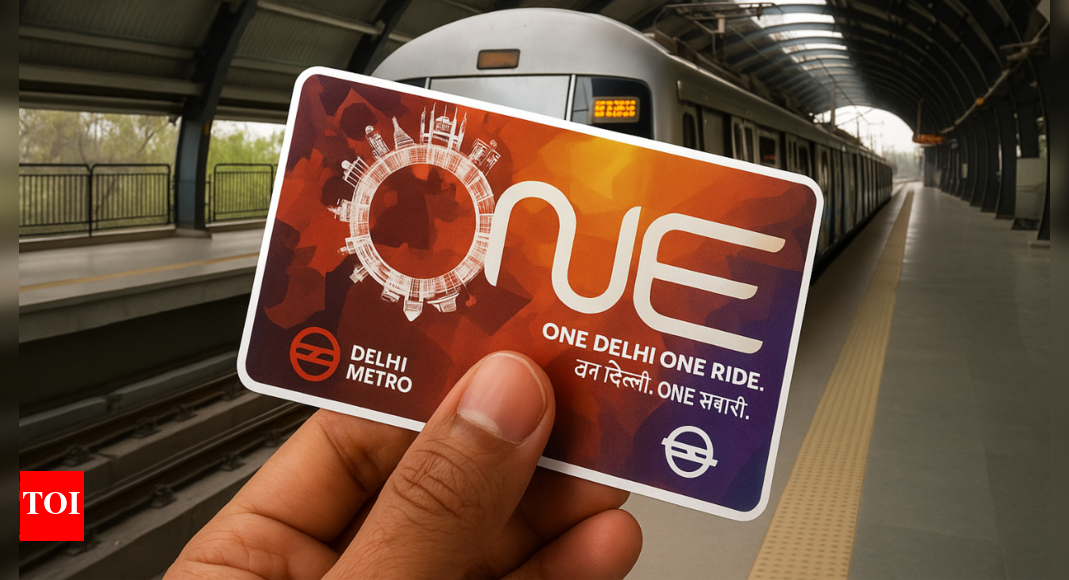
Living in Delhi? Metro rides will become a little costlier for you.The Delhi Metro Rail Corporation (DMRC) has revised passenger fares for the first time in years, with increases ranging from Rs 1 to Rs 4 depending on the distance travelled, while the Airport Express Line has also seen a hike of up to Rs 5.According to the new structure, effective from Monday, the minimum fare on normal days has gone up from Rs 10 to Rs 11 for journeys up to 2 km. The highest fare for trips beyond 32 km now stands at Rs 64, up from Rs 60.Here is how much more you will have to pay aboard the Delhi metro:
| Distance slab | Old fare for normal days | New fare for normal days | Old fare for national holiday & Sunday in Rs | New fare for national holiday & Sunday in Rs |
|---|---|---|---|---|
| 0–2 km | 10 | 11 | 10 | 11 |
| 2–5 km | 20 | 21 | 10 | 11 |
| 5–12 km | 30 | 32 | 20 | 21 |
| 12–21 km | 40 | 43 | 30 | 32 |
| 21–32 km | 50 | 54 | 40 | 43 |
| >32 km | 60 | 64 | 50 | 54 |
For mid-range journeys, fares between 12–21 km have been raised from Rs 40 to Rs 43, while traveling 21–32 km will now cost Rs 54 compared to Rs 50 earlier.These revisions also apply on Sundays and national holidays. Trips beyond 32 km on such days, which previously cost Rs 50, will now cost Rs 54, while the 12–21 km slab has increased to Rs 32 from Rs 30.A similar rise has also been introduced on the Airport Express Line, where the increase varies between Rs 1 and Rs 5.The DMRC described the revision as “minimal” and said the step was crucial “to balance operational costs while continuing to provide affordable public transport.”Smart Card users will, however, continue to receive a 10 per cent discount, along with an additional 10 per cent rebate during off-peak hours.
As governments across the world restricted the movements of their citizens during Covid lockdowns from 2020, people spent more time online. We bought more online and socialised more online, and this brought us closer to the people who want to scam us. At the same time, realistic video impersonations, voices, websites, and texts became more commonplace, and scammers increased their use of social media including WhatsApp.

The conflict in the Middle East has caused rapid price rises for both petrol and diesel.
Source link
Business
NaBFID signs pact with PDCOR to expand advisory support for state projects – The Times of India
The National Bank for Financing Infrastructure and Development (NaBFID) has signed a Memorandum of Agreement with Projects Development Company of Rajasthan Limited (PDCOR) to strengthen advisory services for state and city-level infrastructure projects.The agreement will also allow both institutions to jointly explore financing and transaction advisory opportunities, including transaction structuring, commercial and technical due diligence, and support for financial closure of projects undertaken by state governments and urban local bodies across India, according to PTI.“This collaboration seeks to enhance access to long-term institutional finance for State Governments and Urban Local Bodies, while strengthening the infrastructure advisory and financing ecosystem,” Rajkiran Rai G., Managing Director of NaBFID, said.He added that the partnership would help both institutions jointly pursue project advisory opportunities, develop replicable financing frameworks, accelerate financial closures and mobilise capital across the infrastructure value chain.Monika Kalia, DMD-CFO, NaBFID, said the tie-up would leverage the strengths of both organisations to provide much-needed advisory support to states and urban local bodies for impactful urban infrastructure projects.Dileep Chingapurath, Chief Executive Officer, PDCOR, said the agreement would address the long-felt need for end-to-end professional support to structure and mobilise sustainable financing solutions, particularly for state governments and their agencies.“Through this collaboration, both institutions aim to enhance the quality of project preparation, mobilise institutional capital more effectively and accelerate the implementation of sustainable infrastructure projects across states and municipalities,” he said.NaBFID is a Development Financial Institution focused on long-term infrastructure financing, while PDCOR is an undertaking of the Government of Rajasthan.


UAE-Jordan Railway Company formed to build freight railway

Iran’s speaker says US negotiations have progressed but far from final deal

Germany’s Puma appoints James Carnes to new creative leadership role

-

 Politics1 week ago
Indian airlines hit hardest after Dubai limits foreign flights until May 31
-

 Entertainment6 days ago
Palace left in shock as Prince William cancels grand ceremony
-

 Sports6 days ago
The case for Man United’s Fernandes as Premier League’s best
-

 Politics1 week ago
Chinese, Taiwanese will unite, Xi tells Taiwan opposition leader
-
 Business6 days ago
UK could adopt EU single market rules under new legislation
-

 Entertainment1 week ago
Dua Lipa hits major career high ahead of wedding with Callum Turner
-
 Business1 week ago
The FAA wants gamers to apply for air traffic control jobs
-
 Business1 week ago
100% road tax waiver for electric cars, new rules for 2, 3 and 4 wheelers – what Delhi govt’s draft EV policy says – The Times of India