

Politics
Dhaka’s message to Islamabad and Delhi

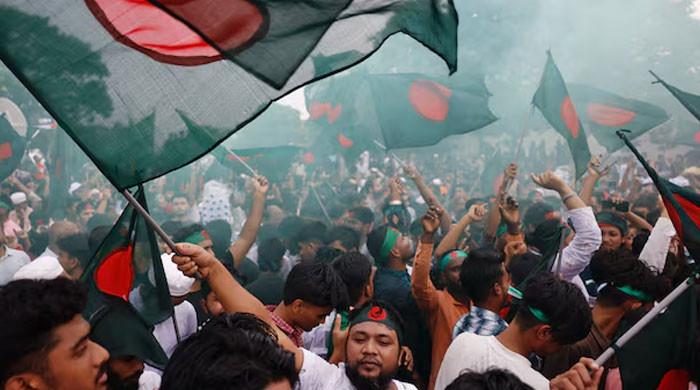
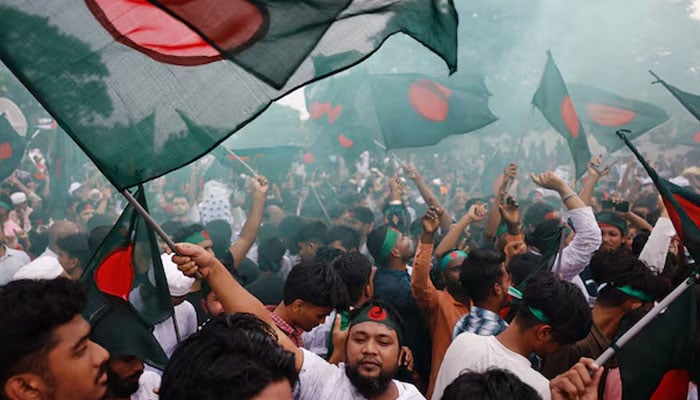
While discussing Bangladesh’s political situation with Bangladeshi, Pakistani, and Indian journalists in Dhaka, I was struck by how neatly history seemed to fold back on itself.
In 2024, India is grappling with the consequences of its misjudgments in Dhaka, even as Pakistan finds new diplomatic space. Whether this moment marks a break with the past or merely its repetition remains unclear.
What struck me most was a comment by a young Bangladeshi: “We want equal and better relations with both Pakistan and India. Both of you treated us in similar ways. […] We have wounds from both, but we want to move forward”.
Following Sheikh Hasina’s departure for India on August 5, 2024, anti-Indian sentiment persists among the public, but it is directed at the Indian government rather than the Indian people. India and Bangladesh share a 4,096-kilometre land border.
Fifty-four rivers, including the Padma, Brahmaputra, and Teesta, connect the two countries. Bilateral trade stands at $14-16 billion, and their interests remain deeply intertwined.
India’s policy of putting all its eggs in Hasina’s Awami League basket proved costly, though it is now trying to rebuild bridges. India appears to have realised its policy missteps, or at least that the Bangladesh Nationalist Party (BNP) represents the new political reality with a public mandate.
When I asked Prime Minister-elect Tarique Rahman whether he would demand Hasina’s extradition from India, given public calls in Dhaka for accountability, he replied cautiously: “That depends on the judicial process”.
Rahman appeared to be a seasoned and careful politician. He avoided angering anyone and did not resort to populist rhetoric. Notably, he did not utter a single critical word about the Awami League or Hasina.
One positive aspect of the current moment is that doors appear open for Pakistan. In Dhaka, people warmly welcome Pakistanis. I met Afroza Begum, the daughter of a Pakistani Air Force officer, born in Rawalpindi in 1958.
She had come to a restaurant with her siblings and recalled how, after the attempted hijacking of a Pakistani plane by Matiur Rahman, they were detained. Alongside those memories, she also recalled fond ones, especially the food and places of Karachi and Peshawar.
“We came from Pakistan in 1974, but our hearts still remain there. That is why, when we heard of the Peshawari Kitchen restaurant in Dhaka, we came to relive those memories.”
The efforts of Pakistani diplomats, especially former high commissioner Imran Siddiqui, are visible. Current High Commissioner Imran Haider and his team are also working to bring the two countries closer. Bilateral trade between Pakistan and Bangladesh stands at about $865 million, and diplomats are focusing on expanding both social and economic ties.
Policymakers in Pakistan should view Bangladesh not through an Indian lens, but as an independent and sovereign brother with its own relationships. Similarly, Indian policymakers should not see Bangladesh through a Pakistani lens, but as a country that initiated Saarc and wants to revive it.
“We will work to reorganise Saarc and will talk to our friends, after forming the government, as it was our initiative,” Tarique Rahman said at a press conference in response to a question from The News.
For Bangladesh’s new leadership, the first priority is Bangladesh itself and its national interests. Rahman’s approach focuses on “Bangladesh First” rather than Pakistan or India. Despite personal tragedies, including the assassination of his father and his mother’s death after years in exile, he refrains from speaking ill of opponents.
Domestically, he is reaching across divides, visiting Dr Shafiqur Rahman of Jamaat-e-Islami Bangladesh and meeting Nashad Islam, a key elected youth leader of the National Citizens Party (NCP), which played a significant role in the movement that led to Sheikh Hasina Wajed’s removal from power.
He appears to understand that rebuilding a nation requires respecting political opponents. The hope is that by revitalising Saarc, Bangladesh can become a centre of regional cooperation rather than a battleground of India-Pakistan rivalry.
Originally published in The News


Tensions in the Middle East have disrupted the delivery of imported goods from Dubai, leading to an increase in prices of computers, laptops and related spare parts in local markets.
Supply delays have pushed up costs for consumers, while repair work has also become more expensive, affecting citizens relying on electronic devices.
Traders cited shipment disruptions as a key factor behind the rising prices.
Politics
Israeli journalist admits reporting rescue of US airman as Trump threatens jail over ‘leak’


Israeli journalist Amit Segal has admitted he was the first to report that a US airman in Iran had been rescued, in a rare public confession that comes as US President Donald Trump threatens to force the reporter behind the disclosure to reveal their source or face jail.
According to Newsweek, Segal confirmed that he broke the story based on information from his sources, but said he would not reveal who provided it.
“I will safeguard my sources at all costs,” Segal said, highlighting the pressure journalists can face when reporting on sensitive military developments.
The report emerged in the aftermath of a high-stakes US military operation after an F-15E Strike Eagle was shot down over southwestern Iran on April 3. One of the two officers onboard was rescued soon after the crash, while efforts to recover the second continued for two days, fuelling concern in military and diplomatic circles.
Against that backdrop, Trump on Monday sharply escalated his criticism of the press, saying he would demand that the journalist who first reported the rescue identify how they obtained the information.
Trump said the disclosure had endangered the ongoing mission to recover the second airman, although that officer was later also rescued safely.
“We didn’t talk about the first one for an hour. Then somebody leaked something, which, we will hopefully find that leaker. We’re looking very hard to find that leaker,” Trump told a White House press conference.
“We’re going to go to the media company that released it, and we’re going to say, ‘National security, give it up or go to jail'”.
It was not immediately clear which specific media outlet or reporter Trump was referring to. Multiple news organisations, including The New York Times, CBS News and Axios, reported within a short span that one of the two airmen had been recovered by US rescue forces after the fighter jet was brought down over Iran on Friday.
The White House did not immediately respond when asked which journalist Trump was threatening.
Trump’s remarks marked a significant intensification of his administration’s attacks on the media.
In recent weeks, he has privately complained to aides that coverage of the US-Israeli war on Iran has been overly negative, while he and his allies have also publicly criticised several news organisations over their reporting on the conflict.
The pressure on broadcasters has also grown. Last month, Federal Communications Commission Chairman Brendan Carr wrote on X that broadcasters airing “fake news” had an opportunity to “correct course before their licence renewals come up”.
His post was accompanied by a screenshot of a Truth Social post by Trump, in which the president claimed that “Lowlife ‘Papers’ and Media actually want us to lose the War.”
- Afghan victims were not taking part in hostilities, says officer.
- “Victims shot by accused or by subordinates acting on his orders.”
- Smith to be charged with five counts of war crime — murder.
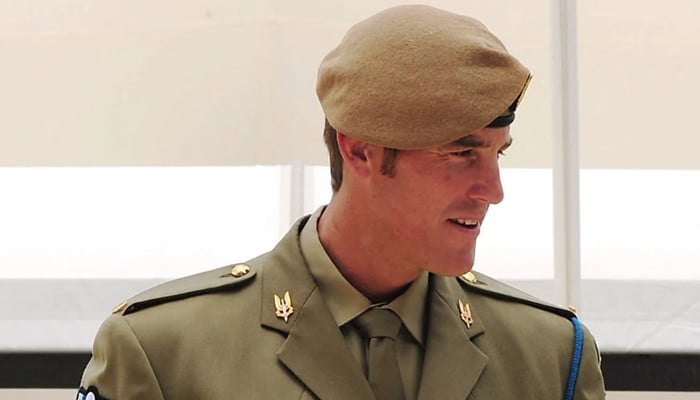
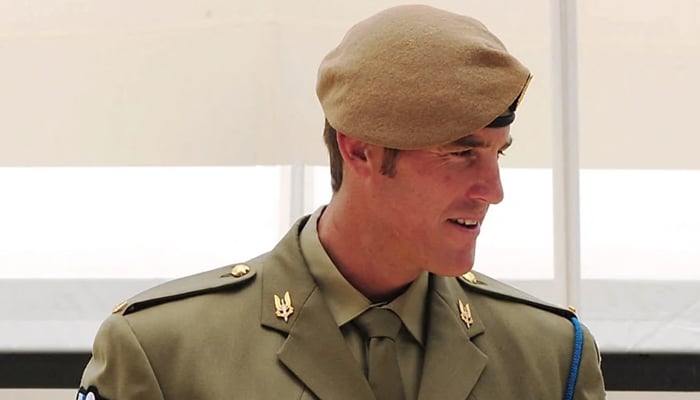
One of Australia’s most decorated soldiers was arrested on Tuesday for allegedly murdering unarmed prisoners while serving in Afghanistan, police and local media said following a sweeping war crimes probe.
The Australian Federal Police said they arrested a 47-year-old former Australian soldier, who was widely named in local media as Victoria Cross recipient Ben Roberts-Smith.
Federal police commissioner Krissy Barrett said the soldier had been linked to a string of murders while serving in Afghanistan between 2009 and 2012.
“The victims were not taking part in hostilities at the time of their alleged murder in Afghanistan,” she told reporters.
“It will be alleged the victims were shot by the accused, or shot by subordinate members acting on the orders of the accused.”
He would be charged with five counts of “war crime — murder”, she said.
A former member of the Special Air Service Regiment, Roberts-Smith was once lauded as Australia’s most distinguished living war hero.
But his reputation took a major hit in 2018, when a series of newspaper reports first linked him to the murder of unarmed Afghan prisoners by Australian troops.
Those reports would eventually trigger an ongoing police investigation into alleged war crimes carried out by Australian soldiers.
Roberts-Smith has maintained his innocence throughout, launching a multi-million-dollar legal suit against the newspapers that first reported on the allegations.
War crime allegations
Roberts-Smith won the Victoria Cross — Australia’s highest military honour — for “conspicuous gallantry” in Afghanistan while on the hunt for a senior Taliban commander.
He met Queen Elizabeth II and his image was hung in the hallowed halls of the Australian War Memorial in Canberra.
But after painstaking reporting, The Age and The Sydney Morning Herald alleged his public persona masked a pattern of criminal and immoral behaviour.
The papers alleged Roberts-Smith had kicked an unarmed Afghan civilian off a cliff and ordered subordinates to shoot him.
He was also said to have taken part in the machine-gunning of a man with a prosthetic leg, later using the limb as a drinking vessel with comrades.
Australia deployed 39,000 troops to Afghanistan over two decades as part of US and Nato-led operations against the Taliban and other militant groups.
As Australian veterans returned home, their actions have come into sharp legal focus.
A 2020 military investigation found special forces personnel “unlawfully killed” 39 Afghan civilians and prisoners, revealing allegations of summary executions, body count competitions and torture by Australian forces.
Under growing pressure, the government appointed a special investigator to probe whether current and former soldiers should face criminal charges.


Blake Lively, Justin Baldoni refuse to settle legal battle amid chaos

Relive the best moments of March Madness through the lenses

India’s exports face reset as EU links trade to carbon metrics: EY

-
Uncategorized1 week ago
[CinePlex360] Please moderate: “Further tariff
-
Uncategorized5 days ago
[CinePlex360] Please moderate: “Trump signals p
-

 Tech4 days ago
Our Favorite iPad Is $50 Off
-

 Entertainment4 days ago
Joe Jonas shares candid glimpse into parenthood with Sophie Turner
-

 Fashion6 days ago
China’s Anta Sports posts record $11.62 bn revenue in 2025
-
 Politics4 days ago
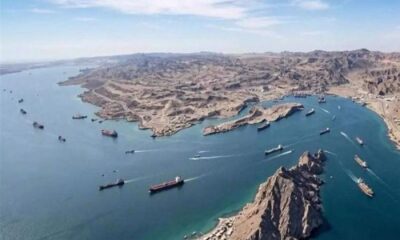
Iran can sustain Strait of Hormuz closure for years, will cut US military logistics: Official
-
 Business6 days ago
UPI transactions hit record Rs 29.53 lakh crore in March; volumes cross 22.6 billion – The Times of India
-

 Sports4 days ago
UConn Final Four run could trigger a $50M furniture giveaway for Massachusetts-based Jordan’s Furniture