

Business
Dick’s Sporting Goods raises guidance after second-quarter earnings beat


A Dick’s Sporting Goods store is shown in Oceanside, California, U.S., May 15, 2025.
Mike Blake | Reuters
Dick’s Sporting Goods raised its full-year sales and earnings guidance after delivering fiscal second-quarter results that beat expectations.
The company is now expecting comparable sales to grow between 2% and 3.5%, up from a previous range of 1% and 3% and ahead of analyst estimates of 2.9%, according to StreetAccount.
Dick’s said its earnings per share are now expected to be between $13.90 and $14.50, up from a previous range of $13.80 to $14.40. Analysts were expecting $14.39 per share, according to LSEG.
Here’s how the company performed compared with what Wall Street was anticipating, based on a survey of analysts by LSEG:
- Earnings per share: $4.38 adjusted vs. $4.32 expected
- Revenue: $3.65 billion vs. $3.63 billion expected
The company’s reported net income for the three-month period that ended Aug. 2 was $381 million, or $4.71 per share, compared with $362 million, or $4.37 per share, a year earlier. Excluding one-time items related to its acquisition of Foot Locker and other costs, Dick’s posted earnings per share of $4.38.
Sales rose to $3.65 billion, up about 5% from $3.47 billion a year earlier. During the quarter, comparable sales also grew 5%, well ahead of expectations of 3.2%, according to StreetAccount.
“Our performance shows how well our long-term strategies are working, the strength and resilience of our operating model and the impact of our team’s consistent execution,” CEO Lauren Hobart said in a news release. “Our Q2 comps increased 5.0%, with growth in average ticket and transactions, and we drove second quarter gross margin expansion.”
While Dick’s comparable sales guidance came in ahead of expectations, its full-year revenue outlook was slightly below estimates. The company said it’s expecting revenue to be between $13.75 billion and $13.95 billion, below estimates of $14 billion, according to LSEG.
Dick’s said its raised profit guidance includes the impact of tariffs that are currently in effect. In an interview with CNBC’s Courtney Reagan, Dick’s executive chairman Ed Stack said the company has implemented some price increases to offset the impact of higher duties but has been “surgical” in its approach.
“We’ve been able to do what we need to from a pricing standpoint, whether that’s from the national brands or from our own brands, and then other places where we’ve held price, we’ve been able to do that, and we’ve offset it someplace else, which is what you have to do in these in these situations, and the team’s done a great job doing that,” Stack said.
Hobart said during Thursday’s call with analysts that the retailer hasn’t seen its shoppers balking at the “small-level” price increases that have gone into effect.
Hobart said broadly Dick’s hasn’t seen any signs of a consumer spending slowdown as a result of tariffs. She said Dick’s saw growth across all of its key segments during the quarter.
Foot Locker tie-up
The company said its guidance doesn’t include any potential impact from its acquisition of Foot Locker, such as costs or results from the planned takeover, which is expected to close on Sept. 8.
In May, Dick’s announced it would be acquiring its longtime rival for $2.4 billion, giving it a competitive edge in the wholesale sneaker market, most importantly for Nike products, along with a bigger global presence.
Nike is a critical brand partner for both Dick’s and Foot Locker and, at times, their performance is reliant on how well the sneaker brand is doing. During the quarter, Stack said new drops from Nike’s revamped running portfolio, including the Pegasus Premium and the Vomero Plus, are performing so well, it can’t keep the shoes in stock.
“Anything that’s new, innovative and kind of the cool factor, is blowing out,” Stack said.
However, the acquisition also comes with risks. Foot Locker’s business has been in the midst of an ambitious turnaround under CEO Mary Dillon but the company is still struggling.
In the quarter ended Aug. 2, Foot Locker’s sales fell 2.4% and it posted a loss of $38 million. The company faces a range of existential challenges, including its heavy mall footprint, its small online business and a core consumer that often has less discretionary income than the core Dick’s consumer.
Once the businesses are combined, Foot Locker’s struggles could ultimately weigh on Dick’s overall results. On the other hand, the combined company will become the No. 1 seller of athletic footwear in the U.S., which will allow it to better compete against its next biggest rival, JD Sports.
Stack acknowledged to CNBC that Foot Locker’s earnings “were not great” but said the company has a strategy.
“We have a game plan of how to turn this around,” Stack told Reagan. “We think that we can return Foot Locker to its rightful place in the top of this industry and we’re excited to roll up our sleeves and get started with that.”
Dick’s plans to operate Foot Locker as a separate entity. Moving forward, Stack said the company plans to break out details on how each brand is performing when releasing quarterly results. It’ll provide separate details on how Dick’s performed and how Foot Locker performed so investors can get a sense of what’s going on in each part of the business.
Hobart said during Thursday’s earnings call that as part of the acquisition, Dick’s plans to invest in Foot Locker stores and marketing. She also said Dick’s sees opportunities in merchandising and bringing in a new assortment of products.
“As Foot Locker becomes part of the Dick’s family, we are an even more important brand to our wholesale partners, and that’s part of the thesis,” Hobart said.
Earlier this week, Dick’s said it had received all regulatory approvals associated with the transaction. It’s unclear if it had to divest any stores to satisfy the FTC’s requirements.
— CNBC’s Ali McCadden contributed to this report.




Britain is to “step up” defensive support for Gulf states after Iran attacked energy sites across the region in a “serious escalation” of the war that could push up inflation and interest rates.
The price of Brent crude climbed as high as $119 a barrel and European gas prices briefly surged by 35 per cent after Iran pounded Qatar’s Ras Laffan energy hub and other Middle Eastern oil and gas infrastructure with missiles.
Interest rates were held at 3.75 per cent instead of the previously expected cut, as the Bank of England warned that the war could push inflation as high as 3.5 per cent by July on the back of rising energy bills, and that rates could rise – creating misery for homeowners.
It came as:
- US defence secretary Pete Hegseth said “ungrateful” European allies should be thanking Donald Trump for the war
- Trump claimed he was unaware of Israel’s strike on Iran’s South Pars gas field
- Oman called the US/Israel attacks a “grave miscalculation”
- Europe’s biggest airlines warned of higher fares
Iran’s attacks were in retaliation to an Israeli strike on the vital South Pars gas field, which drew condemnation from the Gulf states as well as Tehran. It was the first attack of the war so far on an energy production facility. Tehran fired missiles at multiple energy sites across the Gulf, including a Saudi oil refinery, Qatari gas facilities and two more oil refineries in Kuwait.
While Sir Keir Starmer and Emmanuel Macron called for de-escalation, President Trump threatened to “massively blow up” the South Pars facility if Iran did not halt its retaliatory attacks, repeating his claim that US forces had “obliterated” Iran’s navy and military, adding that the war was “substantially ahead of schedule”. He denied that plans were being made to send more American troops to the region.
John Healey, the UK defence secretary, said Tehran’s tit-for-tat responses threatened to further destabilise the region and Europe’s economies. He called them a “serious escalation”, adding: “They further destabilise the region and we will step up the defensive support that we can offer to those Gulf states.”
British forces are already deployed to the Middle East, with RAF jets flying defensive sorties against Iranian drones across the Gulf and British air defence systems protecting critical infrastructure in Saudi Arabia. UK military planners have also joined US Central Command to help formulate proposals for opening the Strait of Hormuz, a critical trade route for the world’s oil and gas.But there were signs of growing frustration towards Washington’s war aims in the Gulf states, with Oman’s foreign minister claiming that the conflict was President Trump’s “greatest miscalculation”.
In the most scathing attack on Washington’s foreign policy yet by a Gulf state, Badr Albusaidi said “this is not America’s war” and criticised Mr Trump for supporting Israel. Writing in The Economist, he called on American allies to help extricate it from the conflict, which has continued for a third week despite failing to achieve the US and Israel’s stated aim of instigating regime change in Tehran or stopping its nuclear programme.
Meanwhile, the Bank of England has warned that it may have to put up interest rates if the war continues to drive up inflation and unemployment. Its governor, Andrew Bailey, said the impact was already being felt by consumers as petrol prices surge and that he is “ready to act as necessary to ensure inflation remains on track to meet the 2 per cent target”. That would pave the way for a rate hike as early as the end of April.
Bets on the financial markets suggest a 50/50 chance that Britain will face higher interest rates from next month – and the possibility of two more rises by the end of the year.
Danni Hewson, head of financial analysis at AJ Bell, said: “Markets are now pricing in an almost 50 per cent chance that April’s meeting will see rates rise to 4 per cent with the potential for two additional rate hikes by the end of the year. But no one has a crystal ball. No one knows how long the conflict will last or the amount of damage that could be inflicted on crucial energy infrastructure by the time it ends.”
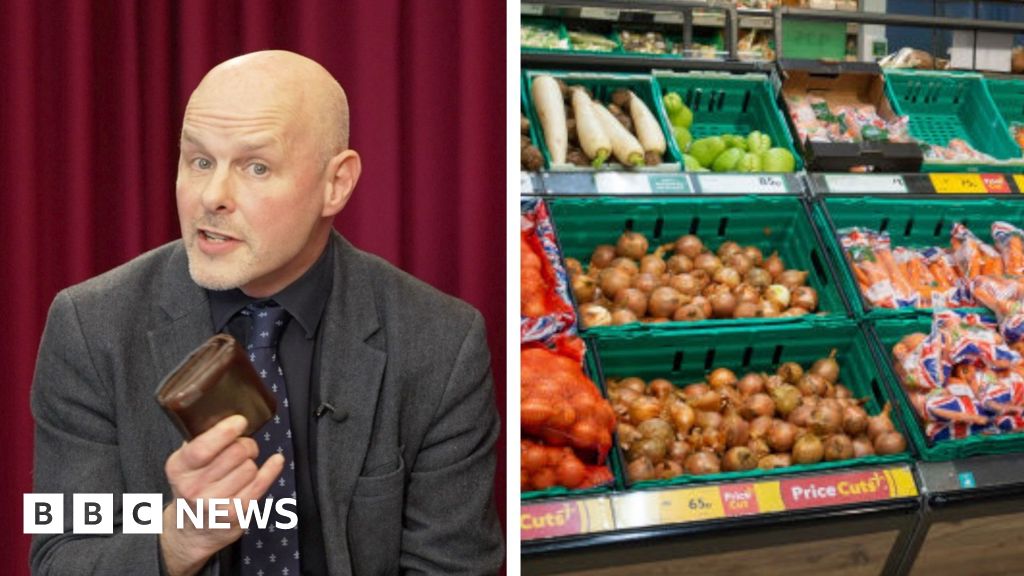
From fuel to mortgages, the BBC looks at how oil and gas prices could push up the cost of living.
Source link
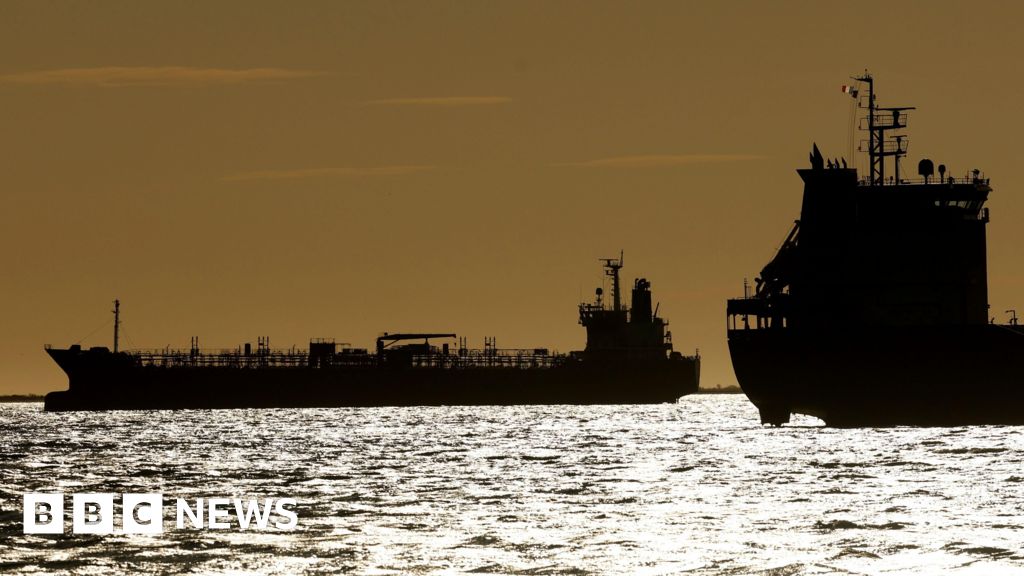
“To put it mildly, this is bananas,” said David Tannenbaum, director of Blackstone Compliance Services, a consultancy specialising in maritime sanctions. “Essentially we’re allowing Iran to sell oil, which could then be used to fund the war effort.”


FIFA clears Israeli settlement clubs but fines IFA over breaches

Prince William and Kate wow with last-minute surprise portrait drop

US Takes Down Botnets Used in Record-Breaking Cyberattacks

Stock market crash today (March 12, 2026): Nifty50 opens below 23,600; BSE Sensex down over 900 points on continuing US-Iran war – The Times of India

UK’s Topshop unveils Tolu Coker capsule collection

US ignites Iran war, but Gulf Arab states pay the price | The Express Tribune

-
Business1 week ago
Stock market crash today (March 12, 2026): Nifty50 opens below 23,600; BSE Sensex down over 900 points on continuing US-Iran war – The Times of India
-
 Fashion1 week ago
UK’s Topshop unveils Tolu Coker capsule collection
-
Business1 week ago
US ignites Iran war, but Gulf Arab states pay the price | The Express Tribune
-

 Fashion1 week ago
India’s textile recycling market may reach $3.5 bn by 2030: Report
-

 Tech1 week ago
Meta Developed 4 New Chips to Power Its AI and Recommendation Systems
-

 Sports1 week ago
Bangladesh crush Pakistan in ODI series opener | The Express Tribune
-
 Business1 week ago
8th Pay Commission: How Much Will Central Govt Employees’ Salaries Rise? What We Know So Far
-

 Entertainment1 week ago
Ed Sheeran makes surprising Benny Blanco confession after hygiene uproar