

Tech
Diversity Think Tank: We can’t afford to roll back DEI | Computer Weekly


We are experiencing a deliberate, and often quiet, roll back of diversity, equity and inclusion (DEI) initiatives within UK businesses which will have long-term damaging effects for the tech sector and wider economy. The implications of these roll backs are, put simply, a reversal in progress and a reinforcement of deep systemic inequality.
With pressure to reduce costs and stay afloat in challenging economic times many businesses cite the cost of DEI initiatives and policies as being prohibitive to doing business. This is short sighted. A 2020 study by McKinsey which gathered data from 1,000 organisations revealed that gender-diverse businesses are 25% more likely to have higher profits, with that number increasing to 36% for ethnically and culturally diverse businesses.
The risk of turning away
So, what are the actual implications of the roll back in DEI initiatives? If you are experiencing a change in DEI activities within your organisation it’s useful to consider whether this is because DEI is being de-prioritised or whether the organisation is re-framing what DEI means within the context of its organisational strategy. If efforts are being de-prioritised then potential implications include:
1. A shift in workplace culture
When DEI is no longer a priority the risk is that some employees become more vulnerable to discrimination, micro-aggressions and systemic disadvantages. They may lack the structures and mechanisms to ensure their voices and perspectives are heard, in the worst-case scenario they may be actively silenced.
Practically, you might see this in meetings where the same people contribute regularly, and the same people struggle to contribute their ideas and perspectives. Over time you may notice your teams becoming more homogenous. There is an active disadvantage in having a team where all members come from a similar background, have a similar thinking style, are of the same gender, race or education background. You create an echo-chamber which inhibits creativity and innovation. This can erode the deep cultural fabric of an organisation.
2. Loss of Innovation and Competitiveness
A BCG study suggests that increasing the diversity of leadership teams leads to more and better innovation and improved financial performance. In today’s economic climate, coupled with the opportunities and risks artificial intelligence (AI) brings to the way we do business, businesses need to stand out and continue to truly innovate to remain competitive. This requires resilience and a commitment to building and nurturing loyal talent within organisations.
3. Damage to Employer Brand and Talent Retention
As Gen Z, and eventually Gen Alpha, enter the workforce businesses will need to consider the expectations of a younger workforce. Gen Z is the first generation to grow up in a fully digital world with ready access to a wealth of information to shape their perspectives. Emerging research shows that their expectations are to find employment which is financially secure, supports overall well-being, and aligns to their values. For many individuals who represent Gen Z within the workforce DEI is not optional, it is a necessity. To remain relevant businesses need to consider how they will meet the expectations of the younger generations and their future leaders.
4. Widening Societal Gaps
Businesses influence our society, employers can promote and sustain upward mobility, economic empowerment and equitable opportunities. Stalling or stopping DEI initiatives will entrench existing inequalities particularly with regards to race, gender, disability, sexuality, and socioeconomic background. This is harmful to our societal values and norms and will have a ripple effect to our social services and societal structure.
Protecting the progress so far
Whilst it’s key to maintain and protect progress which has been made in business as a result of successful and thoughtful DEI initiatives it might be time for a reframe. Creativity, innovation and diverse perspectives are key to a business being resilient and adaptable in today’s world. Responsible businesses will not only prioritise DEI they will also consider their approach to the climate emergency and their ethical values in the way they do business. As a result there’s an opportunity for businesses who want to remain relevant to reshape how DEI initiatives are funded and delivered.
Here’s what can be done:
1. Integrate DEI into the overall strategy
DEI should not sit within one department, rather it should be embedded across all functions of the organisations from recruitment, marketing, leadership and service and/or product design. In this way DEI approaches should influence the day-to-day practices within an organisation, shaping culture and behaviour without requiring high investment.
2. Transparent leadership
If it matters, it should be measured. Leadership teams and company boards should be measuring their progress on inclusion alongside their bottom line. The numbers will start to speak for themselves. Leaders who prioritise transparent and open communication, including public reporting on workforce diversity and the gender pay gap are more likely to develop loyalty both internally and with their clients.
3. Build a network of strong allies
Organisational behaviours and practices that lack inclusivity are often inherently discriminatory and can contribute to a toxic and unproductive workplace culture. Build alliances and find allies. It’s extremely challenging for one individual to speak out however building a constructive case as a group could contribute to significant change and impact within your organisation. DEI initiatives are inherently hard because they challenge the status quo, therefore it makes sense to co-create solutions and share the load.
What might the future hold?
In uncertain times it’s easy to lose heart and lose sight of the bigger picture. The seismic shift we saw in 2020 of businesses pivoting resources and focus to support DEI came at a significant moment during the peak of the COVID-19 pandemic alongside the Black Lives Matter movement. Five years on we can see that the journey for successful DEI initiatives is not linear, it’s often experimental, fraught with tension (at least at the start) and take time to mature.
A key enabling factor is the current approach of the UK Government. The Mission Led Government framework deeply embeds diversity, equity and inclusion by calling for a fairer and more equal society. The cross cutting nature of DEI across the five national mission areas identified in the framework signals that DEI is foundational to societal progress. Businesses should take a lead from this.
This is not the moment to roll back from DEI, doing so is short-sighted and damaging to long-term business resilience, innovation and ethical responsibility. Now is a moment to galvanise progress to date and evolve how we understand DEI and how we deliver it. This is a critical moment, a crossroad for businesses tempted to retreat from previous DEI commitments. Whilst the economic pressures are real the answer is not drawing back from an approach which ultimately impacts the bottom line. The research is clear, organisations that prioritise diversity are more creative, more adaptable, and more profitable. Beyond the numbers, inclusive companies foster greater loyalty, collaboration, and innovation all essential qualities in an uncertain economy and a fast-evolving tech sector.
DEI is an essential component of a business strategy, now is the time for organisations to embed it deeply and strategically. The focus should shift from performative gestures to meaningful, measurable, and systemic change. This means aligning DEI with business goals, integrating inclusive practices across functions, and embedding accountability at every level of leadership.
There is also an opportunity to reframe DEI within a broader commitment to ethical and sustainable business practices. Gen Z and Gen Alpha are entering the workforce with high expectations for fairness, transparency, and impact. If businesses wish to attract and retain top talent, they must be able to practically demonstrate how they are building inclusive cultures and equitable opportunities.
Whilst UK business is inevitably influenced by governments and policies overseas there is a risk that our very values, the values which make UK businesses unique and attractive to investors and employees, are being slowly eroded. To stand out and take a stand is to hold true to the positive values which take time and focus to cultivate. Ditching a focus on DEI is a disappointing outcome, but all is not lost. The real opportunity lies in reaffirming our commitment to fairness, innovation, and integrity—even when it’s difficult. UK businesses can lead not by following reactive trends, but by setting a clear, values-driven example of what responsible, future-ready leadership truly looks like.
In closing, it’s always important to remember the words of Robert Reich, former U.S Secretary of Labour: “Change threatens those who benefit most from the status quo.”
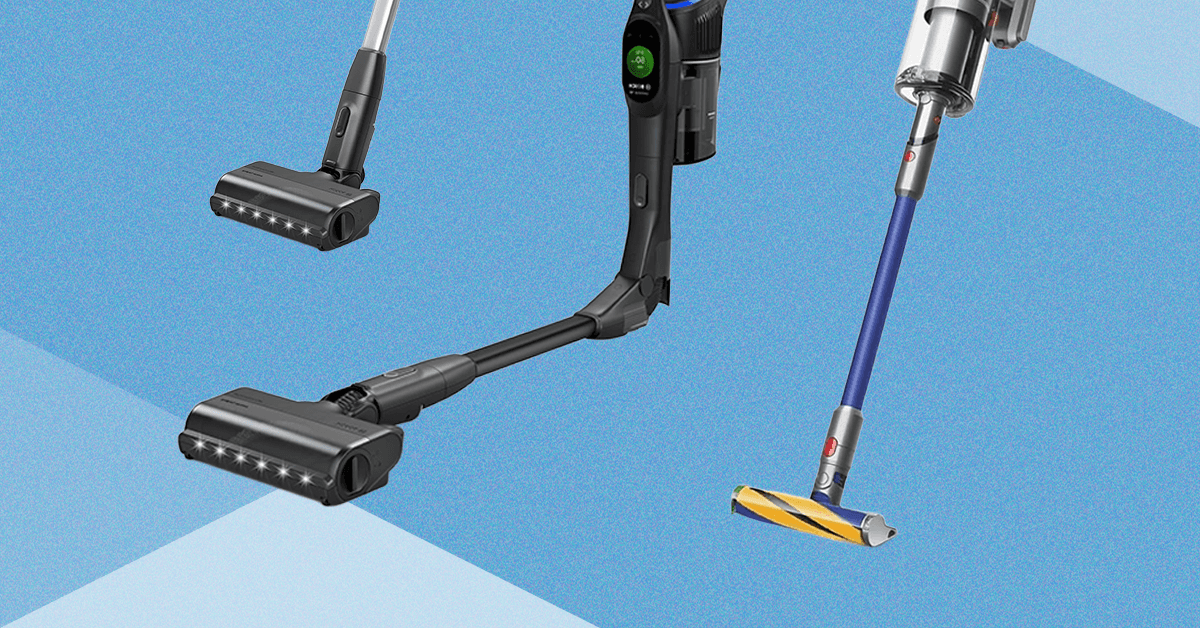
There’s a lever on the back for this compression mechanism that you manually press down and a separate button to open the dustbin at the bottom. You can use the compression lever when it’s both closed and open. It did help compress the hair and dust while I was vacuuming, helping me see if I had really filled the bin, though at a certain point it doesn’t compress much more. It was helpful to push debris out if needed too, versus the times I’ve had to stick my hand in both the Dyson and Shark to get the stuck hair and dust out. Dyson has this same feature on the Piston Animal V16, which is due out this year, so I’ll be curious to see which mechanism is better engineered.
Bendable Winner: Shark
Photograph: Nena Farrell
If you’re looking for a vacuum that can bend to reach under furniture, I prefer the Shark to the Bosch. Both have a similar mechanism and feel, but the Bosch tended to push debris around when I was using it with an active bend, while the Shark managed to vacuum up debris I couldn’t get with the Bosch without lifting it and placing it on top of that particular debris (in this case, rogue cat kibble).
Accessory Winner: Dyson
Dyson pulls ahead because the Dyson Gen5 Detect comes with three attachments and two heads. You’ll get a Motorbar head, a Fluffy Optic head, a hair tool, a combination tool, and a dusting and crevice tool that’s actually built into the stick tube. I love that it’s built into the vacuum so that it’s one less separate attachment to carry around, and it makes me more likely to use it.
But Bosch does well in this area, too. You’ll get an upholstery nozzle, a furniture brush, and a crevice nozzle. It’s one more attachment than you’ll get with Shark, and Bosch also includes a wall mount that you can wire the charging cord into for storage and charging, and you can mount two attachments on it. But I will say, I like that Shark includes a simple tote bag to store the attachments in. The rest of my attachments are in plastic bags for each vacuum, and keeping track of attachments is the most annoying part of a cordless vacuum.
Build Winner: Tie

Photograph: Nena Farrell
All three of these vacuums have a good build quality, but each one feels like it focuses on something different. Bosch feels the lightest of the three and stands up the easiest on its own, but all three do need something to lean against to stay upright. The Dyson is the worst at this; it also needs a ledge or table wedged under the canister, or it’ll roll forward and tip over. The Bosch has a sleek black look and a colorful LED screen that will show you a picture of carpet or hardwood depending on what mode it’s vacuuming in. The vacuum head itself feels like the lightest plastic of the bunch, though.
Tech
Right-Wing Gun Enthusiasts and Extremists Are Working Overtime to Justify Alex Pretti’s Killing

Brandon Herrera, a prominent gun influencer with over 4 million followers on YouTube, said in a video posted this week that while it was unfortunate that Pretti died, ultimately the fault was his own.
“Pretti didn’t deserve to die, but it also wasn’t just a baseless execution,” Herrera said, adding without evidence that Pretti’s purpose was to disrupt ICE operations. “If you’re interfering with arrests and things like that, that’s a crime. If you get in the fucking officer’s way, that will probably be escalated to physical force, whether it’s arresting you or just getting you the fuck out of the way, which then can lead to a tussle, which, if you’re armed, can lead to a fatal shooting.” He described the situation as “lawful but awful.”
Herrera was joined in the video by former police officer and fellow gun influencer Cody Garrett, known online as Donut Operator.
Both men took the opportunity to deride immigrants, with Herrera saying “every news outlet is going to jump onto this because it’s current thing and they’re going to ignore the 12 drunk drivers who killed you know, American citizens yesterday that were all illegals or H-1Bs or whatever.”
Herrera also referenced his “friend” Kyle Rittenhouse, who has become central to much of the debate about the shooting.
On August 25, 2020, Rittenhouse, who was 17 at the time, traveled from his home in Illinois to a protest in Kenosha, Wisconsin, brandishing an AR-15-style rifle, claiming he was there to protect local businesses. He killed two people and shot another in the arm that night.
Critics of ICE’s actions in Minneapolis quickly highlighted what they saw as the hypocrisy of the right’s defense of Rittenhouse and attacks on Pretti.
“Kyle Rittenhouse was a conservative hero for walking into a protest actually brandishing a weapon, but this guy who had a legal permit to carry and already had had his gun removed is to some people an instigator, when he was actually going to help a woman,” Jessica Tarlov, a Democratic strategist, said on Fox News this week.
Rittenhouse also waded into the debate, writing on X: “The correct way to approach law enforcement when armed,” above a picture of himself with his hands up in front of police after he killed two people. He added in another post that “ICE messed up.”
The claim that Pretti was to blame was repeated in private Facebook groups run by armed militias, according to data shared with WIRED by the Tech Transparency Project, as well as on extremist Telegram channels.
“I’m sorry for him and his family,” one member of a Facebook group called American Patriots wrote. “My question though, why did he go to these riots armed with a gun and extra magazines if he wasn’t planning on using them?”
Some extremist groups, such as the far-right Boogaloo movement, have been highly critical of the administration’s comments on being armed at a protest.
“To the ‘dont bring a gun to a protest’ crowd, fuck you,” one member of a private Boogaloo group wrote on Facebook this week. “To the fucking turn coats thinking disarming is the answer and dont think it would happen to you as well, fuck you. To the federal government who I’ve watched murder citizens just for saying no to them, fuck you. Shall not be infringed.”
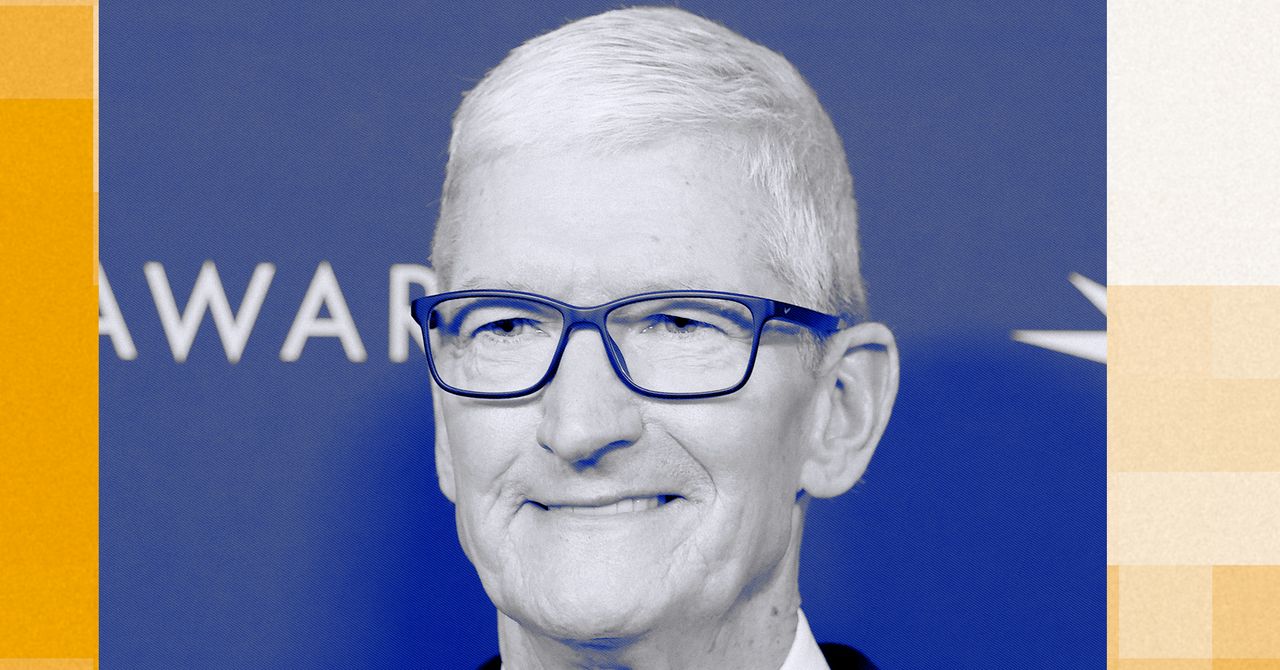
It was November 12, 2016, four days after Donald Trump won his first presidential election. Aside from a few outliers (looking at you, Peter Thiel), almost everyone in the tech world was shocked and appalled. At a conference I attended that Thursday, Facebook CEO Mark Zuckerberg said it was “a pretty crazy idea” to think that his company had anything to do with the outcome. The following Saturday, I was leaving my favorite breakfast place in downtown Palo Alto when I ran into Tim Cook, the CEO of Apple. We knew each other, but at that point, I had never really sat down with him to do a deep interview. But this was a moment when raw emotions were triggering all sorts of conversations, even between journalists and famously cautious executives. We ended up talking for what must have been 20 minutes.
I won’t go into the particulars of a private conversation. But it will surprise no one to hear what was mutually understood on that streetcorner: We were two people stunned at what had happened and shared the same unspoken belief that it was not good.
I have thought back to that day many times, certainly last year when Cook gifted President Trump a glitzy Apple sculpture with a 24k gold base, and most recently this past weekend when he attended a White House screening of the $40 million vanity documentary about Melania Trump. The event, which also included Amazon CEO Andy Jassy (whose company funded the project) and AMD CEO Lisa Su, took place only hours after the Trump administration’s masked army in Minneapolis put 10 bullets into 37-year-old Department of Veterans Affairs ICU nurse Alex Pretti. Also, a snowstorm was coming, which would have provided a good excuse to miss an event that might very well haunt its attendees for the rest of their lives. But there was Cook, feting a competitor’s media product, looking sharp in a tuxedo, and posing with the movie’s director, who hadn’t worked since he was accused of sexual misconduct or harassment by half a dozen women. (He has denied the allegations.)
Cook’s presence reflects the behavior of many of his peers in the trillion-dollar tech CEO club, all of whom run businesses highly vulnerable to the president’s potential ire. During Trump’s first term, CEOs of companies like Facebook, Amazon, and Google straddled a tightrope between objecting to policies that violated their company’s values and cooperating with the federal government. In the past year, however, their default strategy, executed with varying degrees of enthusiasm, has been to lavishly flatter the president and cut deals where Trump can claim wins. These executives have also funneled millions toward Trump’s inauguration, his future presidential library, and the humongous ballroom that he is building to replace the demolished East Wing of the White House. In return, the corporate leaders hoped to blunt the impact of tariffs and avoid onerous regulations.
This behavior disappointed a lot of people, including me. When Jeff Bezos bought The Washington Post, he was seen as a civic hero, but now he is molding the opinion pages of that venerable institution into that of a White House cheerleader. Zuckerberg once cofounded a group that advocated for immigration reform and penned an op-ed bemoaning the uncertain future of a young entrepreneur he was coaching who happened to be undocumented. Last year, Zuckerberg formally cut ties with the group, but by then he had already positioned himself as a Trump toady.
When Googlers protested Trump’s immigration policies during his first term, cofounder Sergey Brin joined their march. “I wouldn’t be where I am today or have any kind of the life that I have today if this was not a brave country that really stood out and spoke for liberty,” said Brin, whose family had escaped Russia when he was 6. Today, families like his are being pulled out of their cars and classrooms, sent to detention centers, and flown out of the country. Brin and fellow cofounder Larry Page built their search engine on the kind of government grant that the Trump administration no longer supports. Nonetheless, Brin is a Trump supporter. Alphabet CEO Sundar Pichai, himself an immigrant, oversaw Google’s $22 million contribution to the White House ballroom and was among tech grandees flattering Trump at a September White House dinner where CEOs competed to see who could pander to Trump the most insincerely. Another immigrant, Microsoft CEO Satya Nadella, once slammed Trump’s first-term policies as “cruel and abusive.” In 2025, he was among those offering hosannas to the president.


Elena Rybakina wins Australian Open for 2nd Grand Slam title

Saturday Sessions: Courtney Marie Andrews performs “Everyone Wants To Feel Like You Do”

Kensington Palace releases Kate’s personal message as Andrew leaves Windsor

-
 Business1 week ago
Success Story: This IITian Failed 17 Times Before Building A ₹40,000 Crore Giant
-

 Entertainment1 week ago
Drake takes legal battle over Kendrick Lamar track to next level
-

 Politics1 week ago
In fiery Davos speech, Zelensky blasts EU, says US ‘security guarantees’ ready
-

 Entertainment1 week ago
Harry Styles world tour promises unforgettable star packed nights
-
 Business1 week ago
Silver ETFs Jump Up To 10%, Gold ETFs Gain Over 3% On Record Bullion Prices
-

 Tech1 week ago
Ruckus gears up for networking partnership with TGR Haas F1 Team | Computer Weekly
-

 Sports1 week ago
Senegal coach defends team’s AFCON final walkoff and chaos
-

 Fashion1 week ago
South Korea tilts sourcing towards China as apparel imports shift