

Fashion
Does December’s rise in UK GfK’s consumer confidence report conceal tougher expectations for 2026?


Published
December 21, 2025
The latest consumer confidence report from GfK didn’t share the gloom of the one a day earlier from the British Retail Consortium (BRC), but it did reflect its note of caution for the year ahead.
GfK’s long-running Consumer Confidence Index in fact showed confidence is up two points (to -17) in December and all five of its measures edged up this month. But confidence still “remains subdued after a year of no progress”, it noted.
So how did those five measures, come out this time? The personal finances index over the last 12 months increased by one point to -6 month on month; the forecast for personal finances over the next year rose one point to 2; the measure for the country’s general economic situation over the last 12 months increased three points to -40; expectations for the general economic situation over the next 12 months lifted three points to -29; the Major Purchase Index jumped four points to -11; and finally, the Savings Index was unchanged at 24.
Neil Bellamy, Consumer Insights director at GfK, said: “It’s tempting to see festive cheer in December’s two-point improvement in consumer confidence. Are we seeing a sigh of relief that the Autumn Budget wasn’t as bad as most had feared?
“All five measures are up this month led by a four-point jump in major purchase intentions. This is a surprise finding for the UK high street because it contrasts with the Black Friday sales slump we reported on earlier this month. Have people decided to spend on Christmas regardless, and worry about 2026 later?
Bellamy added: “However, looking at the full year, the December headline score of -17 is the same as 12 months ago, and on that basis 2025 has been a year of no progress. UK households still face cost-of-living pressures, despite the recent softening in inflation, along with rising economic uncertainty, and those conditions result in weaker consumer confidence.
“Sadly, consumers resemble a family on a festive winter hike, crossing a boggy field – plodding along stoically, getting stuck in the mud and hoping that easier conditions are not far off.”
Copyright © 2025 FashionNetwork.com All rights reserved.
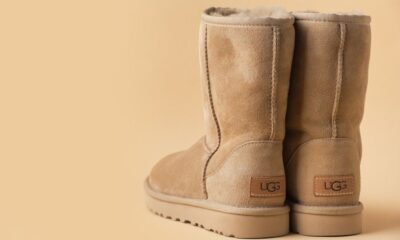









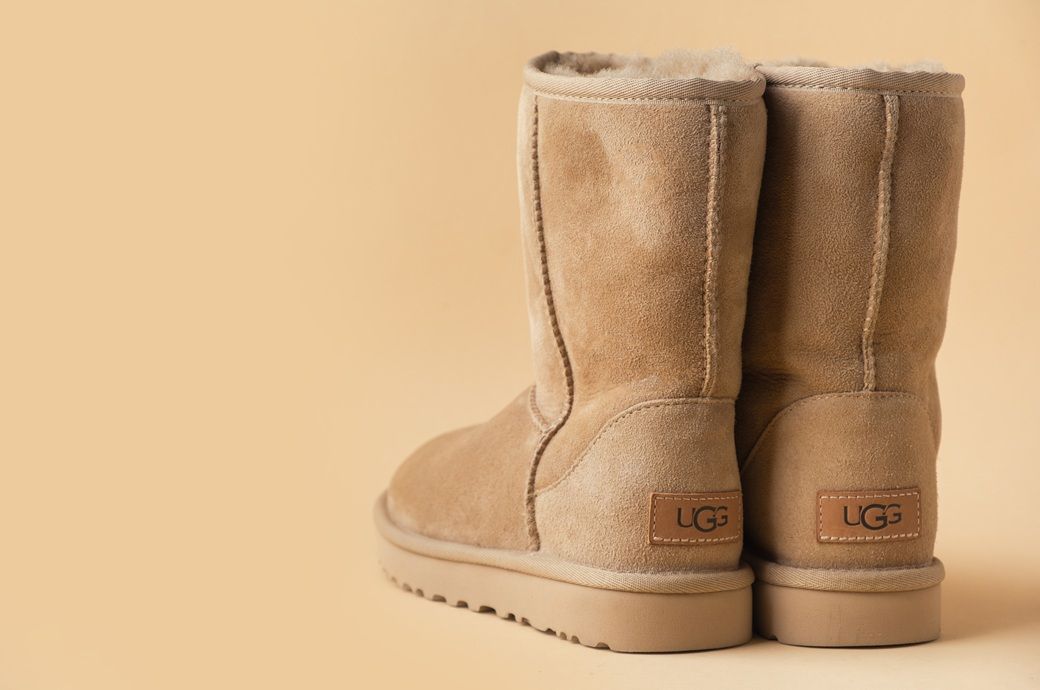
Kenneth Straka, Senior Product Development Manager at Deckers Outdoor Corporation, said that Deckers places strong emphasis on sustainability, noting that founder John Luke often reminded the team that the French word for sustainability is durability. This idea aligned with discussions at the Global Fashion Summit, where the theme centred on “Building Resilient Futures” in the sustainable and circular economy.
Durability has helped UGG become one of the most sought-after boot brands and a key sales driver for Deckers, alongside its sportswear brand Hoka. “One of the things we think about in terms of circularity is making products that last a long time and remain with consumers throughout their lives. We want products that consumers can wear for ** or ** years,” Straka said in an interview with Fibre*Fashion on the sidelines of the Global Fashion Summit in Copenhagen.
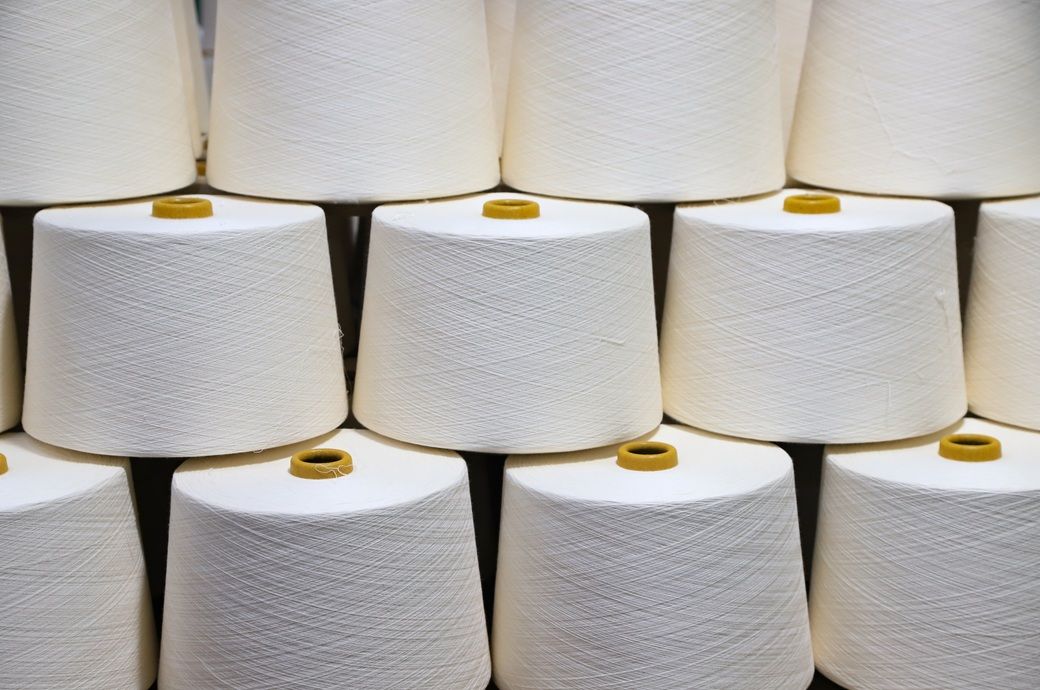
In the Tiruppur market, cotton yarn prices increased by ****;*–* per kg in this week despite sluggish local demand. Prices were quoted higher because of limited supply from spinning mills. A trader from the Tiruppur market told Fibre*Fashion, “Domestic demand remained limited, but spinning mills are not relying solely on the domestic market for cotton yarn sales. They are focusing more on exports, where demand and prices remain attractive. Mills have raised yarn prices following higher ICE cotton prices and the CCI’s increase in auction base prices, although ICE cotton has witnessed a sharp decline over the past two days.”
In Tiruppur, knitting cotton yarn prices were noted as: ** count combed cotton yarn at ****;***–*** (~$*.**–*.**) per kg (excluding GST), ** count combed cotton yarn at ****;***–*** (~$*.**–*.**) per kg, ** count combed cotton yarn at ****;***–*** (~$*.**–*.**) per kg, ** count carded cotton yarn at ****;***–*** (~$*.**–*.**) per kg, ** count carded cotton yarn at ****;***–*** (~$*.**–*.**) per kg, and ** count carded cotton yarn at ****;***–*** (~$*.**–*.**) per kg.
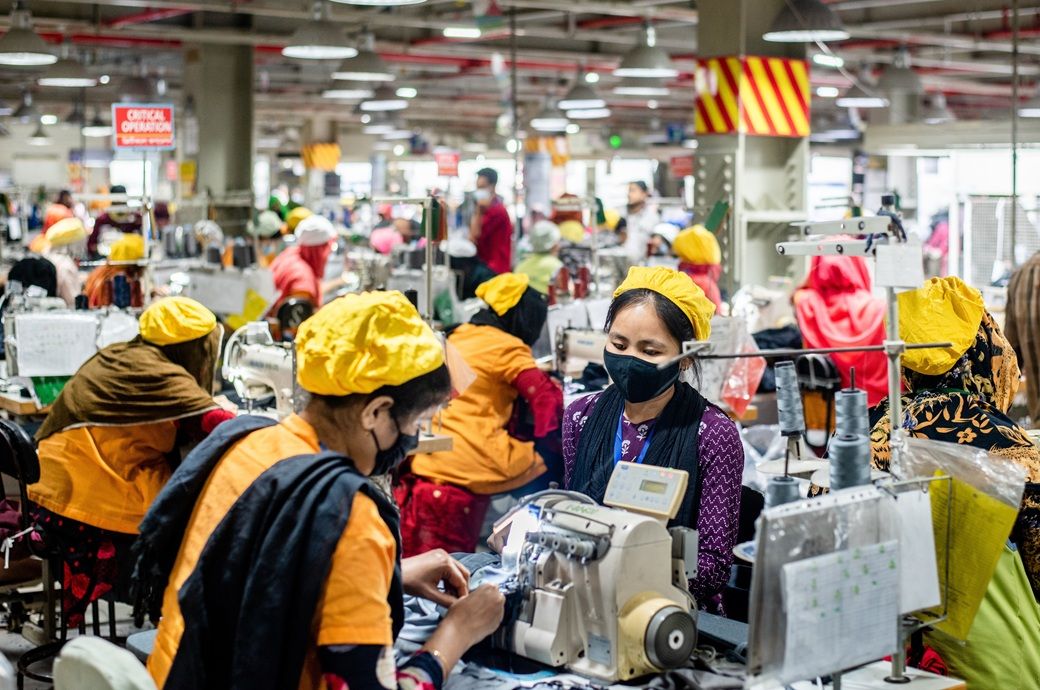
BGMEA president Mahmud Hasan Khan said they discussed export diversification within the garment sector, reopening of closed factories and many factories’ struggle for survival.
Representatives of two top Bangladesh garment trade bodies recently met PM Tarique Rahman and urged him to ensure uninterrupted power and energy supply, quick release of export receipts from banks, reopening of closed factories and easing of customs regulations.
BKMEA raised concerns about misuse of the bond facility and urged action against violators of bond licences.
104 factories have informed the BGMEA about their closure till now, Khan said. BGMEA will scrutinise these cases to identify the genuine reasons for the closures.
Following the scrutiny, the association will send recommendations for reopening these factories, as the government is working to open a Tk 200-billion fund to assist their revival.
BKMEA president Mohammad Hatem said some 400 factories closed in the last three years—nearly 300 of them due to non-cooperation from banks. He said banks release export receipts to exporters’ lien accounts, but delays in payment often force loans into default, leaving exporters unable to pay suppliers on time.
He also demanded uninterrupted supply of power and gas to industrial units as recent shortages of fuel oil have severely affected productivity, according to domestic media ooutlets.
Hatem raised concerns about misuse of the bond facility and urged action against violators of bond licences.
He also called for easing the rules of the National Board of Revenue, particularly customs procedures, to smoothen export and import processes and reduce lead times.
Fibre2Fashion News Desk (DS)


Military jets’ crew members safely eject after Idaho air-show collision

Pete Davidson’s friends support comic against ex Elsie Hewitt allegations

Indy 500: Counting Down The 10 Best Finishes In Race History

-

 Entertainment5 days ago
Conan O’Brien hat tricks as Oscar host
-

 Tech1 week ago
Could Contact-Tracing Apps Help With the Hantavirus? Not Really
-

 Tech1 week ago
I Tried the Best Captioning Smart Glasses, and Only One Leads the Pack
-

 Fashion5 days ago
Italy’s Zegna Group’s Q1 growth boosted by strong organic performance
-

 Sports1 week ago
Bobby Cox, legendary Atlanta Braves manager who led 1995 World Series champions, dead at 84
-

 Entertainment1 week ago
Martin Short: Facing tragedy with joy
-

 Entertainment1 week ago
Tom Brady gets back at Kevin Hart during Netflix roast
-

 Entertainment1 week ago
Martha Stewart: How to make an omelet