

Business
Don’t blindly trust what AI tells you, Google boss tells BBC


Faisal Islam,economics editor,
Rachel Clun,business reporter and
Liv McMahon,Technology reporter
 Getty Images
People should not “blindly trust” everything AI tools tell them, the boss of Google’s parent company Alphabet has told the BBC.
In an exclusive interview, chief executive Sundar Pichai said that AI models are “prone to errors” and urged people to use them alongside other tools.
Mr Pichai said it highlighted the importance of having a rich information ecosystem, rather than solely relying on AI technology.
“This is why people also use Google search, and we have other products that are more grounded in providing accurate information.”
However, some experts say big tech firms such as Google should not be inviting users to fact-check their tools’ output, but should focus instead on making their systems more reliable.
While AI tools were helpful “if you want to creatively write something”, Mr Pichai said people “have to learn to use these tools for what they’re good at, and not blindly trust everything they say”.
He told the BBC: “We take pride in the amount of work we put in to give us as accurate information as possible, but the current state-of-the-art AI technology is prone to some errors.”
The company displays disclaimers on its AI tools to let users know they can make mistakes.
But this has not shielded it from criticism and concerns over errors made by its own products.
Google’s rollout of AI Overviews summarising its search results was marred by criticism and mockery over some erratic, inaccurate responses.
The tendency for generative AI products, such as chatbots, to relay misleading or false information, is a cause of concern among experts.
“We know these systems make up answers, and they make up answers to please us – and that’s a problem,” Gina Neff, professor of responsible AI at Queen Mary University of London, told BBC Radio 4’s Today programme.
“It’s okay if I’m asking ‘what movie should I see next’, it’s quite different if I’m asking really sensitive questions about my health, mental wellbeing, about science, about news,” she said.
She also urged Google to take more responsibility over its AI products and their accuracy, rather than passing that on to consumers.
“The company now is asking to mark their own exam paper while they’re burning down the school,” the said.
‘A new phase’
The tech world has been awaiting the latest launch of Google’s consumer AI model, Gemini 3.0, which is starting to win back market share from ChatGPT.
The company unveiled the model on Tuesday, claiming it would unleash “a new era of intelligence” at the heart of its own products such as its search engine.
In a blog post, it said Gemini 3 boasted industry-leading performance across understanding and responding to different modes of input, such as photo, audio and video, as well as “state-of-the-art” reasoning capabilities.
In May this year, Google began introducing a new “AI Mode” into its search, integrating its Gemini chatbot which is aimed at giving users the experience of talking to an expert.
At the time, Mr Pichai said the integration of Gemini with search signalled a “new phase of the AI platform shift”.
The move is also part of the tech giant’s bid to remain competitive against AI services such as ChatGPT, which have threatened Google’s online search dominance.
His comments back up BBC research from earlier this year, which found that AI chatbots inaccurately summarised news stories.
OpenAI’s ChatGPT, Microsoft’s Copilot, Google’s Gemini and Perplexity AI were all given content from the BBC website and asked questions about it, and the research found the AI answers contained “significant inaccuracies“.
Broader BBC findings have since suggested that, despite improvements, AI assistants still misrepresent news 45% of the time.
In his interview with the BBC, Mr Pichai said there was some tension between how fast technology was being developed and how mitigations are built in to prevent potential harmful effects.
For Alphabet, Mr Pichai said managing that tension means being “bold and responsible at the same time”.
“So we are moving fast through this moment. I think our consumers are demanding it,” he said.
The tech giant has also increased its investment in AI security in proportion with its investment in AI, Mr Pichai added.
“For example, we are open-sourcing technology which will allow you to detect whether an image is generated by AI,” he said.
Asked about recently uncovered years-old comments from tech billionaire Elon Musk to OpenAI’s founders around fears the now Google-owned DeepMind could create an AI “dictatorship”, Mr Pichai said “no one company should own a technology as powerful as AI”.
But he added there were many companies in the AI ecosystem today.
“If there was only one company which was building AI technology and everyone else had to use it, I would be concerned about that too, but we are so far from that scenario right now,” he said.
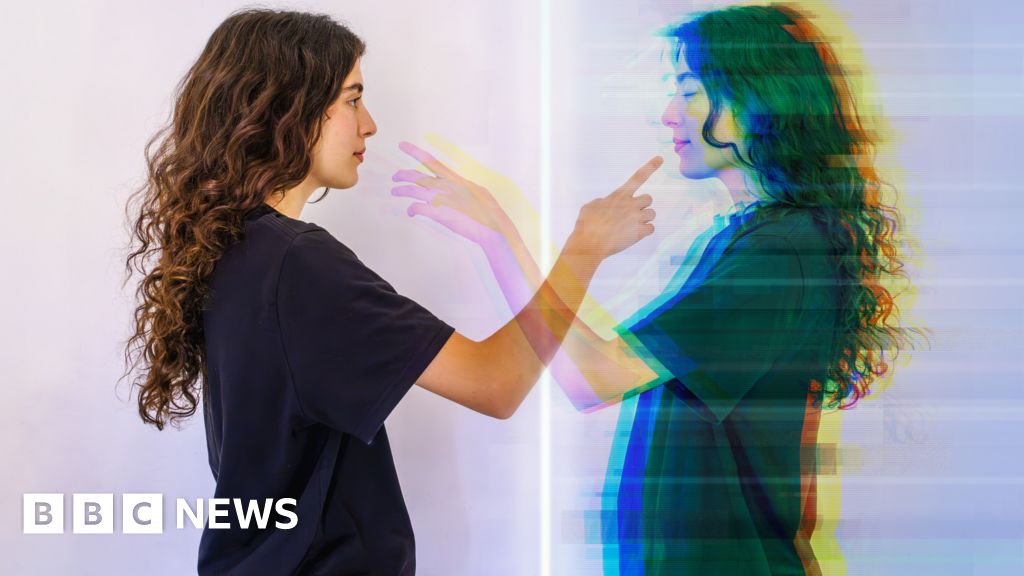
Firms say digital twins make staff more productive, but are they a potential legal minefield?
Source link
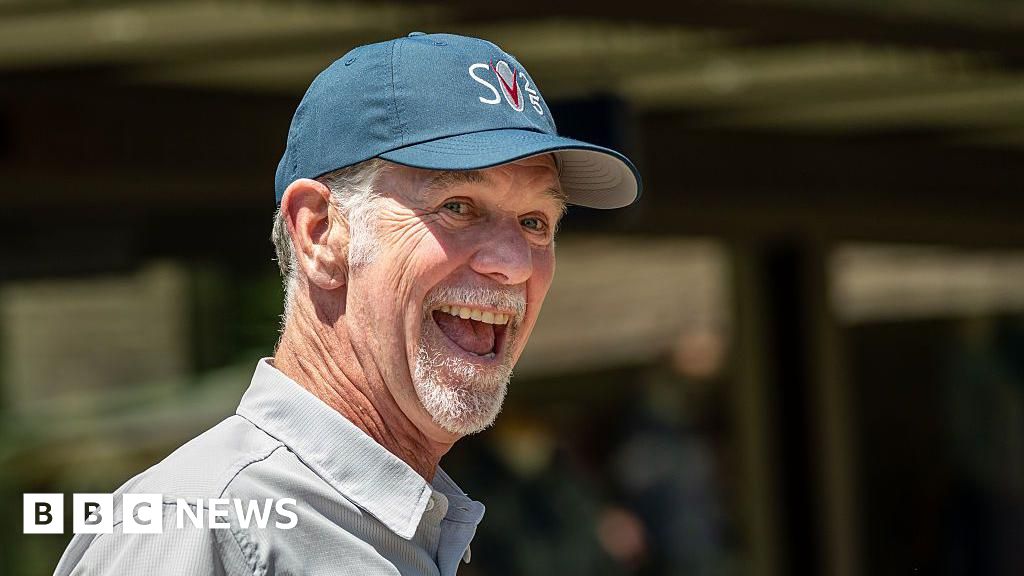
Hastings set up the company in 1997, when it rented DVDs to customers and delivered by post.
Source link
Business
Trump nominates Erica Schwartz as CDC director amid turmoil around leadership, vaccine policy

Rear Admiral Erica G. Schwartz.
U.S. Department of Health and Human Services
President Donald Trump on Thursday nominated Erica Schwartz to serve as director of the Centers for Disease Control and Prevention, concluding a monthslong effort to choose a permanent leader of the embattled health agency.
Schwartz, who will have to be confirmed by the Senate, would take over the role as Health and Human Services Secretary Robert F. Kennedy Jr. oversees a string of controversial health policy changes at the agency, including an overhaul of childhood vaccine recommendations.
Schwartz served as deputy surgeon general during the first Trump administration, where she played a major role in the U.S. response to the Covid-19 pandemic. She spent more than 20 year in uniform, including as rear admiral and chief medical officer of the Coast Guard.
Dr. Jay Bhattacharya had been acting director of the CDC — a title that expired last month under federal law. That law, called the Vacancies Act, limits the amount of time an acting officer can serve in place of a Senate-confirmed official to 210 days.
Late last month marked 210 days since the most recent CDC director, Dr. Susan Monarez, was fired.
A sign sits outside of the Centers for Disease Control and Prevention (CDC) Roybal campus in Atlanta, Georgia, U.S. March 18, 2026.
Megan Varner | Reuters
She has so far been the only person to serve as a confirmed CDC director during Trump’s second term, holding the role for under a month last summer. In congressional testimony in September, Monarez said she was fired after refusing Kennedy’s demands to approve vaccine recommendations she believed lacked scientific support.
It is unclear how Schwartz’s views on vaccines or other key public health policies compare with Kennedy’s.
Also on Thursday, Trump said he chose Sean Slovenski as deputy CDC director and chief operating officer, and Jennifer Shuford as deputy CDC director and chief medical officer. Shuford, as head of the Texas Department of State Health Services, led the state’s response to a massive measles outbreak last year, and credited vaccination and testing in declaring it over.
Schwartz’s nomination comes after a tumultuous several months for the agency, which is reeling from the leadership upheaval, plummeting morale, significant staff turnover and controversial changes to U.S. vaccine policy. Ahead of leadership departures last year, staff members were shaken by a gunman’s attack on the CDC’s Atlanta headquarters on Aug. 8.
Last month, a judge blocked a critical vaccine panel’s efforts to overhaul U.S. immunization policy. That includes an effort to reduce the number of recommended childhood shots from 17 to 11.
Trust in federal health agencies has plummeted during Kennedy’s tenure as Health and Human Services secretary, according to a February poll from health policy research group KFF, with declines across the political spectrum.


Mike Trout crushes fifth Yankee Stadium HR in four games

AI version of Val Kilmer to star in new movie after his death

2026 NCAA gymnastics championships: Live updates from semifinals

-

 Entertainment1 week ago
Queen Elizabeth II emotional message for Archie, Lilibet sparks speculation
-

 Tech1 week ago
Azure customers up in arms over ‘full’ UK South region | Computer Weekly
-

 Tech1 week ago
As the Strait of Hormuz Reopens, Global Shipping Will Take Months to Recover
-

 Fashion1 week ago
CII submits 20-pt agenda to Indian govt to back firms hit by Iran war
-

 Tech1 week ago
This AI Button Wearable From Ex-Apple Engineers Looks Like an iPod Shuffle
-

 Politics7 days ago
Indian airlines hit hardest after Dubai limits foreign flights until May 31
-

 Entertainment4 days ago
Palace left in shock as Prince William cancels grand ceremony
-

 Politics7 days ago
Chinese, Taiwanese will unite, Xi tells Taiwan opposition leader