Connect with us

Business

Don’t rule out EU customs union, TUC boss Nowak tells Starmer

Published

on

Don’t rule out EU customs union, TUC boss Nowak tells Starmer
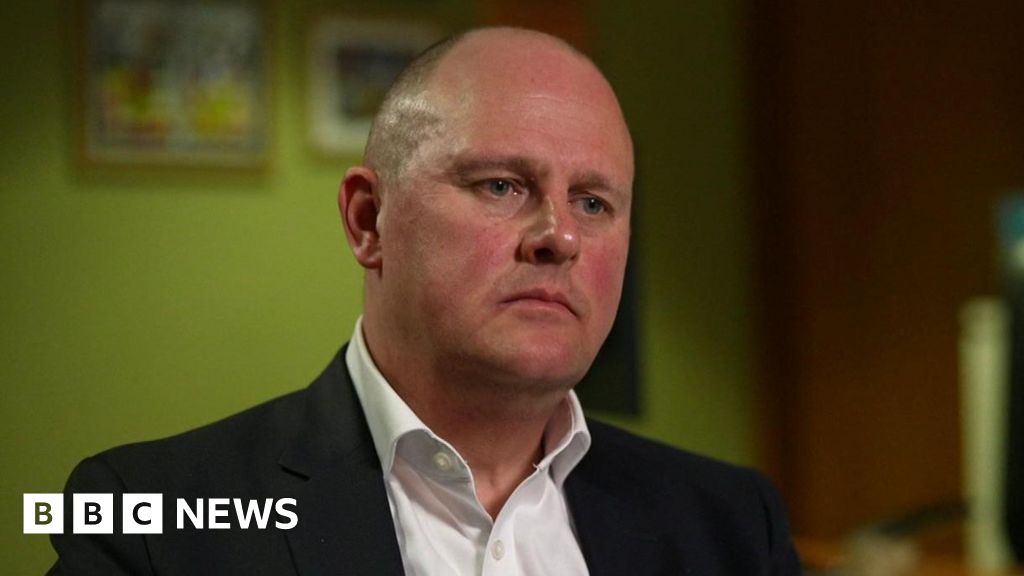

The leader of the Trades Union Congress has called for “the closest possible economic and political relationship with the European Union”.

The UK’s most senior trade unionist, Paul Nowak, told the BBC that he believed this would be “essential” to boost economic growth and warned that faith in mainstream politics could “drain away” unless living standards improved.

Nowak urged the PM not to rule out a customs union with the EU, which he argued would lower barriers to trade with the UK’s biggest market.

Sir Keir Starmer has said he wants to “reset” relations with Brussels but has ruled out rejoining the EU’s single market and customs union.

The prime minister fears that recent deals with the US and India would be scrapped if the UK rejoined.

Labour’s manifesto ruled out signing up to the existing EU custom union.

Recently, senior cabinet ministers such as Health Secretary Wes Streeting and Deputy Prime Minister David Lammy have danced along the edges of those red lines, bemoaning what they see as the economic damage of Brexit and extolling the virtues of closer relations.

Earlier this month, 13 Labour MPs backed a Liberal Democrat bill requiring the government to begin negotiations on joining a bespoke customs union with the EU.

The Conservatives and Reform UK oppose rejoining a customs union, and say it would undermine what they see as the benefits of Brexit.

A customs union would eliminate tariffs or taxes on goods between the UK and the EU, reducing bureaucracy.

But critics point out that it would also severely curtail the UK’s ability to strike bespoke global trade deals, as the EU would place a common tariff on all goods from outside the customs union area and would expect the UK to conform to common standards.

Nowak told the BBC in an interview: “2026 really needs to be the year when the government gets to grips with the cost of living crisis.”

He said that “one of the reasons we are seeing prices so high in our supermarkets is because of that bad Brexit deal”, adding: “Absolutely the government should rule nothing out. They should look at every option for our relationship with the European Union up to and including a customs union.

“I go round workplaces week in, week out – aerospace, automative, steel – and having a good deal with Europe is essential.”

Nowak, who became general secretary of the TUC in 2023, also said the government must act on a wide range of fronts to make people feel better off, or risk paying a political price.

He pointed to research from the Joseph Rowntree Foundation that suggested that voters who felt financially insecure were abandoning Labour at a greater rate than those who felt more secure.

The TUC itself commissioned polling suggesting one in five people were skipping some meals, and one in three expected their financial situation to worsen.

Nowak praised action the government had already announced to help some families, such as lifting the two-child benefit cap, but said the government should do more.

As TUC leader, Nowak represents 47 trade unions with a collective membership of more than five million people.

He has the ear of government and this is the message he is shouting into it: that there should be no backsliding on implementing the newly enacted Employment Rights Act.

The legislation will give workers access to sick pay and paternity leave from the first day on the job and contains new protections for pregnant women and new mothers.

But many of its measures will not be implemented immediately and, in November, Labour backed down from its plan to give all workers the right to claim unfair dismissal from their first day in a job. Instead, it will be after a six-month period.

The Conservatives say the act will place new burdens on businesses and destroy jobs.

Nowak also called for no cap to be placed on penalties big employers would face if they tried to prevent unions from organising in their workplaces, and insisted the new rights would boost living standards by “making work pay” and by making employment more secure.

A government spokesperson said it knew there was “more to do to help families with the cost of living”, pointing to Budget measures to cut energy bills, freeze rail fares and prescription fees, and raise the living wage, among others.

“With the passing of the Employment Rights Act, we will transform workers’ rights for the 21st Century with a clear commitment to implement this in full and on time,” they added.

Labour is trailing Reform UK in the polls, but Nowak said the solution was not to “get on the same pitch” on immigration.

“I don’t think you can out-Reform Reform,” he said.

“For too many people at the economic sharp end in low paid employment, they feel that change hasn’t come, or come quickly enough.

“But for lots of people it looks like there is a simple answer in Reform.

“My job isn’t to tell union members they have voted the wrong way. The responsibility is on the government to demonstrate that mainstream politics can deliver the change people want.”

But it would seem discontented voters are not just drifting to Reform. The left candidate Andrea Egan was elected this month as the leader of the country’s biggest union Unison, and she is calling for a change of direction from the government and a change of Labour leader.

Supporters of the incumbent, Christina McAnea, felt that her perceived closeness to the Labour leadership had harmed her chances.

Nowak said: “You only have to look at the opinion polls – the prime minister is struggling personally too.

“If the government can deliver on improving living standards, then I think the polls will look after themselves. A Labour government is always at its best when it is ambitious and on the front foot.”


Source link

Continue Reading
Click to comment

Leave a Reply

Your email address will not be published. Required fields are marked *

Business

Greenland ‘will stay Greenland’, former Trump adviser declares

Published

on

Greenland ‘will stay Greenland’, former Trump adviser declares


Faisal IslamEconomics editor

Getty Images Donald Trump's former chief economic advisor wearing a dark suit. Getty Images

Gary Cohn advised Trump on the economy in his first term

Oliver SmithBusiness producer, Davos

Donald Trump will not be able to force Greenland to change ownership, a former top adviser to the US president has told the BBC.

IBM’s vice chairman Gary Cohn, who advised Trump on the economy in his first term, said “Greenland will stay Greenland” and linked the need for access to critical minerals to his former boss’s plans for the territory.

Cohn is one of America’s top tech bosses, a leader in the race to develop AI and quantum computing, and served under Trump as director of the White House National Economic Council.

In a sign of how seriously business leaders are taking the crisis, he warned “invading an independent country that is part of Nato” would be “over the edge”.

He also suggested the president’s recent comments about Greenland “may be part of a negotiation”.

“I just came from a US congressional delegation meeting, and I think there’s pretty uniform consensus with both Republicans and Democrats that Greenland will stay Greenland”, he said.

Greenland would be happy for the US to increase its military presence on the island, he said, with the North Atlantic and Arctic Ocean “becoming much more of a military threat”.

The US could also negotiate an “offtake” agreement for Greenland’s vast yet largely untapped supplies of rare earth minerals, Cohn suggested.

“But I think, you know, invading a country that doesn’t want to be invaded – that’s part of a militaristic alliance, Nato – seems to me to be a little bit over the edge at this point”, he said.

Cohn indicated the president may be overstating his demands as part of a negotiating tactic – something he says the president has done successfully in the past.

“You’ve got to give Donald Trump some credit for the successes he’s had and he’s many times tried to overreach to get something in a compromise situation,” he said.

“He has overreached in advertising something to end up getting what he actually wants. Maybe what he actually wants is a larger military presence and an offtake.”

The start of this year’s World Economic Forum in the Swiss ski resort of Davos has been overshadowed by the president’s increasingly aggressive stance on the arctic territory, with many political and business leaders alarmed about the potential geopolitical and economic impact. Trump is due to address delegates at the gathering on Wednesday.

While Cohn expressed reservations about some of the president’s actions, he said the US administration had “various different motives” for what they were doing.

He said Trump’s decision to intervene in Venezuela was “a path” to disrupt the country’s relationship with China, the biggest market for its oil, as well as Russia and Cuba.

Cohn also thinks that the president has become increasingly focused on the importance of rare earth minerals, noting that “Greenland has quite a supply” of the resources.

Those minerals are critical to the development of Artificial Intelligence (AI) and quantum computing – also a major talking point in Davos.

US Treasury Secretary Scott Bessent on Monday hit back at claims Trump has blamed his escalating threats over Greenland on the fact he was not awarded the Nobel Peace Prize.

In a message to Norway’s Prime Minister Jonas Gahr Støre, Trump blamed the country for not giving him the prize and said he no longer feels obliged to think only of peace.

Bessent said: “I don’t know anything about the president’s letter to Norway, and I think it’s complete canard that the President will be doing this because of the Nobel Prize.

“The president is looking at Greenland as a strategic asset for the United States. We are not going to outsource our hemispheric security to anyone else.”

AI ‘to be part of every business’

Developments in quantum computing and AI are seen as critical not just for the US economy and productivity, but for US strategic influence in the world.

“IBM is dead centre in what’s going on in quantum today. We have the largest amount of quantum computers in use today” Cohn said, highlighting that his company has put many of these computers into use across America in firms from the banking industry to medicine.

“AI is going to be the backbone for data that feeds into quantum to solve problems we’ve never been able to solve”, he added.

“Where we’re heading is AI is going to be part of everyone’s enterprise. AI and quantum are going to be working in the enterprise behind the scenes to make every company more efficient. And we’re just at the beginning of that sort of long road, and that’s going to take probably another three to five years to get there.”

Earlier this month, Google, also a US company, told the BBC it had the world’s best-performing quantum computer. The race to develop the technology is the other key talking point – apart from Greenland – at the World Economic Forum.


Source link

Continue Reading

Business

Are ‘tech dense’ farms the future of farming?

Published

on

Are ‘tech dense’ farms the future of farming?


David SilverbergTechnology Reporter

Getty Images An aerial view of a farmer plowing a field in Colorado. Getty Images

The US has fewer but more “tech dense” farms according to a government report

Jake Leguee is a third-generation farmer in Saskatchewan, Canada.

Since his grandfather bought the 17,000 acres in 1956, the Leguee family has grown canola, wheat, flax and green lentils.

As a child, he watched his father and grandfather spending hours riding their tractor to sow seeds and spray crops. Sweat would coat their shirts after those long, hot days.

“It was a lot less efficient back then,” says Leguee. “Today, technology has vastly improved the job that we do.”

To keep his farm competitive, Leguee has made several innovations, particularly when it comes to crop spraying.

With software and remote cameras attached to his John Deere tractor, he can kill the weeds much more efficiently, a practice every farmer has to do before planting seeds.

“It can look down and spray a nozzle when the sensors pick a weed, while we’re going around 15 miles an hour,” Leguee says.

He adds that he saves on pesticide spray since the nozzles only turn on when weeds are detected, as opposed to the kind of blanket spraying he used to do.

The return-on-investment for adding these new layers to his farm operations are often high, Leguee adds.

“There are low-cost solutions that won’t be as expensive as new spraying tech, and they could be an app to help you better keep your records, for example,” he says.

Jake Leguee Smiling and wearing a stripey blue and grey shirt, Jake Leguee stands in front of large tractor.Jake Leguee

Jake Leguee’s farm in Saskatchewan has been in the family since the 1950s

It’s a lesson that farmers across North America are taking on board.

A 2024 McKinsey survey found that 57% of North American farmers are likely to try new yield-increasing technologies in the next two years.

Another report, from 2022, by the US Department of Agriculture said that while the number of farms in the country is shrinking, the farms that remain are becoming “tech dense”.

Norah Lake, the owner and farmer at Vermont’s Sweetland Farms, says to get a successful harvest, “there’s a lot of looking forward and then backwards and then forwards and then backwards in crop farming”.

She once used Microsoft Excel to plug in the figures for, say, their yields from a recent harvest, or a given year, and see how they compare to years prior.

“I’d want to know that if we planted 100 bed feet of broccoli, what did we actually produce?” she says.

More recently, Lake, who grows vegetables such as asparagus, tomatoes and zucchini, as well as pastured meat, has been using software and an app from a company called Tend.

She wanted to digitise and streamline those laborious tasks into a piece of tech that she can view on her cellphone or computer.

Now she can input those harvest numbers into Tend, and the software can give her details, and advice, on how to manage her crop best for the coming harvest.

“We can use Tend to calculate the quantity of seed that we need to order based on the row feet of a particular crop that we want to harvest,” she says.

Syngenta Group A tablet computer shows a map of a farm with someone pointing to a particular field.Syngenta Group

Cropwise uses 20 years of weather data to help help advise farmers

There’s no shortage of tech for farmers to choose from.

Sygenta, the argri-tech giant based in Switzerland, offers farmers the software Cropwise, which uses AI and satellite imagery to guide farmers on what to do next with their crops, or alerts them to emergencies.

“It can tell the farmer that you need to visit the southeast corner of your field because something is not right about that section, such as a pest outbreak,” says Feroz Sheikh, chief information office of Syngenta Group. “And the system also has 20 years of our weather pattern data fed into a machine learning model, so we know exactly what kind of conditions lead to what outcome.”

With that data, farmers can cover their crops before, say, an incoming snap frost that could kill a large portion of their acreage.

In Germany, Jean-Pascal Lutze founded NoMaze to give farmers a deeper understanding of how different crops will perform under climate conditions.

Its software is rolling out this year. “We did field tests in a variety of environments and then created simulations through our computer model to give clients better insight into, say, how much water to use, how to get the maximum yield,” he explains.

Getty Images Soybeans pour through a metal grating as they are unloaded.Getty Images

If the tech works then it could lead to lower food prices

The impact of these technologies might be felt by the consumer, says Heather Darby, an agronomist and soil specialist at the University of Vermont.

Bringing more food to market could translate to lower prices at the register, she says.

“When farmers get help to avoid crop failures, that could lead to a more controlled farm environment and a reliable and secure food system,” says Darby.

Back in Saskatchewan, Darby notes younger farmers are turning to technology while older tillers might resist major change.

He says that farmers need to be open to change.

“After all, when you think about it, some of these farms are multi-million-dollar businesses that are supporting multiple families. We need to embrace technology that works for us.”

“I heard someone say once: ‘If you treat farming as a business, it’s a great way of life, but if you treat your farming as a way of life, it’s a horrible business.'”


Source link

Continue Reading

Business

Water companies to face regular MOT-style checks in industry shake-up

Published

on

Water companies to face regular MOT-style checks in industry shake-up


Simon Jack,Business editorand

Jonah Fisher,Climate correspondent

Getty Images A young woman's hands cup water as it runs from a tap into a deep black sink.Getty Images

Inspections without notice, regular MOT-style checks and compulsory water efficiency labels on appliances are among the key measures in the government’s overhaul of the water industry.

The government is describing the measures as as the biggest overhaul of the water industry in England and Wales since privatisation.

Environment Secretary Emma Reynolds said there will be “nowhere to hide” for poor performing water companies.

The proposed changes come after widespread public anger at increasing numbers of pollution incidents, leaks and water outages that have affected thousands of customers across England and Wales in recent years.

Reynolds told the BBC: “We’ve had a system whereby water companies are marking their own homework.”

“This has been a whole system failure,” she said. “A failure of regulation, a failure of regulators, of the water companies themselves.”

The Water white paper promises to set up company-specific teams to monitor, supervise and support individual firms and their particular issues rather than rely on a “desk based, one size fits all” approach.

Smart meters and mandatory water efficiency labels on appliances including dishwashers and washing machines will also help households monitor their usage and costs, the government said.

It is also creating a chief engineer role at the regulator that will be set up to replace Ofwat.

Government officials have told the BBC that the establishment of a new regulator may take a year or more and water companies say it will take time for the benefits of new investments to be felt.

The government’s reforms come after a review by Sir John Cunliffe, who issued 88 recommendations to improve the industry.

However, he was asked not to consider whether to nationalise the sector, which was privatised in the late 1980s.

Campaigners said the proposed reforms did not go far enough.

River Action chief executive James Wallace said the measures showed the government “recognises the scale of the freshwater emergency, but lacks the urgency and bold reform to tackle it”.

The new regulator must be “truly independent” and properly funded, he warned, and said major gaps remain.

“None of these reforms will make a meaningful difference unless the failed privatised model is confronted head on. Pollution for profit is the root cause of this crisis,” Wallace said.

Surfers Against Sewage chief executive Giles Bristow said the government’s proposed changes were “frankly insulting” and fall short of much needed structural reform.

“The truth is glaringly obvious to everyone except this government. As long as the industry is structured to prioritise profit, the public will keep paying the price through soaring bills and polluted water,” he said.

Sir Dieter Helm, professor of economic policy at Oxford University, said the government had not wanted to explore that because its self-imposed spending rules have already been stretched to the limits.

“In addition to that, I think there’s a very sensible view around government that the government probably isn’t competent and capable to run these businesses,” he said.

“The government should think really quite carefully about this, because if they’re supervising the companies, and something goes wrong, Whose fault is it?”

Problems in the beleaguered sector have been thrown into focus recently after tens of thousands of South East Water customers were cut off for several days both before and after Christmas.

Mike Keil, chief executive of the Consumer Council for Water (CCW), said the “miserable disruption” underlined the importance of “meaningful change” in water regulation.

A new, powerful ombudsman service would also be welcome, Keil said, given CCW has had a 50% increase in customers asking for help with complaints relating to their water provider.

“One of our key asks of the Independent Water Commission was to make our existing voluntary ombudsman service mandatory, as this is vital to giving customers robust protection,” he said.

‘Proof in the river’

A man in a grey sweatshirt and khaki trousers kneels on a green riverbank next to a tree. He is using equipment from a yellow box to test the water.

Peter Devery testing the water of the River Pang

The River Pang in Berkshire is regarded by some as one of the inspirations for Kenneth Grahame’s Wind in the Willows classics. It’s environmental status has deteriorated from “good” in 2015 to “poor” now – with campaigners blaming regular sewage discharges.

On the banks of the Pang, Pete Devery from the Angling Trust told the BBC he was sceptical of the government’s plans.

“I won’t hold my breath” he said.

“The proof will be in the river. Do the rivers across the country improve? That’s the end result. Doesn’t matter what you call that regulator. It doesn’t matter how many regulators there are. If the difference isn’t made in the rivers, they will have failed.”

In 2024, water companies released raw sewage into England’s rivers and seas for a record 3.61 million hours, a slight increase on 2023.

Aging infrastructure, wetter winters and drier springs and farming runoff into rivers and lakes have all contributed to poor water service and quality.

Ofwat, is currently the water industry’s economic regulator for both England and Wales. In October 2025 the Welsh government said that when Ofwat is abolished it plans to form its own stand-alone economic regulator to replace it.

In 2025, water supply interruptions across England and Wales rose by 8% and pollution incidents by 27%, while customer satisfaction fell by 9%.

Average water bills rose by 26%, or £123 a year, from last April after years of below-inflation increases that some have blamed, along with high executive pay and shareholder dividends, on under-investment in the sector.

The sharp rise in bills is meant to address that under-investment by funding spending of £104 billion over the next five years – more than 40% of which is earmarked for new infrastructure.


Source link

Continue Reading

Trending