

Business
Don’t rule out EU customs union, TUC boss Nowak tells Starmer

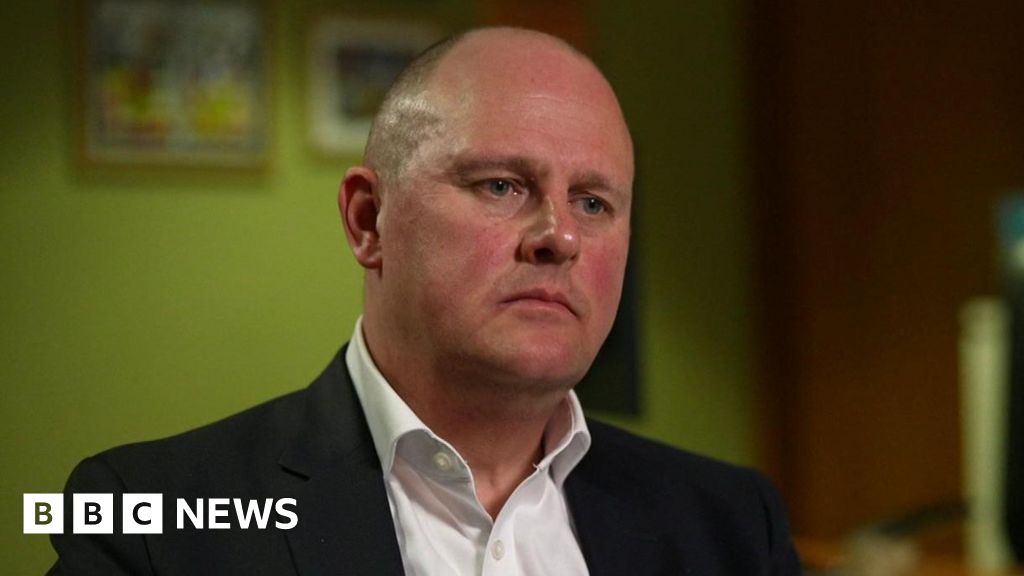
The leader of the Trades Union Congress has called for “the closest possible economic and political relationship with the European Union”.
The UK’s most senior trade unionist, Paul Nowak, told the BBC that he believed this would be “essential” to boost economic growth and warned that faith in mainstream politics could “drain away” unless living standards improved.
Nowak urged the PM not to rule out a customs union with the EU, which he argued would lower barriers to trade with the UK’s biggest market.
Sir Keir Starmer has said he wants to “reset” relations with Brussels but has ruled out rejoining the EU’s single market and customs union.
The prime minister fears that recent deals with the US and India would be scrapped if the UK rejoined.
Labour’s manifesto ruled out signing up to the existing EU custom union.
Recently, senior cabinet ministers such as Health Secretary Wes Streeting and Deputy Prime Minister David Lammy have danced along the edges of those red lines, bemoaning what they see as the economic damage of Brexit and extolling the virtues of closer relations.
Earlier this month, 13 Labour MPs backed a Liberal Democrat bill requiring the government to begin negotiations on joining a bespoke customs union with the EU.
The Conservatives and Reform UK oppose rejoining a customs union, and say it would undermine what they see as the benefits of Brexit.
A customs union would eliminate tariffs or taxes on goods between the UK and the EU, reducing bureaucracy.
But critics point out that it would also severely curtail the UK’s ability to strike bespoke global trade deals, as the EU would place a common tariff on all goods from outside the customs union area and would expect the UK to conform to common standards.
Nowak told the BBC in an interview: “2026 really needs to be the year when the government gets to grips with the cost of living crisis.”
He said that “one of the reasons we are seeing prices so high in our supermarkets is because of that bad Brexit deal”, adding: “Absolutely the government should rule nothing out. They should look at every option for our relationship with the European Union up to and including a customs union.
“I go round workplaces week in, week out – aerospace, automative, steel – and having a good deal with Europe is essential.”
Nowak, who became general secretary of the TUC in 2023, also said the government must act on a wide range of fronts to make people feel better off, or risk paying a political price.
He pointed to research from the Joseph Rowntree Foundation that suggested that voters who felt financially insecure were abandoning Labour at a greater rate than those who felt more secure.
The TUC itself commissioned polling suggesting one in five people were skipping some meals, and one in three expected their financial situation to worsen.
Nowak praised action the government had already announced to help some families, such as lifting the two-child benefit cap, but said the government should do more.
As TUC leader, Nowak represents 47 trade unions with a collective membership of more than five million people.
He has the ear of government and this is the message he is shouting into it: that there should be no backsliding on implementing the newly enacted Employment Rights Act.
The legislation will give workers access to sick pay and paternity leave from the first day on the job and contains new protections for pregnant women and new mothers.
But many of its measures will not be implemented immediately and, in November, Labour backed down from its plan to give all workers the right to claim unfair dismissal from their first day in a job. Instead, it will be after a six-month period.
The Conservatives say the act will place new burdens on businesses and destroy jobs.
Nowak also called for no cap to be placed on penalties big employers would face if they tried to prevent unions from organising in their workplaces, and insisted the new rights would boost living standards by “making work pay” and by making employment more secure.
A government spokesperson said it knew there was “more to do to help families with the cost of living”, pointing to Budget measures to cut energy bills, freeze rail fares and prescription fees, and raise the living wage, among others.
“With the passing of the Employment Rights Act, we will transform workers’ rights for the 21st Century with a clear commitment to implement this in full and on time,” they added.
Labour is trailing Reform UK in the polls, but Nowak said the solution was not to “get on the same pitch” on immigration.
“I don’t think you can out-Reform Reform,” he said.
“For too many people at the economic sharp end in low paid employment, they feel that change hasn’t come, or come quickly enough.
“But for lots of people it looks like there is a simple answer in Reform.
“My job isn’t to tell union members they have voted the wrong way. The responsibility is on the government to demonstrate that mainstream politics can deliver the change people want.”
But it would seem discontented voters are not just drifting to Reform. The left candidate Andrea Egan was elected this month as the leader of the country’s biggest union Unison, and she is calling for a change of direction from the government and a change of Labour leader.
Supporters of the incumbent, Christina McAnea, felt that her perceived closeness to the Labour leadership had harmed her chances.
Nowak said: “You only have to look at the opinion polls – the prime minister is struggling personally too.
“If the government can deliver on improving living standards, then I think the polls will look after themselves. A Labour government is always at its best when it is ambitious and on the front foot.”
The earlier plan, which would have seen the US government take effective ownership of as much as 90% of the airline, faced stiff opposition from Wall Street, Capitol Hill and even a member of Trump’s own cabinet. Transportation Secretary Sean Duffy told Reuters a rescue would amount to tossing “good money after bad”.

Spirit Airlines check-in Kiosks sit idle at Oakland International Airport on August 13, 2025 in Oakland, California.
Justin Sullivan | Getty Images
Spirit Airlines could shut down as early as 3 a.m. ET Saturday, according to people familiar with the matter. The carrier has failed to secure a financial lifeline to continue operating, though it hasn’t commented on the potential shutdown or its plans.
About 290 Spirit flights are scheduled for Saturday, according to aviation site Flightradar24. Another 381 are scheduled for Sunday.
Travelers with Spirit tickets could be understandably rattled. While there have been some U.S. airlines to shut down in recent years, the budget carrier is larger than most recent airline failures and links major cities like New York, Miami, Detroit and Los Angles — and many others in between — with its Airbus jets.
Here’s what travelers need to know:
You have a Spirit ticket. What should you do?
Immediately? Nothing.
Travelers who are booked on a Spirit flight, like this CNBC reporter is for later this month, are likely to receive a refund if they purchased tickets with a credit card.
If the ticket was bought with a debit card or with loyalty points, however, the chances of recovering funds are slim to none, said Henry Harteveldt, founder of Atmosphere Research Group, a travel consulting firm.
“If you’re holding a reservation for a flight on Spirit don’t proactively cancel it. Wait for the airline to announce it is shutting down,” he said.
Would Spirit be able to help you at the airport?
Don’t count on it.
Spirit has declined to comment on a potential shutdown. If it confirms an end to operations, the carrier will most likely have information on its website about travelers’ next steps.
Harteveldt said travelers shouldn’t go to the airport expecting to find Spirit staff in the event the airline ceases operations. Call centers are likely to be overwhelmed if they are still staffed.
That could leave passengers with fewer answers than they’d like, but other airlines are likely to help assist affected customers.
Airlines that offer last-minute fares, likely with some discounts, will be available to travelers at airport ticket counters.
How can another airline help?
United Airlines, JetBlue Airways, Frontier Airlines and American Airlines are among the carriers that have said they are ready to assist Spirit customers and crews if the carrier shuts down.
That could mean scheduling additional flights to carry the stranded passengers, similar to what they do during a hurricane or other natural disaster.
Why could Spirit shut down?
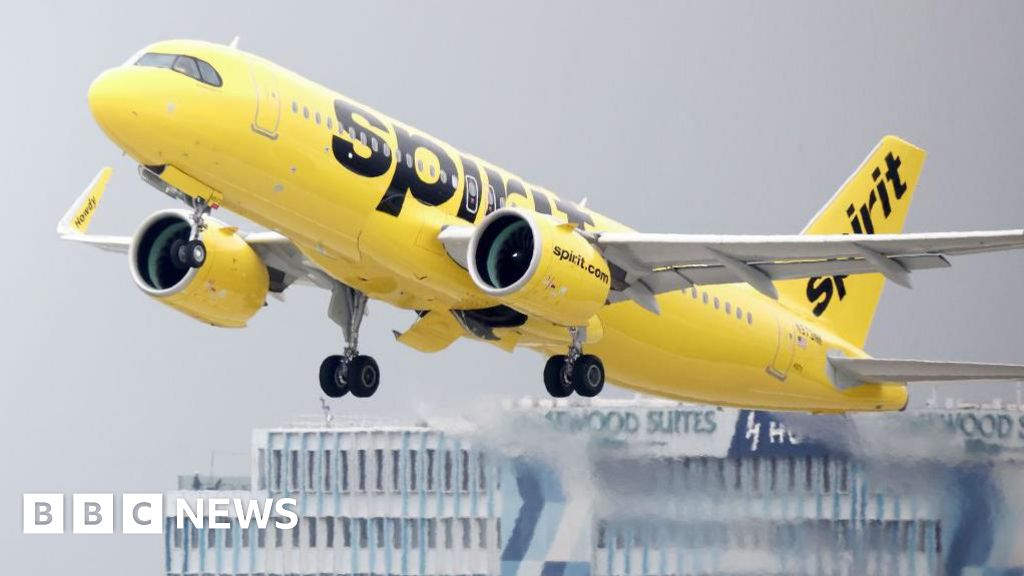
Spirit, known for bright yellow planes, low fares and fees for everything else, had been successful for years, but this week it’s been on the brink of liquidation after failing to reach a deal with bondholders for a $500 million government bailout from the Trump administration.
Last year Spirit filed for its second bankruptcy in less than a year, though it’s had a host of problems even before then.
A plan to be acquired by JetBlue was blocked. Rising costs upended its business model. An engine defect grounded dozens of its planes. And, more broadly, upscale travel became more popular with consumers, driving airline profits.
At the same time, big, legacy airlines were selling their own basic economy fares that were similar to what Spirit was offering, but with bigger networks.
What does this mean for travel going forward?
Airlines have been adding flights since Spirit’s bankruptcy filing last year on some of its routes and at major airports. They’re likely to keep doing so.
Experts have said they expect fares to rise, at least in some markets, if the discounter goes away, even though the carrier has shrunk substantially.
Business
Middle East crisis: Air India to make food optional, help cut price of tickets – The Times of India
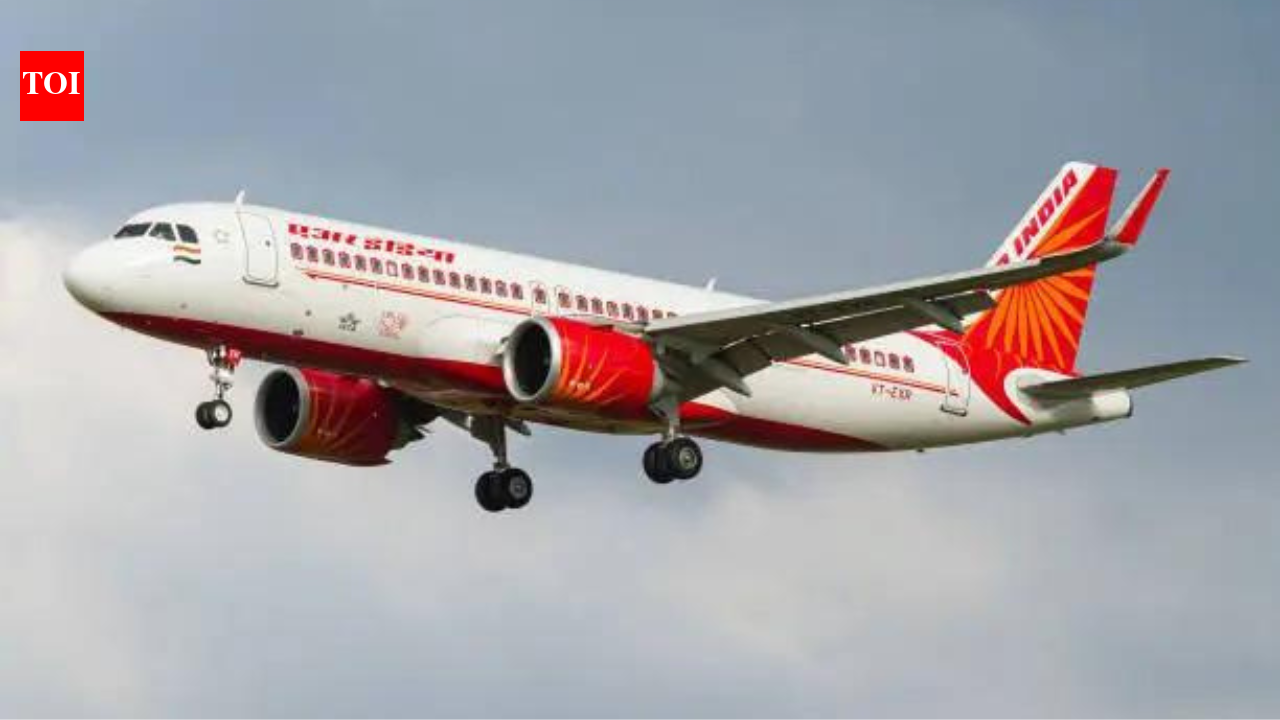
NEW DELHI: Desperate times call for desperate measures. Full service Air India is planning to make meals optional on its domestic and short international (under two hour) flights. Once this “unbundling” rolls out in the next month or two, passengers opting out of meals could have upwards of Rs 250 shaved off their ticket price. While this move, say people in the know, is “on the anvil,” the airline is looking at several other unprecedented measures to fly through the severe cost-revenue turbulence caused by the unending West Asia war.While not opting for meals could lead to slightly cheaper economy tickets, AI is looking at unbundling lounge access for business class passengers because those opting out of this, could get their tickets cheaper. On an average, lounge operators charge Rs 1,100-1,400 per user at metro airports and Rs 600-700 at non metros.The average spend is about Rs 1,000 per lounge. Many business class flyers are frequent travellers who just make it to airports in time for their flight and do not head to the lounge. If unbundled, this could be a saving in their ticket cost. Banks have been reducing lounge access for credit card users for the same reason to cut their costs.“From Day One, Air India has had meals bundled in its ticket price. Now the way aviation turbine fuel (ATF) price is rising and the rupee crashing since Feb 28, ticket prices are going up. India is a price-sensitive market and raising fares beyond a point leads to a fall in traffic with many opting to travel by train or road. This has led to the rethinking to unbundle meals on some flights. Other steps are also being considered,” said people in the know.Several airlines globally have over the past few years unbundled their onboard offerings. Many international full service airlines offer a basic meal in economy while giving the option of buying gourmet meals at an additional cost. Ditto for alcoholic beverages, with cheaper beer and wines being given at no extra cost while the others being charged for. “For passengers, the distinction between full service and low cost airlines is blurring very fast,” said an industry old-timer.


US awards $488m F-16 radar support contract for Pakistan, other countries

Germany urges stronger European defence after US reduces troops

ICE cotton witnesses sharp rise on weaker dollar, strong exports

-

 Tech5 days ago
A Brain Implant for Depression Is About to Be Tested in Humans
-

 Tech1 week ago
They Wanted to Join Raya. They’ve Been on the Waiting List for Years
-

 Tech5 days ago
Almost 90% of women leave tech industry within 10 years | Computer Weekly
-

 Entertainment1 week ago
Anne Hathaway makes shocking confession about Taylor Swift’s music
-

 Fashion1 week ago
North India cotton yarn steady despite continued push by spinners
-

 Tech1 week ago
Why Do I Like Dyson’s PencilVac So Much?
-

 Sports5 days ago
Toulouse fall to first home defeat for a year | The Express Tribune
-

 Sports1 week ago
Yankees owner Hal Steinbrenner considering factors before debuting new alternate uniforms: report