

Tech
E-cargo bikes can replace car trips and reshape family travel

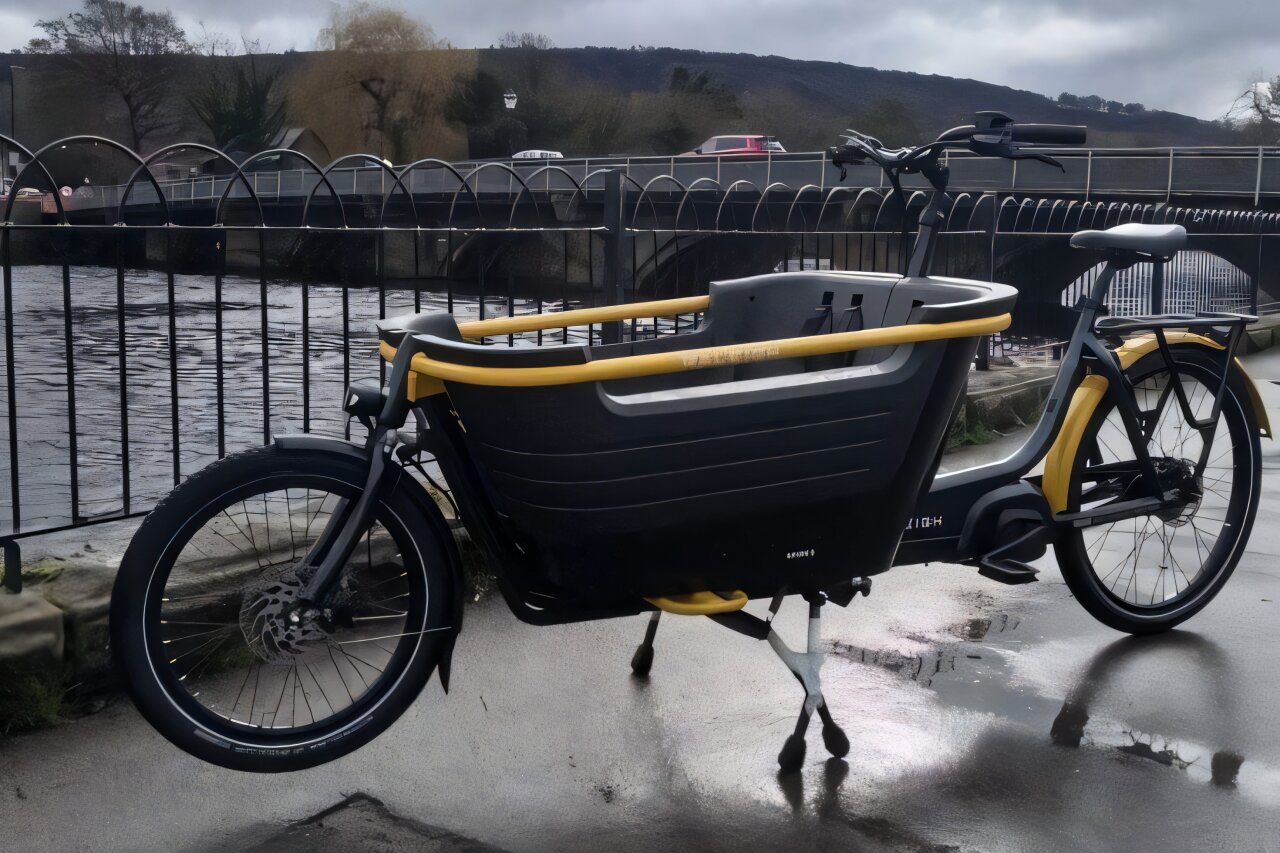
Electric cargo (e-cargo) bikes can replace many car journeys, from school runs to shopping trips and family outings, according to new research. They also have the potential to shift how families and communities perceive cycling, making it a more practical and inclusive everyday option.
The research shows that e-cargo bikes can do many of the jobs we rely on cars for, while also bringing the social benefits of cycling. The research is also helping to normalize cycling and change views in places where cycling doesn’t always have a positive image.
Researchers analyzed the experiences of 49 households who trialed e-cargo bikes as part of a loan scheme in British suburbs. The study included researchers from Eindhoven University of Technology, University of Brighton and University of Leeds University of Oxford.
New social norms
Published in the journal Geoforum, the study found that e-cargo bikes are not only practical alternatives to cars for some but also foster new social norms and cultural identities around family, community and sustainable travel.
They showed that e-cargo bikes offer a hybrid experience for users, allowing interaction between riders and passengers, somewhat vehicle-like, while still connecting users to their local surroundings.
Key findings of the study include the following:
- Everyday practicality: Study participants used e-cargo bikes for lots of reasons including school runs, food shopping and commuting, trips often seen as only possible by car. More than a technical trait, this everyday practicality encourages a cultural shift, normalizing cycling as utility activity beyond leisure or sport.
- Family mobility: Unlike conventional cycling by individuals, e-cargo bikes often involved carrying children or passengers, creating a sense of shared family travel. It enabled interactions between rider and passengers, not hugely dissimilar to traveling by car.
- Community connection: Riders reported feeling more connected to local communities compared to car use, describing e-cargo cycling as “part of the neighborhood.”
- Novel and unconventional: While most interactions were positive, some riders experienced feelings of being unconventional or out-of-place, linked to concerns over child safety.
More than a novelty
Clara Glachant of the Eindhoven University of Technology and lead author of the study, said, “This trial shows e-cargo bikes are more than a novelty. They can fit into everyday family life. Our findings suggest that e-cargo cycling may help cultivate a cycling culture both at the household level and the community level. They may reshape ideas of who belongs on the road, who is entitled to space. This could help to reduce anti-cyclist sentiment which would help active travel contribute more to sustainable transport.
“It’s also about culture: people’s habits, identities and perceptions of transport. Our research shows e-cargo bikes can help reshape these, challenging what psychologist Ian Walker has coined ‘motonormativity,’ a concept that describes society’s unconscious acceptance of car dominance and making cycling feel like a more normal, mainstream choice.”
The ELEVATE project
Professor Ian Philips of the University of Leeds, who leads the ELEctric Vehicles for Active and Digital TravEl (ELEVATE) project, said, “The ELEVATE project is about understanding who might benefit from using e-cargo bikes and other e-micromobility in what circumstances and to understand if that has a positive effect on carbon emissions, health and other important aspects of people’s lives.
“Clara’s work on the project helps us see more about how e-cargo bikes fit into daily life in terms of culture, perceptions and identities around active travel.”
Combining innovative technology
Professor Charlotte Deane, Executive Chair of Engineering and Physical Sciences Research Council (EPSRC), said, “This research shows that transforming transport sustainably means combining innovative technology with an understanding of people’s everyday choices and behaviors.
“New designs in e-cargo bikes are making them more practical and accessible, helping families replace short car trips. They can cut congestion and emissions while opening up cycling to more women and children. Through projects like ELEVATE, EPSRC is supporting innovations that have the potential to change how we travel and create healthier, more connected communities.”
Individual perceptions
The research highlights that shifting towards low-carbon transport isn’t just about infrastructure or technology but also about how people perceive themselves and cultural perceptions associated with transport modes.
The National Travel Survey data published in 2024, shows while 81% of journeys under one mile in length in 2023 were made by foot, 17% were made by car or van.
For journeys between one and five miles, 69% were made by car or van, compared to 19% by foot and 6% by bus. Between five and 10 miles, 83% of journeys were made by car or van.
More connected communities
Encouraging e-cargo bike use could help reduce urban congestion, lower emissions and create healthier, more connected communities.
The researchers add that as cycle commuting in the UK is male-dominated, e-cargo bikes may help include more women and children in utility cycling.
More information:
Clara Glachant et al, Between or Beyond Bicycles and Cars? Navigating E-Cargo Bike Citizenship in the Transition to Sustainable Urban Mobility, Geoforum (2025). DOI: 10.1016/j.geoforum.2025.104416
Citation:
E-cargo bikes can replace car trips and reshape family travel (2025, October 10)
retrieved 10 October 2025
from https://techxplore.com/news/2025-10-cargo-bikes-car-reshape-family.html
This document is subject to copyright. Apart from any fair dealing for the purpose of private study or research, no
part may be reproduced without the written permission. The content is provided for information purposes only.











Though most people associate the beginning of March with the hopefulness of spring and the indignities of daylight saving time, there’s another important event taking place yards all over the country: hummingbird season.
While many species of hummingbirds can be seen in regions year-round, others are migratory, and this time typically marks their return from wintering grounds in Central and South America. These tiny birds can lose up to 40 percent of their body weight by the time they arrive here after having flown thousands of miles, and since many flowers haven’t bloomed yet, nectar feeders can be a source of essential fuel.
Though I test smart bird feeders year-round, I don’t use hummingbird feeders as often as I should, as it’s imperative that they be cleaned and refilled with new nectar every two or three days (a ratio of 1:4 granulated sugar to water is best, and avoid any dyes or additives) to prevent deadly bacteria and mold, and I don’t always have the time.
But if you are going to invest the energy in maintaining a hummingbird feeder, right now is the best time, as you have a chance to see migratory species you might not otherwise encounter, such as black-chinned hummingbirds. A smart feeder helps you ID them, whether they’re stopping at your feeder on their way north or arriving at their final destination.
Birdbuddy’s Pro is the smart hummingbird feeder I recommend and use myself when I’m not actively testing. The app is easy to navigate and sends cleaning reminders, the built-in solar roof keeps the battery charged, and, unlike other feeders, only the shallow bottom screws off for refilling. No having to pour sticky nectar through a narrow opening, or turn a giant cylinder upside down and risk spilling.
Note that it’s not perfect; the sensor is inconsistent and doesn’t capture every hummingbird that visits, but for the camera quality (5 MP photos, 2K video with slow-motion, 122-degree field of view) and ease of use, it’s a foible I’m willing to put up with. If you already have another Birdbuddy feeder, the hummingbird feeder images and videos will integrate seamlessly into your app feed.

Birdbuddy
Pro Smart Solar Hummingbird Feeder
Right now, the feeder is 37 percent off on Birdbuddy’s website—a deal I usually don’t see outside of shopping events like Black Friday or Amazon Prime Day. Note that the feeder only runs on 2.4 GHz Wi-Fi, and while it is fully functional without a subscription, a Birdbuddy Premium subscription will let you add friends and family members to your account so they can see the birds as well. That’s $99 a year through the app.
Power up with unlimited access to WIRED. Get best-in-class reporting and exclusive subscriber content that’s too important to ignore. Subscribe Today.

After a tenure marked by controversy and a contentious week of Congressional hearings, secretary Kristi Noem is out as head of the Department of Homeland Security.
President Donald Trump announced in a Truth Social post on Thursday that Noem would be replaced by senator Markwayne Mullin of Oklahoma, a staunch Trump ally and immigration hardliner. “The current Secretary, Kristi Noem, who has served us well, and has had numerous and spectacular results (especially on the Border!), will be moving to be Special Envoy for The Shield of the Americas, our new Security Initiative in the Western Hemisphere we are announcing on Saturday in Doral, Florida,” Trump wrote. “I thank Kristi for her service at ‘Homeland.’”
DHS did not immediately respond to a request for comment.
The agencies under DHS include Immigration and Customs Enforcement, US Customs and Border Protection, the Cybersecurity and Infrastructure Security Agency, the Federal Emergency Management Agency, US Citizenship and Immigration Services, the US Coast Guard, and others. It’s a sprawling network whose vast responsibilities and rapidly expanding budget have put it at the center of the Trump administration’s radical overhaul of immigration and border policy.
Speculation has swirled around Noem’s departure for months. Critics have assailed DHS’s aggressive immigration enforcement tactics, while Noem and figures like White House border czar Tom Homan have reportedly been at odds over how to execute the administration’s mass deportation agenda, with Noem and senior adviser Corey Lewandowski said to have emphasized sheer numbers of arrests and deportations above other considerations.
The relationship between Noem and Lewandowski has itself been a subject of controversy, with CNN reporting that a September meeting between the two and president Donald Trump grew “contentious.” Last month, the Wall Street Journal reported that Lewandowski attempted to fire a pilot during a flight for failing to bring Noem’s blanket from one plane to another during a transfer.
The ousted secretary faced mounting scrutiny over the deaths of US citizens during federal operations in Minneapolis, including the killings of Renee Good and Alex Pretti by federal agents under Noem’s employ. In both cases, Noem publicly labeled the deceased “domestic terrorists,” framing echoed by Trump and other key administration officials. Video evidence, witness testimony, and an independent autopsy contradicted the agency’s claims, including early assertions that Pretti brandished a firearm.
Scrutiny of Noem’s tenure extends beyond the fatal shootings in Minneapolis to a broader pattern of aggressive enforcement tactics, warrantless raids, and mass detention camps. A secretive policy directive issued in May 2025, first reported by the Associated Press, authorized ICE agents to forcibly enter private residences without a judicial warrant. The memo, signed by acting ICE director Todd Lyons, instructed agents to rely solely on an administrative removal document to bypass Fourth Amendment requirements. The policy led to multiple documented instances of federal agents entering the wrong homes, including a January raid in Minnesota where agents removed a US citizen at gunpoint with no legitimate reason.
A record 53 people died in ICE or CBP custody last year, according to House Democrats on the Committee on Homeland Security. Concurrently, Noem has initiated a $38 billion procurement effort to buy and refurbish up to 24 warehouses across the country, aimed at converting them into mass detention camps for people awaiting deportation.
Noem’s tenure has led to controversy at other DHS agencies as well. Her insistence on approving any contracts or grants over $100,000 at the department have caused particular strain at FEMA, which has experienced a massive backlog of funding that has slowed normal processes at the agency. A report issued from Senate Democrats Wednesday found that Noem’s vetting process at FEMA has caused more than 1,000 contracts, grants, and awards to be held up. Multiple FEMA employees have told WIRED that this process has made the agency less ready to respond to disasters and threats.
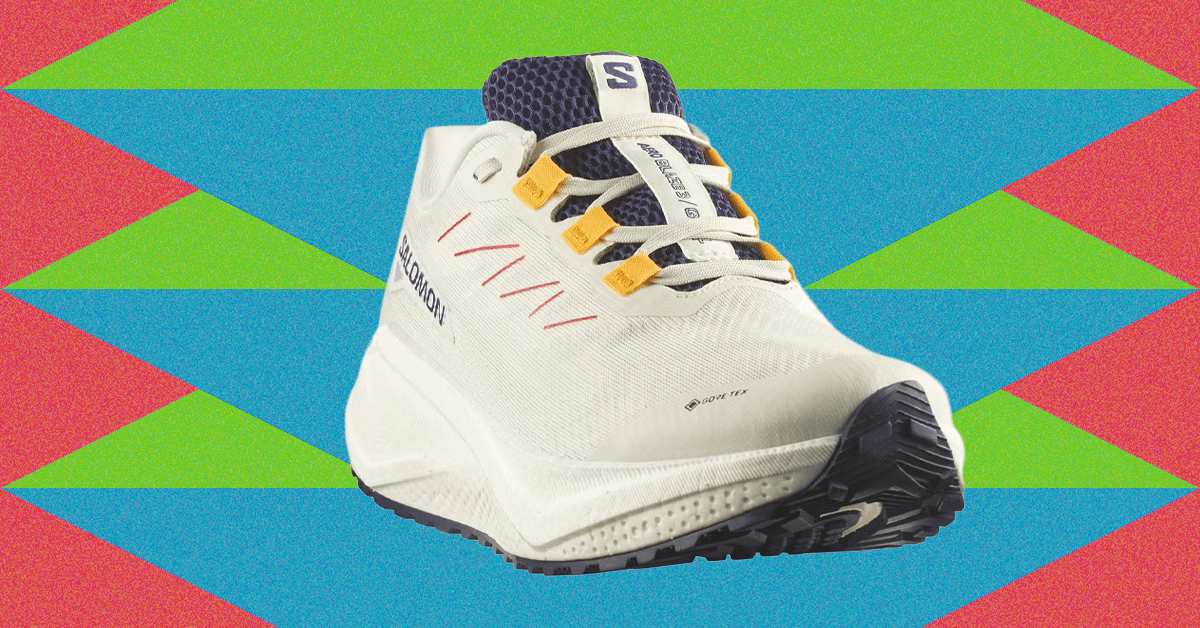
HOKA’s max-stacked Rocket X Trail combines road race shoe energy with boosted grip from a 3-mm lugged outsole. If you’re looking for a fast shoe to go on the attack, this is it. It’s also fantastic for all round comfort. In testing, I laced up the Rocket X Trail and ran 3 hours (just short of 19 miles) fresh out of the box, across roads, forest gravel trails, some grass and through some serious water. It delivered efficiency and energy whether I was moving at marathon pace or with heavier, tired, ragged footfalls in the latter miles.
The rockered, supercritical midsole uses HOKA’s liveliest foam, similar to those you find in its race-ready road shoes, along with a carbon plate. That combines for a really fun ride that’s smooth, springy and fast and really consistent. It’s also highly cushioned, so you will sacrifice a lot of ground feel for that big stack springy softness. It’s also less stable over very lumpy terrain. But on open, flat, runnable mixed terrain, it’s excellent.
The lightweight uppers have a race-shoe-ready feel and after running through ankle-deep flooded sections, they shed water really quickly. This is a pricey road-to-trail shoe, it’s versatile and there’s plenty of winter road potential, too.
| Specs | |
|---|---|
| Weight | 9.45 oz |
| Heel-to-toe drop | 6 mm |
| Lug depth | 3 mm |


Don’t Risk Birdwatching FOMO—Put Out Your Hummingbird Feeders Now

Savannah Guthrie visits “Today” studio, says she intends to return to show

Princess Anne marks milestone moment at UCL with historic Cloisters reopening

Attock Cement’s acquisition approved | The Express Tribune

What are Iran’s ballistic missile capabilities?

India Us Trade Deal: Fresh look at India-US trade deal? May be ‘rebalanced’ if circumstances change, says Piyush Goyal – The Times of India

-
 Politics1 week ago
What are Iran’s ballistic missile capabilities?
-
Business7 days ago
India Us Trade Deal: Fresh look at India-US trade deal? May be ‘rebalanced’ if circumstances change, says Piyush Goyal – The Times of India
-
Business1 week ago
Attock Cement’s acquisition approved | The Express Tribune
-

 Politics1 week ago
US arrests ex-Air Force pilot for ‘training’ Chinese military
-
 Business1 week ago
Households set for lower energy bills amid price cap shake-up
-

 Fashion1 week ago
Policy easing drives Argentina’s garment import surge in 2025
-

 Sports6 days ago
LPGA legend shares her feelings about US women’s Olympic wins: ‘Gets me really emotional’
-

 Fashion7 days ago
Texwin Spinning showcasing premium cotton yarn range at VIATT 2026