

Business
Ed Miliband hints at cut to VAT on energy bills

Becky MortonPolitical reporter
 BBC
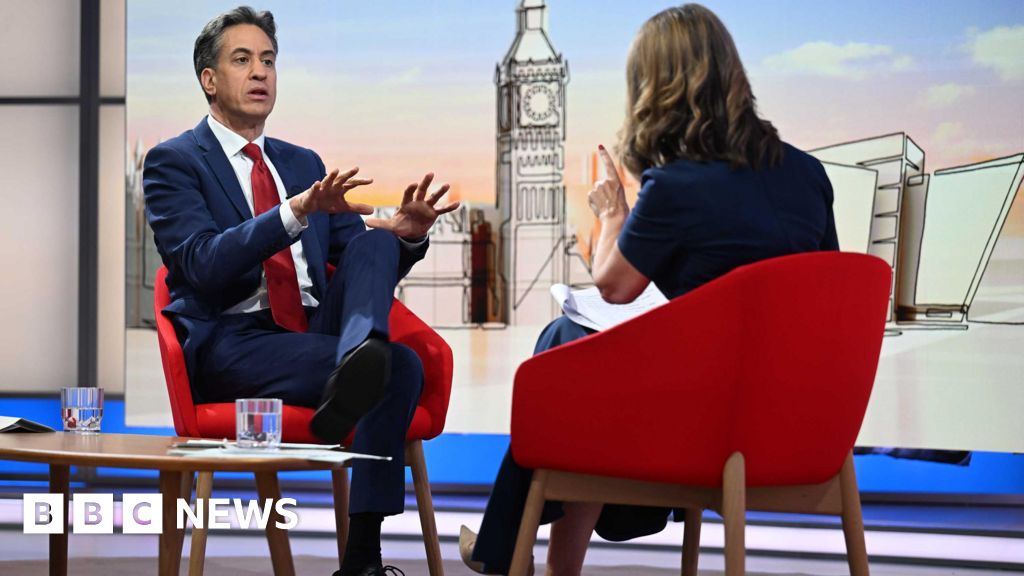
BBCThe government is looking at the possibility of cutting the rate of VAT on energy bills, Ed Miliband has suggested.
The energy secretary said he would not speculate ahead of the chancellor’s Budget in November.
But asked if the government would consider scrapping the 5% rate, he told the BBC the country was facing a “cost-of-living crisis that we need to address as a government” and “we’re looking at all of these issues”.
The government is under pressure to reduce household energy costs and before the election Labour pledged to lower average bills by £300 a year by 2030.
Miliband told the BBC’s Sunday with Laura Kuenssberg programme he stood by that promise but the reason bills were so high was “because of our dependence on fossil fuels”.
He added: “There is only one route to get bills down, which is to go for clean power, home-grown, clean energy, that we control, so we’re not at the behest of the petrol states and the dictators.”
Pressed over whether the government was considering scrapping the 5% VAT rate on energy bills in November’s Budget, Miliband said: “The whole of the government, including the chancellor, understand that we face an affordability crisis in this country.
“We face a cost-of-living crisis, a longstanding cost-of-living crisis, that we need to address as a government. We also face difficult fiscal circumstances… so obviously we’re looking at all of these issues.”
A Treasury spokesperson said: “We do not comment on speculation.”
Scrapping VAT on domestic energy bills would save the average household £86 per year and cost an estimated £2.5bn per year to implement, according to the charity Nesta.
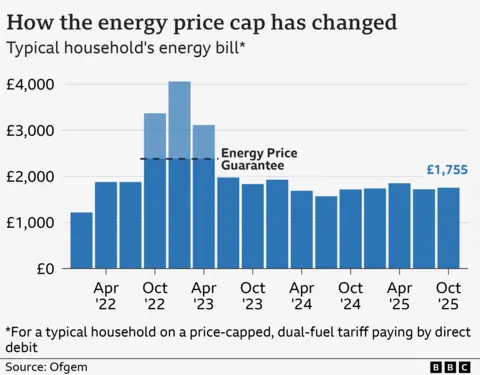
There was a rapid spike in energy prices in 2021, following Russia’s invasion of Ukraine, and although costs have gone down, they have remained high by historical standards.
This month bills went up by 2% for millions of households, under the energy regulator Ofgem’s price cap.
It means a household using a typical amount of energy will pay £1,755 a year, up £35 a year on the previous cap.

Earlier this week Chancellor Rachel Reeves told the BBC she was planning “targeted action to deal with cost-of-living challenges” in her Budget next month.
The BBC understands this could also include reducing some of the regulatory levies currently added to energy bills.
Levies known as “policy costs” – which are used to fund environmental and social schemes such as subsidies for renewables – made up around 16% of the average electricity bill and 6% of the average gas bill last year.
Some energy bosses have argued green levies are partly to blame for rising bills and the government’s independent adviser, the Climate Change Committee, has long recommended removing policy costs from electricity bills to help people feel the benefits of net-zero transition.
Asked whether these could be funded through taxes rather than coming off energy bills, Miliband said: “That’s always a judgement for the chancellor, but let’s be honest we know we’ve got really difficult fiscal circumstances that we inherited… but absolutely we look at those things.”
He argued the government had to invest in “aging electricity infrastructure” but there needed to be a “balance between public expenditure and levies”.
The cost of household energy bills has become a major political battleground, with the Conservatives and Reform UK blaming net-zero policies for higher prices.
The Conservatives have said they would scrap the Climate Change Act, which legally requires the UK government to reduce emissions to net zero by 2050, as well as ditch carbon taxes on electricity generation and cut a funding scheme for renewables.
Shadow energy secretary Claire Coutinho said her party’s plans would cut electricity bills for everyone by 20%.
“[The public] care about climate change but what I don’t think they are signing up for is much higher bills and jobs being lost to countries abroad,” she told the BBC.
In an interview with the same programme, Green Party leader Zack Polanski argued nationalising energy companies would help cut costs for customers.
His party has also proposed a new tax on carbon emissions to drive fossil fuels out of the economy and raise money to invest in the green transition.
Challenged over whether businesses would simply pass on these costs to customers, Polanski rejected this and said the tax would be “vital for tackling the climate crisis”.
“What we need to be doing is finding other ways to support particularly small and local businesses… We know the big corporations are destroying our environment, our democracy and our communities,” he said.
“They can make a profit, sure, but this isn’t about squeezing out every single profit they can make.”

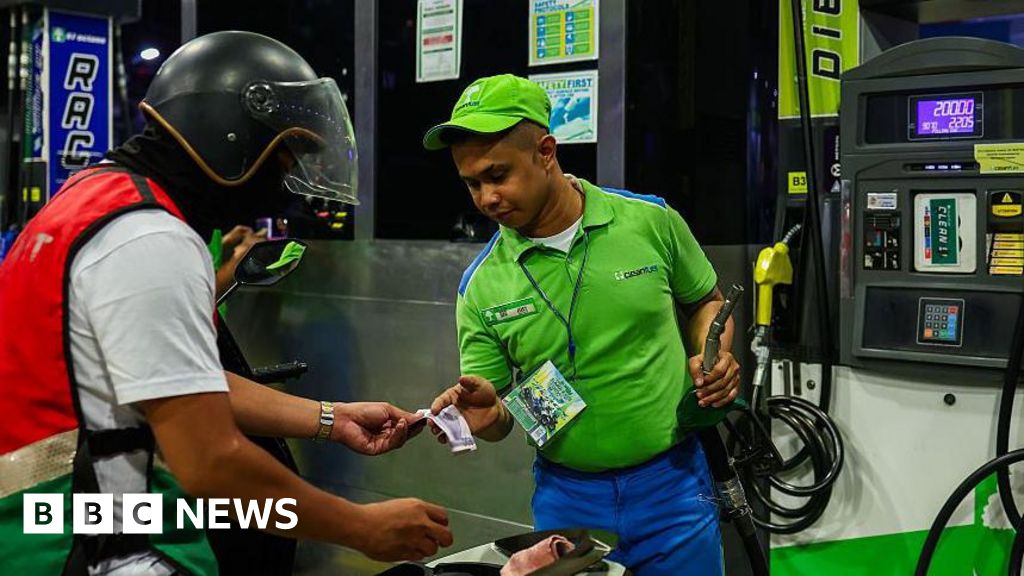
Crude rose back above $100 a barrel as the US and Iran clashed over bringing the conflict to an end.
Source link

President Donald Trump said he’s considering sending the National Guard to U.S. airports, two days after the administration deployed Immigration and Customs Enforcement agents to several major U.S. airports following hourslong waits for travelers because of the partial government shutdown.
In a Truth Social post Wednesday, Trump blamed Democrats for the shutdown, which began Feb. 14.
“Thank you to our great ICE Patriots for helping. It makes a big difference,” he wrote in his post. “I may call up the National Guard for more help.”
Travelers wait in line at a Transportation Security Administration (TSA) checkpoint at Hartsfield-Jackson Atlanta International Airport (ATL) in Atlanta, Georgia, US, on Monday, March 23, 2026.
Elijah Nouvelage | Bloomberg | Getty Images
More than 11% of TSA officers called out on Wednesday and over 450 have quit since the shutdown started, the Department of Homeland Security said.
Elevated absences of Transportation Security Administration officers, who are required to work though they’re not getting paid during the shutdown, have contributed to long lines at major U.S. airports, including in Atlanta, Houston and New York.
The DHS, which oversees both ICE and and the TSA, said the ICE agents will “support airports facing the greatest strain” but the department didn’t respond to requests for comment on what the ICE agents’ duties are. ICE agents are getting paid in the shutdown.
Airlines have been warning customers about potentially long security lines, while executives grow increasingly frustrated with lawmakers about the impasse. On Tuesday, Delta Air Lines said it suspended its airport escorts and other special services for members of Congress and their staff because of the ongoing partial shutdown of the DHS.
The shutdown comes as Democrats in Congress have demanded changes to how federal immigration enforcement operates in exchange for releasing DHS funding after two U.S. citizens were shot and killed by ICE officers in Minneapolis.

Low-income families are being offered help with the cost of food during the Easter holidays.
Source link

Oil prices volatile as Trump talks up Iran negotiations

What small businesses need to know

My Favorite Air Fryer Is at Its Lowest Price Since Black Friday

-

 Fashion1 week ago
Sales at US apparel, clothing accessories stores up 4% YoY in Jan 2026
-
 Tech1 week ago
Justice Department Says Anthropic Can’t Be Trusted With Warfighting Systems
-
 Business1 week ago
Stocks and pound rise as US rate call approaches
-

 Sports1 week ago
March Madness 2026 – How to watch in SA, start time, schedule, TV channel for NCAA championship basketball tournament
-

 Entertainment1 week ago
Val Kilmer revived 1 year after death through AI
-
 Business1 week ago
Brits cashing in jewellery as gold price hits record high
-

 Fashion1 week ago
Spain’s Inditex FY25 sales rise 3.2% to $46.28 bn amid strong demand
-

 Entertainment1 week ago
With few new leads 45 days after Nancy Guthrie’s disappearance, investigation “becomes much harder,” expert says