

Business
EES: Portugal and Italy will not suspend digital border checks for Brits, says European Commission

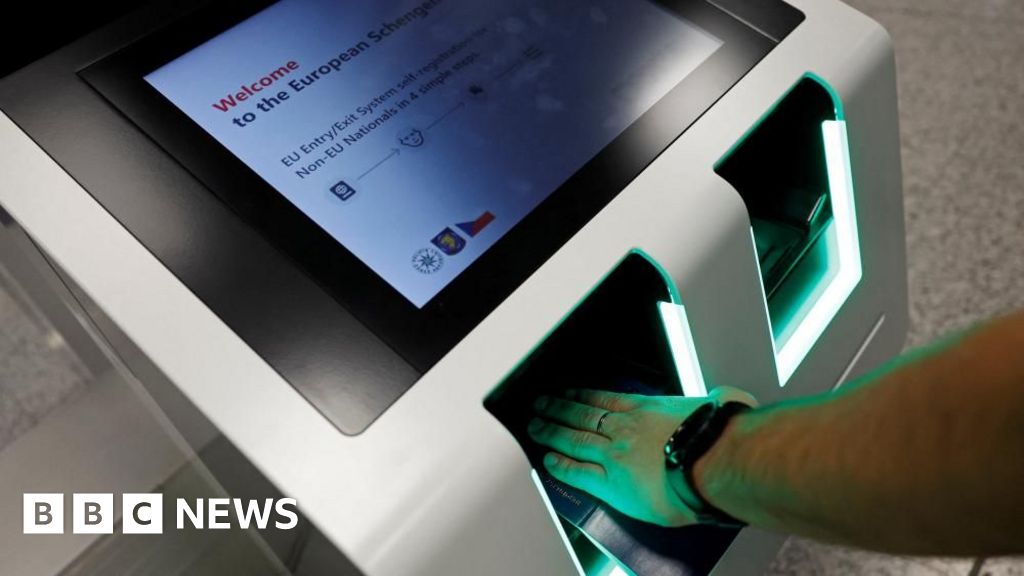
Reports had suggested the countries were set to follow the example of Greece, which effectively suspended biometric checks for UK nationals.
Source link

Peloton posted fiscal third-quarter results Thursday that beat Wall Street expectations on revenue and revealed a narrow profit for the first three months of the year.
The company touted better-than-expected equipment sales and subscription revenue as helping to drive its sales and profitability, with free cash flow up nearly 60%.
Shares of Peloton closed the day roughly 8% higher after being as high as 13% following the report.
“The first order of business in earnings is reporting how you did financially, and we feel like that was a pretty good quarter in terms of where we are strategically,” CEO Peter Stern told CNBC.
Here’s how the company performed in its quarter ended March 31, compared with what Wall Street was expecting, based on a survey of analysts by LSEG:
- Earnings per share: 6 cents vs. 7 cents expected
- Revenue: $630.9 million vs. $617.6 million expected
The company’s net income for the quarter was $26.4 million, or 6 cents per share, up from a loss of $47.7 million, or 12 cents per share, in the year-ago period. Sales came in at $630.9 million, up roughly 1% from $624 million a year earlier.
For the full fiscal year, Peloton said it projects total revenue of between $2.42 billion and $2.44 billion, lifting the lower end of the guidance range it provided last quarter.
The company saw revenue for its connected fitness subscriptions come in at $202.9 million, down from $205.5 million a year prior, but beating estimates of $196 million, according to StreetAccount. Subscription revenue also topped estimates and grew 2% year over year, reaching $428 million.
Paid connected fitness subscriber count, however, fell year over year to 2.66 million.
“Some of the vectors that are at play this quarter, and will be in the future, are selling additional equipment to our existing members,” Stern said on a call with analysts. “That doesn’t generate more subscriptions, but it does generate revenue.”
The connected fitness company has been struggling with weak performance and sluggish sales, previously projecting that performance to extend into this quarter. It’s tried to revamp its product assortment and recently raised prices on both its equipment and subscription plans.
Stern said Peloton feels its pricing changes were appropriate.
“We’re really sensitive to the fact that people feel stress in this economic environment, and it’s impacting different people in really different ways,” Stern told CNBC. “That being said, we feel like the price changes that we made in Q2 – it was time. We had added a tremendous amount of value over the succeeding three or four years since we previously made any change in our subscription prices.”
Peloton has also been inking new partnerships and trying new strategies to win back customers. Last month, Peloton announced a deal with Spotify, making more than 1,400 Peloton classes available to Spotify Premium subscribers. It also launched its first Bike and Tread products for high-traffic gym floors in March.
Stern added that the company had already factored the Spotify deal into its revenue guidance because it had been in the works for “a long time.” Peloton also does not count Spotify users toward its subscribers.
“We’re really excited about our deal with Spotify, that allows us to reach Peloton members in a lot more countries and is also a high-margin revenue [stream] for us,” Stern said.
On a call with analysts on Thursday, Stern said Peloton now expects tariffs to represent roughly $30 million of free cash flow exposure for the full year, down from a previous expectation of $45 million.
“I was very pleased that we were able to deliver a Q3 with positive revenue growth, and while we won’t see that likely sustain in Q4 based on our implied guidance for the quarter, I think we’re now in a stage where hopefully we’ll see some steps forward and some steps back as we right the ship,” Stern said.
Business
Trai proposes stricter complaint rules for telcos; penalties may go up to Rs 50 lakh per quarter – The Times of India

Telecom regulator Trai on Thursday proposed a stronger consumer grievance redressal framework for telecom operators, including penalties of up to Rs 50 lakh per quarter for improper handling or disposal of customer complaints, PTI reported.The proposed Telecom Consumers Complaint Redressal (Fourth Amendment) Regulation, 2026 aims to make complaint registration and tracking more transparent and accessible for telecom subscribers.Under the draft rules, telecom operators will be required to provide clear complaint registration facilities through their websites, mobile applications and chatbots, along with regular status updates on grievances raised by consumers.The Telecom Regulatory Authority of India (Trai) said that if audits find complaints or appeals were improperly dismissed or unsatisfactorily resolved, financial disincentives would be imposed on service providers.According to the draft regulation, telecom companies could face a penalty of Rs 1,000 for every improperly dismissed or poorly handled complaint.For improper disposal of appeals, the penalty would rise to Rs 5,000 per violation.“Provided that the maximum amount of financial disincentive payable by a service provider shall not exceed rupees fifty lakhs per quarter for the licensed/authorised service area,” the draft regulation stated.Trai has also proposed that consumers should be able to register complaints, appeals, service requests and queries through digital platforms with options to upload additional details through text or voice notes.“In case the consumer prefers to give additional information or in the absence of suitable options, the app/portal shall further provide an option for the complainant to share the details of their issue by entering text or via voice note,” the draft said.The regulator further proposed mandatory updates on complaint status, action taken and estimated timelines for resolution through the app or portal interface until final closure of the grievance.Trai also suggested that all telecom operators create a prominently displayed ‘Consumer Corner’ on their websites containing details of complaint centres, appellate authorities, consumer satisfaction surveys and quarterly performance reports.The regulator has invited stakeholder comments on the draft regulation by June 5.
Business
Used car prices fall for the first time this year and EV interest rises as gas prices spike

Customers browse in a used car lot in Glendale, California, Feb. 15, 2023.
Mario Tama | Getty Images News | Getty Images
DETROIT — Used car prices fell in April for the first time since October as gas prices rose amid the Iran war.
Cox Automotive’s Manheim Used Vehicle Value Index — which tracks prices of used vehicles sold at its U.S. wholesale auctions — decreased 1.6% last month compared with March and was up 1.8% compared with the same month a year earlier.
Cox said affordability remains a key concern for buyers and that concern is driving increased demand for older vehicles and all-electric vehicles at Manheim auctions.
Gas prices at the end of April were up $1.12 per gallon compared with a year earlier to a national average of $4.30 a gallon, according to AAA. They’ve continued to rise since, with the national average hitting $4.56 as of Thursday.
“The conflict in the Middle East has now been ongoing for two months, and while energy prices backed off a bit in mid-April, they have reaccelerated to the upside: the price of gas just hit a high for the year and is up 47% since the end of February,” Cox Automotive chief economist Jeremy Robb said in a release. “Those higher prices are soaking up a lot of the extra money in consumers’ pockets, and currently there’s no end in sight.”
Retail prices for consumers traditionally follow changes in wholesale prices, which Cox forecasts to rise at a historically stable rate of about 2% this year. The average listed price of a used vehicle was $25,390 as of March, according to Cox. That was up roughly $100 from February.
The average listing price for a used EV remains more than $9,200 higher than the overall market, but new and used vehicle retailers have said the rapid rise in gas prices has led to higher EV sales following a slowdown after the end of federal incentives last year by the Trump administration.
Manheim’s electric vehicle index was up 7.2% year over year and up 1.4% from March.
The report of April’s lower pricing follows a strong start to the spring selling season, fueled by many consumers spending higher tax refunds to purchase or finance used vehicles, Cox said.


Spencer Pratt compares his fledgling political career to Obama’s national rise: “He had no experience running the whole entire country”

Kris Jenner clears the air about Ozempic use

Trump Pivots on AI Regulation, Worker Ousted by DOGE Runs for Office, and Hantavirus Explained

-
 Business1 week ago
PSX plunges over 4,800 points | The Express Tribune
-

 Tech1 week ago
Almost half of UK businesses hit by cyber attacks | Computer Weekly
-

 Politics4 days ago
Iran weighs US reply delivered via Pakistan as Trump signals opposition to deal terms
-
 Business7 days ago
Apollo Sports Capital and Tom Dundon make landmark $225 million investment in pickleball
-
Uncategorized1 week ago
[CinePlex360] Some plugins have failed to updat
-

 Fashion7 days ago
Canada’s Lululemon appoints Esi Eggleston Bracey to board of directors
-

 Tech7 days ago
This Indigenous Language Survived Russian Occupation. Can It Survive YouTube?
-

 Entertainment1 week ago
David Allan Coe, country singer who wrote “Take This Job and Shove It,” dies at age 86