

Fashion
Eleventy: Revenue at €127 million, Chicago store opening imminent, push in the US and Asia


Published
January 20, 2026
From its elegantly appointed 1,000-square-metre showroom at 11 Via Uberto Visconti di Modrone in Milan, which showcases the brand’s entire universe, high-end clothing and accessories label Eleventy presented its Autumn-Winter 2026/27 collection, marked by colours new to the house, an expanded assortment—especially in footwear—and the use of new raw materials such as vicuña, as revenue stabilises and new store openings are readied, starting in Chicago.
“It’s an important year for us, one in which we wanted to reinvent ourselves, because we believe it’s right to go back to being special,” Marco Baldassari, who continues to lead the brand he owns as CEO, tells FashionNetwork.com. “We had certainly spent many years operating in our comfort zone, with light colours, which by now are no longer distinctive. So we wanted to introduce new, more sophisticated, darker colours and silhouettes that are new to us, to differentiate ourselves once again from what the market offers.”
“The inspiration for the collection,” Eleventy’s CEO continues, “begins with an inner journey of reconnection with nature, which becomes our stage.”
Brown, therefore, assumes a central role in Eleventy’s wardrobe, as do very deep, almost black greys—like the winter sky—alongside forest greens and burgundy.
“This change has been noticed and, I must say, warmly received by buyers, also because I think it’s right to rekindle the desire of a consumer who perhaps had found the market a bit flat, lacking truly new propositions, where everything seems interchangeable,” the entrepreneur notes.
“It’s one of the contributing factors to this global downturn in fashion and luxury sales. More than tariffs, which in my view have somewhat distracted from the real issue—the strengthening of the euro, alongside the weakening of the yen and the dollar—pricing has certainly played a part, and in many cases the end consumer has not found it justified. With a very balanced price-to-quality proposition, Eleventy has not been particularly affected by this phenomenon. I hope this new collection of ours will reignite a great deal of desire, because we have completely reinvented ourselves, including in terms of fit and aesthetic.”

Eleventy, which in late 2025 opened its first flagship in Lisbon, will continue its programme of monobrand openings in 2026. The most significant will be in Chicago, in the United States.
“The U.S. is our most important market, thanks also to the mentality of the American consumer, who tends to spend more and is more inclined to purchase than the European customer,” Baldassari observes.
Eleventy currently employs 200 people and has 18 monobrand stores managed directly from headquarters, plus 22 with franchise partners, for a total of 40 monobrand stores. In the multibrand channel, the Milan-based label is carried in around 300 carefully selected doors worldwide.
“To be special, and thereby sell a quality product, you also have to be more selective in distribution, sometimes sacrificing opportunities in favour of a longer-term vision,” the CEO said.
The womenswear collection is growing within Eleventy’s business; today it accounts for 25 per cent of revenue, with turnover rising to 127 million euros from approximately 100 million in 2024 (it was 43 million euros in 2022 and 65 million in 2023, ed.), with 18 per cent generated in Italy and 82 per cent abroad. After the US comes the Middle East, Europe overall, and Asia, where Baldassari highlights South Korea and Japan as growth markets, while China remains to be defined.

The agreement between the European Union and Mercosur to further liberalise trade between them “is certainly a new opportunity that we will not fail to evaluate with great attention and interest,” said the founder, in the presence of Gianmarco Tamberi, who has officially become Eleventy’s new brand ambassador.
“The choice of Gianmarco Tamberi is due to two fundamental reasons. First, we are Italian and we want to bring Italy to the world, which an athlete like him represents excellently. Second, the alignment of our respective values: to achieve the results we have, we have made many sacrifices, with hard work, consistency, commitment and discipline. These are all elements that unite our paths,” the founder continued.
Since in recent years fashion has first seen the rise of tennis-inspired style and then that of skiing (preceded about fifteen years earlier by golfwear and polowear), can athleticwear be trendy in the coming years as well?
In other words, will athletics succeed in conveying its values to the general public, as it has almost never managed to do in the past? “Achieving results certainly helps to spur similar developments,” Tamberi replies.
“We were coming out of a period (from around 2000 to 2015) when athletics had a huge void of champions in Italy. Now something has shifted, especially since the Tokyo 2020 Olympics, after the famous five gold medals we managed to bring home. Results can allow the personalities who achieve them to emerge; otherwise it’s difficult to bring a movement to public attention. Today, many young people in athletics are coming through,” explains the high jumper, who in his discipline has won at least once everything there was to win, having been Olympic champion at the Tokyo 2020 Games, world champion in Budapest 2023, world indoor champion in Portland in 2016, and three-time European champion (2016, 2022, 2024), not to mention victories at the European Indoors and two Diamond League finals reached.

“The collaboration with Eleventy came about very naturally, as we share similar values,” confirms the Ancona-born athlete. “For a few years I had the honour of being a Giorgio Armani ambassador, whom I take this opportunity to thank and acknowledge. When that partnership ended, several companies came forward to have me as a testimonial, but I couldn’t find any that resonated with me and with what I want to represent and communicate. Then Marco Baldassari got in touch. And everything clicked into place naturally.”
Founded in Milan in 2007 by Marco Baldassari and Paolo Zuntini, joined in 2009 by Andrea Scuderi, and now majority controlled (65 per cent) by the Fashion Cube fund—a holding company composed of the VEI Capital fund and a Gulf financial group that controls all the sales networks of the high-end apparel and accessories company—Eleventy works exclusively with natural Italian materials and 100% made in Italy production. Present in more than 30 countries, it also has directly operated stores in cities such as Milan, New York, Paris, Tokyo, Seoul and Dubai.
This article is an automatic translation.
Click here to read the original article.
Copyright © 2026 FashionNetwork.com All rights reserved.












The additional week in the fourth quarter of fiscal 2025, compared to the fourth quarter of fiscal 2024, contributed approximately $37.0 million in consolidated net sales. On a comparable week basis, net sales grew 3.4 per cent. On a reported basis including the extra week in fiscal 2025, the US retail, international, and US wholesale segments grew 9.4 per cent, 10.2 per cent, and 3.4 per cent, respectively. US retail comparable net sales increased 4.7 per cent. Changes in foreign currency exchange rates used for translation in the fourth quarter of fiscal 2025, as compared to the fourth quarter of fiscal 2024, had a favourable effect on consolidated net sales of approximately $3.0 million, or 0.3 per cent.
Carter’s reported Q4 fiscal 2025 sales of $925.5 million, up 7.6 per cent, boosted by a $37 million extra week; on a comparable basis, sales rose 3.4 per cent.
Growth spanned US retail, international, and wholesale segments.
Operating income edged up to $84.7 million, though margin dipped to 9.2 per cent.
Full-year sales increased 1.9 per cent to $2.9 billion.
Operating income increased $1.5 million, or 1.8 per cent, to $84.7 million, compared to $83.2 million in the fourth quarter of fiscal 2024. Operating margin decreased 50 basis points to 9.2 per cent, reflecting incremental tariff costs, investments in product mix and make, and higher performance-based compensation provisions, partially offset by higher pricing, lower corporate expenses, and an asset impairment charge in the prior year period.
“Carter’s delivered improved fourth quarter results with each of our business segments posting sales growth over last year. We see momentum building behind our products and demand creation initiatives, which have driven an improvement in the rate of traffic, new customer acquisition, higher realised pricing, and increased penetration of the best portions of our product assortments. All of this gives us confidence that our strategies are gaining traction,” said Douglas C Palladini, chief executive officer & president.
“2025 was a year of meaningful progress in stabilising our business while responding to significant new tariffs. We took actions to right-size our cost structure and we launched several important initiatives to improve the productivity of our merchandise assortments and store fleet. We also strengthened our balance sheet and liquidity with the successful refinancing of our long-term debt and a new asset-based revolving credit facility in place,” Palladini added.
Consolidated net sales increased $54.3 million, or 1.9 per cent, to $2.90 billion, compared to $2.84 billion in fiscal 2024, reflecting growth in our US retail and international segments that were partially offset by a decline in the US wholesale segment. The additional week in fiscal 2025, compared to fiscal 2024, contributed approximately $37.0 million in consolidated net sales. On a comparable week basis, net sales grew 0.6 per cent. On a reported basis including the extra week in fiscal 2025, the company’s US retail and international segments grew 3.5 per cent, and 6.3 per cent, respectively, while US wholesale net sales declined 2.0 per cent. US retail comparable net sales increased 1.4 per cent. Changes in foreign currency exchange rates used for translation in fiscal 2025, as compared to fiscal 2024, had an unfavourable effect on consolidated net sales of approximately $6.7 million, or 0.2 per cent, the company said in a press release.
“While we are encouraged by our progress, much work remains. Excluding the recent tariff developments, for 2026 we are planning growth in net sales as we build on the momentum of our product and demand creation strategies. We are also planning growth in operating income. We will remain focused and disciplined in our investments and overall spending and expect solid contributions from productivity initiatives. We believe the recent news regarding tariffs will be net positive for Carter’s, but it will take some time to fully understand the implications for our business and the broader marketplace. Our talented and dedicated teams and I are committed to returning Carter’s to long-term sustainable, profitable growth over time,” Palladini concluded.
Fibre2Fashion News Desk (RR)

The model will be fuelled by both domestic and foreign direct investment. The country’s tax-to-GDP ratio currently sits at the bottom level globally.
Rashed Al Mahmud Titumir, Prime Minister’s Adviser Finance and Planning, recently outlined a comprehensive road map to overhaul the country’s economic framework, setting a target to raise the tax-GDP ratio to 15 per cent by 2035, while taking the nation forward on a path of investment-led growth.
A key pillar of this transition is a significant increase in internal resource mobilisation, he said.
A key pillar of this transition is a significant increase in internal resource mobilisation, he said.
“The previous consumption-led growth model was unsustainable and had left the country burdened by a mountain of debt accumulated particularly between 2009 and 2024,” he told a recent roundtable on the government’s priorities in the short-to-medium term.
The roundtable was organised by the Centre for Policy Dialogue (CPD) and The Daily Star newspaper.
There is a need for a tax culture rooted in investment, production and employment, he was cited as saying by domestic media reports.
He identified several systemic maladies in the current revenue structure that require urgent reform.
The government intends to move from greenfield incentives (based on identity and influence) to performance-based subsidies (ex-post subsidies), he said, adding that this model, which proved successful in the garments sector, will reward actual results rather than potential.
Fibre2Fashion News Desk (DS)
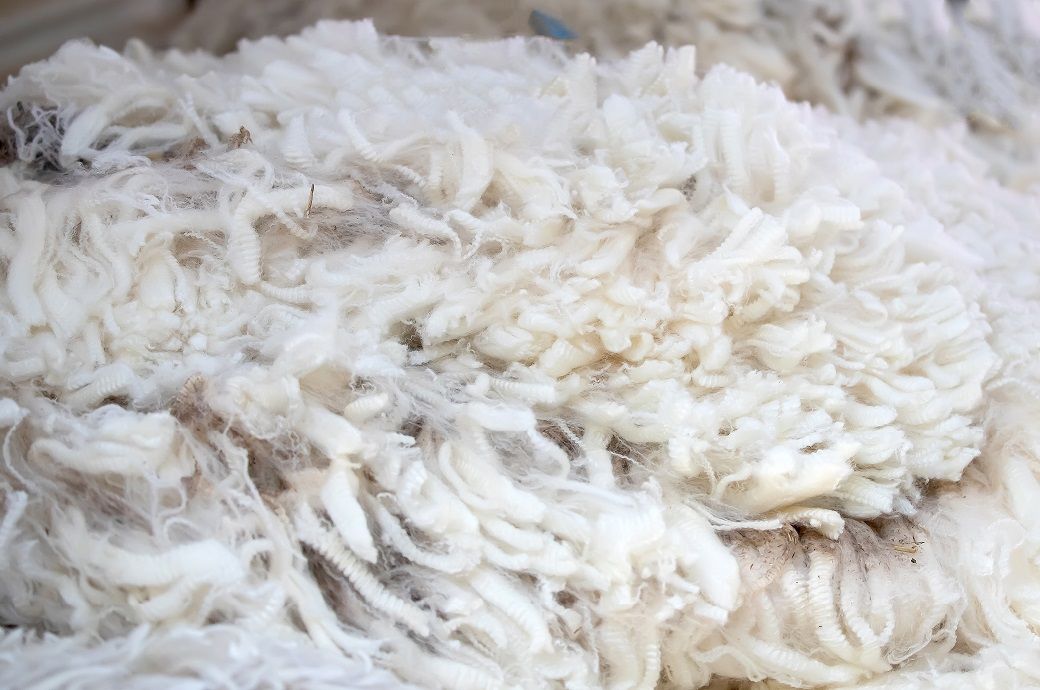
“A smaller offering of 37,212 bales, combined with a softer Australian dollar, helped support the market and drive solid gains, particularly in the Merino sector. Year-on-year, the EMI now sits 542 cents (44.2 per cent) higher,” the Australian Wool Innovation (AWI) Limited said in its Commentary for week 36 of the current Australian wool marketing season.
Strong demand for finer Merino wool, supported by a weaker Australian dollar and tighter supply, continues to lift Australian wool prices.
While Merino segments posted significant gains, crossbred wools lagged.
With higher offerings expected next week, the market’s resilience will depend on sustained global demand and buyer confidence in premium-quality fibre.
Premium prices were recorded for high-strength, well-styled Merino fleece, while discounts remained evident in lots with higher vegetable matter, poorer colour and lower style grades. Finer Merino wools showed the strongest gains, increasing by 90 to 95 cents across selling centres, with Fremantle leading the rise as these types advanced by 115 to 120 cents. Medium Merino wool also attracted solid demand, gaining around 80 to 85 cents, the AWI commentary noted.
In contrast, the crossbred segment experienced a quieter week, slipping by 5 to 10 cents. The cardings market in the eastern selling centres maintained its positive momentum, rising 35 to 40 cents, while cardings in the western region eased by 5 to 10 cents.
Following the latest price surge, next week’s offering is expected to expand as sellers respond to favourable market conditions. A total of 45,973 bales is scheduled for auction across all three centres. Fremantle and Sydney will conduct sales on Tuesday and Wednesday, while Melbourne will auction wool on Wednesday and Thursday.
Fibre2Fashion News Desk (CG)


Pastors pray for Trump in Oval Office amid US-Israel war with Iran

Book excerpt: “Judge Stone” by Viola Davis & James Patterson

Princess Kate’s brother celebrates National Golden Retriever day at Crufts

Attock Cement’s acquisition approved | The Express Tribune

Policy easing drives Argentina’s garment import surge in 2025

India Us Trade Deal: Fresh look at India-US trade deal? May be ‘rebalanced’ if circumstances change, says Piyush Goyal – The Times of India

-
Business1 week ago
Attock Cement’s acquisition approved | The Express Tribune
-
 Fashion1 week ago
Policy easing drives Argentina’s garment import surge in 2025
-
Business1 week ago
India Us Trade Deal: Fresh look at India-US trade deal? May be ‘rebalanced’ if circumstances change, says Piyush Goyal – The Times of India
-

 Politics1 week ago
What are Iran’s ballistic missile capabilities?
-

 Politics1 week ago
US arrests ex-Air Force pilot for ‘training’ Chinese military
-

 Sports1 week ago
LPGA legend shares her feelings about US women’s Olympic wins: ‘Gets me really emotional’
-
 Business1 week ago
Greggs to reveal trading amid pressure from cost of living and weight loss drugs
-

 Sports1 week ago
Sri Lanka’s Shanaka says constant criticism has affected players’ mental health