

Business
Eli Lilly, Novo Nordisk prepare to face off in the next obesity drug battleground


Eli Lilly and Novo Nordisk are preparing to take their rivalry to the next frontier of weight-loss medications: pills.
Both companies expect to launch oral obesity drugs in the U.S. next year, once regulators approve them. Daily pills could introduce more people to GLP-1s, the class of medicine that’s best known for weekly shots.
But after Lilly’s pill produced less weight loss than analysts had expected in a recent late-stage trial, it raised new questions about how widely the oral drugs will be adopted and which rival company will dominate the space.
Doctors will get a closer look at how Lilly and Novo’s pills compare in the coming months when Lilly releases the results of a head-to-head trial of the two, Lilly’s Chief Scientific Officer Dan Skovronsky said in an exclusive interview with CNBC. The study’s main objective is to measure how much the pills can reduce blood sugar levels in people with Type 2 diabetes, but it will also gauge weight loss.
“We wouldn’t have undertaken this head-to-head phase three randomized control trial unless we had a lot of confidence that orforglipron would fare well in comparison to oral semaglutide,” Skovronsky said.
Nikos Pekiaridis | Nurphoto | Getty Images
He cautioned against making comparisons across trials that didn’t directly compare the drugs, where Novo’s pill looks more effective and led to fewer discontinuations. Meanwhile, Novo’s Chief Scientific Officer Martin Holst Lange in a separate interview said the data speak for themselves.
Novo’s forthcoming obesity pill is an oral version of its weekly shot Wegovy; Lilly’s pill is a new drug called orforglipron that’s different from its shot Zepbound. Lilly’s shot is the gold standard in terms of efficacy, Skovronsky said. It can help people lose more than 20% of their body weight.
Neither Novo’s pill nor Lilly’s oral drug are as effective as Zepbound. At the highest dose, orforglipron has produced about 12% weight loss, while oral semaglutide has led to about 17%. That raises the question of how many people will opt for a pill if it means less weight loss.
Even so, Wall Street expects pills to make major inroads in the coming years. Analysts see oral drugs representing about 20% of the estimated $80 billion market for GLP-1 obesity drugs in 2030, according to data from Evaluate.
The logos of Danish drugmaker Novo Nordisk, maker of the blockbuster diabetes and weight-loss treatments Ozempic and Wegovy is seen outside theri building as the company presents the annual report at Novo Nordisk in Bagsvaerd, Denmark, on February 5, 2025.
Mads Claus Rasmussen | Afp | Getty Images
Skovronsky thinks that pills could eventually become the primary way that obesity is treated around the world, and that oral drugs could have a larger market share than injectables. He said most patients are more concerned about other factors like supply and convenience than how much weight they can lose, and he thinks orforglipron has the edge.
The treatment is a small molecule drug like most pills people know. It can be manufactured more easily than peptides, like the shots and Novo’s pill. And it doesn’t come with the food and water restrictions that come with Novo’s oral option, which requires people wait 30 minutes after taking the drug to eat and drink.
“When I look at the pills, orforglipron has no food effect, it’s a small molecule, so the manufacturing should be easier,” said BMO Capital Markets analyst Evan Seigerman. “But with new management at Novo Nordisk, I think [new Chief Executive Officer] Mike Doustdar is not going to just take this and be complacent about it. He’s going to lean in and ensure that this launch is successful.”
After seeing the results from Lilly’s obesity pill trial, Seigerman moved some of his market share estimate from orforglipron to oral semaglutide. Analysts cut their 2032 estimates for orforglipron by an average of about $4.5 billion between May and September, according to Evaluate. They now see sales of $14.56 billion that year.
Skovronsky said it’s harder to predict the market dynamics than the science.
“We did a good job predicting the science,” he said. “We said we’d make an oral that had safety, tolerability and efficacy that was similar to injectable GLP-1s. We did that. The science parts played out. Let’s see how the market plays out.”


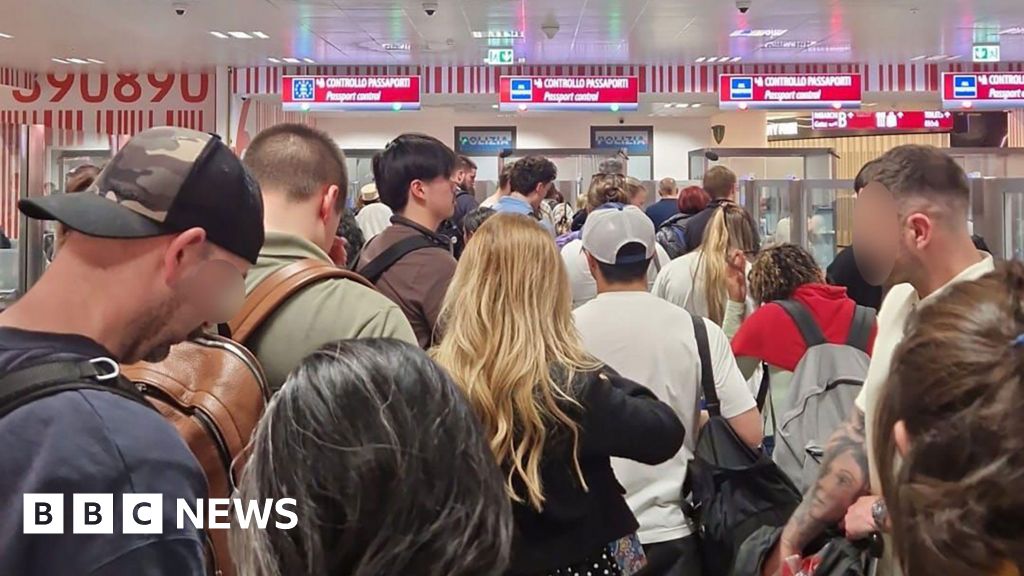
New European border rules have caused delays at airports across the continent, affecting flights.
Source link
Business
‘A win-win for both nations!’ Three-day India-US trade talks to begin this week – The Times of India

India and the United States are set to resume trade talks this week, taking a “great step to finalize” the proposed agreement. Taking to social media platform X, US Ambassador to India Sergio Gor said “The Indian trade delegation will be arriving in Washington this week. A great step to finalize our bilateral trade deal. A win-win for both nations!”This week, a delegation of around a dozen officials will be travelling from New Delhi to Washington for discussions on the first phase of the proposed bilateral trade agreement (BTA). The talks are scheduled from April 20 to 22 and will be led by India’s chief negotiator Darpan Jain, additional secretary in the department of commerce. The team will also include officials from the customs department and the ministry of external affairs.The negotiations come against the backdrop of recent changes in the US tariff system, prompting both sides to revisit parts of the trade agreement finalised earlier this year and released on February 7.A key development was the US Supreme Court striking down reciprocal tariffs imposed under the 1977 International Emergency Economic Powers Act. Following this, the US administration introduced a temporary flat 10% tariff on all countries for 150 days from February 24.These changes led to the postponement of a planned February meeting between the chief negotiators. The rescheduled talks in Washington will now proceed under the revised tariff framework.Alongside tariff issues, the discussions are also expected to cover two investigations initiated by the US Trade Representative under Section 301 of its trade law. India has refuted the allegations and is seeking withdrawal of the probes, arguing that the initiation notices do not provide adequate justification.
Energy markets have seen wild swings since the US and Israel attacked Iran on 28 February.
Source link

Ryanair flight from Milan to Manchester leaves passengers behind due to border delays

Harry Kane vows Bayern Munich have ‘a lot to play for’ after Bundesliga title

Hyundai’s New Ioniq 3 Has Hot-Hatch Looks, but Can It Beat BYD?

-

 Fashion4 days ago
France’s LVMH Q1 revenue falls 6%, shows resilience amid Iran war
-

 Sports1 week ago
The case for Man United’s Fernandes as Premier League’s best
-

 Entertainment1 week ago
Palace left in shock as Prince William cancels grand ceremony
-
 Business1 week ago
UK could adopt EU single market rules under new legislation
-

 Entertainment5 days ago
Is Claude down? Here’s why users are seeing errors
-

 Fashion1 week ago
Energy emerges as biggest cost driver in textile margins
-
 Business1 week ago
Delta Air Lines unveils first new Delta One suite in premium cabin arms race
-

 Tech1 week ago
A Lot of Shops Won’t Fix Electric Bikes. Here’s Why