

Business
Eli Lilly’s GLP-1 growth is only getting started as Novo Nordisk braces for a decline in 2026


The Eli Lilly and Novo Nordisk logos.
Mike Blake | Tom Little | Reuters
It’s a tale of two drugmakers in the red-hot obesity drug market.
Both Novo Nordisk and Eli Lilly are grappling with lower prices in the U.S., but their 2026 outlooks are diverging sharply: While Novo is bracing for a sales decline, Lilly sees revenue jumping again thanks to its blockbuster medicines.
The split in guidance – despite similar headwinds – underscores the strength of Lilly’s position in the obesity and diabetes drug market, underpinned by its more effective injections and early foray into direct-to-consumer sales, among other factors. While Novo Nordisk effectively made the drugs mainstream, Lilly has since taken a clear edge in market share — and the forecasts show it will likely only extend its advantage this year.
“The difference in sales momentum and market share trend was visible throughout 2025, but the dichotomy between the two companies’ prospects was accentuated within this 24-hour period in which Novo guided below consensus and Lilly guided above consensus expectations,” Leerink Partners analyst David Risinger told CNBC on Wednesday.
“That really solidified an investor’s mind that Lilly is going to be the dominant player in obesity going forward,” he added.
This year, all eyes will be on how Lilly’s upcoming obesity pill, orforglipron, fares against Novo’s own oral Wegovy drug, which has had an explosive U.S. launch this year.
In an interview on CNBC’s “Squawk Box” on Wednesday, Lilly CEO Dave Ricks said 20 million to 25 million patients are currently taking both companies’ medicines. But he said the total addressable market of patients in the obesity space is “gigantic.”
Diverging outlooks
On Wednesday, Lilly forecasted 2026 sales of $80 billion to $83 billion, surpassing the $77.62 billion that analysts were expecting, according to LSEG.
The midpoint of that outlook translates to sales growing by 25% this year.
In contrast, Novo warned on Tuesday that it sees sales and profit declining by 5% to 13% this year, as prices fall in the U.S. and exclusivity expires for its blockbuster obesity and diabetes drugs in China, Brazil and Canada.
(L/R) Maziar Mike Doustdar, CEO of Novo Nordisk, and David Ricks, CEO of Eli Lilly, listen as US President Donald Trump speaks in the Oval Office during an event about weight-loss drugs at the White House in Washington, DC on November 6, 2025.
Andrew Caballero-Reynolds | Afp | Getty Images
Lilly similarly pointed to a “global pricing decline in the low- to mid- teens [percentages] this year.” That comes after the landmark “most favored nation” deals both companies struck with President Donald Trump in November to slash obesity and diabetes drug costs, along with their recent efforts to further reduce direct-to-consumer prices for their treatments.
The agreements with Trump are expected to take a bite out of both companies’ sales, but eventually increase volumes of prescriptions for their drugs. Still, Lilly is bullish about other factors that will help offset that pricing pressure.
That includes continued worldwide demand for its obesity drug Zepbound and diabetes counterpart Mounjaro and the expected launch of its GLP-1 pill for obesity in the second quarter, pending U.S. approval. Lilly also pointed to government Medicare coverage of obesity treatments starting for the first time by at least July, one of the winning features of the drug pricing deals with Trump.
Lilly’s Ricks told CNBC that coverage will open up access to 40 million new Medicare beneficiaries, “and that could be quite expansive to volume.”
Overall, Risinger called Lilly’s guidance “very encouraging” and said the “price per volume trade-off is playing out well” for the company.
He said tirzepatide, the active ingredient in Zepbound and Mounjaro, is “superior” in its effectiveness and tolerability compared to semaglutide, the ingredient in Novo’s obesity and diabetes drugs. That was proven in a head-to-head clinical trial conducted by Lilly in 2024, and prescription trends show that the company’s drugs are preferred among prescribers.
“I think that’s what is driving Lilly’s market share gain” relative to Novo, Risinger said.
Another factor that sets Lilly and Novo apart is patent exclusivity. While Novo said expiring patents in some international markets pose a challenge, Lilly’s Ricks said tirzepatide should be protected into “the back half of the 2030s” in major markets.
Risinger noted that Lilly is still working to drive global uptake for tirzepatide, which won U.S. approval for obesity in 2023.
All eyes on pills
A pharmacist displays a box of Wegovy pills at a pharmacy in Provo, Utah, Jan. 15, 2026.
George Frey | Bloomberg | Getty Images
Novo Nordisk is first to market with a GLP-1 pill for obesity, and it already hit 50,000 weekly prescriptions in just under three weeks of its launch. But investors are watching to see how that shifts once Lilly’s pill rolls out to patients later this year.
In an interview with CNBC’s “Mad Money,” Novo CEO Mike Doustdar said he’s confident about the company’s ability to compete with Lilly.
“Clearly we have the most efficacious weight reduction pill that there is and I’m very optimistic and bullish on when they come with their pill and we have to battle this out,” Doustdar said.
He’s referring to clinical trial data suggesting that Novo’s Wegovy pill promotes comparable weight loss to its injectable counterpart, which is around 15%. Meanwhile, Lilly’s pill appears to be slightly less effective than that, based on separate study data.
Risinger said the launch of Novo’s pill has benefited from the fact that the company is leveraging the Wegovy brand name, which is recognizable by many patients, and immediately launched direct-to-consumer advertising for the product in early January.
But he said Lilly could capitalize on its pill’s convenience advantage.
Orforglipron is a small-molecule drug that is absorbed more easily in the body and doesn’t require dietary restrictions like Novo Nordisk’s pill, which is a peptide medication. Patients are supposed to drink no more than four ounces of water with the Wegovy pill and must wait 30 minutes before eating or drinking anything else each day.
Novo contends that those requirements won’t hinder uptake, but Risinger said it could help Lilly’s pill eventually generate greater sales globally.





new video loaded: How Kharg Island May Change the Trajectory of the Iran War
By Peter Eavis, Gilad Thaler, Edward Vega, Lauren Pruitt and Joey Sendaydiego
March 25, 2026
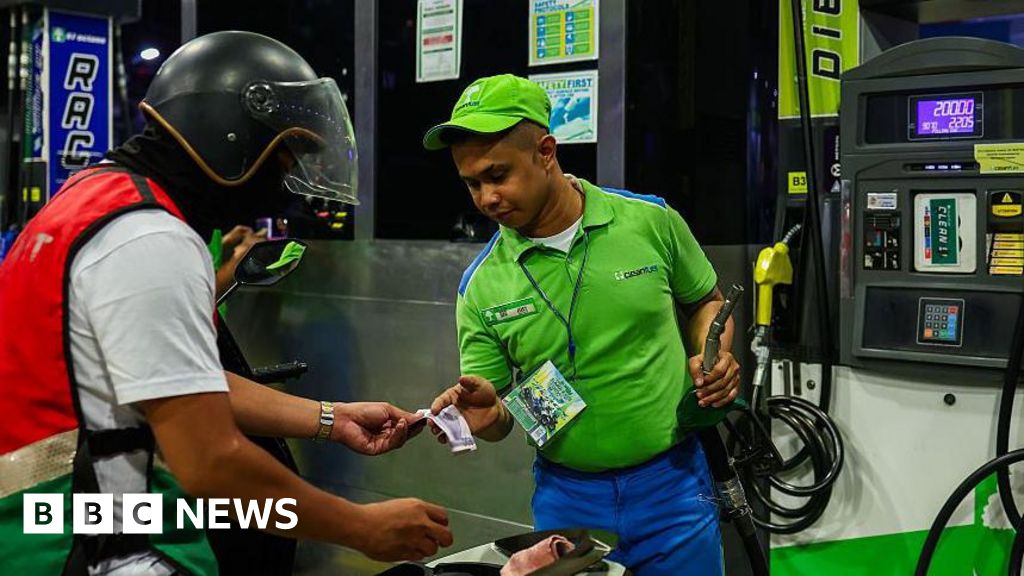
Crude rose back above $100 a barrel as the US and Iran clashed over bringing the conflict to an end.
Source link

President Donald Trump said he’s considering sending the National Guard to U.S. airports, two days after the administration deployed Immigration and Customs Enforcement agents to several major U.S. airports following hourslong waits for travelers because of the partial government shutdown.
In a Truth Social post Wednesday, Trump blamed Democrats for the shutdown, which began Feb. 14.
“Thank you to our great ICE Patriots for helping. It makes a big difference,” he wrote in his post. “I may call up the National Guard for more help.”
Travelers wait in line at a Transportation Security Administration (TSA) checkpoint at Hartsfield-Jackson Atlanta International Airport (ATL) in Atlanta, Georgia, US, on Monday, March 23, 2026.
Elijah Nouvelage | Bloomberg | Getty Images
More than 11% of TSA officers called out on Wednesday and over 450 have quit since the shutdown started, the Department of Homeland Security said.
Elevated absences of Transportation Security Administration officers, who are required to work though they’re not getting paid during the shutdown, have contributed to long lines at major U.S. airports, including in Atlanta, Houston and New York.
The DHS, which oversees both ICE and and the TSA, said the ICE agents will “support airports facing the greatest strain” but the department didn’t respond to requests for comment on what the ICE agents’ duties are. ICE agents are getting paid in the shutdown.
Airlines have been warning customers about potentially long security lines, while executives grow increasingly frustrated with lawmakers about the impasse. On Tuesday, Delta Air Lines said it suspended its airport escorts and other special services for members of Congress and their staff because of the ongoing partial shutdown of the DHS.
The shutdown comes as Democrats in Congress have demanded changes to how federal immigration enforcement operates in exchange for releasing DHS funding after two U.S. citizens were shot and killed by ICE officers in Minneapolis.

Video: How Kharg Island May Change the Trajectory of the Iran War
Oil prices volatile as Trump talks up Iran negotiations

What small businesses need to know

Sales at US apparel, clothing accessories stores up 4% YoY in Jan 2026

Justice Department Says Anthropic Can’t Be Trusted With Warfighting Systems

March Madness 2026 – How to watch in SA, start time, schedule, TV channel for NCAA championship basketball tournament

-
 Fashion1 week ago
Sales at US apparel, clothing accessories stores up 4% YoY in Jan 2026
-
 Tech1 week ago
Justice Department Says Anthropic Can’t Be Trusted With Warfighting Systems
-
 Sports1 week ago
March Madness 2026 – How to watch in SA, start time, schedule, TV channel for NCAA championship basketball tournament
-
 Business1 week ago
Stocks and pound rise as US rate call approaches
-

 Entertainment1 week ago
Val Kilmer revived 1 year after death through AI
-
 Business1 week ago
Brits cashing in jewellery as gold price hits record high
-

 Politics1 week ago
Iran strikes Tel Aviv with cluster-warhead missiles in retaliation of Larijani’s martyrdom
-

 Sports1 week ago
WBC championship: USA-Venezuela preview, live updates, analysis