

Business
Elon Musk Says Money May Become Irrelevant, Will Jobs Disappear Too? India’s Future Explained

Last Updated:
Musk does not suggest that rupees, dollars, or digital payments will disappear. Instead, he means money could lose its important function, such as controlling access to essentials

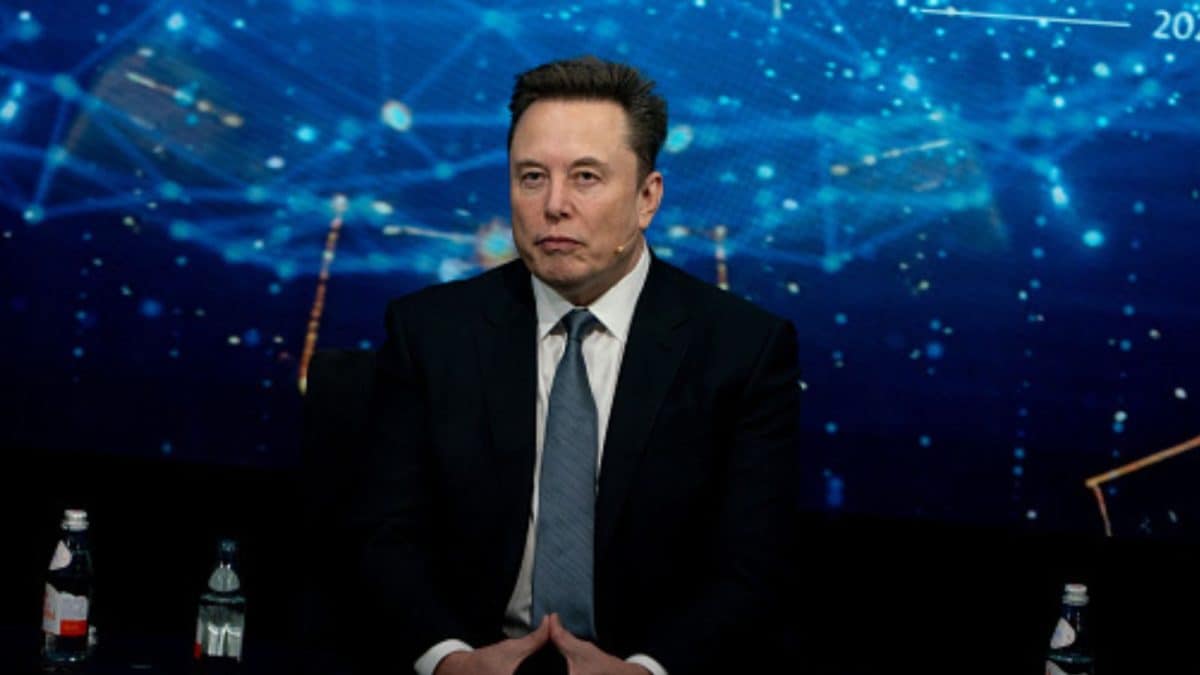
Elon Musk’s idea is inspiring, but it is not around the corner. AI is progressing rapidly, but economic and cultural change happens much more slowly. Experts say AI will automate tasks, not entire professions. (Getty Images)
When Elon Musk told Zerodha co-founder Nikhil Kamath in a November 30 podcast that “money will ultimately become irrelevant,” the statement spread rapidly across the Internet. Many assumed he meant that currency would vanish or that jobs would disappear completely. But Musk was describing a deeper transformation that is shaped by artificial intelligence (AI) and robotics, where basic needs could be met without traditional work, and where human effort would no longer be essential for survival.
What does that mean for a country like India, where 90% of the workforce depends on daily wages, formal safety nets are limited, and money is not just an economic tool but a measure of survival?
Let’s understand Musk’s statement, how AI and automation will drive a future without money, and the socio-economic implications, especially for India.
What Exactly Did Musk Say, And Why?
In the conversation, Kamath asked whether AI and robotics would eventually make most jobs obsolete. Musk replied that advanced AI systems, combined with highly capable robots, will eventually be able to produce goods, services, and solutions without requiring human labour. Work, he said, may still exist but largely as a choice rather than a necessity. Humans would work for fulfillment, not for income.
Kamath then asked: “If work is optional, will money also lose its meaning?” Musk answered, “Yes, money will eventually become irrelevant.” It was not a prediction of the end of currency but a vision of a future where survival is not determined by income or employment. His statement reflected the concept of abundance, which means a future where technology creates so much efficiency that basic needs are easily met without financial barriers.
The Idea Of Work Becoming Optional
Musk’s view is rooted in the idea of abundance economics, where technological progress makes resources so plentiful that scarcity — the foundation of traditional economics — begins to fade. Today, the world runs on scarcity. There is limited food, limited housing, limited energy, and limited healthcare, and these hurdles make money essential. Humans work to access what is scarce.
In a world powered by super-efficient AI, autonomous factories, precision agriculture, robot-led construction, and AI-powered medical systems, the cost of producing essentials could drop dramatically. Instead of working eight to ten hours a day to afford rent, food, and transport, people may receive these basic needs automatically, managed by intelligent systems. Work, then, becomes something humans pursue for passion, creativity, innovation, or personal fulfilment, not survival.
What Does ‘Money Becoming Redundant’ Really Mean?
Musk does not suggest that rupees, dollars, or digital payments will disappear. Instead, he means that money could lose its most important function, such as controlling access to essentials. In today’s world, if you cannot afford housing, healthcare, education, food, or transport, you simply don’t get them. In a future with abundant automation, those essentials could be provided as guaranteed rights, not as commodities.
Money would still exist, but its power would fade. It would become a tool for luxury, not survival. People could still spend on travel, art, entertainment, and premium experiences, but shelter, food, healthcare, education, electricity, and internet could become universal and near-free. In such a world, human well-being would no longer depend on income.
“A fully automated society where money loses relevance is still several decades away, if it ever materialises. We are at an early stage globally in advanced automation, and economic systems still have a deep linkage with labour, markets, and capital. The drastic implications of the post-scarcity model demand an unprecedented level of technological maturity, stable government, and social acceptability, even if AI surges,” said Piyush Goel, Founder and CEO of Beyond Key, a software development and IT consulting company whose operations are in the US, Indore, Pune and Hyderabad.
What This Future Could Look Like In India
India’s workforce is complex and largely informal. Any change brought by AI and automation would not affect all sectors equally. For gig workers such as delivery agents, taxi drivers, and service providers, automation through drones and self-driving vehicles could reduce demand for manual work. Yet these individuals could transition into supervisory, maintenance, logistics coordination, or customer management roles; that is, jobs would still exist, but their nature would change.
“Elon Musk’s idea of a future where money becomes redundant is fascinating, but its practicality depends heavily on a nation’s social and economic foundations. India is progressing rapidly, with digital inclusion, UPI-driven financial access, and tech-led governance transforming how people work and live. However, a completely money-free society requires very advanced automation, universal social welfare, and highly robust institutions. India’s strengths — a young workforce, fast-growing digital economy, and improving financial inclusion — create room for long-term possibilities, but income disparities, informal employment, and varying access to technology mean such a model is not realistic in the near future,” said Goel.
IT professionals, software developers, and tech engineers may face the biggest disruption. AI tools already generate code, manage cyber security, create digital designs, and even write detailed business plans. However, academic and industry experts suggest that AI will change, not replace, these jobs. Human roles could evolve into AI supervision, ethics management, strategic design, and innovation-driven problem-solving rather than repetitive coding.
Factory and manufacturing workers in sectors such as textiles, automobiles, electronics, and processed food could gradually shift from operational labour to monitoring and managing robotic systems. Robotics-led manufacturing will arrive faster than many expect, especially in industrial zones like Gujarat, Tamil Nadu, and Maharashtra.
Indian agriculture presents both challenges and opportunities. Drone spraying, climate prediction, AI-based irrigation, and robot farming could improve yields and reduce labour needs. Yet, without policy support and digital training, small and marginal farmers, who form the majority, risk being left behind.
The only sector least threatened by AI is one deeply rooted in human emotion, that is, creativity and relationship-based professions. Artists, writers, spiritual guides, mental health professionals, social workers, community leaders, teachers, counsellors, and storytellers may find greater relevance, not less, in a world of abundant automation.
What Will Be The Challenges Amidst Income Inequality, Policy Gaps?
While Musk’s vision seems futuristic, India faces deep structural challenges that must be addressed before a post-money society becomes a reality. Income inequality is still extremely high. Access to digital tools is limited. The majority of workers do not have a pension, insurance, or unemployment support. If robots and AI take away routine jobs, traditional livelihoods could collapse without replacement.
India has no universal unemployment protection or national reskilling safety net. Though it has existing social safety nets, such as the Mahatma Gandhi Rural Employment Guarantee Act (MGREGA) and Employees’ State Insurance Corporation (ESIC). But basic legal protection for informal workers is minimal. Without a proper framework to manage job transitions, automation could widen the gap between the educated digital elite and the economically vulnerable.
There is also a psychological factor. In India, work is not just an economic act. It is deeply tied to dignity, identity, and social value. Even if technology allows people not to work, the cultural importance of employment may not disappear easily.
According to government data, in the July-September 2025 quarter, around 56.2 crore people aged 15 and above were employed in India. Of which, 39.6 crore are males and 16.6 crore are females.
How Can India Prepare For A Post-Jobs Economy?
Countries such as Finland, Canada, and Spain have experimented with Universal Basic Income, where the government pays every citizen a fixed amount regardless of employment status. These experiments aimed to deal with job loss caused by automation. In India, the feasibility of Universal Basic Income has been debated, but cost and scale remain major hurdles.
Another approach could be Universal Basic Services, where instead of giving people money, the government guarantees access to housing, healthcare, education, the Internet, and food. India already has versions of this through the Public Distribution System, government schools, free vaccinations, PM-Kisan, Ayushman Bharat, and subsidised housing schemes. With stronger digital infrastructure, these could eventually form a foundational welfare system that supports a future with less traditional employment.
“Indiawill have to proactively strengthen social and economic buffers. This is about increasing unemployment benefits and providing retraining grants, incorporating large-scale reskilling programmes into the national framework, particularly the digital and technical skills. Public-private partnership models will enable these kinds of pathways for those who lose their jobs. Encouraging entrepreneurship, pressing companies to adopt suitable automation methods, and bolstering social security for the unorganised sector are all equally important,” explained Goel.
India may also explore technology dividend models, where organisations using AI and automation contribute to a pool that supports reskilling, digital access, and social security.
When Could This Actually Happen?
Musk’s idea is inspiring, but it is not around the corner. Artificial intelligence is progressing rapidly, but economic and cultural change happens much more slowly. Experts agree that AI will automate tasks, not entire professions. Doctors, teachers, designers, lawyers, and engineers will increasingly work alongside AI, not be replaced by it completely. Jobs will evolve rather than disappear overnight.
In India, automation may affect some sectors faster than others, but a complete shift to a post-work society is still decades away. Technology will transform work, but will not eliminate it. The next 10 to 15 years will likely see a coexistence model, where AI enhances efficiency while humans focus on creative, relational, strategic, and leadership roles.
What To Conclude?
Musk’s statement does not signal the end of money or jobs, but the beginning of a new way of thinking about them. In India, where money is linked to identity, survival, and opportunity, any movement towards abundance will require infrastructure, policy innovation, inclusion, and cultural acceptance. AI may change how human beings earn, but it will also change how they live, learn, create, and connect.
The future is not one without money. It is one where money stops being the only way to live.
About the Author

Shilpy Bisht is a News Editor at News18, where she leads the English App operations. She writes on world affairs, health, AI, career, business, and issues affecting women and children. A former print …Read More
 Click here to add News18 as your preferred news source on Google.
 December 01, 2025, 12:51 IST

Stay Ahead, Read Faster
Scan the QR code to download the News18 app and enjoy a seamless news experience anytime, anywhere.












Pakistan’s inflation rose to 7% in February 2026, marking the highest level since October 2024, as electricity price hikes and rising global uncertainty pushed consumer costs upward.
According to the Pakistan Bureau of Statistics, the Consumer Price Index (CPI) increased 6.98% year-on-year, compared to 5.8% in January and 1.5% in February last year.
Electricity Tariffs Drive Surge
The biggest impact came from higher electricity prices after subsidy cuts and revised tariff structures.
Housing, water, electricity, gas & fuels index rose 9.65% annually
Electricity prices alone increased 10.03% month-on-month
These adjustments significantly burdened households already coping with high living costs.
Core Inflation & Interest Rates
Core inflation showed slight easing:
Urban core inflation: 7.1% (down from 7.2%)
Rural core inflation: Stable at 8.3%
The rise in CPI reduced real interest rates by around 120 basis points. The State Bank of Pakistan kept its policy rate unchanged at 10.5% last month.
Food Prices Mixed
Food inflation rose to 5.8%, up from 3.9% in January.
Major increases:
Tomatoes: +82%
Wheat: +42.6%
Wheat flour: +25.9%
Meat: +11.3%
Milk powder: +9.4%
Price declines:
Potatoes: -40%
Chicken: -21.8%
Gram pulse: -21.7%
Onions: -17%
Wholesale Pressure Rising
The Wholesale Price Index (WPI) increased to 1.0%, signaling growing producer-level cost pressures that could pass on to consumers in coming months.
External Risks Loom
Analysts warn that escalating Middle East tensions could:
Raise global oil prices
Increase Pakistan’s import bill
Pressure the rupee
Worsen inflation further
With millions of Pakistanis working in Gulf countries, any prolonged instability could also affect remittances — a key pillar of the economy.

Last Updated:
Gold and silver prices in India eased after a rally driven by Middle East conflict. 24-carat gold is Rs 1,70,020 per 10gm, silver below Rs 3,00,000.


Amid escalating tensions in the Middle East, gold and silver prices have witnessed a sharp surge, with market experts warning of further increases if the conflict intensifies.
Gold and silver prices: Gold and silver prices across India eased slightly after rallying as investors rushed towards safe havens due to the conflict in the Middle East. The price of 24-carat gold stood at Rs 1,70,020 per 10 grams, while 22k gold was available at Rs 1,55,850 per 10 grams. These rates do not include GST and making charges.
Silver also fell by Rs 20,000 to come down below Rs 3,00,000.
On MCX, gold futures, whose expiry is on April 02, 2026, was traded at Rs 1,66,199 per 10 gram, with a rise of 2.53 per cent. While silver futures expiring on March 05, 2026, were trading at Rs 2,80,090 per kg, with a fall of 0.90 per cent.
What Is The Price Of 22kt, 24kt Gold Rates Today In India Across Key Cities On March 03?
| City | 22K Gold (per 10gm) | 24K Gold (per 10gm) |
|---|---|---|
| Delhi | Rs 1,56,000 | Rs 1,70,170 |
| Jaipur | Rs 1,56,000 | Rs 1,70,170 |
| Ahmedabad | Rs 1,55,900 | Rs 1,70,070 |
| Pune | Rs 1,55,900 | Rs 1,70,070 |
| Mumbai | Rs 1,55,850 | Rs 1,70,020 |
| Hyderabad | Rs 1,55,850 | Rs 1,70,020 |
| Chennai | Rs 1,55,850 | Rs 1,70,020 |
| Bengaluru | Rs 1,55,850 | Rs 1,70,020 |
| Kolkata | Rs 1,55,850 | Rs 1,70,020 |
What Factors Affect Gold Prices In India?
International market rates, import duties, taxes, and fluctuations in exchange rates primarily influence gold prices in India. Together, these factors determine the daily gold rates across the country.
In India, gold is deeply cultural and financial. It is a preferred investment option and is key to celebrations, particularly weddings and festivals.
With constantly changing market conditions, investors and traders monitor fluctuations closely. Staying updated is crucial for effectively navigating dynamic trends.
Click here to add News18 as your preferred news source on Google.
Follow News18 on Google. Join the fun, play games on News18. Stay updated with all the latest business news, including market trends, stock updates, tax, IPO, banking finance, real estate, savings and investments. To Get in-depth analysis, expert opinions, and real-time updates. Also Download the News18 App to stay updated.
March 03, 2026, 09:52 IST
Read More

Shop price inflation eased in February but consumers are still paying 3.5% more for food than a year ago, figures show.
Overall shop inflation fell slightly to 1.1% from January’s 1.5%, in line with the three-month average of 1.1%, as fierce competition between retailers kept price rises in check and customers benefited from promotions across health, beauty and fashion, according to the British Retail Consortium (BRC) and NIQ.
Prices of products other than food were down 0.1% year on year, a significant drop from January’s growth of 0.3%.
Overall food inflation fell slightly to 3.5% from 3.9% in January, while fresh food prices remained 4.3% higher than last February, a slight drop from January’s 4.4% and above the three-month average of 4.2%.
However falling global costs pushed ambient food inflation down to 2.3% – its lowest level in four years and a significant fall from January’s 3.1%.
BRC chief executive Helen Dickinson said: “Households got some welcome relief in February as shop price inflation eased.
“While the direction of travel is promising, prices are still rising, and many consumers remain under pressure.”
Mike Watkins, head of retailer and business insight at NIQ, said: “Since the start of the year, we have seen some competitive pricing across both the food and non-food channels which is helping to bring down inflation.
“Whilst the inclement weather and weak sentiment is making consumer demand rather unpredictable for retailers, at least shoppers are now seeing some of their cost-of-living pressures start to ease.”


Retech to showcase precision godet technology at Techtextil 2026

Football is life! ‘Dani Rojas’ from Ted Lasso is on trial at a USL club
Inflation Climbs to 16-Month High at 7% in February – SUCH TV

-

 Politics5 days ago
What are Iran’s ballistic missile capabilities?
-
 Business6 days ago
Households set for lower energy bills amid price cap shake-up
-

 Sports5 days ago
Sri Lanka’s Shanaka says constant criticism has affected players’ mental health
-
 Business6 days ago
Lucid widely misses earnings expectations, forecasts continued EV growth in 2026
-

 Fashion4 days ago
Policy easing drives Argentina’s garment import surge in 2025
-

 Sports1 week ago
South Africa thrash India by 76 runs in T20 World Cup Super 8 – SUCH TV
-
 Business1 week ago
Govt to return unclaimed EPFO deposits, expand scholarships for unorganised workers’ children – The Times of India
-
 Business1 week ago
Haryana Govt bars IDFC First Bank, AU Small Finance Bank over alleged Rs 590 crore fraud