

Fashion
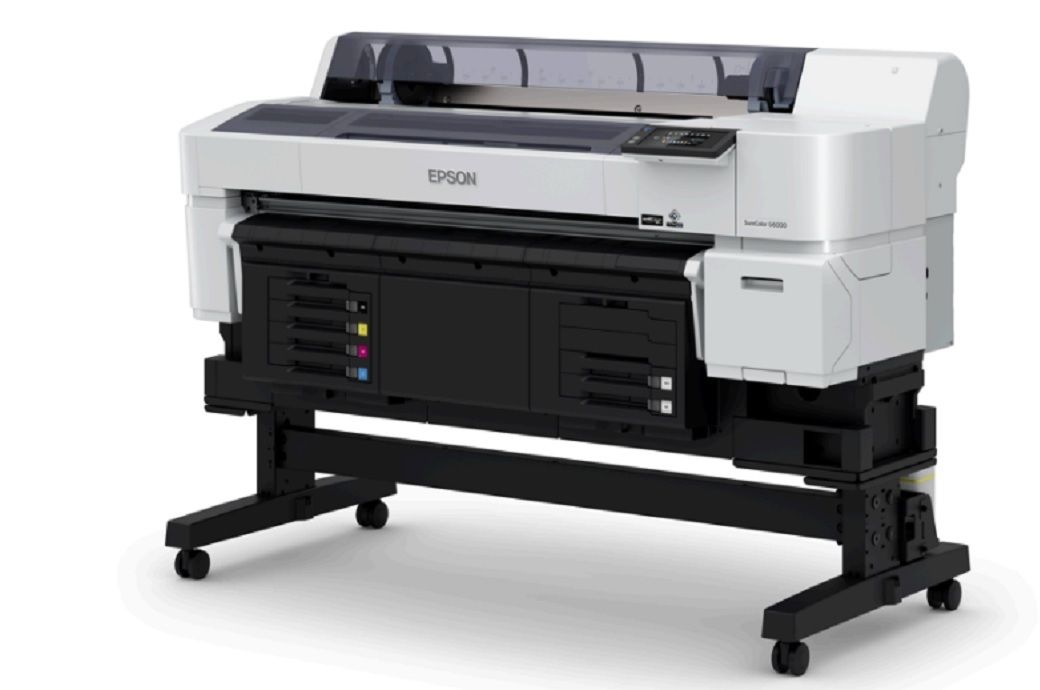
Epson unveils SureColor G6030, revolutionising textile printing

Fuss-free Maintenance and Reliable Operational Stability
Epson has introduced the SureColor G6030, its first Direct-to-Film printer designed to meet rising demand in wearable printing as the market shifts from DTG to DTFilm technology.
The 32-inch model features a 1.6-litre ink capacity, automated maintenance, and minimal daily upkeep.
Certified by Oeko-Tex Eco Passport and GOTS, it supports sustainable, high-speed printing.
The SC-G6030 is designed to streamline operations by eliminating the need for daily maintenance tasks, making it a highly efficient solution for businesses. Unlike traditional printers, it only requires a simple shake of the white ink pack at the beginning of each day. The DTFilm printer automates key processes like nozzle checks, bidirectional adjustments, paper feed adjustments, and job sending. This enables parallel task execution, allowing a single operator to manage multiple units, which reduces manual follow-up work and significantly lowers operational costs.
In terms of maintenance, the SC-G6030 features an easy-to-maintain fabric wiper system that only requires occasional replacement of consumables, unlike traditional printers with rubber wipers that demand daily cleaning. The wiper unit uses a fabric feed system, ensuring a fresh wipe every time and reducing the frequency of maintenance.
The DTFilm printer also features a distinct cap station and suction cap system that further minimises the need for manual upkeep. The auto suction cap cleaning function eliminates the need for regular printhead cleaning by using maintenance liquid to remove dried ink from the cap edges. This ensures a proper seal for suction, enhancing productivity.
Additionally, the SC-G6030 is equipped with a white ink circulation system that prevents sedimentation, reducing clogging and maintaining consistent print quality. Epson’s UltraChrome DF ink is designed to recover easily from sedimentation, incorporating spacer material that enhances performance and ensures smooth, uninterrupted printing.
Versatile Printing Performance with Sustainability at its Core
The SC-G6030 offers various print modes to meet customer needs and expand application possibilities. With the capability to deliver full-colour graphic in under 9 minutes, the printer delivers exceptional speed and performance. Enhancing its credibility, the SC-G6030 is certified by the Oeko-Tex Eco Passport, guaranteeing that its inks are free from harmful substances and meet strict safety and environmental standards. Additionally, it is also certified by Global Organic Textile Standard (GOTS), ensuring that its printing process follows environmentally conscious practices, from raw materials to product labelling.
Enhanced Efficiency and User-Centric Design
The SC-G6030 offers several user-friendly features that enhance operational efficiency. The inbuilt cutter function helps prevent the film from falling off the printer by using a countdown, minimising waste and improving manual post-processing productivity. This function also reduces the risk of printout damage. Additionally, the printer’s high-capacity 1.6L ink supply unit allows customers to reduce ink replacement frequency, enabling continuous high-volume printing and further improving operational efficiency.
Designed for customers with limited space, the SC-G6030 boasts a compact footprint, making it ideal for small or challenging spaces. Occupying just 1.2 m² (1608mm in width and 745mm in depth), it easily fits into most printing environments and is convenient to transport. Requiring only 3.88 m² of workspace (2118mm by 1834mm), this ensures its versatility in various industrial settings.
“With the SureColor G6030, Epson is once again setting the standard for innovation in the printing industry,” said Derek Tan, head of sales and marketing, Epson Singapore. “This 32-inch Direct-to-Film printer is designed to address the growing demand for efficient, high-quality printing solutions. With its impressive 1.6L ink capacity and minimal maintenance requirements, the SC-G6030 offers businesses a reliable tool for boosting productivity and reducing operational costs. Its intuitive design, including automated maintenance features and versatile print modes, makes it an ideal solution for businesses looking to streamline operations and keep up with the industry’s shift from Direct-to-Garment to Direct-To-Film printing.”
Availability
The new Epson SureColor G6030 Printer is available for sale in Singapore.
Note: The headline, insights, and image of this press release may have been refined by the Fibre2Fashion staff; the rest of the content remains unchanged.
Fibre2Fashion News Desk (KD)











The recommendation follows a survey analysed by researchers from the University of Nottingham and the University of Leicester in collaboration with trade justice charity Transform Trade, which found systemic late payments, last-minute order changes without compensation and post-contract price reductions. Manufacturers reported that such practices shift financial risk from brands and retailers onto suppliers and ultimately workers.
Among respondents, 31 per cent reported order cancellations, while 78 per cent said brands failed to cover costs of last-minute changes to confirmed orders. A further 75 per cent stated prices were not adjusted to reflect minimum wage increases. Additionally, 67 per cent experienced order volumes being reduced without corresponding revisions to unit costs, and 44 per cent faced repeated payment extension requests. Ten per cent reported payments delayed by more than three months beyond agreed terms.
Researchers are urging the UK government to establish a Garment Trading Adjudicator after a survey by the University of Nottingham, University of Leicester and Transform Trade found widespread unfair purchasing practices in UK garment manufacturing.
The study highlights systemic late payments, cancellations and cost pressures affecting manufacturers and workers.
Manufacturers said these pressures had direct workforce consequences, including increased overtime to meet sudden order spikes for 73 per cent of workers, reduced hours following cancellations for 58 per cent, and job terminations for 29 per cent.
The survey also revealed limited confidence in formal dispute mechanisms. Only 22 per cent viewed the legal system as a viable route for redress, and none considered government or multistakeholder initiatives effective. Respondents cited financial and legal barriers, stating that pursuing action against brands was often unaffordable.
Dr Sabina Lawreniuk of the University of Nottingham’s School of Geography said, “Our research shows that current brand purchasing practices directly impact workers, resulting in precarious and insecure work across UK factories. Voluntary codes have proven insufficient. If we are serious about protecting workers and supporting a sustainable UK fashion industry, we need a Garment Trading Adjudicator to enforce fair practices across the sector.”
She added that the findings emphasise the need to rebalance relationships between brands and fashion manufacturers in the UK to support domestic manufacturing, sustainable business models, investment strategies, and to strengthen work and employment in the sector.
Professor Nikolaus Hammer of the University of Leicester also highlighted the importance of rebalancing these relationships to ensure sustainable UK production.
The researchers and Transform Trade said a sector regulator, like the Groceries Code Adjudicator, could help curb unfair purchasing practices and create greater accountability across fashion supply chains.
Fibre2Fashion News Desk (CG)

New Zealand’s apparel imports (HS ** and ** combined) declined to NZ$***.** million (~$***.* million) in January **** from NZ$***.** million in January ****, representing a *.* per cent year-on-year decrease. In volume terms, shipments fell to **.** million units from **.** million units, reflecting softer sourcing activity and continued inventory discipline among retailers.
Knitted apparel (HS **) imports declined to NZ$**.** million (~$**.* million) in January **** from NZ$**.** million in January ****, down *.* per cent year on year. Volumes also fell to **.** million units from **.** million units, suggesting weaker replenishment demand and continued emphasis on controlled inventory cycles across the retail segment.


Kornit Digital launches footwear solution at ITMA Asia + CITME 2025

Vin Diesel shares exciting news on 25th anniversary of ‘Fast & Furious’

Create Garment Trading Adjudicator: Researchers tell UK govt

Eye-popping rise in one year: Betting on just gold and silver for long-term wealth creation? Think again! – The Times of India

These Cheap Noise-Cancelling Sony Headphones Are Even Cheaper Right Now

Pakistan carries out precision strikes on seven militant hideouts in Afghanistan

-
Business1 week ago
Eye-popping rise in one year: Betting on just gold and silver for long-term wealth creation? Think again! – The Times of India
-
 Tech1 week ago
These Cheap Noise-Cancelling Sony Headphones Are Even Cheaper Right Now
-
 Politics1 week ago
Pakistan carries out precision strikes on seven militant hideouts in Afghanistan
-

 Sports1 week ago
Kansas’ Darryn Peterson misses most of 2nd half with cramping
-

 Sports1 week ago
How James Milner broke Premier League’s appearances record
-

 Entertainment1 week ago
Viral monkey Punch makes IKEA toy global sensation: Here’s what it costs
-
Sports1 week ago
Mike Eruzione and the ‘Miracle on Ice’ team are looking for some company
-

 Entertainment1 week ago
Saturday Sessions: Say She She performs "Under the Sun"