Noting that mobile connectivity has been one of the most powerful economic engines of modern Australia and that the emergence of advanced artificial intelligence (AI)-native networks could be the key to opening the potential for new use cases in public safety, agriculture and weather detection, among others, Australian telco Telstra has signed a letter of intent with Ericsson to collaborate on the evolution of 6G networks.
The letter sets out Telstra and Ericsson’s commitment to work together on research and trials to drive momentum towards the launch of 6G, including collaboration on 3GPP standards evolution and access to Ericsson’s 6G testbed capabilities.
The agreement is regarded by the operator as reinforcing its commitment to keep Australia at the forefront of digital innovation as part of its Connected Future 30 strategy.
Telstra has for some time been carrying out test and development work in the realm of 6G, such as conducting 6GHz trials under extreme data loads in Anglesea, Victoria, assessing the electromagnetic energy from its prospective wireless communications to ensure the safety of the new mobile technology.
Building on what it calls “a strong shared history”, Telstra said it is focused on ensuring the next era of connectivity delivers tangible outcomes for customers – prioritising performance, security and sustainability, and reflecting the evolving needs of Australians. It suggested that unlocking the benefits of 6G would also depend on sustained investment and certainty around spectrum access – areas where it said that Ericsson and itself continue to play an active role.
As part of the agreement, Ericsson has invited Telstra engineering teams to test new concepts and technologies at its 6G testbed in Sweden. Ericsson’s 6G testbed is claimed to provide a “dynamic platform” for communications service providers to collaboratively develop and test 6G concepts and technologies.
Our focus is on making sure Australia remains at the forefront of digital innovation, with connectivity that helps people, businesses and communities thrive Shailin Sehgal, Telstra
In addition, Ericsson engineering teams will also spend time at Telstra’s Innovation Centre on Australia’s Gold Coast to test how 6G operates in different geographic conditions as part of a reciprocal exchange of ideas and capabilities.
Commenting on the partnership and the expected outcomes, Shailin Sehgal, Telstra’s group executive of global networks and technology, said the collaboration with Ericsson demonstrates how it is delivering on its Connected Future 30 strategy by continuing to build the technology momentum that will underpin 6G.
“As the first G which is AI-native, 6G will be the most intelligent network yet – capable of advanced network connectivity, and new network-as-a-product innovations such as the ability to sense the environment around the network. Our focus is on making sure Australia remains at the forefront of digital innovation, with connectivity that helps people, businesses and communities thrive,” added Sehgal.
Ericsson’s chief technology officer, Erik Ekudden, said it was on a clear and exciting trajectory towards AI-native 6G. “6G will redefine what a network fundamentally is – not just an AI-native technology platform, but a platform that senses, adapts and orchestrates resources to deliver outcomes for enterprises and society at scale; simply an intelligent fabric,” he said.
“Realising that potential requires the kind of early, deliberate collaboration we are building together. Australia is a market at the forefront of network innovation where the combination of operator ambition, technical depth and innovation culture makes this genuinely meaningful. Our work with Telstra – spanning research, standards and real-world testing – paves the way for the next era of advanced connectivity,” Ekudden added.
That collaboration seeks to establish a framework for ongoing technology evolution, enabling the practical deployment of innovations in the 5G era while laying the foundation for long-term 6G research and standardisation.
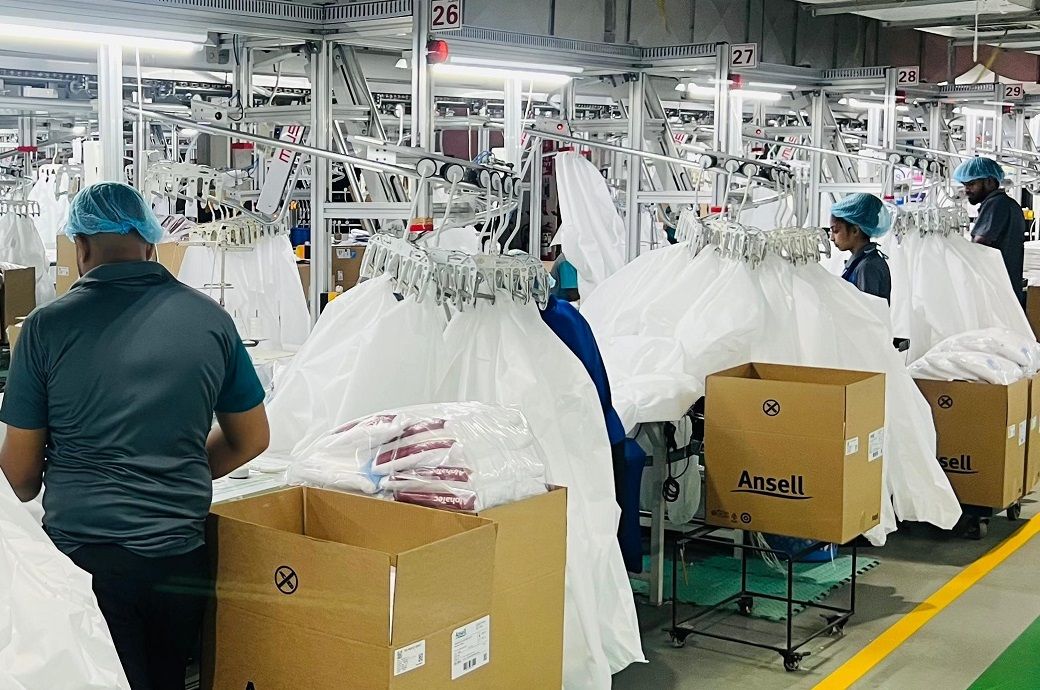
Coats Digital is pleased to announce that Ansell Textile Lanka (Pvt) Ltd., part of the global personal protective equipment leader, Ansell (ASX: ANN), has significantly improved manufacturing consistency and productivity through the implementation of its GSDCost solution. The company has successfully reduced style-based Standard Minute Values (SMV) by up to 7%, achieved a 7% improvement in productivity within its Body Protection division, and is now well-positioned to accommodate increasing capacity demands using existing resources.
Ansell Textile Lanka, part of global PPE leader Ansell, boosted productivity by 7 per cent and reduced SMVs by up to 7 per cent after implementing Coats Digital’s GSDCost solution.
The tool standardised methods, improved costing accuracy, and enhanced transparency across teams, enabling scalable, efficient production and data-driven decision-making.
Ansell is a global leader in safety solutions and an integrated manufacturer of personal protective equipment (PPE) for healthcare and industrial workplaces. With 14 manufacturing sites and operations in over 100 countries, Ansell delivers trusted brands including HyFlex, Ringers, MICROFLEX, and AlphaTec.Ansell Textile Lanka is widely recognised for its sustainability leadership, having received multiple national accolades including the Gold Award at the 2024 Presidential Environmental Awards. Ansell’s Sri Lankan operations are central to the company’s growing PPE portfolio, producing 1 million body protection garments and 2.5 million pairs of gloves per month, securing an annual turnover of USD 24 million.
Before adopting GSDCost, Ansell relied on manual time study and team experience based SMV values to carry out costing and capacity across operations. The absence of reliable SMVs and real-time data visibility meant teams often worked with outdated or conflicting information, undermining confidence in costings and limiting the ability to make informed, data-driven decisions. As product complexity and demand scaled in body protection from 35 to 150 styles, it was important for ATL to have standardised methods, values, and training in order to manage inefficiencies across its manual practices.
Eroshan Nilanga, Manager, Industrial Engineering, Ansell Textile Lanka, said, “As our product portfolio expanded from 35 to 150 styles, we moved to more complex manufacturing processes. Issuing accurate SMV values and standardised methods is challenging day by day. Therefore, we needed a globally recognized, scientific solution that could standardize SMVs and bring greater transparency and control to our operation processes. GSDCost stood out for its data validation, proven methodology, and ability to support scalable, cost-effective manufacturing.”
Coats Digital’s SaaS-based method-time-cost optimisation solution, GSDCost, was implemented at the Ansell Textiles Lanka facility to support the company’s growing need for accurate SMV benchmarks and to improve cross-functional collaboration. The solution enables the establishment of international standard time benchmarks using digitized motion codes and predetermined times, so that Ansell can now ensure uniformity in costing, planning, and production.
Following its implementation of GSDCost, Ansell achieved a 7% reduction in SMVs across its plants, establishing a single version of truth for costing and productivity. As a result, its body protection garment line, for example, saw a productivity improvement of between 6–7%. The company has now transitioned from manually tracking 36 styles to having accurate SMVs available across 150 styles, enabling more precise and scalable production planning. In addition, operator training has been standardised through video-based motion analysis, effectively upskilling teams and aligning operational practices across the organisation.
Presantha Fernando, Associate Director, Manufacturing Operations, Ansell Textile Lanka, said: “Accurately benchmarking SMVs across styles and factories has given us high confidence in our costing data. This supports smarter decisions as we expand and diversify production, while significantly improving transparency and alignment between finance and operational teams.”
With GSDCost onboard, Ansell is now better equipped to manage scale-ups—such as the major increase in glove production—while avoiding capacity blind spots and unnecessary freight costs. Enhanced visibility has proved instrumental in enabling the company to actively diversify its manufacturing footprint beyond China in response to growing supply chain volatility.
“GSDCost has become an excellent tool for standardising our manufacturing process,” added Eroshan Nilanga. “It’s provided a standardised framework that not only ensures costing accuracy but also accuracy of the employee incentive payment process. The clarity and consistency GSDCost delivers enables us to scale with confidence and respond swiftly to new growth opportunities. That level of control is proving invaluable.”
GSDCost, Coats Digital’s method analysis and predetermined times solution, is widely acknowledged as the de facto international standard across the sewn products industry. It supports a more collaborative, transparent, and sustainable supply chain in which brands and manufacturers establish and optimize ‘International Standard Time Benchmarks’ using standard motion codes and predetermined times. This shared framework supports accurate cost prediction, fact-based negotiation, and a more efficient garment manufacturing process, while concurrently delivering on CSR commitments.
Karthik Duraisamy,Sales Director, Coats Digital, commented “In an industry facing growing complexity and unpredictability, Ansell’s impressive productivity gains and standardisation across multiple production lines highlight just how vital scientifically calculated SMVs are for ensuring operational consistency and scalability.
We’re proud to support Ansell in building a transparent, future-ready manufacturing framework that not only strengthens resilience but also supports its ambitious environmental and performance objectives.”
Key Benefits and ROI for Ansell Textiles Lanka:
Up to 7% reduction in SMV.
6–7% productivity increase in body protection garments.
Standardised operator training via video-based motion analysis
Guide for future costings
Supports scale-up in near future from 1 million to 2 million garments/month
Enhanced transparency across manufacturing and finance teams
Note: The headline, insights, and image of this press release may have been refined by the Fibre2Fashion staff; the rest of the content remains unchanged.
Forward Networks has evolved into simply Forward, and unveiled Forward Predict, said to be a first-of-its-kind capability that shows the full impact of network changes before they are made.
With the primary aim of making safe autonomous networking possible, Forward’s network digital twin is designed to deliver deterministic proof of how any change will affect a production network before it is made.
This, said Forward, will give organisations the behavioural insight they need to move fast, operate securely, and scale with confidence across multi-supplier environments and every major cloud, such as Amazon Web Services, Azure, Google Cloud and IBM.
Forward customers include Goldman Sachs, PayPal, S&P Global, IBM and Dell, alongside other Fortune 500 enterprises and government agencies.
By running every proposed change against a mathematically accurate digital twin of the entire production network, Forward Predict is attributed with ensuring that costly errors never reach production, giving organisations the confidence to move faster, operate safely at any scale, and lay the foundation for autonomous networking.
“We built Forward on the conviction that math could do what manual processes never could,” said Forward chief artificial intelligence (AI) officer and co-founder Nikhil Handigol. “Network changes have always carried unnecessary risk, because engineers lacked definitive knowledge of the network behaviour.
“Forward Predict changes the paradigm by verifying every change before it happens, which means engineering teams stop operating on instinct and start operating on certainty. This level of certainty is the essential prerequisite for autonomous networking, enabling AI agents to propose, verify and deploy at machine speed without human intervention.”
Zeus Kerravala, founder and principal analyst at ZK Research, said: “Autonomous networking has long been the goal, but the missing piece has always been trust. Forward Predict changes that by providing a mathematically accurate environment where IT leaders can validate both human and AI-driven changes before they touch production. This creates the safety net required to finally move at machine speed without the fear of manual errors or outages.”
Looking at the key technology in the service, Forward’s digital twin model is said to contain the state of every device from every supplier, from the network layer to the application layer. This model is claimed to be able to understand all possible ways the network can handle packets, identify where policies are in conflict and answer questions with what is said to be “mathematical certainty”.
Such capabilities also extend to future states of the network. Proposed changes are validated against a production equivalent network digital twin spanning every supplier and every cloud. The intention is that risks are discovered and resolved before anything touches the live network. The platform verifies the impact of a change through testing and delivers deterministic evidence of the outcome.
In its beta deployments with select, unnamed customers, Forward said Predict is already delivering results in the ability to accelerate design to deployment; validate changes before they reach production; and eliminate risk at design time.
“Once you see the platform and you understand how it works, trusting it is easy,” said Steve Bamford, senior network engineer at IG Group. “I have deliberately tested scenarios that, if pushed live, would have isolated parts of the network and taken the network down. Predict catches them. Being able to test changes across our entire production network before they go live is a game-changer, and it accelerates our autonomous networking journey.”
Vodafone has announced the successful completion of a trial using Amazon Web Services (AWS) cloud infrastructure to run key internet of things (IoT) voice and data network services on Nokia core systems.
The purpose of the trial was to support the European comms operator’s aim to add extra capacity in days by using a cloud-based architecture that scales with demand, further extending its reach with additional points of presence to deliver services to more customers on a worldwide basis.
In phase one, Vodafone, Nokia and AWS deployed a proof of concept of Nokia’s mobile data core and voice core on AWS cloud infrastructure in Frankfurt, Germany, integrating with network components in Vodafone datacentres across several European countries.
The trial included support for IoT services on Nokia’s IP Multimedia Subsystem (IMS) for voice applications, such as emergency calling in vehicles and elevators, and on Nokia’s Packet Core for data services, such as smart metering for utilities. Both voice and packet core’s cloud-native network functions were hosted on AWS cloud infrastructure. The next phase will address security and sovereignty ahead of commercial trials later this year.
In establishing the project, Vodafone, Nokia and AWS assessed lifecycle management, integration with the operator’s existing systems and operational performance. They also evaluated costs and potential new business opportunities enabled by using the AWS public cloud for Vodafone’s global managed IoT connectivity platform.
The collaboration also supported Vodafone’s multicloud strategy by using Nokia’s cloud‑native network functions operating on AWS infrastructure. This includes Amazon’s cloud platform Elastic Kubernetes Service (EKS) for managing containers that bundle and run applications, and Elastic Compute Cloud (EC2) for compute workloads. The architecture was designed to deliver the elasticity, scalability and operational agility that modern telecommunications networks require.
Vodafone believes the option to incorporate large cloud provider infrastructure into its future architecture will allow it to further strengthen its global managed IoT connectivity platform, which currently has more than 240 million connections worldwide.
Vodafone’s director of network strategy and architecture, Marco Zangani, said the multicloud strategy would give the operator greater agility to capitalise on advances in technology, such as the rise of agentic AI, to enhance the customer experience. “By validating AWS as an effective infrastructure option for network functions, we can introduce services faster, leaving more time for experimentation and innovation,” he remarked.
Kal De, senior vice-president of core networks at Nokia, said the supplier was committed to advancing connectivity by helping telecommunication providers transform their networks through cloud-native solutions. “This successful trial with Vodafone and AWS demonstrates how our voice (IMS) and data (mobile core) solutions can leverage public cloud infrastructure to deliver carrier-grade performance while enabling greater operational flexibility. The result is a more scalable service, to more customers, at times when it’s needed the most,” said De.
Fabio Cerone, managing director of the EMEA telco business unit at AWS, said the trial demonstrates his company’s commitment to providing the secure, scalable and high-performance infrastructure telcos need to run their most critical network workloads in the cloud. “This solution shows how telcos can redefine their operating models through full automation and elasticity at scale,” added Cerone.











 Entertainment1 week ago
 Fashion1 week ago

 Fashion1 week ago
 Sports1 week ago

 Entertainment4 days ago