

Business
Fintech firm Mercury hits $5.2 billion valuation after funding round, up 49% in 14 months


Immad Akhund, CEO and co-founder of the startup Mercury.
Courtesy: Mercury Technologies
Mercury, a fintech firm that provides banking services to startups, has raised $200 million in funding at a $5.2 billion valuation, CNBC has learned exclusively.
That valuation is 49% higher than the San Francisco-based company’s previous funding round just 14 months ago, bucking the downturn facing much of the fintech sector.
The Series D round was led by venture firm TCV — backer of other well-known fintech firms, including Revolut and Nubank — and included existing investors Sequoia Capital, Andreessen Horowitz and Coatue, Mercury CEO Immad Akhund told CNBC.
Mercury has emerged in recent years as one of a select group of fintech firms, like the larger payments startups Ramp and Stripe, that have continued to thrive after the collapse of the inflated valuations of the pandemic era.
Mercury, with more than 300,000 customers, including a third of early-stage U.S. startups, has been profitable for the past four years and recently hit $650 million in annualized revenue, Akhund said.
While generative AI has hurt many startups created before the arrival of OpenAI’s ChatGPT in late 2022, it has also fueled the formation of new companies — a trend that Mercury, which opens accounts for businesses at their earliest stage, has directly benefited from, according to Akhund.
“We’ve seen a lot of growth, especially recently, and a lot of that comes down to AI being a big enabler for entrepreneurship,” he said. “We’re seeing a lot of people doing AI startups, but also non-AI companies where they’re using AI to build an app really easily or build products and websites really quickly.”
The fundraising comes weeks after Mercury disclosed it received conditional approval from the Office of the Comptroller of the Currency to become a federally regulated bank, part of a wave of fintech and crypto firms seeking entry to the traditional banking system dominated by established lenders.
Building Mercury Bank
The charter, which Akhund says may be ready for final approval in 2027 as Mercury builds its products and internal controls, will enable the firm to keep more revenue for itself.
Once it is a regulated bank, Mercury will also be able to expand its loan offerings, join the Zelle network for instant payments and reduce its reliance on partner banks Column and Choice Financial.
“At the scale Mercury is at, it just makes sense to be directly regulated,” Akhund said. “We tend to be much bigger than our sponsor banks. When a bank regulator goes in there, they really want to be regulating us directly.”
The move also reflects a broader shift underway in fintech after the collapse of fintech middleman Synapse exposed weaknesses in the partnership model that powered much of the industry’s growth over the past decade.
Still, Akhund said Mercury plans to continue working with its partner banks even after obtaining its own charter because some banking services will remain shared across institutions.
Mercury originally gained traction among startups as a more tech-friendly alternative to traditional banks. It later benefited from the fallout of Silicon Valley Bank’s collapse in 2023. Now, it aims to use AI to maintain its lead in digital features for founders of startups and small businesses.
Mercury recently launched tools allowing businesses to interact with accounts through AI coding assistants. It also plans to unveil a broader AI interface later this year that will let customers approve payments, send invoices and manage finances with conversational language.
Akhund said he has no plans to sell the company to a bank, as Brex did in January. He said he eventually wants Mercury to go public.
“I really want to build a strong independent brand,” he said. “I would like it to be a public company.”



Mumbai: Skydo, a cross-border payments platform for Indian exporters/businesses, is among the first to receive in-principle approval to operate as a cross-border Payment Service Provider at GIFT City IFSC.The GIFT City presence plugs Skydo into a globally-aligned finance hub built for cross-border flows. It unlocks build-for-global infra/products tailored to firms selling, buying, operating abroad. These include Indian MSMEs and startups selling abroad, freelancers and consultants. Indian firms can now receive from global clients and pay overseas vendors/software partners via a compliant, streamlined stack.The approval widens scope of servies as Skydo can provide besides multi-currency collections, e-money accounts, merchant acquisition amd open up new payment corridors.For Indian businesses this allows them to tighten pay-outs without too many intermediaries and widen pay-ins; it cut friction, speed cycles and turns cross-border ops to one-window flow. Skydo also cleared RBI’s PA-CB rails—outward flows approval, plus earlier final nod for export collections. Net-net: both sides covered.Co-founder & CEO Srivatsan Sridhar said GIFT City is a key step in building globally-competitive infra. Co-founder Movin Jain said dual frameworks bring clarity and flexibility which are fuel for compliant innovation.

Target on Wednesday posted earnings and revenue that beat Wall Street expectations, and reported that net sales grew more than 6% year over year as the retailer tries to win back customers amid slumping sales.
Target’s same-store sales jumped 5.6%, its first positive same-store sales number in five quarters.
The retailer said it saw broad-based strength across its categories, with traffic across stores and digital platforms growing 4.4% compared with the fiscal first quarter last year. Digital comparable sales increased 8.9%, growth the company attributed to same-day delivery through its membership, Target Circle 360.
“Even with this early progress, we know our work is just beginning, and we have confidence we’re on the right path because guests are responding in areas where we are leaning in and driving change,” CEO Michael Fiddelke said on a call with reporters. “These are areas where we bring style, design, and value to not only the products we sell, but how we sell them, creating a distinctly Target experience.”
Notably, nonmerchandise sales spiked nearly 25%, including from what the company identified as strong growth in its membership revenue and the Target+ marketplace. Target, like Walmart and Amazon, has tried to grow those business units both to offer more convenience to customers and boost its profits.
The company said it saw sales increase across all six of its core merchandising categories, with particularly strong responses from consumers in its health and wellness, toys, and baby segments. It opened seven new stores in the fiscal first quarter, with more than 100 remodel projects in progress.
Here’s what the retailer reported for its fiscal first quarter compared with what Wall Street expected, based on a survey of analysts by LSEG:
- Earnings per share: $1.71 vs. $1.46 expected
- Revenue: $25.44 billion vs. $24.64 billion expected
As it reported the first-quarter beats, Target also hiked its full-year revenue outlook. The retailer said it expects net sales growth of 4% compared with 2025, an increase of 2 percentage points from its prior outlook. It also expects its earnings per share to come in near the high end of its previously provided guidance range of $7.50 to $8.50. Analysts were expecting earnings of $8.14 per share.
“Despite our updated guidance, we’re maintaining a cautious outlook given the work we know we have in front of us and ongoing uncertainty in the macroeconomic environment,” Fiddelke told reporters.
Shares of the company rose slightly in premarket trading.
For the three-month period that ended May 2, Target reported net income of $781 million, or $1.71 per share, down from $1.04 billion, or $2.27 per share, in the year-ago period. Adjusted earnings per share were $1.30 in the year-ago period.
It reported merchandise revenue of $24.89 billion, beating estimates of $24.18 billion. Target’s revenue beat reported Wednesday was the largest since November 2021.
Some of Target’s strongest strength this quarter was in its baby and kids category, Fiddelke told reporters, with a more than 5 percentage point acceleration in the second half of the quarter, in addition to product additions in the health and wellness category that drove double-digit sales growth in that segment.
Target’s gross margin came in at 29% for the first quarter, compared with Wall Street estimates of 28.7%.
The company has been struggling as it works to prove to investors that it can end its sales slump and win back brand loyalty from consumers. Wednesday’s earnings come as Wall Street keeps a keen eye on a more selective consumer, hit by soaring gas prices and macroeconomic uncertainty.
Despite high gas prices and an overall pullback in discretionary spending, executives said the consumer continues to show interest in new items that Target is bringing into its assortment.
“We see a consumer that continues to be resilient, even though they faced a mix of headwinds and tailwinds in the first quarter,” Fiddelke said.
Target said it’s focused on improving its merchandising, guest experience and technology as it hopes to return to sustainable growth.
CFO Jim Lee said in March that Target would increase its spending this year to accelerate its turnaround, with capital expenditures totaling about $5 billion for the year, a more than $1 billion increase from last fiscal year. Those investments will go toward its supply chain and investment in its stores, among other areas.
For the current fiscal second quarter, Target said its key priorities include what it called its “largest food and beverage transition” in more than a decade, in addition to launching the Target Beauty Studio across more than 600 stores and overhauling nearly 75% of decorative accessories.
“We will not confuse this progress with potential,” Fiddelke said. “Our focus is on delivering consistent growth, not just in 2026 but for decades to come.”
Lee told reporters the company is “working through the process” of applying for tariff refunds and acknowledged that the tariff environment remains dynamic. He said it’s early to determine how policy changes are affecting margins.
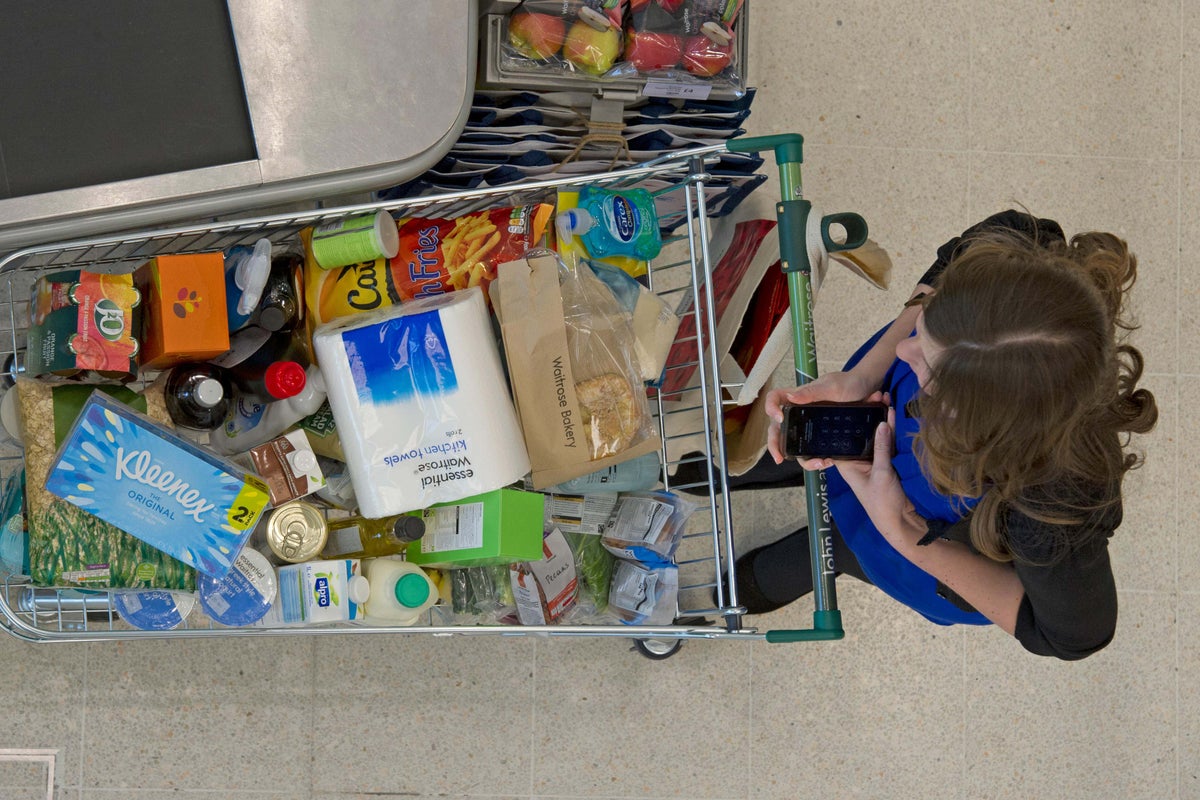
Falls last month in the cost of energy and air travel – along with an easing of inflation across a range of everyday groceries including chocolate, coffee and rice – helped pull down the UK’s overall rate to its lowest level since spring 2025.
Electricity bills in April were on average 6.0% lower than a year ago.
This is a sharp turnaround from March, when they were up year on year by 5.6%.
Gas bills were already down 2.8% on the year in March, but in April they recorded an even larger drop, averaging 13.5% below where they stood 12 months ago, according to data from the Office for National Statistics (ONS).
The falls are a result of Ofgem lowering its energy price cap from the start of April by 7%, or £10 a month, for the average household using both electricity and gas, in response to measures announced by the Government to cut the cost of bills.
A steep drop in air fares also helped ease the overall rate of inflation.
The average cost of air travel was down 13.2% year on year in April, following a jump of 14.5% in March, reflecting the early timing of this year’s Easter holidays.
A wide range of groceries recorded an smaller annual increase in price last month than in March, including chocolate, mineral water, ready meals, coffee, meat, tea, rice and bread.
The same was true for the cost of tickets to cinemas, theatres, concerts and museums, while train fares swung from a positive rate of inflation in March of 1.9% to a fall of 0.2% in April.
There were also smaller rises in water and sewerage bills than a year ago.
All of these factors were more than enough to offset the upwards pressures on inflation last month, led by a sharp rise in the cost of fuel.
The average price of petrol in April was 16.6% higher than 12 months ago, compared with a much smaller year on year on increase of 2.0% in March.
Diesel saw an even bigger jump, from an annual inflation rate of 9.6% in March to 34.1% in April.
The steep increases reflect the ongoing impact of the Iran war, which began at the end of February and prompted a spike in the price of crude oil during March, in turn boosting the cost of filling up at the pumps.
Inflation also picked up pace in April for a handful of everyday groceries, including pasta, fish, potatoes and breakfast cereals.
The average cost of staying in hotels and similar accommodation was 3.8% higher in April than 12 months earlier, compared with a year on year rise of just 0.8% in March.
Below are some examples of how the Consumer Prices Index (CPI) inflation rate has eased or accelerated.
Two figures are listed for each item: the average rise in price in the 12 months to March, followed by the average rise in price in the 12 months to April.
– Examples where annual inflation has eased, ranked by the size of change:
Passenger air travel: March up 14.5%, April down 13.2%Water supply: March up 26.4%, April up 9.0%Electricity: March up 5.6%, April down 6.0%Gas: March down 2.8%, April down 13.5%Margarine: March up 3.1%, April down 1.4%Chocolate: March up 10.9%, April up 7.8%Mineral or spring waters: March up 9.4%, April up 6.3%Ready-made meals: March up 6.7%, April up 3.9%Coffee: March up 9.0%, April up 6.3%Cinemas, theatres, concerts: March up 7.4%, April up 5.2%Meat: March up 5.8%, April up 3.6%Tea: March up 6.7%, April up 4.6%Bread: March up 3.3%, April up 2.0%
– Examples where annual inflation has accelerated
Diesel: March up 9.6%, April up 34.1%Petrol: March up 2.0%, April up 16.6%Hotels/other accommodation: March up 0.8%, April up 3.8%Sauces, spices & culinary herbs: March up 2.6%, April up 4.9%Pasta & couscous: March up 4.4%, April up 6.1%Men’s clothes: March up 0.2%, April up 1.6%Fish: March up 4.5%, April up 5.7%Crisps: March up 0.3%, April up 1.5%Women’s clothes: March up 0.9%, April up 2.0%Potatoes: March up 0.5%, April up 1.5%


Michelle Monaghan on the importance of getting quality sleep
Fintech firm Mercury hits $5.2 billion valuation after funding round, up 49% in 14 months

Putin, Xi hail ‘unyielding’ ties in talks after Trump visit

-

 Entertainment1 week ago
Conan O’Brien hat tricks as Oscar host
-

 Fashion1 week ago
Italy’s Zegna Group’s Q1 growth boosted by strong organic performance
-
 Business1 week ago
Pound wobbles and bonds suffer as Starmer battles on
-

 Sports1 week ago
2025-26 NBA Title Odds: Thunder, Spurs Favored; Knicks Rising
-

 Fashion1 week ago
US T&A exports decline 10% to $5 bn on softer regional demand
-

 Entertainment4 days ago
Where Pete Davidson, Elsie Hewitt stand after breakup: Details revealed
-
 Business6 days ago
Jersey Election 2026: Cost of living concern in St Helier Central
-
 Business1 week ago
India must build its own AI models: Sarvam AI – The Times of India