

Fashion
EU Parliament greenlights CBAM update, SMEs get relief


The updated CBAM introduces a new de minimis mass threshold, exempting imports of up to 50 tonnes per importer per year from CBAM requirements. This replaces the earlier rule exempting only goods of negligible value. According to the EU, this change will relieve 90 per cent of importers—primarily SMEs and individuals—of reporting and compliance obligations while still covering 99 per cent of total CO2 emissions from CBAM goods such as iron, steel, aluminium, cement, and fertilisers, the Parliament said in a press statement.
European Parliament has approved CBAM reforms under the ‘Omnibus I’ package, easing compliance for SMEs by exempting imports up to 50 tonnes per importer annually.
The changes simplify authorisation, emissions calculation, and verification rules while retaining 99 per cent emissions coverage for some products.
The text now awaits Council endorsement.
For goods still covered by CBAM, the law simplifies key processes including authorisation of CBAM declarants, calculation and verification of embedded emissions, and financial liability requirements. The legislation also introduces safeguards and anti-abuse provisions to ensure that emissions coverage remains intact and that the threshold cannot be misused to avoid compliance.
The legislation must now be formally endorsed by the Council of the EU. It will enter into force three days after its publication in the EU Official Journal.
CBAM is the EU’s flagship tool to ensure a level playing field between EU-made products—which are subject to the EU Emissions Trading System (ETS)—and imports from non-EU countries. It is designed to encourage foreign producers to adopt more climate-friendly production methods. In early 2026, the European Commission is set to review whether the CBAM’s scope should be expanded to cover additional ETS sectors and consider measures to assist EU exporters of CBAM-covered goods facing carbon leakage risks.
Fibre2Fashion News Desk (KD)
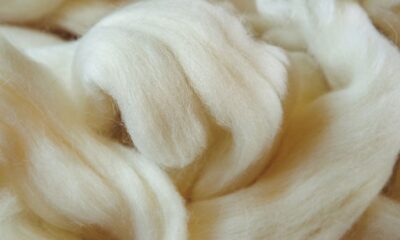









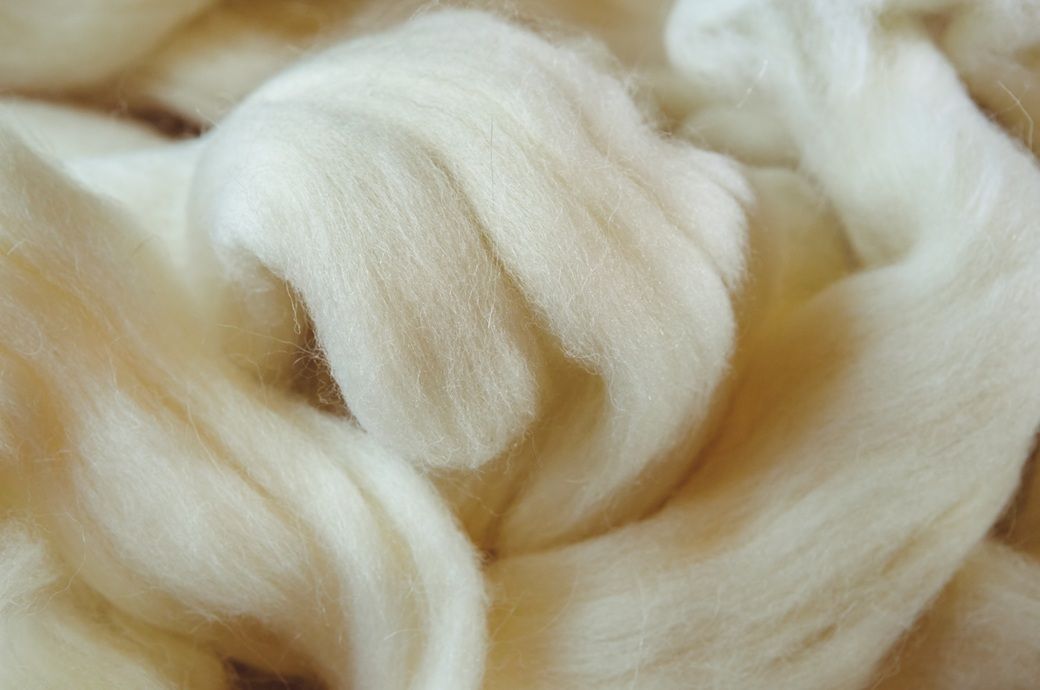
“The price weakness was most evident in the 18.5–21 micron Merino fleece range, particularly in Southern and Western regions, where declines of 40–60 cents were recorded. Crossbred wool prices also eased, while the Northern market showed some firmness in 20–21 microns,” said Australian Wool Innovation (AWI) in its week 39 commentary.
Australian wool prices declined this week, with the Eastern Market Indicator (EMI) falling 27 cents to 1,724 c/kg amid buyer caution and rising logistics costs.
Weakness was led by Merino fleece, while crossbreds also eased.
Strong auction volumes and increased supply reduced competition, signalling a pause after sustained price gains.
Market sentiment was impacted by increased supply, with offerings nearing 40,000 bales. Pass-in rates stood at 9 per cent nationally and over 13 per cent in the West, signalling growing seller resistance. Despite lower annual production, supply levels remain elevated, partly supported by broker and farm-held stocks, the AWI commentary noted.
Rising freight costs linked to Middle East tensions and sustained supply are expected to test market stability. Around 37,815 bales are scheduled for sale next week, the AWI commentary added.
Fibre2Fashion News Desk (CG)
Ukraine’s apparel imports increased from $***.*** million in **** and $***.*** million in ****, reflecting a steady recovery in demand. However, Turkiye’s exports dropped to $***.*** million in ****, reducing its share to **.** per cent from **.** per cent in **** and a dominant **.** per cent in ****, when it was the leading supplier, according to *fashion.com/market-intelligence/texpro-textile-and-apparel/” target=”_blank”>sourcing intelligence tool TexPro.
China emerged as the top supplier in ****, with shipments valued at $***.*** million, accounting for **.** per cent of total imports, only marginally higher than **.** per cent in ****. Bangladesh continued its strong growth trajectory, supplying $***.*** million and capturing a **.** per cent share, up significantly from **.** per cent in ****.



The unexpected path that led Morgan and Frankie Price to Arkansas gymnastics

US-Iran mediation: Politicians castigate India’s Jaishankar for spiteful remarks on Pakistan

The 2026 ESPN Fantasy Baseball draft guide: Rankings, tips, stats, strategy and more

Sales at US apparel, clothing accessories stores up 4% YoY in Jan 2026

Justice Department Says Anthropic Can’t Be Trusted With Warfighting Systems

March Madness 2026 – How to watch in SA, start time, schedule, TV channel for NCAA championship basketball tournament

-
 Fashion1 week ago
Sales at US apparel, clothing accessories stores up 4% YoY in Jan 2026
-
 Tech1 week ago
Justice Department Says Anthropic Can’t Be Trusted With Warfighting Systems
-
 Sports1 week ago
March Madness 2026 – How to watch in SA, start time, schedule, TV channel for NCAA championship basketball tournament
-
 Fashion1 week ago
Spain’s Inditex FY25 sales rise 3.2% to $46.28 bn amid strong demand
-

 Politics1 week ago
Iran strikes Tel Aviv with cluster-warhead missiles in retaliation of Larijani’s martyrdom
-

 Entertainment1 week ago
Val Kilmer revived 1 year after death through AI
-
 Business1 week ago
Brits cashing in jewellery as gold price hits record high
-
 Fashion1 week ago
US’ G-III Apparel’s FY26 sales fall 7% to $2.96 bn