

Fashion
Bestseller CEO’s Klarna stake drives $1.7 billion investment comeback


By
Bloomberg
Published
September 11, 2025
Anders Holch Povlsen has accumulated stakes in listed online retailers, banks, and other finance firms over the past two decades, while overseeing one of the world’s largest closely held fashion fortunes.
But it’s a lucrative bet on Klarna Group Plc that’s currently driving the 52-year-old billionaire’s wealth revamp.
Povlsen, chief executive officer of Danish clothing retailer Bestseller, is among the biggest winners from the initial public offering of the financial technology company, which began trading Wednesday in New York and closed almost 15% above its offering price of $40 per share.
He now owns a roughly $1.4 billion stake in the Swedish business, making it his largest holding in a publicly traded company, while also cashing in at least $250 million from the offering, which priced above the marketed ranges, according to Bloomberg calculations. Povlsen has overall gains of more than 600% from his investment in the provider of buy-now, pay-later financing, taking the value of his disclosed holdings in listed companies to about $2.5 billion, the calculations show.
A representative for Povlsen — who has a total net worth of $6.9 billion, according to the Bloomberg Billionaires Index — didn’t immediately respond to requests for comment.
Despite Klarna’s current valuation falling well below its 2021 peak of $45.6 billion, Povlsen’s investment underscores one of his most successful efforts to diversify a family fortune that began five decades ago, when his parents founded Bestseller as a women’s clothing store in a small Danish town.
Povlsen acquired a 10% stake in Klarna in mid-2017 through his family office, Heartland, just weeks before the fintech was valued at approximately $2.3 billion. He earlier used the investment firm to acquire holdings in e-commerce fashion sites Zalando SE and ASOS Plc. Heartland’s other listed assets include Funding Circle Holdings Plc, a London-based lending platform that has struggled since its initial public offering in 2018.
While also a major landowner in Scotland, most of Povlsen’s fortune remains tied up in Bestseller, where he first began working as a teenager before taking over from his parents as owner and managing director in 2001.
In a rare interview this year to mark Bestseller’s 50th anniversary, Povlsen said he originally wanted to start an e-commerce firm before deciding to work in the family business, underscoring his long-standing interest in the sector that Klarna has helped transform since its own creation in 2005.
“My parents did everything they could to dissuade me from following in their footsteps,” he told the Spin Off fashion magazine. “The more they tried, the more my interest in Bestseller grew.”
Other winners in Klarna’s IPO include the founders Victor Jacobsson, Niklas Adalberth, and Sebastian Siemiatkowski, who’s also its CEO. They cashed in at least $50 million of their combined holdings in the oversubscribed IPO, which valued the company at approximately $15 billion, according to filings.
The three now control overall stakes worth more than $2 billion in Klarna, a company that has evolved from a European clone of PayPal Holdings Inc. to one of the world’s biggest providers of short-term consumer loans as it seeks to disrupt the banking sector.
“You have to be willing to push the envelope,” Siemiatkowski said in an interview Tuesday with Bloomberg News.









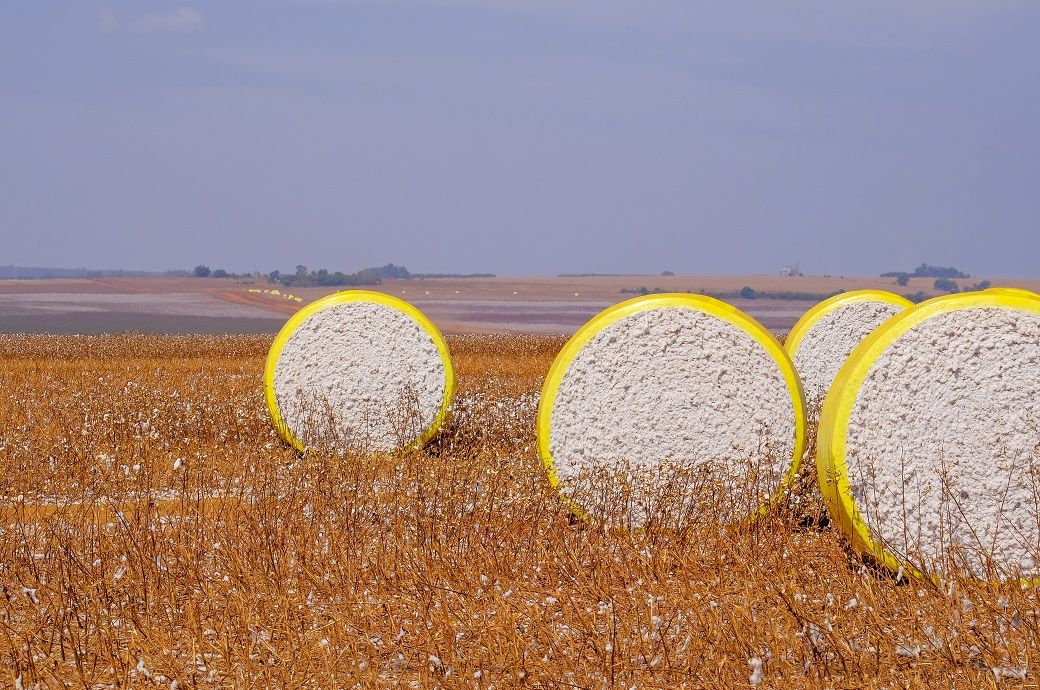
Net sales of Upland cotton for the 2025–26 marketing year declined to 123,300 RB (running bales each weighing 226.8 kg), down 24 per cent from the previous week and 35 per cent below the prior four-week average. The slowdown followed the previous week’s strong rebound, when sales had climbed to 162,900 RB.
US cotton export sales weakened in the week ended April 30, with both Upland and Pima cotton posting lower demand and shipments, according to USDA.
Upland sales fell 24 per cent week on week to 123,300 RB, while Pima sales declined 47 per cent to 11,500 RB. Asian markets, led by Pakistan, India, Vietnam, and Bangladesh, continued to dominate US cotton buying activity.
Pakistan emerged as the largest buyer during the latest reporting week with purchases of 38,800 RB, followed by India (27,200 RB), Vietnam (18,800 RB), Indonesia (14,400 RB), and Bangladesh (9,100 RB). Reduced demand from South Korea partly offset the gains. The data also showed active switching activity between Asian buyers, including volumes redirected from Vietnam and South Korea.
New crop Upland sales for the 2026–27 marketing year totalled 48,400 RB, led by Guatemala (35,200 RB) and Indonesia (19,000 RB), while reductions for Vietnam limited overall growth. This was lower than the previous week’s 105,700 RB, which had been driven by strong buying from Turkiye, China, and Guatemala.
Export shipments of Upland cotton also softened. Weekly exports fell to 327,500 RB, down 15 per cent from the previous week and 1 per cent below the prior four-week average. Vietnam remained the top destination with 135,000 RB, followed by Bangladesh (29,600 RB), Pakistan (29,100 RB), Turkiye (27,700 RB), and China (20,400 RB).
Pima cotton exports also lost momentum during the week. Net sales for the 2025–26 marketing year declined to 11,500 RB, down 47 per cent from the previous week and 35 per cent below the four-week average. India continued to dominate buying activity with purchases of 6,700 RB, followed by Egypt (1,800 RB), Italy (800 RB), Thailand (600 RB), and Pakistan (600 RB). New crop Pima sales for 2026–27 were limited to 1,300 RB, all destined for Egypt, compared to 11,500 RB in the previous week.
Pima export shipments totalled 14,800 RB, down 17 per cent week on week, although still 52 per cent above the four-week average. Vietnam remained the leading destination with 8,400 RB, followed by India (2,700 RB), China (2,200 RB), Bangladesh (500 RB), and Colombia (400 RB).
Overall, the latest USDA data indicate that US cotton export demand moderated after the previous week’s recovery, with Asian markets continuing to dominate buying activity. Vietnam, Pakistan, India, Bangladesh, and Turkiye remained the key drivers of Upland exports, while India retained its position as the leading buyer of US Pima cotton.
Fibre2Fashion News Desk (KUL)
Canada’s total apparel imports stood at $*.** billion in January-February ****, down from $*.** billion in the same period last year, indicating slightly softer demand. China’s exports declined sharply to $***.** million, reducing its share to **.** per cent from **.** per cent a year ago, a significant drop in a short span, according to *fashion.com/market-intelligence/texpro-textile-and-apparel/” target=”_blank”>sourcing intelligence tool TexPro.
In contrast, other Asian suppliers strengthened their positions. Bangladesh emerged as a key gainer, with shipments rising to $***.** million and its share increasing to **.** per cent. Vietnam also expanded its footprint, accounting for $***.** million and a **.** per cent share. Cambodia continued its upward trajectory, reaching $***.** million and **.** per cent share. India recorded a marginal increase to $**.** million, with its share improving to *.** per cent.

The company posted net sales of $130 million for the quarter ended March 29, 2026, down 11.3 per cent year on year (YoY) from $146.6 million. However, sales increased 7.1 per cent sequentially from the previous quarter.
US-based Unifi Inc has reported improved Q3 FY26 profitability despite an 11.3 per cent YoY decline in net sales to $130 million.
The gross profit rose to $9.1 million from a loss a year earlier, while net loss narrowed sharply to $2.3 million.
Adjusted EBIT turned positive at $4 million, supported by cost reductions, operational optimisation and stronger Repreve product sales.
Eddie Ingle, CEO at Unifi said the company’s operational and cost restructuring measures were beginning to translate into improved financial performance. “We are pleased to report that the impact of our team’s hard work is beginning to translate into improved financial performance, highlighted by improved gross profit and debt reduction,” added Ingle.
Gross margin returns to positive territory
The gross profit improved significantly to $9.1 million compared to a gross loss of $0.4 million in Q3 FY25. Gross margin rose to 7 per cent from negative 0.3 per cent a year earlier, supported by multi-year cost reduction efforts and operational optimisation, Unifi said in a press release.
Net loss narrowed sharply to $2.3 million, or $0.12 per diluted share, from $16.8 million, or $0.92 per diluted share, in the corresponding quarter last year. Adjusted net loss improved to $3.8 million from $13.9 million in Q3 FY25, while adjusted EBITDA turned positive at $4 million against a negative $4.9 million a year ago.
Revenue from Repreve fibre products reached $38.2 million during the quarter and accounted for 29 per cent of total net sales, up from $34.3 million and 28 per cent share in the second quarter of FY26.
Unifi also generated $8 million in cash from operating activities during the quarter and $24.4 million during the first nine months of FY26. Debt principal stood at $94.9 million, while net debt was reduced to $68.4 million as of March 29, 2026.
Selling, general and administrative (SG&A) expenses declined 9 per cent YoY to $11.2 million, driven by continued cost-saving initiatives.
“These results were driven by the actions we have taken over the past several quarters to realign our cost structure and optimise our operations and give us confidence that we can generate stronger profitability and cash flow from a lower revenue base moving forward,” said Ingle.
The Americas segment recorded the largest improvement in gross profit due to cost reductions, partially offset by lower sales. Meanwhile, the Brazil segment faced import pricing pressure, and the Asia segment was impacted by lower sales volumes.
Innovation and sustainability focus continue
During the quarter, Unifi published its ‘Sustainability Snapshot’ highlighting progress in textile-to-textile recycling and launched Luxel, a linen-inspired easy-care performance yarn.
Looking ahead, the company expects the fourth quarter of FY26 to benefit from responsive price increases linked to petrochemical-related inflation.
“As we enter the fourth quarter and look towards the remainder of calendar year 2026, we are encouraged by the momentum we are seeing across our businesses,” Ingle said.
“Our innovative beyond apparel business is continuing to gain traction, which should help support improved financial results,” he added.
Fibre2Fashion News Desk (SG)


Middle power or hard state?

First Test: Abbas strikes thrice, Rahim stands firm for Bangladesh at lunch

Nicola Peltz sparks fresh Beckham feud buzz with emotional family photo

-

 Politics5 days ago
Iran weighs US reply delivered via Pakistan as Trump signals opposition to deal terms
-

 Tech1 week ago
Almost half of UK businesses hit by cyber attacks | Computer Weekly
-

 Tech1 week ago
This Indigenous Language Survived Russian Occupation. Can It Survive YouTube?
-

 Fashion1 week ago
US’ J.Jill, Inc. appoints Kimberly Wallengren as CMO
-
 Fashion1 week ago
Canada’s Lululemon appoints Esi Eggleston Bracey to board of directors
-

 Entertainment1 week ago
David Allan Coe, country singer who wrote “Take This Job and Shove It,” dies at age 86
-
 Business1 week ago
Government hikes jet fuel prices by 5% for international airlines – The Times of India
-

 Fashion1 week ago
US’ Gap partners with Victoria Beckham on timeless wardrobe essentials