

Business
Evergrande: Why should I care about the crisis-hit Chinese property giant?

Business reporter, BBC News
 Getty Images
What does Evergrande do?
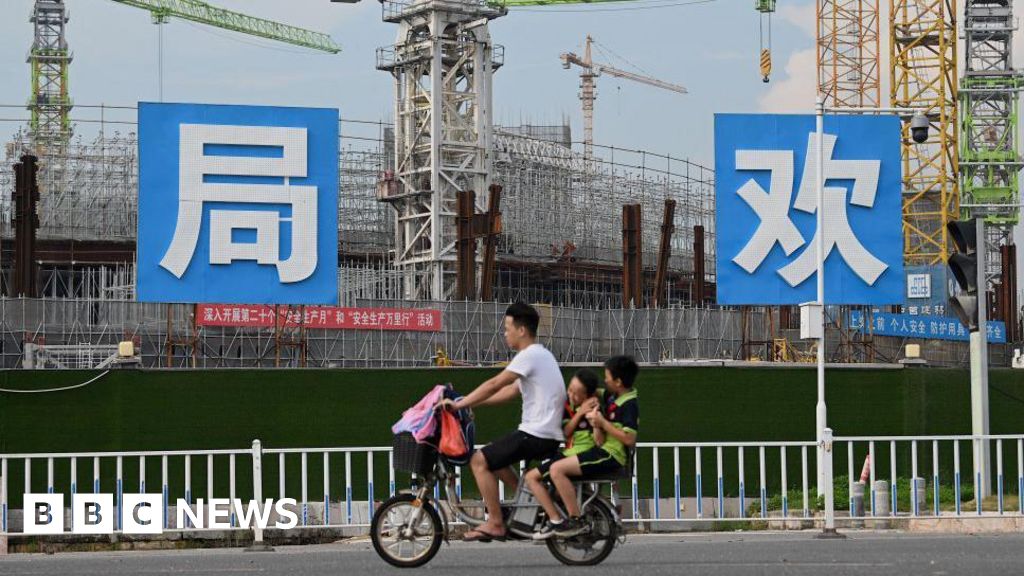
Evergrande, formerly known as the Hengda Group, was founded by Mr Hui in 1996 in Guangzhou, southern China.
At the time of its collapse, Evergrande had some 1,300 projects under development in 280 cities across China.
The Evergrande Group as a whole encompassed far more than just real estate development.
Its businesses ranged from wealth management to making electric cars. It even owned a controlling stake in the country’s most successful football team, Guangzhou FC.
Mr Hui was once Asia’s richest person with his fortune estimated at $42.5bn (£31.6bn) by Forbes, but his wealth plummeted as Evergrande’s problems deepened.
Why is Evergrande in trouble?
Evergrande expanded aggressively to become one of China’s biggest companies by borrowing more than $300bn.
But in 2020, the Chinese government brought in new rules to control the amount owed by big real estate developers.
The new measures led Evergrande to offer its properties at major discounts to ensure money was coming in to keep the business afloat.
That meant the company struggled to meet the interest payments on its debts.
Since the start of the crisis Evergrande’s shares have lost more than 99% of their value.
In August 2023, the firm filed for bankruptcy in New York, in a bid to protect its US assets as it worked on a multi-billion dollar deal with creditors.
Why do Evergrande’s problems matter?
Evergrande’s problems and the property crisis as a whole have hurt the Chinese economy as the real estate industry accounted for about a third of the country’s gross domestic product (GDP), an annual measure of all economic activity.
It was not only a significant driver of growth but also a major source of revenue for local governments.

 Getty Images
A sharp fall in investment and fund raising activities in real estate have impacted the financial sector, and allied industries like construction, which are a huge source of employment.
At the grassroots level, it has hit ordinary people in China hard as many families put their savings into property.
All of this has helped put pressure on consumer spending, which Beijing sees as crucial to boosting economic growth.
Why didn’t Evergrande get a state bailout?
Through the property crisis the Chinese government has taken a number of measures to help shore up the industry and the economy.
Beijing has poured hundreds of billions of dollars into measures including the country’s central bank providing low-interest loans for state-controlled banks to support struggling real estate projects.
There has also been help for home buyers and incentives to purchase new household appliances.
But it did not roll direct bailouts for the country’s struggling developers, partly to avoid encouraging more risky behaviour.
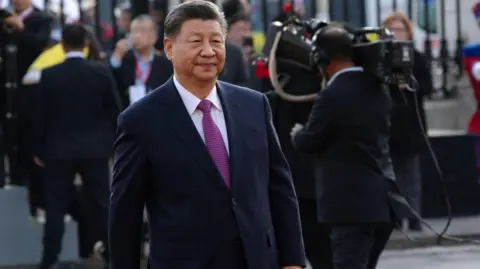
While the property market was once crucial to China’s economic growth, President Xi Jinping’s focus has changed to competing with US to gain the lead in high-tech manufacturing and AI.
So the ruling Communist Party‘s economic priorities have shifted to areas like renewable energy, electric vehicles, automation and robotics.
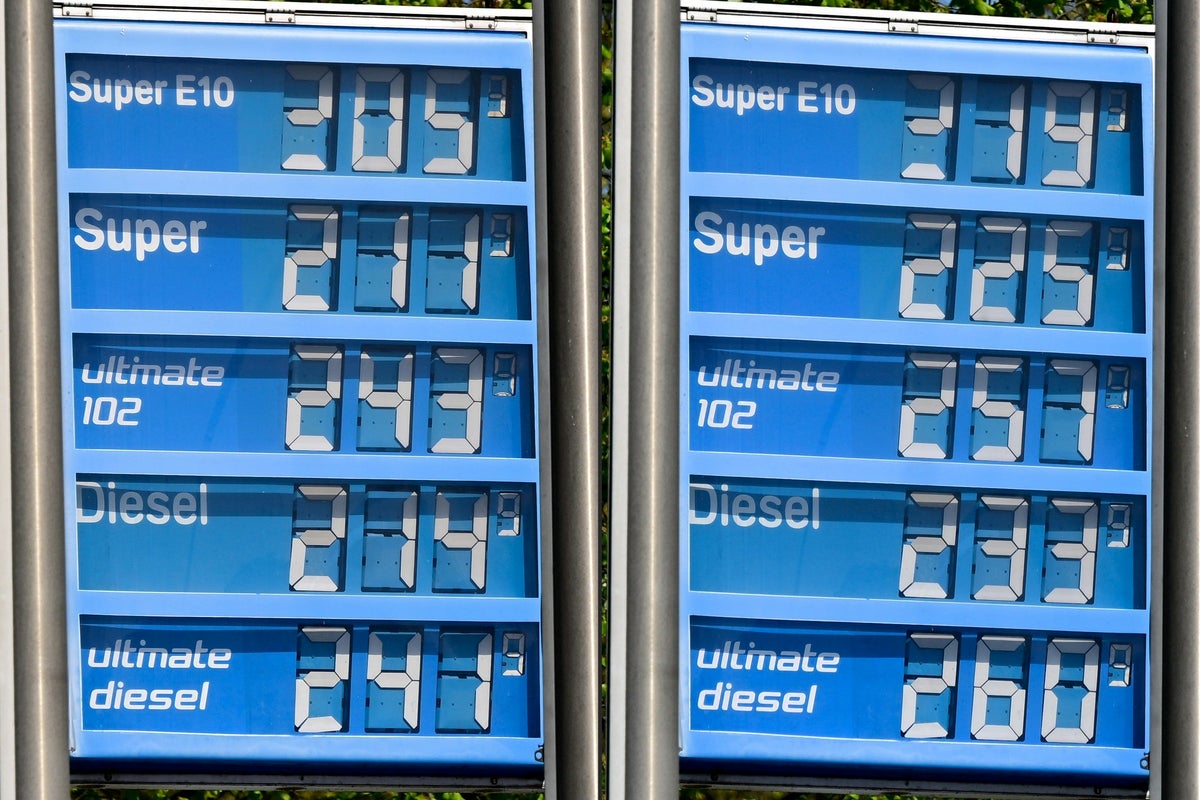
Oil prices jumped on Tuesday as Donald Trump weighed Iran’s latest proposal to end the war.
The US president is unhappy with the latest Iranian proposal, a US official said on Monday. Iranian sources disclosed that Tehran’s proposal avoided addressing its nuclear programme until hostilities cease and Gulf shipping disputes are resolved.
Trump’s displeasure with the Iranian offer leaves the conflict deadlocked, with Iran shutting shipping flows through the Strait of Hormuz, which typically carries supply equal to about 20 per cent of global oil and gas consumption, and the US keeping in place its blockade of Iranian ports.
Brent crude rose to $108.13 per barrel, hovering near a three-week high, while US West Texas Intermediate went up to $96.48.
Both benchmarks are well above pre-war levels. Brent was trading at $72 before the US-Israeli war on Iran began on 28 February.
Asian stocks were broadly subdued at the opening. While MSCI’s broadest index of Asia-Pacific shares outside Japan was down 0.12 per cent, hovering near the record high it touched on Monday, Nikkei fell 0.5 per cent.
The S&P 500 eked out modest gains on Monday and was on course for a nearly 10 per cent gain for April. US stock futures were 0.1 per cent higher in Asian hours.
Indian shares are set to open lower on Tuesday, with GIFT Nifty futures pointing to the benchmark Nifty 50 opening below Monday’s close of 24,092.70. Both Nifty and Sensex snapped a three-session losing run on Monday, led by a rebound in technology stocks, but the broader momentum remained constrained by unresolved tensions around the Strait of Hormuz.
Elevated oil prices are a particular headwind for India, the world’s third-largest crude importer, heightening inflation risks, pressuring economic growth and widening the country’s import bill.
Foreign portfolio investors offloaded domestic stocks worth Rs 11.5bn ($122m) on Monday, extending their selling streak to a sixth straight session.
Vessel crossings showed signs of recovery over the weekend, according to the maritime intelligence firm Windward, but analysts warned increased movement was yet to translate into a surge in oil and gas flows.
Iran reportedly offered to end its blockade of the waterway without addressing its nuclear programme, passing the proposal to Washington through Pakistani mediators. But Mr Trump has made ending Iran’s atomic programme a condition for any deal.
Central banks are also in focus this week, with the Bank of Japan, the US Federal Reserve, the Bank of England, and the European Central Bank all due to announce policy decisions. All are expected to hold rates steady, but markets will be watching closely for signals about how policymakers plan to respond to the inflationary pressure from the war.
“The BOJ is likely to stay highly sensitive to market volatility,” Fred Neumann, chief Asia economist at HSBC, told Reuters. “Our base case remains one single 25 basis point hike this year in July, but a June rate rise becomes more likely if the Strait of Hormuz is still effectively closed after mid-May.”

The General Motors global headquarters at Hudson’s Detroit in Detroit, Michigan, US, on Monday, Jan. 12, 2026.
Jeff Kowalsky | Bloomberg | Getty Images
DETROIT – General Motors is set to report its first-quarter earnings before the bell Tuesday.
Here’s what Wall Street is expecting, based on a survey of analysts by LSEG:
- Earnings per share: $2.62 adjusted
- Revenue: $43.68 billion
Those results would mark a roughly 1% decline in revenue compared with a year earlier and a 5.8% decrease in adjusted earnings per share.
GM’s 2025 first-quarter results included $44.02 billion in revenue, net income attributable to stockholders of $2.78 billion, and adjusted earnings before interest and taxes of $3.49 billion.
Aside from earnings and any changes to the automaker’s 2026 guidance, investors will be monitoring effects from the Iran war, tariff impacts and additional charges related to the automaker’s pullback in all-electric vehicles.
After announcing $7.6 billion in EV write-downs last year, the automaker said it expected additional charges but at a lower level than in 2025.
GM’s 2026 earnings guidance is better than its expectations and results from last year. It includes net income attributable to stockholders of between $10.3 billion and $11.7 billion; adjusted earnings before interest and taxes of $13 billion to $15 billion; and EPS of between $11 and $13 for the year.
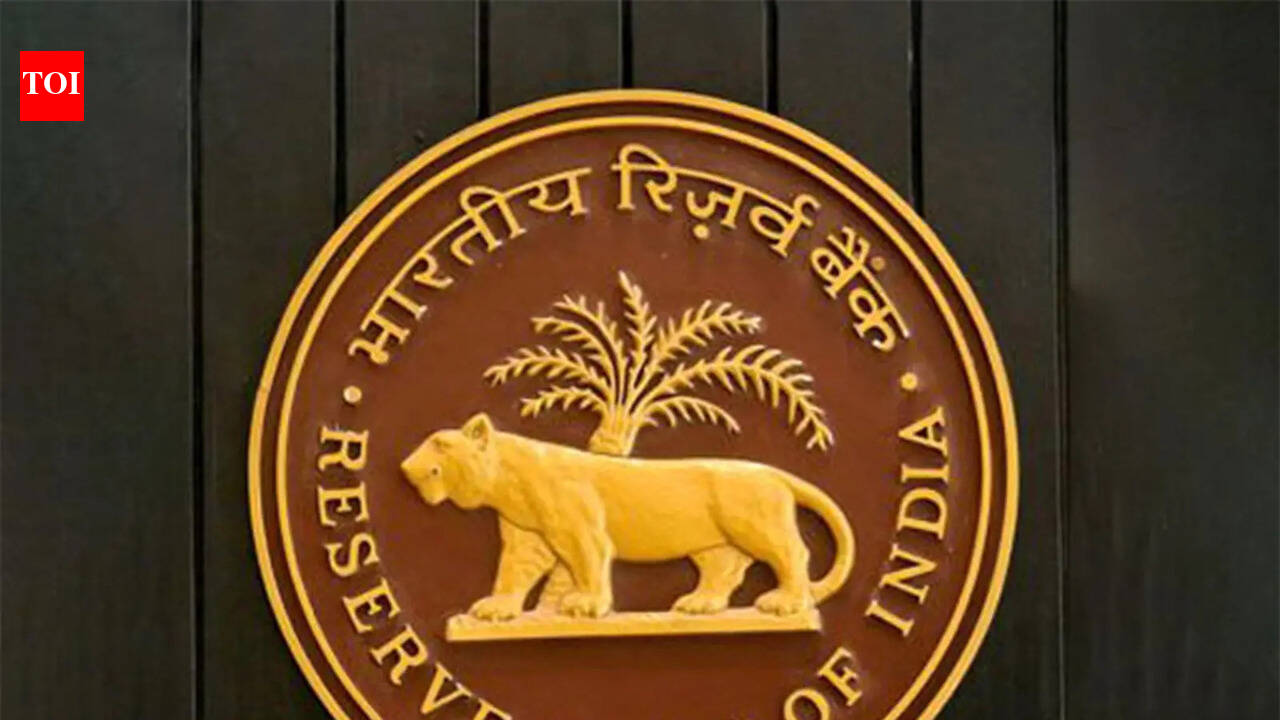
Mumbai: RBI has required banks to report all foreign exchange derivative deals involving the rupee undertaken in India and globally by their entire group, including overseas branches, subsidiaries, and parent entities. This brings into view offshore trades that were earlier largely invisible. This applies to both OTC deliverable and offshore non-deliverable contracts, meaning even speculative offshore bets on the rupee must now be disclosed. Banks now must report detailed transaction data-size, counterparty, maturity, and structure-no later than two working days, though trades below $1 million and certain already-reported or internal hedging transactions are exempt.


World Cup FAQ: How Are Penalties Awarded And What Are The Rules?

Unicef warns Afghanistan could lose up to 25,000 female health workers, teachers
Oil prices edge higher as Trump weighs Iran’s latest proposal to open Hormuz

-

 Sports1 week ago
NCAA men’s gymnastics championship: All-time winners list
-

 Sports1 week ago
WWE WrestleMania 42 Night 2: Live match results and analysis
-

 Fashion1 week ago
UK’s Sosandar returns to profitability amid robust FY26 performance
-

 Politics7 days ago
UK’s Starmer seeks to deflect blame over Mandelson appointment
-
 Entertainment1 week ago
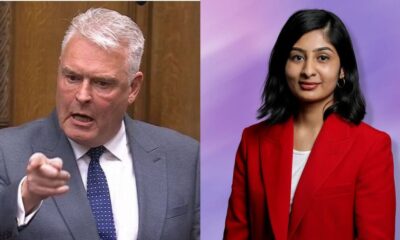
Lee Anderson, Zarah Sultana kicked out of UK Parliament for calling PM ‘liar’
-
 Business1 week ago
How Trump’s psychedelics executive order could unlock stalled cannabis reform
-

 Sports1 week ago
Quetta Gladiators opt to bowl after winning toss against Peshawar Zalmi in PSL 11 clash
-
 Business1 week ago
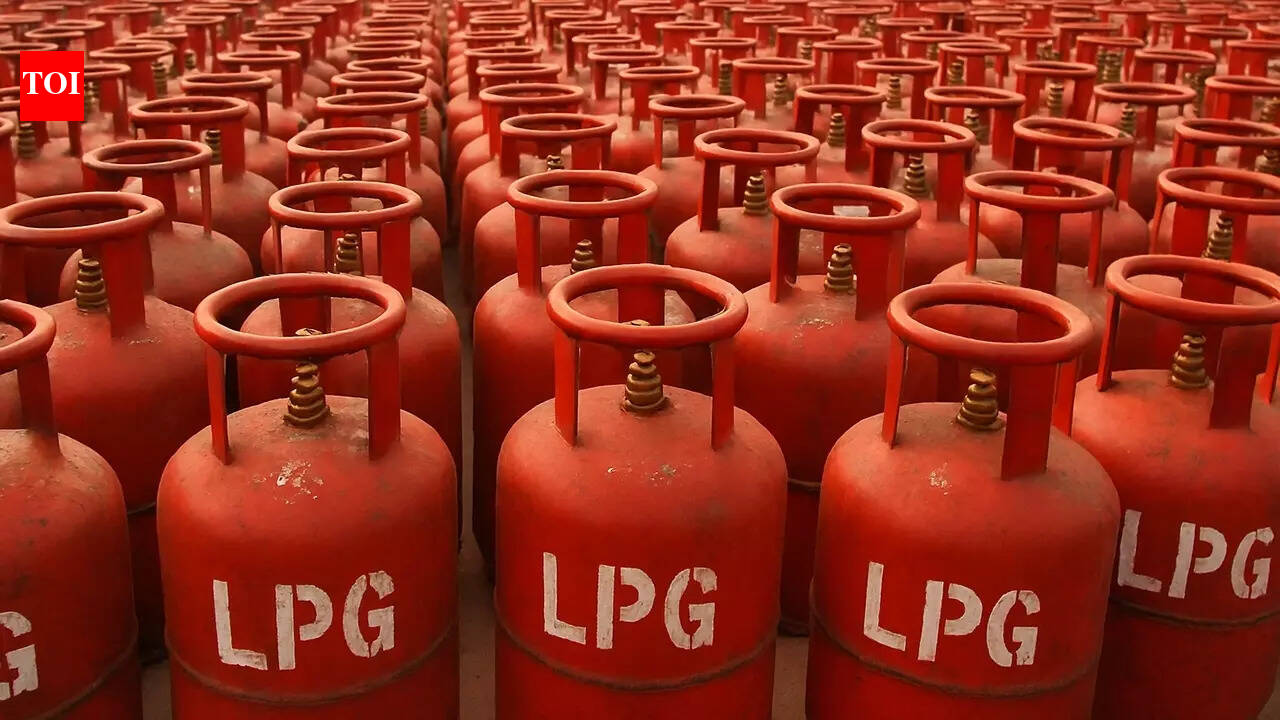
No fuel shortage: Govt assures 100% domestic LPG, PNG, CNG supply amid Hormuz energy crunch – The Times of India