

Business
Exato Technologies IPO: The Rs 37-Crore SME IPO Gets Bids Worth Rs 23,600 Crore; GMP Surges To 114%


Last Updated:
Exato Technologies IPO: Unlisted shares of Exato Technologies Ltd are trading at Rs 300 apiece in the grey market, which is a GMP of whopping 114.29% over the IPO price of Rs 140.
Exato Technologies IPO Day 3.
Exato Technologies IPO Day 3: The initial public offering (IPO) of Exato Technologies Ltd, which opened on Friday, witnessed its final day of bidding today, Tuesday, December 2. The Rs 37.5-Crore BSE SME IPO closed at 5:00 pm today. On the last day of bidding on Tuesday, the IPO received a whopping 947.21 times subscription, receiving bids for 1,68,60,29,000 shares as against the 17,80,000 shares on offer. With this, the IPO received bids worth Rs 23,600 crore.
Its retail category got a 1,068.74x subscription, while its non-institutional investor (NII) quota got a 1,488.72x subscription. The QIB category received a 327.08x subscription.
Exato Technologies IPO GMP Today
According to market observers, unlisted shares of Exato Technologies Ltd are currently trading at Rs 300 apiece in the grey market, against the upper IPO price of Rs 140. It means a grey market premium (GMP) of a whopping 114.29%, indicating a blockbuster listing for the company.
The GMP had stood at 107.14% in the morning and 93.57% on Monday.
The GMP is based on market sentiments and keeps changing. ‘Grey market premium’ indicates investors’ readiness to pay more than the issue price.
The price band of the IPO has been fixed at Rs 133-140 per equity share.
Exato Technologies IPO: Allotment & Listing Dates
The three-day IPO bidding will be closed today, December 2. Following this, its allotment will be finalised on December 3. However, its market listing will take place on December 5 on the BSE SME platform.
Exato Technologies IPO: More Details
The Exato Technologies IPO is a book-built issue worth Rs 37.45 crore, comprising a fresh issue of 0.23 crore shares amounting to Rs 31.85 crore and an offer for sale of 0.04 crore shares worth Rs 5.60 crore.
The company has set a price band of Rs 133 to Rs 140 per share. The lot size is 1,000 shares, translating into a minimum retail investment of Rs 2,80,000 for two lots at the upper price band. For high-net-worth individuals (HNIs), the minimum investment is 3 lots (3,000 shares), totalling Rs 4,20,000. GYR Capital Advisors Pvt. Ltd. is the book-running lead manager for the issue, Kfin Technologies Ltd. is the registrar, and Giriraj Stock Broking Pvt. Ltd. is the market maker.
Financially, Exato Technologies reported a 10% rise in revenue and an 84% jump in profit after tax between FY24 and FY25.
Founded in 2016, the company positions itself as a customer transformation partner, offering technology-led solutions aimed at improving customer engagement and operational efficiency. Its service portfolio spans CX and analytics, unified communications and infrastructure, and its proprietary platform Exato IQ.
The company caters to clients across BFSI, healthcare, retail, telecom, manufacturing, and the IT/ITeS and BPO/KPO sectors, leveraging AI, automation, and cloud technologies to deliver scalable and intelligent customer service solutions.
About the Author

Haris is Deputy News Editor (Business) at news18.com. He writes on various issues related to personal finance, markets, economy and companies. Having over a decade of experience in financial journalis…Read More
 Click here to add News18 as your preferred news source on Google.
 December 02, 2025, 10:13 IST
Read More
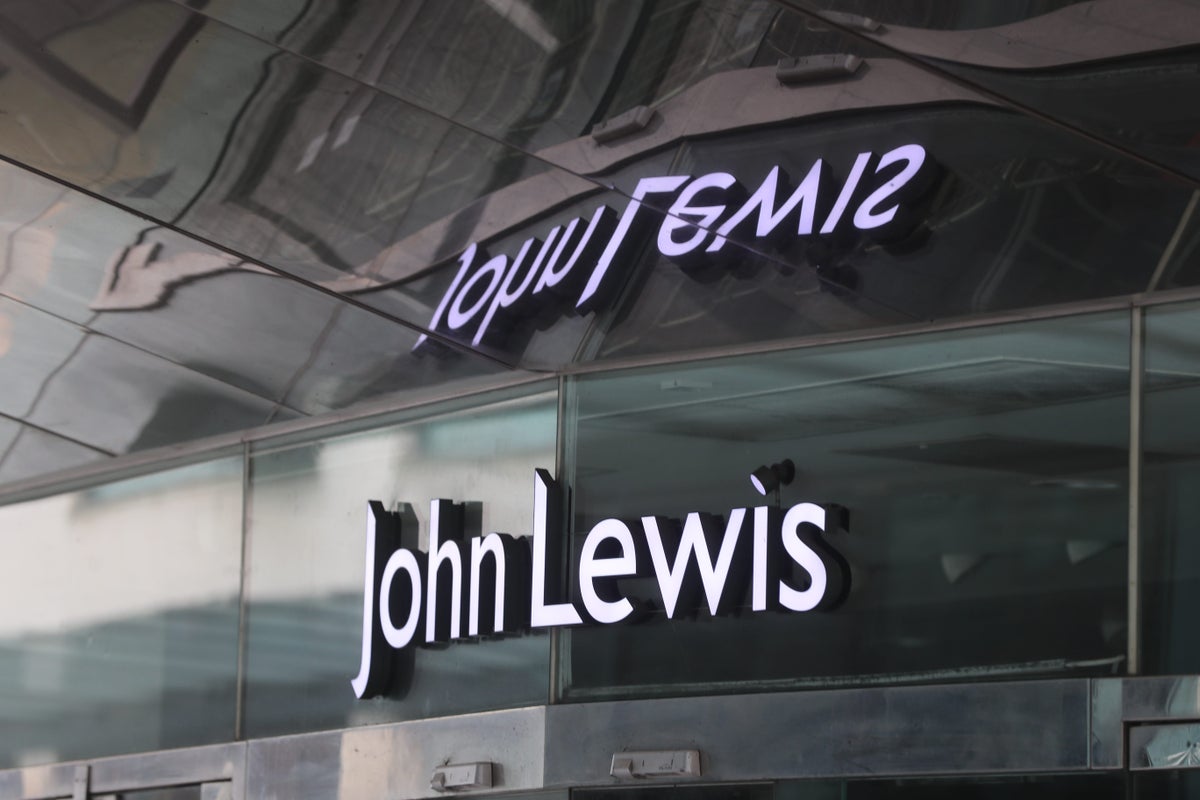
Workers at the John Lewis Partnership are set to find out whether they will receive their first annual bonus payment in four years next week.
The retail group, which runs the John Lewis department store chain and Waitrose supermarket business, will also reveal how it has been progressing with its transformation strategy in an update on Thursday March 12.
It will report its results for the year to January, which will include informing staff over its plans for any potential bonus.
It is still not clear whether the employee-owned business will pay an annual bonus to its staff, who the retail group call partners.
The payment of a bonus is decided by the company’s board.
JLP has not paid an annual bonus to workers since January 2022 amid a major turnaround strategy at the company.
Following the coronavirus pandemic, the group shut a number of John Lewis department stores and cut head office jobs in a bid to shore up its finances.
Last year, the company opted not to hand out a bonus again despite seeing annual profits triple.
JLP saw underlying profits rebound higher to £126 million for the year to January last year, from £42 million a year earlier.
Last summer, the company indicated in an internal update that staff could be in line for a bonus if it beats a £200 million profit target.
At its peak during the 1980s, the retailer paid an annual bonus worth as much as 24% of employee salaries.
After it was not paid out for a third consecutive year, a number of frustrated workers signed an open letter calling on bosses to bring the bonus back.
Last month, JLP said John Lewis and Waitrose partners would receive an inflation-busting 6.9% pay increase as part of a £108 million investment in its workforce.
On Thursday, the company will also shed more light on the progress of its major transformation under chair Jason Tarry.
The company’s strategy under the former Tesco UK boss has seen it pump more investment into its stores as JLP renewed its focus in its core retail business.
The firm is currently investing £800 million across its stores as part of a long-term investment.
It has refurbished 23 Waitrose stores over the past year, as well as five John Lewis shops.
It also launched the Topshop brand across all its 32 department stores last month as part of investment into its fashion offer.
Last month, Mr Tarry also pulled the plug on the partnership’s plans to build around 10,000 rental properties in order to focus further on retail.
It abandoned the build-to-rent ambitions launched under previous chairwoman Dame Sharon White in 2020, blaming higher costs and caution in the property market.

Last Updated:
On International Women’s Day 2026, Equirus Wealth reports Indian women investors’ shift from fixed deposits and gold to equity mutual funds.




Women investors are steadily reshaping India’s financial landscape, with rising participation in stocks, mutual funds, and digital investing platforms.
On International Women’s Day 2026, a key trend of behavior change among female investors has emerged over the past five years, particularly in their investment choices across various financial products. Women are now more confident while investing in high risk but rewarding equity market, as the portfolio allocation in equity mutual funds surged from 10 per cent to 32 per cent, while down from 40 per cent to 20 per cent in Fixed Deposits (FDs).
The five-year study on women investors and relationship managers was conducted by Equirus Wealth Limited, and was published in a report titled “Expanding Horizons: Changing Wealth Management Behaviours of Indian Women – Qualitative Analysis of Investor Evolution Across Age and Affluence.”
The study reveals that women investors are increasingly moving away from episodic product purchases such as fixed deposits, gold and property towards diversified, allocation-driven portfolios anchored around long-term financial goals.
This reflects the major behavioural change from ‘safety-first’ investing to allocation-driven portfolio strategies.
Female Investors Adopting AI Cautiously
According to the report ,Artificial Intelligence may dominate global investment conversations, but Indian women investors are adopting it cautiously. They are using AI primarily as research and learning tool rather than for autonomous investment decisions.
Not Panicking During Corrections
Another interesting thing being revealed by the study is that 70-90% of investors hold or review their investments during market corrections rather than exiting in panic, showing maturity during market cycles.
At the same time, around 55% selectively add capital during market dips, reflecting growing conviction and a longer-term approach to investing.
Rise of “bucket investing”
Investors are increasingly dividing portfolios into buckets like safety, growth, liquidity and legacy instead of buying random financial products.
Risk is no longer seen only as loss of capital.
Investors now also consider inflation, goal failure, and portfolio drawdowns as risks.
75–90% are discussing intergenerational wealth transfer and financial discipline for the next generation.
Click here to add News18 as your preferred news source on Google.
Follow News18 on Google. Join the fun, play games on News18. Stay updated with all the latest business news, including market trends, stock updates, tax, IPO, banking finance, real estate, savings and investments. To Get in-depth analysis, expert opinions, and real-time updates. Also Download the News18 App to stay updated.
March 08, 2026, 14:14 IST
Read More

Last Updated:
Gold is sold at a discount in Dubai due to Middle East conflict disrupting flights. Traders offer up to $30 per ounce less than London prices.
Dubai Gold Selling Cheaper As Iran War Grounds Flights
Gold is being sold at a discount in Dubai as the widening conflict in the Middle East disrupts flights and hampers the movement of bullion from one of the world’s key trading hubs.
According to a Bloomberg report, traders in Dubai are offering discounts of up to $30 per ounce compared to the global benchmark price in London. The unusual price cut comes as shipments remain stranded due to flight disruptions triggered by the escalating conflict involving Iran and Israel.
Dubai is a key global centre for refining and exporting gold to markets across Asia, including India. However, partial airspace restrictions and heightened security risks have slowed the movement of bullion out of the region.
Why Gold Is Being Sold Cheaper
Gold is typically transported in the cargo holds of passenger aircraft. With several flights from the UAE restricted amid regional tensions, traders are struggling to move bullion to international markets.
At the same time, insurance and freight costs have surged, making shipments more expensive and uncertain. Many buyers have therefore stepped back from placing new orders, unwilling to bear high logistics costs without assurance of timely delivery.
To avoid paying prolonged storage and financing costs while shipments remain stuck, some traders are offering gold at discounted prices.
Although transporting bullion by road to airports in neighbouring countries such as Saudi Arabia or Oman is theoretically possible, logistics firms are reluctant due to the risks and complications of moving high-value cargo across land borders during a conflict.
What It Means For India
India, one of the largest buyers of gold shipped from Dubai, could face short-term supply disruptions if the situation continues.
Renisha Chainani, head of research at Augmont Enterprises Ltd., said several cargo shipments have already been delayed, creating temporary tightness in the availability of physical bullion in India.
However, industry experts as reported by Bloomberg say the immediate impact may remain limited as domestic inventories are currently comfortable after heavy imports earlier this year.
Chirag Sheth, principal consultant for South Asia at Metals Focus, said Bloomberg that India has ample stocks for now, but warned that prolonged disruptions could eventually affect supply if the conflict continues for several months.
Meanwhile, global gold prices have surged this year amid geopolitical uncertainty, with spot gold recently trading above $5,000 per ounce.
Click here to add News18 as your preferred news source on Google.
Follow News18 on Google. Join the fun, play games on News18. Stay updated with all the latest business news, including market trends, stock updates, tax, IPO, banking finance, real estate, savings and investments. To Get in-depth analysis, expert opinions, and real-time updates. Also Download the News18 App to stay updated.
March 08, 2026, 10:03 IST
Read More

Will John Lewis pay staff an annual bonus for first time in four years?

Police probe man for throwing ‘ignited’ devices near protest in front of Mayor Mamdani’s house

Left-Handed People Are More Competitive, Says Science

-

 Sports1 week ago
LPGA legend shares her feelings about US women’s Olympic wins: ‘Gets me really emotional’
-

 Entertainment1 week ago
Pakistan’s semi-final qualification scenario after England defeat New Zealand
-

 Fashion1 week ago
South Korea’s Misto Holdings completes planned leadership transition
-

 Entertainment1 week ago
Bobby J. Brown, “The Wire” and “Law & Order: SUV” actor, dies of smoke inhalation after reported fire
-
 Business1 week ago
Greggs to reveal trading amid pressure from cost of living and weight loss drugs
-
 Business1 week ago
CNBC To Merge TV And Digital News Operations, Nearly A Dozen Jobs To Be Cut: Report
-

 Entertainment1 week ago
What’s new in Pokémon? Every game, update, surprise from 30th anniversary event
-

 Fashion1 week ago
Italy’s Moncler FY25 revenue reaches $3.69 bn with resilient margins