

Business
Exchange rate in Pakistan Today – January 31, 2026 | The Express Tribune

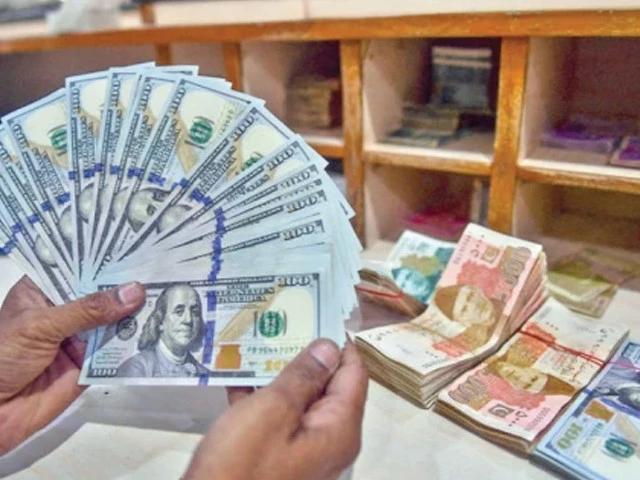
US dollar slips 9 paisa to close at Rs279.77, while in open market it declines 10 paisa to Rs280.82
KARACHI:
The Pakistani rupee remained firm against the US dollar last week, supported by improved investor sentiment, rising foreign inflows and a narrowing gap between interbank and open market rates.
Market confidence was bolstered by investment agreements worth $10 billion signed through the Pak-China e-Mining platform, alongside broad-based joint venture deals with China.
Pakistan’s return to global bond markets and expectations of up to $20 billion in fighter aircraft export agreements also supported the local currency.
The rupee drew further strength from rising workers’ remittances and inflows into Roshan Digital Accounts, which reached $11.70 billion.
Official foreign exchange reserves stood at $16.1 billion, while forecasts that reserves could exceed $40 billion by December added to positive sentiment.
Read: Further decline in gold and silver prices across markets
In addition, a continued crackdown against dollar smuggling helped limit demand in the open market. Over the week, the difference between interbank and open market dollar rates narrowed to Rs1.05.
In the interbank market, the US dollar slipped by 9 paisa to close at Rs279.77, while in the open market it declined by 10 paisa to Rs280.82.
The British pound strengthened during the session, rising by Rs7.99 in the interbank market to Rs385.47 and gaining Rs3.40 in the open market to settle at Rs388.56.
The euro also recorded gains, advancing by Rs5.69 in the interbank market to Rs333.99, while in the open market it rose by Rs2.77 to Rs336.84.
Among regional currencies, the Saudi riyal edged down by 4 paisa in the interbank market to Rs75.50, but gained 3 paisa in the open market to Rs75.40.
The UAE dirham slipped by 2 paisa in the interbank market to Rs76.17, while in the open market it increased by 4 paisa to Rs77.29.








Business
Budget 2026: Fiscal deficit, capex, borrowing and debt roadmap among key numbers to track – The Times of India
Finance Minister Nirmala Sitharaman is set to present her record ninth straight Union Budget, with markets closely tracking headline numbers ranging from the fiscal deficit and capital expenditure to borrowing and tax revenue projections, as India charts its course as the world’s fastest-growing major economy.The Budget will be presented in a paperless format, continuing the practice of recent years. Sitharaman had, in her maiden Budget in 2019, replaced the traditional leather briefcase with a red cloth–wrapped bahi-khata, marking a symbolic shift in presentation.Here are the key numbers and signals that investors, economists and policymakers will be watching in the Union Budget for 2025-26 and beyond:
Fiscal deficit
The fiscal deficit for the current financial year (FY26) is budgeted at 4.4 per cent of GDP, as reported PTI. With the government having achieved its consolidation goal of keeping the deficit below 4.5 per cent, attention will turn to guidance for FY27. Markets expect the government to indicate a deficit closer to 4 per cent of GDP next year, alongside clarity on the medium-term debt reduction path.
Capital expenditure
Capital spending remains a central pillar of the government’s growth strategy. Capex for FY26 is pegged at Rs 11.2 lakh crore. In the upcoming Budget, the government is expected to continue prioritising infrastructure outlays, with a possible 10–15 per cent increase that could take capex beyond Rs 12 lakh crore, especially as private investment sentiment remains cautious.
Debt roadmap
In her previous Budget speech, the finance minister had said fiscal policy from 2026-27 onwards would aim to keep central government debt on a declining trajectory as a share of GDP. Markets will look for a clearer timeline on when general government debt-to-GDP could move towards the 60 per cent target. General government debt stood at about 85 per cent of GDP in 2024, including central government debt of around 57 per cent.
Borrowing programme
Gross market borrowing for FY26 is estimated at Rs 14.80 lakh crore. The borrowing number announced in the Budget will be closely scrutinised, as it signals the government’s funding needs, fiscal discipline and potential impact on bond yields.
Tax revenue
Gross tax revenue for 2025-26 has been estimated at Rs 42.70 lakh crore, implying an 11 per cent growth over FY25. This includes Rs 25.20 lakh crore from direct taxes—personal income tax and corporate tax—and Rs 17.5 lakh crore from indirect taxes such as customs, excise duty and GST.
GST collections
Goods and Services Tax collections for FY26 are projected to rise 11 per cent to Rs 11.78 lakh crore. Projections for FY27 will be keenly watched, especially as GST revenue growth is expected to gather pace following rate rationalisation measures implemented since September 2025.
Nominal GDP growth
Nominal GDP growth for FY26 was initially estimated at 10.1 per cent but has since been revised down to about 8 per cent due to lower-than-expected inflation, even as real GDP growth is pegged at 7.4 per cent by the National Statistics Office. The FY27 nominal GDP assumption—likely in the 10.5–11 per cent range—will offer clues on the government’s inflation and growth outlook.
Spending priorities
Beyond the headline aggregates, the Budget will also be scanned for allocations to key social and development schemes, as well as spending on priority sectors such as health and education.Together, these numbers will shape expectations on fiscal discipline, growth momentum and policy support as India navigates a complex global economic environment.
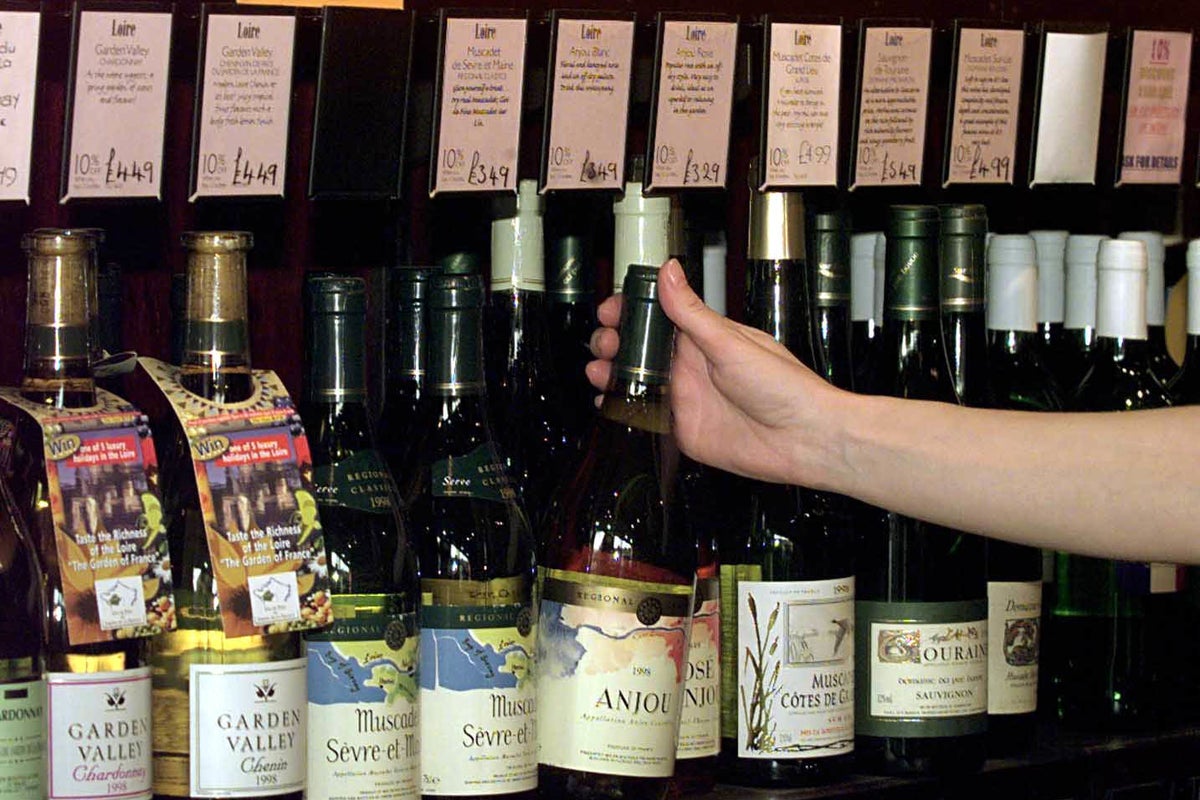
Drinkers across the UK are set to face higher prices for wine and spirits as a significant increase in alcohol duty comes into effect this Sunday, 1 February.
Industry leaders warn that businesses “have no choice but to increase prices” to remain viable amid mounting financial pressures.
The tax levied on alcoholic beverages will rise by 3.66 per cent, in line with the Retail Prices Index (RPI) inflation, a measure confirmed in November’s autumn budget.
While the duty is directly imposed on producers, industry chiefs anticipate a “trickle down” effect, with consumers ultimately bearing the brunt of these additional costs.
Official figures illustrate the impact: the duty on a typical 37.5 per cent alcohol by volume (ABV) bottle of gin will climb by 38p to £8.98, inclusive of VAT.
Similarly, a 40 per cent ABV bottle of Scotch whisky will see its duty increase by 39p, reaching £9.51. A 14.5 per cent red wine will incur an additional 14p in duty.
The Wine and Spirit Trade Association (WSTA) highlighted that the duty on a 14.5 per cent red wine has now surged by £1.10 per bottle since the new alcohol duty regime was introduced in August 2023.
In response, the UK Spirits Alliance, representing hundreds of distillers, has urged the Chancellor to use an upcoming duty review to foster growth, address “spirits discrimination,” and establish a long-term strategy for the sector.
The duty structure, partly linked to drink strength, saw an overhaul in 2023, resulting in beer below 3.5 per cent ABV paying significantly less tax.
This has prompted some beer brands, such as Foster’s, to reduce their strength to 3.4 per cent in recent months to mitigate duty costs.
However, the latest increase will affect beer sold in both pubs and supermarkets, marking the first time pubs have been impacted since 2017.
Emma McClarkin, chief executive of the British Beer and Pub Association, stated: “These changes unfortunately increase the likelihood of further price rises, which no brewer or publican would want to inflict on their customers.
“For brewers, who already pay some of the highest rates of beer duty in Europe, this increase will add further strain to their already razor-thin profit margins and risk one of the UK’s world-renowned industries producing the greatest beers in the world.”
Miles Beale, chief executive of the WSTA, criticised the government’s approach: “Despite the OBR (Office for Budget Responsibility) at last acknowledging higher prices lead to a decline in receipts, the Government fails to recognise that its own policy is benefiting no-one.

“For the nation’s wine and spirit sector the complexities of price changes, especially for wine which is now taxed by strength, mean more red tape headaches ahead.
“Add to this all the other costs – including NI (national insurance) contributions, business rates and waste packaging taxes – and businesses have no choice but to increase prices in order to keep afloat, which unfortunately means consumers are going to take the hit once again.”
Braden Saunders, spokesperson for the UK Spirits Alliance and co-founder of Doghouse Distillery, Battersea, remarked on the timing: “The timing couldn’t be more ironic. Just as dry January draws to a close and people contemplate their first hard-earned drink, they’re met with higher prices at the bar.
“The spirits industry has been treated as a cash cow by consecutive governments, and the sector is on its knees.”
Allen Simpson, chief executive of UKHospitality, echoed these concerns: “Hospitality businesses are facing price pressures at every turn and our sector’s cost burden is growing at an unsustainable rate.
“Increases to alcohol duty, while not paid directly by operators, is another pressure, if it is passed on to businesses through higher drinks prices. We strongly urge suppliers to show restraint in doing so, recognising the economic pressure the sector is under.”
A Treasury spokesman defended the policy, stating: “For too long the economy hasn’t worked for working people, and cost-of-living pressures still bear down. That’s why we are determined to help bring costs down for everyone.
“It’s why we’re taking £150 off energy bills, increasing the National Living Wage, ending the two-child limit, rolling out free breakfast clubs for all primary school children, and freezing fuel duty, rail fares and prescription fees.
“We need to rebuild the public services we all rely on. We’ve put record funding into our schools and NHS to give every child the best start in life and bring down waiting lists.
“Alcohol duty plays an important role in ensuring public finances remain fair and strong and funds the public services people rely on every day.”
Last Updated:
Union Budget 2026, to be tabled by Nirmala Sitharaman, will focus on a detailed Part B, outlining India’s economic vision, reforms, and global strengths.



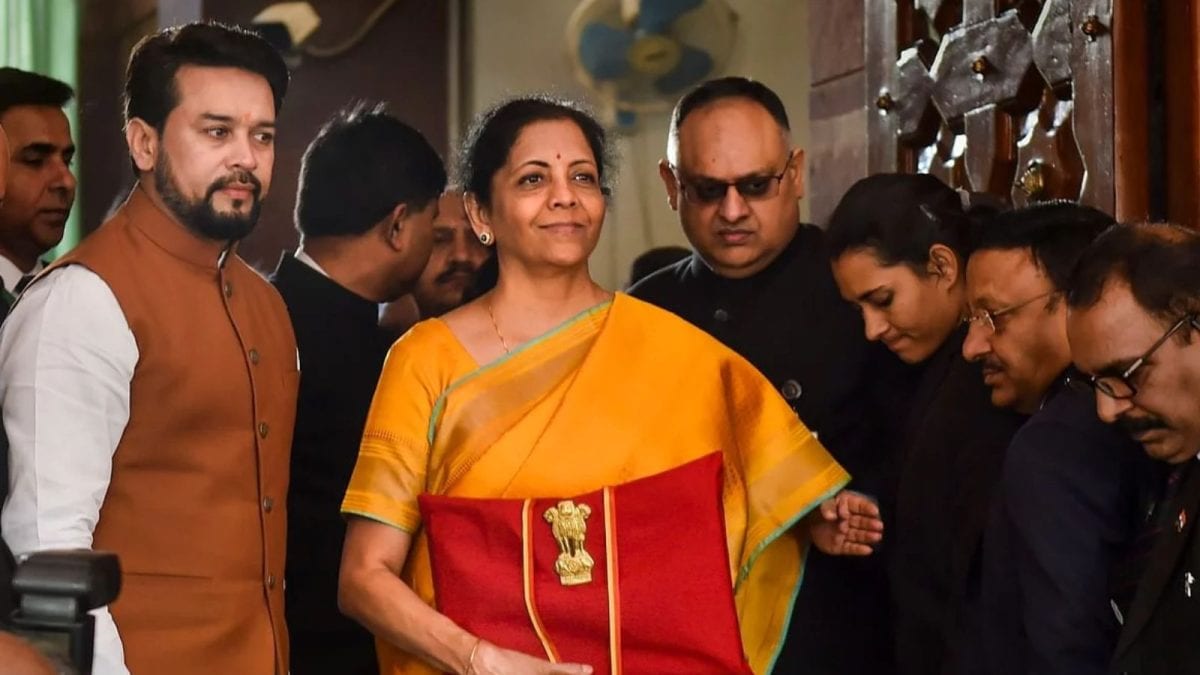
Finance Minister Nirmala Sitharaman to present the Union Budget in Parliament tomorrow, Feb 01.
Budget 2026: Union Budget 2026 to be tabled tomorrow, Sunday, February 01, 2026, is expected to be different and unique from earlier budgets delivered since Independence. It is expected that the Finance Minister Nirmala Sitharaman will focus more in detail on Part B than Part A, as seen in earlier budgets, government sources said.
Traditional Budget Structure Likely To Change
In past budget presentations, Part A of the Finance Minister’s speech typically carried extensive detail on economic conditions, fiscal numbers, and major policy announcements, while Part B was relatively brief and limited in scope. However, government sources said this long-standing format is set to change in the upcoming budget.
According to sources, Finance Minister Nirmala Sitharaman is expected to devote significantly more time and detail to Part B of the Budget Speech than seen in previous years. GoI sources said this shift reflects the government’s intention to present a more structured and forward-looking policy narrative.
Focus On Short-Term And Long-Term Economic Goals
The sources said Part B of the Budget Speech will place strong emphasis on both immediate economic priorities and long-term development goals. The section is expected to outline how the government plans to balance near-term growth, fiscal discipline, and social welfare with longer-term structural reforms.
Part B will articulate India’s economic vision as the country moves deeper into the second quarter of the 21st century, highlighting policy continuity as well as new initiatives aligned with evolving global and domestic challenges.
Showcasing India’s Strengths On The Global Stage
The sources further said Part B of the Budget Speech will offer a roadmap for showcasing India’s local strengths in a global context. This is expected to include an assessment of India’s current economic capabilities, sectoral advantages, and future growth potential.
The emphasis will be on positioning India as a competitive and resilient economy, while reinforcing its role in global supply chains and international markets.
Economists And Global Experts Watching Closely
Given the expanded scope and strategic intent of Part B, GoI sources said it is likely to draw close attention from economists, policy analysts, and global experts. The section is expected to serve as a key indicator of the government’s medium- to long-term economic priorities and reform trajectory.
January 31, 2026, 19:42 IST
Read More


NASA’s perseverance rover completed first-ever AI-planned drive on Mars

Meghan Markle sweetens Valentine’s day after last year’s big sell out

Elena Rybakina wins Australian Open for 2nd Grand Slam title

-
 Business1 week ago
Success Story: This IITian Failed 17 Times Before Building A ₹40,000 Crore Giant
-

 Entertainment1 week ago
Drake takes legal battle over Kendrick Lamar track to next level
-

 Entertainment1 week ago
Harry Styles world tour promises unforgettable star packed nights
-
 Business1 week ago
Silver ETFs Jump Up To 10%, Gold ETFs Gain Over 3% On Record Bullion Prices
-

 Tech1 week ago
Ruckus gears up for networking partnership with TGR Haas F1 Team | Computer Weekly
-

 Sports1 week ago
Senegal coach defends team’s AFCON final walkoff and chaos
-

 Fashion1 week ago
South Korea tilts sourcing towards China as apparel imports shift
-
 Business1 week ago
Video: Why Trump’s Reversal on Greenland Still Leaves Europe on Edge