

Business
Export fall: looking beyond numbers | The Express Tribune

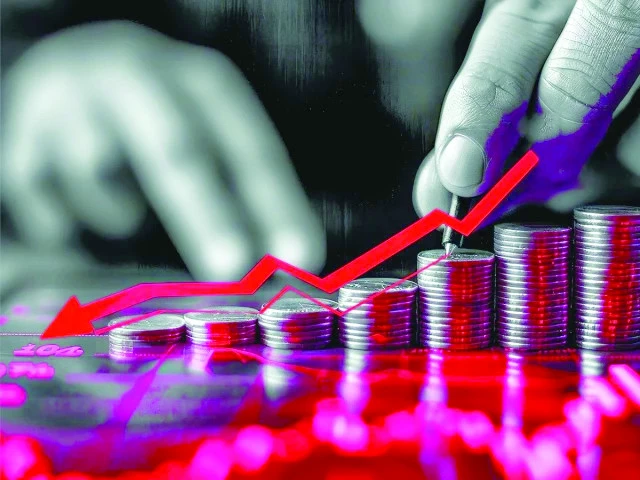
Tariff reforms need to be focused less on delivering immediate results and rather addressing structural constraints in Pakistan’s economy by reducing taxation costs and improving productivity and competitiveness. Photo: file
ISLAMABAD:
Pakistan’s export of goods has declined in the first half of FY26 as exports decreased to $15.2 billion, down from $16.6 billion a year earlier. This stagnation has caused concern amongst policymakers as the trade deficit widened from $14.5 billion to $19.2 billion. Government officials have been conducting a series of meetings this week with industrial leaders with the goal of addressing the salient concerns of businessmen and arresting the export decline.
A common rallying cry among business leaders to communicate the dire straits of the matter at hand is to declare an ‘export emergency’. Such alarm over worsening macroeconomic indicators is understandable in a country like Pakistan where economic growth has always remained ever so fragile and the memory of the inflationary fire of 2022-2024 is still fresh. But it begs the question whether alarmism and clinging to short-term headline figures is an appropriate strategy to address the country’s structural anti-export bias.
After all, a closer look at the export composition reveals that the decline is driven almost entirely by rice exports as well as a sharp fall in trade with Afghanistan and Central Asia due to border skirmishes. But in a public discourse where the specter of crisis permeates even in the absence of it, policymakers are rewarded for ‘doing something’ rather than laying out comprehensive visions with prudence and sobriety.
A key measure to improve exports that has gone under the radar has been tariff reform and the introduction of the National Tariff Policy (2025-2030). The plan aims to rationalise Pakistan’s complex tariff structure into uniform slabs and reduce the simple average tariff rate from 20.2% to 15.7% in year 1, 13% in year 2 and down to 9.7% by year 5.
Pakistan has historically operated one of the most protectionist tariff regimes in Asia, which increase costs of inputs for exporters, especially the tariffs levied on raw materials and intermediate goods. The high protection from foreign competition also encourages domestic manufacturing to remain inward-looking and target local markets rather than expanding into the global market and competing with regional players like India, Bangladesh, and Vietnam.
Another damaging aspect of Pakistan’s tariffs on exports is the discretionary use of additional customs duties (ACDs) and regulatory duties (RDs). These are para-tariffs in addition to customs duties and are typically levied with little regard for trade policy and rather as a means to plug revenue holes and protect uncompetitive domestic industries. This created unpredictability in costs of imported inputs for exporters and undermined confidence in long-term capital investment in export sectors. The NTP has frontloaded the phasing out of ACDs and RDs in the first two years with the goal of removing distortions created by their discretionary use.
But you might ask, if the tariff policy was so successful in improving export competitiveness, why have exports not risen, rather declined in the first few months of this fiscal year. While tariffs have been identified by the World Bank and other leading economic observers as a key driver in Pakistan’s anti-export bias, a boost to exports after lowering tariffs often occurs after a lag. This is because it takes time for firms to expand operations and economic actors to reallocate capital towards export-oriented industry. But most importantly in the case of Pakistan, investors wait for proof of policy continuity before making long-term investments in export and manufacturing sectors.
This reform measure has not gone unnoticed by international organisations and was highlighted by the World Bank’s bi-annual country development report for Pakistan, published in October. The report acknowledged the ambition of the NTP in liberalising trade and that the implementation of the first year of the policy was one of the largest single-year reductions in trade barriers for a lower-middle income country in the past decade.
World Bank reports on Pakistan have been emphasising ‘structural reforms’ and ‘altering growth trajectories’ for as long as one can remember and even as late as April. But the October report was salient for its notable emphasis on ‘staying the course’ and avoiding the temptation to reverse policy before exports respond to the measures taken.
The real fear, as articulated by the World Bank report and its emphasis on continuity, is not that the reforms will not work, but rather whether or not the country’s policymakers will have the patience to see through the adjustment period and resist the impulse and pressure for policy reversal. A fact often under-appreciated by policymakers in Pakistan is the importance of reputation and credibility in facilitating investor confidence and economic activity.
It is harsh but perhaps not inaccurate to say that Pakistan’s reputation among international investors is of a perpetual IMF patient that cycles between the infirmary and the emergency ward but never leaves the hospital. Our reputation is of a country that is crisis-prone, highly unstable and one where administrations conduct frantic changes of policy, sometimes based on whims.
These fears are not unfounded and have plenty of supporting evidence such as the 1998-99 foreign currency account freeze, the cancellation of the Reko Diq mining lease, sudden import rationing and abrupt trade bans from the 2022-23 crisis just to name a few.
So, for businessmen operating in a country whose policymakers are known for going back on their word and making abrupt, sudden and at times whimsical decisions, the rational medium-term investment decision would be to wait and see if the government’s push for trade liberalisation and implementation of the NTP survives another budget. Until that happens, it should be unsurprising that exports remain stagnant and that investors remain reluctant to commit capital and investment until the reforms carried out by the government gain credibility.
Tariff reforms have the potential to be a game-changer for export competitiveness and allow Pakistan to keep pace with India and Bangladesh in terms of trade openness. However, in order for substantive dividends to be realised from these reforms, the government needs to put less emphasis on the headline numbers and rather demonstrate patience, signal credibility and serious commitment to reform. These reforms need to be focused less on delivering immediate results and rather addressing structural constraints in Pakistan’s economy by reducing taxation costs and improving productivity and competitiveness.
For that, the government must appreciate the importance that stability and confidence plays in fostering a conducive investor climate and providing a fertile ground for export growth. But doing so requires clarity in communicating export promotion policy to investors and consistency in assuming ownership of policy that establishes trust across the business community that the government’s word holds serious weight.
The writer is a research fellow at the Strategic Trade and Economic Policy (STEP) Institute





Last Updated:
Gold is sold at a discount in Dubai due to Middle East conflict disrupting flights. Traders offer up to $30 per ounce less than London prices.




Dubai Gold Selling Cheaper As Iran War Grounds Flights
Gold is being sold at a discount in Dubai as the widening conflict in the Middle East disrupts flights and hampers the movement of bullion from one of the world’s key trading hubs.
According to a Bloomberg report, traders in Dubai are offering discounts of up to $30 per ounce compared to the global benchmark price in London. The unusual price cut comes as shipments remain stranded due to flight disruptions triggered by the escalating conflict involving Iran and Israel.
Dubai is a key global centre for refining and exporting gold to markets across Asia, including India. However, partial airspace restrictions and heightened security risks have slowed the movement of bullion out of the region.
Why Gold Is Being Sold Cheaper
Gold is typically transported in the cargo holds of passenger aircraft. With several flights from the UAE restricted amid regional tensions, traders are struggling to move bullion to international markets.
At the same time, insurance and freight costs have surged, making shipments more expensive and uncertain. Many buyers have therefore stepped back from placing new orders, unwilling to bear high logistics costs without assurance of timely delivery.
To avoid paying prolonged storage and financing costs while shipments remain stuck, some traders are offering gold at discounted prices.
Although transporting bullion by road to airports in neighbouring countries such as Saudi Arabia or Oman is theoretically possible, logistics firms are reluctant due to the risks and complications of moving high-value cargo across land borders during a conflict.
What It Means For India
India, one of the largest buyers of gold shipped from Dubai, could face short-term supply disruptions if the situation continues.
Renisha Chainani, head of research at Augmont Enterprises Ltd., said several cargo shipments have already been delayed, creating temporary tightness in the availability of physical bullion in India.
However, industry experts as reported by Bloomberg say the immediate impact may remain limited as domestic inventories are currently comfortable after heavy imports earlier this year.
Chirag Sheth, principal consultant for South Asia at Metals Focus, said Bloomberg that India has ample stocks for now, but warned that prolonged disruptions could eventually affect supply if the conflict continues for several months.
Meanwhile, global gold prices have surged this year amid geopolitical uncertainty, with spot gold recently trading above $5,000 per ounce.
 Click here to add News18 as your preferred news source on Google.
Follow News18 on Google. Join the fun, play games on News18. Stay updated with all the latest business news, including market trends, stock updates, tax, IPO, banking finance, real estate, savings and investments. To Get in-depth analysis, expert opinions, and real-time updates. Also Download the News18 App to stay updated.
March 08, 2026, 10:03 IST
Read More
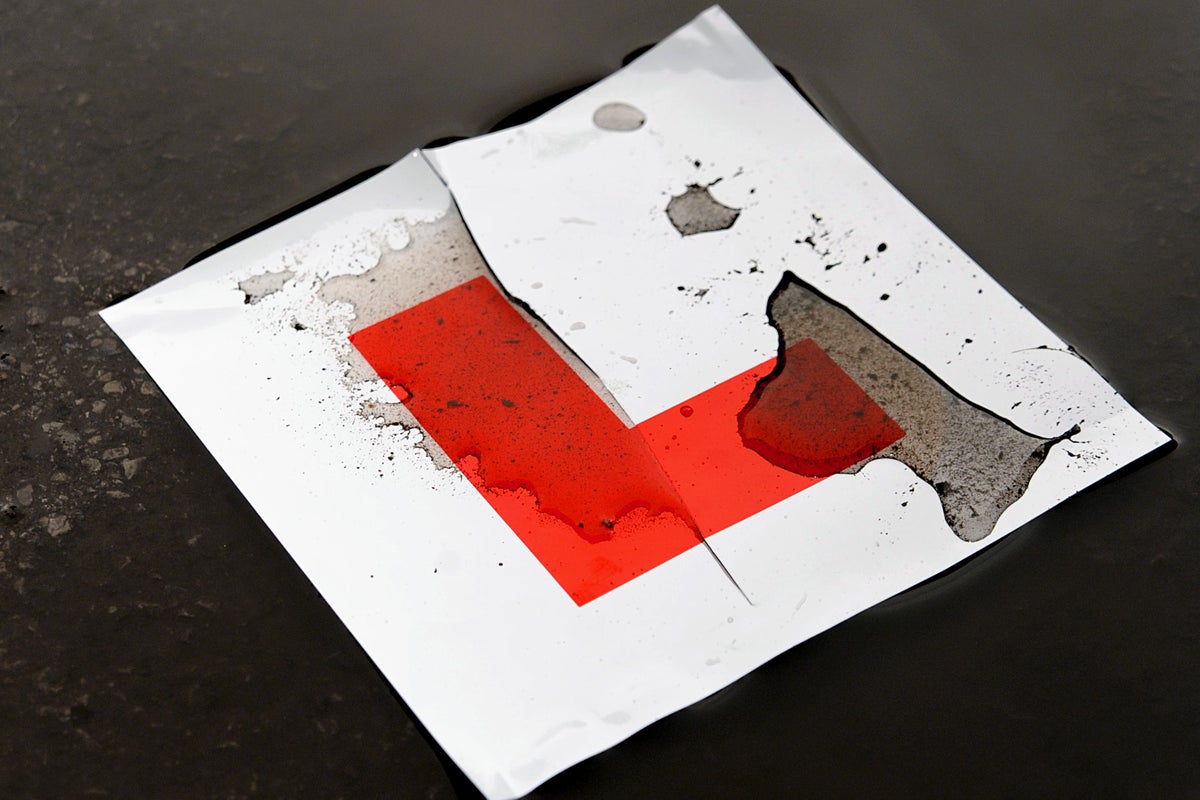
Some seven in 10 British adults without a full driving licence say learning to drive is currently unaffordable, according to a survey.
The figure is even higher among younger people, with 76% of 18 to 29-year-olds without a licence saying driving lessons are financially out of reach, the poll for car insurer Prima found.
Overall, 38% said the cost of driving lessons was the biggest deterrent to learning to drive.
Some 32% were put off by the price of buying a car and 15% said the cost of car insurance was the main barrier to learning to drive.
Almost half (45%) said they would consider learning to drive if it became significantly cheaper.
Nick Ielpo, UK country manager at Prima, said: “For a growing number of people, driving is no longer a symbol of freedom – it’s a financial stretch too far.
“Between lessons, buying a car and insuring it, the upfront and ongoing costs are pricing many people out before they even start.”
Find Out Now surveyed 1,134 adults who do not hold a full driving licence between January 21 and 23.
KARACHI:
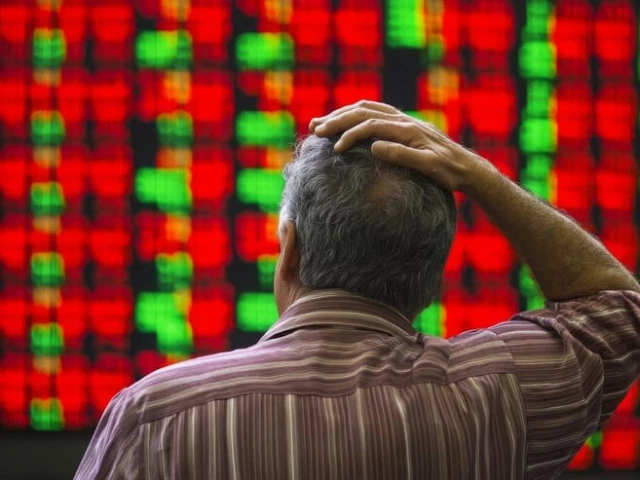
The Pakistan Stock Exchange’s (PSX) KSE-100 index experienced a sharp decline in the outgoing week, closing at 157,496 points, down 6.3% week-on-week, or 10,566 points.
This follows last week’s fall and brings the cumulative decline from its January 2026 peak of around 189,167 points to nearly 17%. The sell-off was driven by heightened geopolitical tensions stemming from the US-Iran conflict, which has rattled regional markets and prompted investors to reduce exposure amid fears of broader instability, rising energy prices and domestic security concerns.
On a day-on-day basis, the PSX commenced the week with its historical single-day decline as the benchmark KSE-100 index plunged 16,089 points, or 9.57%, to close at 151,973. Next day, it staged a partial recovery, with the index advancing 5,159 points, or 3.39%, at 157,132.
On Wednesday, however, the PSX witnessed a directionless session, when the KSE-100 closed at 155,777, down 1,355 points (-0.86%). The PSX recorded a sharp rebound on Thursday, with the benchmark index gaining 5,433 points (+3.49%) to close at 161,211. The market closed the week on a cautious note as the KSE-100 dropped by 3,715 points (-2.30%) to settle at 157,496.
In its weekly report, Arif Habib Limited (AHL) mentioned that the KSE-100 index witnessed a lacklustre performance during the outgoing week, closing at 157,496 points, down 6.3% WoW (10,566 points) amid geopolitical tensions due to the US-Iran conflict. The Consumer Price Index (CPI) for February 2026 hit 7% year-on-year, the highest level since October 2024, compared to 5.8% in January 2026.
Among other economic data, a trade deficit of $3 billion was recorded in February. Exports amounted to $2.3 billion (-8% YoY) while imports reached $5.3 billion, down 1.6% YoY. Total cement dispatches for the month rose 12.53% YoY to 4.19 million tons compared to 3.73 million tons in February 2025. Provisional urea offtake remained subdued, falling 28% YoY to 251k tons, marking the lowest monthly offtake.
AHL mentioned that gas production edged down 0.1% WoW to 2,687 million cubic feet per day (mmcfd) in the fourth week of Feb’26, while oil output fell 2.9% WoW to 59,103 barrels per day. A total of Rs581.7 billion was raised in the T-bill auction on Wednesday, with yields increasing across all tenors by 21.5 to 39.3 basis points. The government’s debt increased by 1% month-on-month to Rs79.3 trillion (+10% YoY) as of Jan’26 against Rs72.1 trillion in Jan’25.
Pakistan’s liquid foreign exchange reserves were recorded at $21.4 billion, up by $26.2 million, comprising $16.3 billion with the State Bank and $5.1 billion with commercial banks, AHL added.
Muhammad Waqas Ghani, Head of Research at JS Global, noted that the KSE-100 extended its decline during the week as heightened geopolitical tensions weighed on the market. The index dropped 10,566 points (-6.3%) WoW, following last week’s 5,108-point decline, pushing the cumulative fall from its January 2026 peak of 189,167 points to nearly 17%.
Market activity remained volatile throughout the week as investors continued to reduce exposure amid regional tensions and domestic security concerns. Sentiment also remained cautious ahead of key macro developments, with the IMF mission currently engaging with Pakistani authorities for the third review of the loan programme.
According to the Pakistan Bureau of Statistics, the inflation clocked in at 7% YoY for Feb’26, the highest since Oct’24. “We expect the SBP to keep its policy rate unchanged at 10.5% in the upcoming meeting as rising global oil prices may add to inflationary pressures,” he said.
Pakistan was exploring options to manage a potential gas shortfall after Qatar Energy halted LNG production following Iran’s attacks. On the other hand, Saudi Arabia assured Pakistan of secure oil supplies through the Port of Yanbu on the Red Sea to help meet energy needs. The government was also reviewing a proposal to shift to weekly revision of petroleum prices from fortnightly reviews, the JS head of research said.


President Pezeshkian’s gesture to neighbors immediately killed by Trump: Iran FM

Christian Bale makes shocking confession about Jacob Elordi’s ‘Frankenstein’

UFC 326 takeaways: Is this the end of the BMF title?

-

 Sports1 week ago
LPGA legend shares her feelings about US women’s Olympic wins: ‘Gets me really emotional’
-

 Entertainment1 week ago
Pakistan’s semi-final qualification scenario after England defeat New Zealand
-

 Fashion1 week ago
South Korea’s Misto Holdings completes planned leadership transition
-
 Business1 week ago
Greggs to reveal trading amid pressure from cost of living and weight loss drugs
-

 Entertainment1 week ago
Bobby J. Brown, “The Wire” and “Law & Order: SUV” actor, dies of smoke inhalation after reported fire
-
 Business1 week ago
CNBC To Merge TV And Digital News Operations, Nearly A Dozen Jobs To Be Cut: Report
-
 Entertainment1 week ago
What’s new in Pokémon? Every game, update, surprise from 30th anniversary event
-

 Politics1 week ago
Iran launches retaliation against Israel, launches ballistic missiles