

Business
Family offices piled into oil after capital dried up. The recent rally has made for big gains


Dwayne Schnell | 500px Plus | Getty Images
A version of this article first appeared in CNBC’s Inside Wealth newsletter with Robert Frank, a weekly guide to the high-net-worth investor and consumer. Sign up to receive future editions, straight to your inbox.
The Iran war has propelled oil prices to above $94 a barrel, up about 30% since the conflict began in late February. That rally has been a boon for investment firms of ultra-wealthy families who made opportunistic bets on oil in recent years.
Since the pandemic, private equity funds and other institutional investors have backed away from oil and gas in part due to pressure from environmentally conscious stakeholders. Family offices have stepped in to fill some of that void, investors and advisors told CNBC.
While many family offices are environmentally minded — with a September survey by Citi Private Bank showing more than half of respondents reporting they were likely to make sustainable investments in the next five years — they’re not subject to the same ESG mandates as private equity firms or endowments, which have faced pressure to divest from oil and gas.
“Family offices are contrarian players. A lot of investors left the sector for non-fundamental reasons, like endowment funds, who had students protesting,” said Keith Behrens, head of energy and clean energy investment banking at Stephens. “Family offices saw that flight of capital, and it created really good investment opportunities for them. They were able to come in and invest with pretty reasonable cash flow multiples.”
Family offices also have an edge on private equity players as they generally hold investments for longer periods, meaning they can weather oil price fluctuations and dealmaking downturns, according to Gillon Capital’s Jeff Peterson.
“We back teams who are looking to build businesses over the long term, because that’s where we really differentiate ourselves. A fund can only really hold a business for their fund life,” he said. “We invest for generations in mind so we can look through current cycles.”
Peterson has managed investments for the descendants of oil tycoon H.L. Hunt for 14 years. About five years ago, A.G. Hill Partners, one of the family’s personal investment firms, doubled down on oil and gas to take advantage of attractive valuations.
Multiples for the sector typically range between two to three times cash flow, according to Peterson, who is now chief investment officer for Gillon Capital, a family office spun out of A.G. Hill Partners a year ago.
Peterson said the family has taken the lead on major deals in the sector, such as forming a consortium of family offices and a few PE funds for the $2 billion acquisition of natural gas producer PureWest Energy. The family is also an anchor investor in a minerals and royalty fund that has raised about $500 million in capital and has a substantial position in the Permian Basin, which is the highest-producing oil field in the U.S., he said.
The sector is increasingly drawing interest from family offices without ties to energy, according to Tailwater Capital’s Doug Prieto. He leads upstream energy funds, which back oil and gas exploration and production, for the middle-market PE firm. Prieto said the funds have raised about $500 million from family offices without backgrounds in energy and just last week took a commitment from a family office built from an options-trading fortune.
Family offices without energy expertise are typically seeking to diversify their portfolio with assets that are uncorrelated to stocks and bonds, Prieto said. Oil and gas are also attractive as inflation hedges, he added.
The Trump administration’s efforts to prioritize oil, gas and nuclear power over clean energy have given investors more confidence in the sector, according to Ellen Conley, lawyer and co-chair of Haynes Boone’s energy finance practice group.
Plus, the potential for cash dividends appeals to family offices, she said.
“Family offices are viewing these assets as cash-flowing real assets rather than a speculative commodity gamble,” she said. “We’re dealing with real assets, particularly in Texas, where you have this repeatable cash flow and predictive models.”
Conley said investors’ interest in energy was already on the rise before the recent oil surge. But headlines about oil prices tied to the Iran war have spurred queries from family offices looking to invest, according to Vicki Odette, global chair of Haynes Boone’s investment management practice group.
However, investors who are new to the space can only realistically take advantage of the current price surge by hedging, Peterson said.
“For anybody to start a drilling program today, you’re really not looking at production this calendar year. You’re looking at next year,” said Peterson.
Analysts generally expect the current spike to be temporary.
And while high prices are good for existing investors, they make it harder to get deals done, according to Behrens.
“If someone’s selling a property, they’re going to want to sell it at the highest price possible and get the latest day close,” he said. “The buyer is going to say, ‘Hey, that’s great that oil is at $115 a barrel, but three months ago it was at $60.'”
Prieto added that it is possible to have too much of a good thing. High oil prices for a prolonged period of time poses a recession risk, he said.
“We like to see a robust U.S. economy. I think for us, somewhere between $75 and $85 a barrel feels pretty darn good,” he said. “When you get over $100, you start to have adverse impacts that don’t benefit anyone.”





A sample prompt response in ChatGPT using Starbucks’ beta app.
Source: Starbucks
Starbucks has launched a beta app in ChatGPT to provide inspiration for customers’ drink orders, the company said Wednesday.
To use the beta app, customers need to enable the Starbucks app through ChatGPT’s app directory and then enter a prompt on the chatbot that includes “@Starbucks.” While they can customize their orders and even select what location to order from, consumers will need to complete their order on the Starbucks app or website — a key distinction for a company that relies heavily on its loyalty program.
“Over the past year, one thing has become clear: Customers aren’t always starting with a menu,” Paul Riedel, Starbucks’ senior vice president of digital and loyalty, said in a statement. “They’re starting with a feeling …. We wanted to meet customers right in that moment of inspiration and make it easier than ever to find a drink that fits.”
The announcement on Wednesday marks the latest way that Starbucks is trying to find ways to entice U.S. customers back to its cafes. Under its “Back to Starbucks” turnaround strategy, the company has added seating back to its cafes, trimmed its menu and reintroduced tiers to its loyalty program.
It also helped customers find new drinks on its mobile app, through its trending beverage category or the secret menu under its “offers” tab. Drink discovery is also important for winning over Gen Z consumers, who have shown more of an affinity for unique beverages at U.S. restaurant chains than members of older generations.
So far, Starbucks’ turnaround strategy looks like it is taking hold. After two years of traffic declines, the chain finally reported rising customer transactions in its fiscal first quarter ended Dec. 28.
Wednesday’s announcement is not Starbucks’ first foray into using generative artificial intelligence or partnering with OpenAI. Last year, the coffee company unveiled Green Dot Assist, an AI assistant for baristas created with Microsoft Azure’s OpenAI platform.
Other consumer companies have also been partnering with OpenAI to boost sales. Walmart, Etsy and Booking.com are among the big names that are testing shopping and purchasing through ChatGPT’s interface.
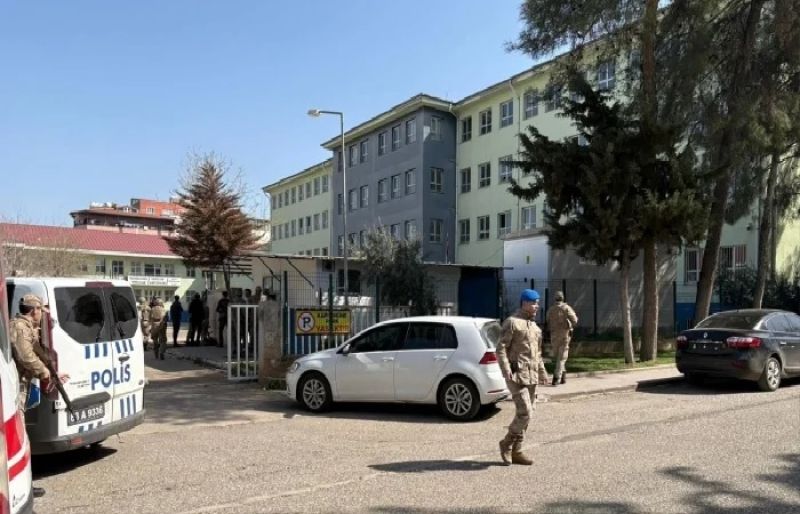
A student aged about 13 opened fire at random in a Turkish school Wednesday killing four people and wounding 20, just one day after a shooter wounded 16 people and then killed himself in another school, officials said.
Kahramanmaras province governor Mukerrem Unluer said a teacher and three students were killed in the latest attack. The attacker was also dead.
“A student came to school with guns that we believe belonged to his father in his backpack. He entered two classrooms and opened fire randomly, causing injuries and deaths,” Unluer told reporters.
Four of the wounded were in serious condition and undergoing surgery, he said.
The attacker, an eighth-grade student, was the son of a former police officer, Unluer said, adding that the suspect was carrying five guns and seven magazines.
“We suspect he may have taken his father’s weapons,” the governor said.
Unluer said the attacker was also dead.
“He shot himself. It is not yet clear whether this was suicide or happened amid the chaos,” he said.
Footage released by IHA private news agency showed a person, body and face covered, being evacuated in an ambulance, as well as tearful parents who had rushed to the school in the southern province’s main city, Kahramanmaras.
Witnesses quoted by media said intense gunfire was heard.
Police increased security around the building, and television footage showed ambulances in the area.
‘Will be held accountable’
Justice Minister Akin Gurlek said prosecutors had launched an immediate investigation into the shooting.
On Tuesday, an ex-student opened fire with a shotgun at his former high school in Siverek district of Sanliurfa province, wounding 16 people before killing himself in a showdown with police. Ten students were among the casualties.
Speaking to the ruling AKP party in parliament, President Recep Tayyip Erdogan promised that those found to have been negligent or at fault “will certainly be held accountable” over the school shootings.
Police detained one suspect after Tuesday’s attack and suspended four officials from duty, Erdogan said. The school was ordered closed for four days.
School shootings in Turkiye had been rare until this week. In May 2024, a former student killed a private high school principal in Istanbul with a firearm five months after he was expelled.
Turkiye has strict gun laws that require licensing, registration, mental and criminal background checks, and severe penalties for illegal possession.
Business
Donald Trump targets Fed chief Jerome Powell again, threatens to fire him if he is ‘not leaving on time’ – The Times of India
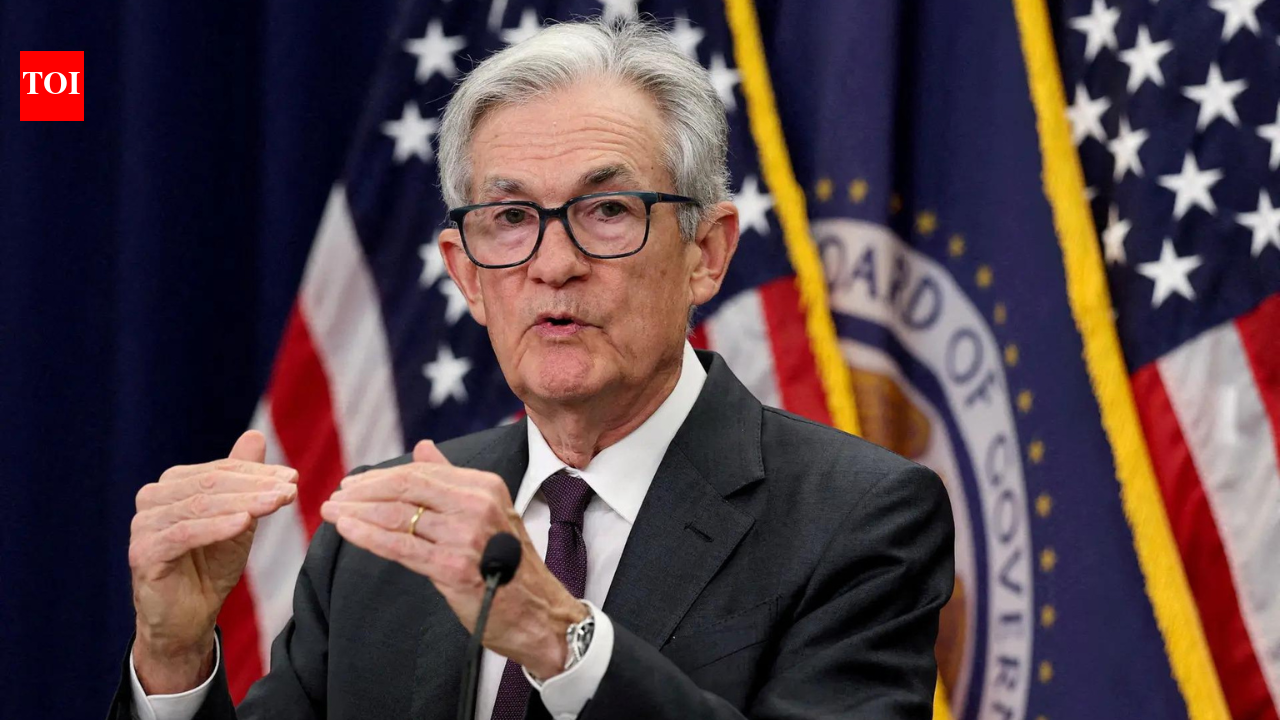
US President Donald Trump on Wednesday renewed his attack on Federal Reserve Chair Jerome Powell, saying he would fire him if he continues in the role beyond the end of his mandate.Powell’s term as Fed chair ends in mid-May, and Trump has repeatedly criticised him for not cutting interest rates more aggressively, AFP reported.
“I’ll have to fire him,” Trump told Fox Business, if Powell “is not leaving on time.”The president added: “I’ve wanted to fire him.”The remarks come as the Trump administration steps up pressure on the independent central bank, including initiating a Department of Justice probe into Powell over alleged renovation cost overruns and seeking to remove Fed governor Lisa Cook.Asked if he would drop the DOJ investigation, Trump said: “I’m not playing. I have to find out.”Trump has nominated former central banker Kevin Warsh to succeed Powell, but his appointment requires confirmation by the US Senate.Warsh is scheduled to appear before the Senate Banking Committee next Tuesday, though his confirmation faces resistance.Senator Thom Tillis, a Republican member of the committee, has said he would hold up the nomination while the probe into Powell remains unresolved.As long as the nomination process is delayed, Powell can legally continue as Fed chair.While uncommon, it is possible for a Fed chair to remain on the board even after their term as chief expires.Powell first became Fed chair in 2018 during Trump’s earlier presidency and was reappointed in 2022 under then president Joe Biden.


PSL 11: Waseem, Khuzaima released from Karachi Kings squad
Starbucks launches beta app in ChatGPT to fuel new drink discovery

Ramy Youssef talks new comedy special and why love is his inspiration

-

 Fashion1 week ago
India’s exports face reset as EU links trade to carbon metrics: EY
-

 Entertainment1 week ago
Queen Elizabeth II emotional message for Archie, Lilibet sparks speculation
-

 Entertainment1 week ago
Lamar Odom shocking response to Khloé Kardashian account of his overdose
-

 Tech7 days ago
As the Strait of Hormuz Reopens, Global Shipping Will Take Months to Recover
-

 Tech1 week ago
Azure customers up in arms over ‘full’ UK South region | Computer Weekly
-

 Fashion1 week ago
CII submits 20-pt agenda to Indian govt to back firms hit by Iran war
-

 Tech6 days ago
This AI Button Wearable From Ex-Apple Engineers Looks Like an iPod Shuffle
-

 Politics5 days ago
Indian airlines hit hardest after Dubai limits foreign flights until May 31